American actor (1955-)
Willem Dafoe
William James "Willem" Dafoe is an American actor.
By globalcelebwiki Editorial Desk, adapted from Wikipedia · Published 29 September 2026
- Profession
- American actor (1955-)
- Born
- 22 July 1955
- Birthplace
- Appleton
- Nationality
- American

Overview
William James "Willem" Dafoe ( də-FOH; born July 22, 1955) is an American actor. Known for his prolific career portraying diverse roles in both blockbusters and independent films, he is the recipient of various accolades including a Volpi Cup Award for Best Actor, with nominations for four Academy Awards, a British Academy Film Award, and four Golden Globe Awards. He received an Honorary Golden Bear in 2018.
Born in Appleton, Wisconsin, Dafoe made his film debut with an uncredited role in Heaven's Gate (1980). He is known for collaborating with both mainstream and auteur filmmakers such as Paul Schrader, Abel Ferrara, Lars von Trier, Julian Schnabel, Wes Anderson, and Robert Eggers. He received Academy Award nominations for playing a compassionate army sergeant in the war drama Platoon (1986), Max Schreck in the mystery film Shadow of the Vampire (2000), a kindly motel manager in the coming of age film The Florida Project (2017), and Vincent van Gogh in the biopic At Eternity's Gate (2018).
He portrayed Jesus Christ in Martin Scorsese's The Last Temptation of Christ (1988) and Norman Osborn in Sam Raimi's Spider-Man film trilogy (2002–2007), reprising the role in Spider-Man: No Way Home (2021). He has also voiced roles in the animated films Finding Nemo (2003) and Fantastic Mr. Fox (2009). His other films credits include Streets of Fire (1984), To Live and Die in L.A. (1985), Mississippi Burning (1988), Born on the Fourth of July (1989), Wild at Heart (1990), Light Sleeper (1992), The English Patient (1996), The Boondock Saints (1999), American Psycho (2000), Animal Factory (2000), The Life Aquatic with Steve Zissou (2004), Inside Man (2006), Antichrist (2009), The Hunter (2011), The Grand Budapest Hotel (2014), John Wick (2014), Aquaman (2018), The Lighthouse (2019), Togo (2019), Poor Things (2023), and Nosferatu (2024).
A lifelong performer in experimental theatre, Dafoe founded the experimental theatre company The Wooster Group in 1975.
Early life and education
Dafoe was born on July 22, 1955, in Appleton, Wisconsin, to Muriel Isabel (née Sprissler; 1921–2012) and Dr. William Alfred Dafoe (1917–2014). He recalled in 2009, "My five sisters raised me because my father was a surgeon, my mother was a nurse and they worked together, so I didn't see either of them much." His brother, Donald, is a surgeon and research scientist. His surname, Dafoe, is the anglicized version of the Swiss-French surname Thévou. Half of his family pronounced Dafoe as DAY-foh, while half pronounced it də-FOH; he used the former early in his career, but ultimately settled with the latter pronunciation. In high school, he acquired the nickname Willem, the Dutch version of the name William. He later grew more accustomed to it than his birth name. He was raised in a Christian household.
After attending Appleton East High School until 1973, Dafoe studied drama at the University of Wisconsin–Milwaukee, and left after 18 months to join the experimental theater company Theatre X in Milwaukee, before moving to New York City in 1976. He apprenticed under Richard Schechner, the director of the avant-garde theater troupe The Performance Group, where he met and became romantically involved with director Elizabeth LeCompte. Following tensions between Schechner and other members after they started staging their own productions outside of the group, Schechner left and the remaining members (including LeCompte and her ex-boyfriend Spalding Gray) renamed themselves The Wooster Group. Dafoe joined the new company and is credited as one of its co-founders. He continued his work with the group into the 2000s, well after establishing himself as a mainstream film star.
Dafoe made his film debut in a supporting role in Michael Cimino's 1980 epic Western film Heaven's Gate. Dafoe was present for the first three months of an eight-month shoot. His role, that of a cockfighter who works for Jeff Bridges' character, was removed from a majority of the film during editing but was visible during a cockfight scene. Dafoe did not receive a credit for his work on the film. In 1982, Dafoe starred as the leader of an outlaw motorcycle club in the drama The Loveless, his first role as a leading man. The film was co-directed by Kathryn Bigelow and Monty Montgomery and paid homage to 1953 film The Wild One, starring Marlon Brando in a similar role.
Following a brief bit part in The Hunger (1983), Dafoe again played the leader of a biker gang in Walter Hill's 1984 action film Streets of Fire. His character in the film served as the main antagonist, who captures the ex-girlfriend of a mercenary, played by Diane Lane and Michael Paré, respectively. Janet Maslin of The New York Times felt there were no great performances in the film, but praised Dafoe's "perfectly villainous" face. Dafoe starred alongside Judge Reinhold in Roadhouse 66 (1985) as a pair of young men who become stranded in a town on U.S. Route 66. Later in 1985, Dafoe starred with William Petersen and John Pankow in William Friedkin's thriller To Live and Die in L.A., in which Dafoe portrays a counterfeiter named Rick Masters who is being tracked by two Secret Service agents. Film critic Roger Ebert commended his "strong" performance in the film.
Dafoe's sole film release of 1986 was Oliver Stone's Vietnam War film Platoon, gaining him his widest exposure up to that point for playing the compassionate Sergeant Elias Grodin. He enjoyed the opportunity to play a heroic role and said the film gave him a chance to display his versatility, saying "I think all characters live in you. You just frame them, give them circumstances, and that character will happen." Principal photography for the film took place in the Philippines and required Dafoe to undergo boot camp training. Los Angeles Times writer Sheila Benson praised his performance and found it to be "particularly fine" to see Dafoe play "something other than a psychopath". At the 59th Academy Awards, Dafoe was nominated for the Academy Award for Best Supporting Actor. Dafoe provided his voice to the documentary Dear America: Letters Home from Vietnam (1987) and, in 1988, Dafoe starred in another film set during the Vietnam War, this time as Buck McGriff in the action thriller Off Limits. His second release of 1988 was Martin Scorsese's epic drama The Last Temptation of Christ, in which Dafoe portrayed Jesus. The film was adapted from the novel of the same name and depicts his struggle with various forms of temptation throughout his life. Like the novel, the film sparked controversy for departing from the biblical portrayal of Jesus and was branded as being blasphemous. Dafoe's performance in the film was widely praised, however, with Janet Maslin opining that Dafoe brought a "gleaming intensity" to the role.
In his final release of 1988, Dafoe starred opposite Gene Hackman in the crime thriller Mississippi Burning as a pair of FBI agents investigating the disappearance of three civil rights workers in fictional Jessup County, Mississippi during the civil rights movement. Variety praised Dafoe's performance, writing, "Dafoe gives a disciplined and noteworthy portrayal of Ward", although they felt it was Hackman "who steals the picture". As with The Last Temptation of Christ, the film was the subject of controversy, this time among African-American activists who criticized its fictionalization of events. Dafoe was briefly considered for the role of the super-villain the Joker in the Tim Burton-directed superhero film Batman (1989), as screenwriter Sam Hamm noticed physical similarities, but was never offered the part that eventually went to Jack Nicholson. Dafoe starred in the drama Triumph of the Spirit in 1989 as Jewish Greek boxer Salamo Arouch, an Auschwitz concentration camp inmate who was forced to fight other internees to death for the Nazi officers' entertainment. It was filmed on location at Auschwitz, the first major film to do so. While the film was negatively received, Dafoe's performance was lauded by some critics; Peter Travers of Rolling Stone felt he gave a "disciplined performance" and Janet Maslin thought he was "harrowingly good". Dafoe reunited with Platoon director Oliver Stone for a small appearance in the biographical war drama Born on the Fourth of July (1989). Dafoe played a paraplegic, wheelchair-using Vietnam veteran who befriends the film's subject Ron Kovic (played by Tom Cruise), another paraplegic veteran.
Dafoe made a cameo appearance in John Waters' musical comedy Cry-Baby (1990) as a prison guard who gives a brief lecture on values to the title character, who is played by Johnny Depp. Rita Kempley of The Washington Post found the scene to be one of the film's highlights. In the same year, Dafoe co-starred in David Lynch's crime film Wild at Heart with Nicolas Cage and Laura Dern. Dafoe played a criminal who engages in a robbery with Cage's character before demonstrating his dark side. He wore fake, corroded teeth and grew a pencil moustache that bore resemblance to his previous collaborator, John Waters. Entertainment Weekly critic Owen Gleiberman felt the role proved Dafoe as a "master of leering, fish-faced villainy". In 1991, Dafoe starred with Danny Glover and Brad Johnson in the action film Flight of the Intruder. The film follows a pair of pilots, played by Dafoe and Johnson, who scheme and participate in an unauthorized air strike on Hanoi. Directed by John Millius, the film received negative reviews. He was due to star opposite Joan Cusack in the comedy Arrive Alive in 1991, but the film was canceled during production. Dafoe had two lead roles in 1992. The first to be released, White Sands, saw Dafoe play a small-town sheriff who impersonates a dead man after finding his dead body and a suitcase containing $500,000 to solve the case, resulting in an investigation. In his next starring role, Paul Schrader's drama Light Sleeper, Dafoe played John LeTour, a lonely, insomniac, New Yorker working as a delivery man for a drug supplier, who is played by Susan Sarandon. Roger Ebert praised Dafoe's "gifted" portrayal of LeTour and Owen Gleiberman opined that "even when the film doesn't gel, one is held by Willem Dafoe's grimly compelling performance."
Dafoe next starred in the erotic thriller Body of Evidence (1993) with Madonna. The story concerns a lawyer, played by Dafoe, who engages in a sexual relationship with the woman he is representing in a murder case. The film was panned by critics and performed poorly at the box office, with some audience members laughing during the sex scenes. In his review of the film, Vincent Canby felt that Dafoe lacked sensuality in the role. Later in 1993, Dafoe appeared in a supporting role as Emit Flesti in the German fantasy film Faraway, So Close!, directed by Wim Wenders. Dafoe co-starred in the spy thriller Clear and Present Danger (1994), an adaptation of the Tom Clancy novel of the name starring Harrison Ford as operative Jack Ryan. Dafoe played John Clark, a CIA agent conducting a covert operation against a drug cartel in Colombia with Jack Ryan. Dafoe portrayed the poet T. S. Eliot in the drama Tom & Viv (also in 1994), which tells the story of Eliot and his first wife, Vivienne Haigh-Wood Eliot, who was played by Miranda Richardson. The film was met with a mixed reception from critics, although Caryn James of The New York Times felt that Dafoe's "stunningly sharp, sympathetic portrait raises the film above a script that is full of serious holes and stilted dialogue". In 1995, he played an 18th-century writer in the period drama The Night and the Moment.
In his first of three film appearances in 1996, Dafoe made a cameo appearance as an electrician in the biographical drama Basquiat. Next, he played an operative in the romantic war drama The English Patient. The English Patient was filmed in Tuscany, where Dafoe said he particularly enjoyed the "quiet moments in the monastery between shoots". In the period drama Victory—which was filmed in 1994 and premiered in Europe in 1996, but was not released until 1998—Dafoe played a European living on an island in the Southeast Asia who becomes the target of redemption after preventing a woman, played by Irène Jacob, from being raped.
In 1997, Dafoe returned to playing a villainous role in the action thriller Speed 2: Cruise Control, expressing the necessity of appearing in both independent and blockbuster films. The film starred Sandra Bullock and Jason Patric as a couple vacationing on a luxury cruise that has been hijacked by Dafoe's character, Geiger, a hacker that has programmed the ship to crash into an oil tanker. Speed 2 was met with negative reviews from critics, with Dafoe himself receiving a Razzie Award nomination for Worst Supporting Actor. For his next film, Affliction (1997), Dafoe worked with Paul Schrader for a second time, playing the brother of Nick Nolte's character and served as the film's narrator. Also in 1997, Dafoe took on a voice acting role in an episode of the animated sitcom The Simpsons titled "The Secret War of Lisa Simpson", voicing the commandant of a military academy that Bart and Lisa Simpson are attending. Following a villainous supporting role in the romantic mystery drama Lulu on the Bridge, Dafoe starred alongside Christopher Walken and Asia Argento in Abel Ferrara's cyberpunk drama New Rose Hotel in 1998. It follows X (Dafoe) and Fox (Walken), a pair of corporate raiders attempting to lure a Japanese scientist from one megacorporation to another. Although the film was largely dismissed by critics, critic David Stratton found there to be "compensation" in the performances.
In 1999, Dafoe gave a supporting performance in David Cronenberg's Existenz, a science fiction thriller in which he played a gas station owner named Gas. Later in the year, Dafoe starred in the action film The Boondock Saints. He played an eccentric, gay FBI agent assigned with investigating a series of murders committed by the MacManus twins (played by Sean Patrick Flanery and Norman Reedus) who are acting as vigilantes after an act of self-defense. The Boondock Saints was negatively received by film critics, largely for its extreme violence and lack of emotional depth, though some critics praised Dafoe's role in the film. The film performed poorly at the box office, but has since been branded as being a cult film.
In his first film of the 2000s, Dafoe was featured in a supporting role in American Psycho (2000) as a private investigator investigating the disappearance of a co-worker of Patrick Bateman (played by Christian Bale), an investment banker who leads a double life as a serial killer. He then acted in Steve Buscemi's crime drama Animal Factory, starring as an incarcerated veteran con-man who takes a young inmate (played by Edward Furlong) under his wing and introduces him to his gang. The film was positively received by critics and Elvis Mitchell of The New York Times wrote that "Dafoe steals the picture with his comic timing".
That same year he starred in Shadow of the Vampire, his final film of the year. He portrayed a fictionalized version of the German actor Max Schreck during the production of the 1922 horror film Nosferatu, in which Schreck starred as the vampire Count Orlok. Dafoe's co-star John Malkovich portrayed the film's director, F. W. Murnau. The film delves into fiction when, over the course of Nosferatu's production, the cast and crew come to discover that Schreck is actually a vampire himself. Much of the film's critical praise went to Dafoe; Roger Ebert wrote that Dafoe "embodies the Schreck of Nosferatu so uncannily that when real scenes from the silent classic are slipped into the frame, we don't notice a difference". The Chicago Reader critic Jonathan Rosenbaum felt the film's "only redeeming quality" was Dafoe's "enjoyably over-the-top, eye-rolling performance". Dafoe received numerous awards and nominations for his performance, including his second Academy Award for Best Supporting Actor nomination.
Dafoe took on two leading roles in 2001, both of which were as priests. In the drama Pavilion of Women, he played an American priest living in China who falls in love with a local married woman (played by the film's screenwriter Luo Yan) while giving her son a Western education. He starred opposite Haley Joel Osment in Edges of the Lord, playing a compassionate priest helping a young Jewish boy pose as a Catholic to protect him during Nazi Germany's occupation of Poland.
In 2014, Dafoe portrayed a wealthy private banker with connections to the Russia mafia opposite Philip Seymour Hoffman in Anton Corbijn's espionage thriller A Most Wanted Man. Dafoe worked with Wes Anderson for a third time with the comedy The Grand Budapest Hotel (also 2014), featuring as the henchman of Adrien Brody's character alongside an ensemble cast led by Ralph Fiennes. Dafoe next starred alongside Matt Dillon as a detective in the crime thriller Bad Country, which critic Justin Chang dismissed as being "blandly constructed".
In May 2014, Dafoe served as member of the main competition jury at the 2014 Cannes Film Festival. He was next featured in a supporting role as a mean-spirited, alcoholic author who is visited by a pair of cancer patients, who are played by Shailene Woodley and Ansel Elgort, in the romantic drama The Fault in Our Stars. Dafoe once again collaborated with Ferrara on the drama Pasolini, in which he played Italian filmmaker Pier Paolo Pasolini during his last days before his murder in 1975. Film critic Peter Bradshaw noted the physical similarities between Dafoe and Pasolini, although felt Dafoe had too little screen time in the film. His final film of 2014 was the action thriller John Wick starring Keanu Reeves, in which Dafoe appeared as the mentor to the titular character, a former hitman who is forced out of retirement to seek vengeance for the killing of his puppy. Dafoe stated he found the use of gun fu combat created an interesting mix of action, stating "you have the grace of martial arts, but then the bang of the gun". His performance in the film was generally well received by critics, including Peter Travers who felt he provided "ample compensation". Dafoe made his second guest appearance on The Simpsons in November 2014, voicing a new school teacher who bullies Bart Simpson profusely. Dafoe starred in director's Héctor Babenco's final film My Hindu Friend (2015) as a film director close to death who befriends a Hindu 8-year-old boy while hospitalized.
The black comedy Dog Eat Dog (2016), Dafoe's sixth film with Paul Schrader, starred Dafoe and Nicolas Cage as a pair of ex-convicts hired to kidnap a baby. In the same year, Dafoe reprised his voice role as Gill, a Moorish idol fish, from Finding Nemo in its sequel Finding Dory. He next played the boss of Gerard Butler's character in the drama A Family Man and starred in Loris Gréaud's arthouse science fiction film Sculpt, which was only screened at the Los Angeles County Museum of Art for one person at a time. His final film of the year was the monster film The Great Wall, a Chinese-American co-production directed by Zhang Yimou starring Matt Damon as an Irish mercenary in China defending the Great Wall of China from a horde of monsters, in which Dafoe played a former adventurer working as a teacher in China. Also in 2016, Dafoe appeared in another Super Bowl commercial, this time for Snickers, recreating Marilyn Monroe's iconic white dress scene from the film The Seven Year Itch.
In the end of the decade, Dafoe experienced career resurgence after receiving two Academy Awards nominations. In 2017, Dafoe co-starred in Sean Baker's drama The Florida Project as the manager of a motel who houses a toxic mother and her six-year-old daughter. The film and his performance received critical acclaim, with The Washington Post critic Ann Hornaday writing that "Dafoe delivers his finest performance in recent memory, bringing to levelheaded, unsanctimonious life a character who offers a glimmer of hope and caring within a world markedly short on both". Dafoe earned his third Academy Award for Best Supporting Actor nomination, as well as nominations at the Golden Globes, SAG Awards, and BAFTA Awards. In 2017, Dafoe also played and voiced the character of Ryuk, a demonic death god from Japanese mythology, in Netflix's Death Note, and adaptation of the Japanese supernatural-thriller manga of the same name. He narrated Australian documentarian Jennifer Peedom's documentary Mountain. Also that year, he co-starred as Gerhard Hardman in a film adaptation of Agatha Christie's detective novel Murder on the Orient Express, directed by and starring Kenneth Branagh; and played Atlantean scientist Nuidis Vulko in a deleted role in Zack Snyder's Justice League. He later played Nuidis Vulko in a leading role in James Wan's 2018 film Aquaman. The same year, Dafoe played Vincent van Gogh in the biographical drama At Eternity's Gate, for which he received the Volpi Cup for Best Actor and his first Academy Award for Best Actor nomination. His performance drew raves from film critics. Peter Keough of Boston Globe said Dafoe "may be the best actor around for expressing an inner life in extremis."
In 2019, he had a supporting role in Edward Norton's period crime drama Motherless Brooklyn where he played powerful developer Moses Randolph's "beaten and broken" brother. In the same year, he played a lighthouse keeper on a storm-swept island in Robert Eggers' psychological horror The Lighthouse opposite Robert Pattinson. It had its world premiere at the Cannes Film Festival, where the film and Dafoe's performance received high praise. Owen Gleiberman of Variety said "Both actors are sensational (and they work together like one), but in terms of sheer showboating power it's Dafoe's movie." Dafoe won Satellite Award for Best Actor in a Supporting Role and Independent Spirit Award for Best Supporting Male for the role, and got Oscar buzz, but ultimately did not receive Academy Award nomination, in what was perceived by some as snub.
Dafoe will next star in Jennifer Peedom's biographical drama Tenzing and Robert Eggers' period horror Werwulf.
Acting credits and accolades
Dafoe has received numerous accolades including nominations for four Academy Awards, a BAFTA Award, four Critics' Choice Movie Awards, three Golden Globe Awards, four Critics' Choice Movie Awards and five Screen Actors Guild Awards. He received four Independent Spirit Award nominations winning twice for Best Supporting Male for his roles in Shadow of the Vampire (2000), and The Florida Project (2017).
Over his career he has been recognized by the Academy of Motion Picture Arts and Sciences for the following performances:
59th Academy Awards: Best Supporting Actor, nomination, Platoon (1986)
73rd Academy Awards: Best Supporting Actor, nomination, Shadow of the Vampire (2000)
90th Academy Awards: Best Supporting Actor, nomination, The Florida Project (2017)
Personal life
In 1977, Dafoe began a relationship with director Elizabeth LeCompte. Their son, Jack, was born in 1982. They separated in 2004 and were never married, with Dafoe later explaining that he and LeCompte "never married because to her marriage represented ownership, and I respected that".
In 1988, his mother, Muriel, told the Orlando Sentinel, "He was brought up in a Christian home, and he believes in God. And I do not believe he would do anything blasphemous."
Sources and references
Spotted something wrong? Report a correction.
Related profiles

Actor
Meryl Streep
The most-nominated performer in Academy Awards history, known for her range across four decades of film and stage.
Read biography ↗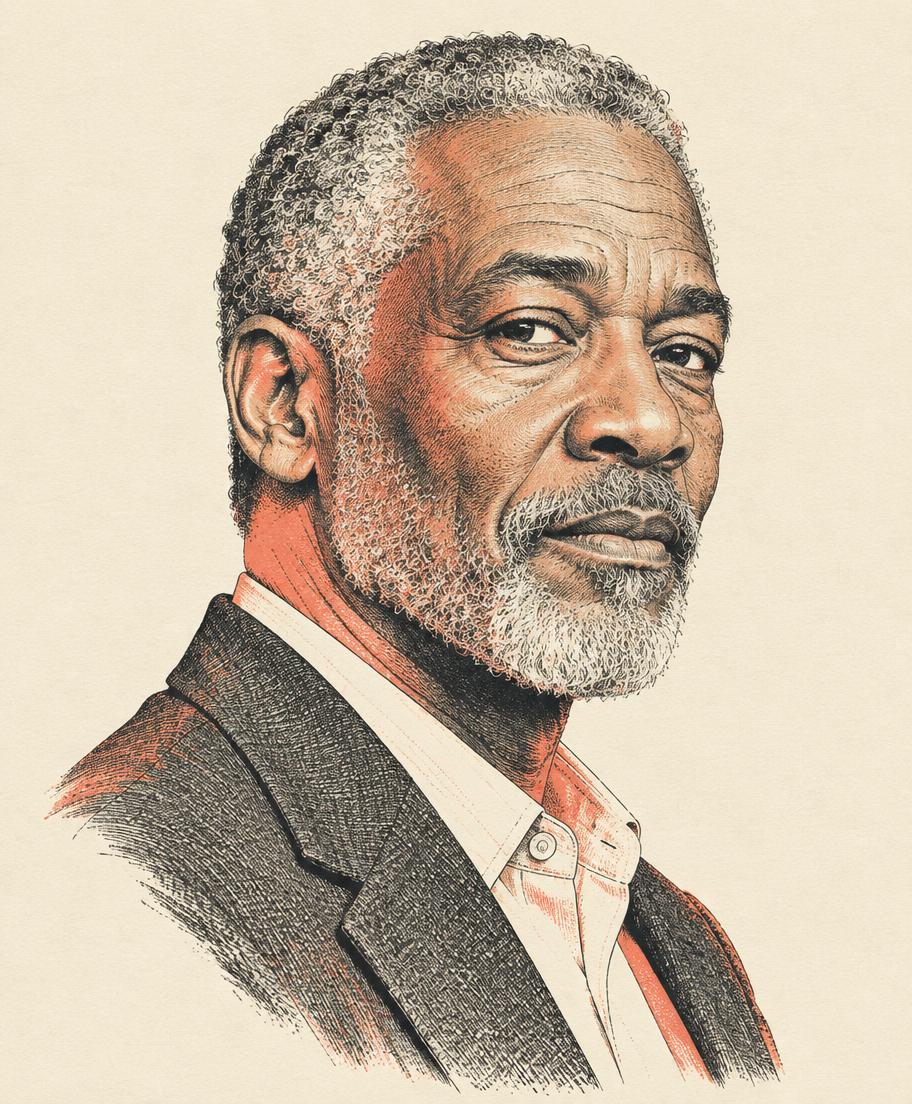
Actor and director
Denzel Washington
An American actor and director whose screen work spans Glory, Malcolm X and Training Day, alongside acclaimed stage performances.
Read biography ↗