English ethologist, evolutionary biologist and author (born 1941)
Richard Dawkins
Richard Dawkins is a British evolutionary biologist, zoologist, science communicator, noted atheist, and author.
By globalcelebwiki Editorial Desk, adapted from Wikipedia · Published 29 September 2026
- Profession
- English ethologist, evolutionary biologist and author (born 1941)
- Born
- 26 March 1941
- Birthplace
- Nairobi
- Nationality
- British

Overview
Richard Dawkins (born 26 March 1941) is a British evolutionary biologist, zoologist, science communicator, noted atheist, and author. He is an emeritus fellow of New College, Oxford. In 1995 he was named the first Simonyi Professor for the Public Understanding of Science, a position he held until 2008, and is on the advisory board of the University of Austin. Dawkins has won several academic and writing awards, among them the 2005 Shakespeare Prize and the 2006 Lewis Thomas Prize. Presenting the latter, Paul Nurse said "In eloquent, evocative prose, Richard Dawkins conveys the certainty that, rather than diminishing the myriad beauties of the universe and extinguishing wonderment at its mysteries, science reveals truths that are yet more awe-inspiring than the mysteries they solve."
Dawkins has written a number of popular books explicating evolution. In The Selfish Gene (1976), he espoused the gene-centred view of evolution and coined the word meme. In The Blind Watchmaker (1986), he explains how the cumulative, non-random process of natural selection, coupled with random variation, creates complexity. In Climbing Mount Improbable (1996), he explores how evolution gradually creates complex adaptations through a series of intermediates. The book grew out of his Royal Institution Christmas Lectures, Growing Up in the Universe. With Yan Wong, he co-authored The Ancestor's Tale (2004), a "Chaucerian pilgrimage to the dawn of life".
Dawkins is a prominent atheist. Along with Christopher Hitchens, Daniel Dennett and Sam Harris, he is known as one of the "Four Horsemen of New Atheism". He made the case for atheism in The God Delusion (2006), which The Sunday Times described as one of the 12 most influential books since the Second World War. That year he founded the Richard Dawkins Foundation for Reason and Science. He edited The Oxford Book of Modern Science Writing (2008) and authored a children's book, The Magic of Reality (2011). He has published two volumes of memoirs, An Appetite for Wonder (2013) and Brief Candle in the Dark (2015).
Early life
Dawkins was born Clinton Richard Dawkins on 26 March 1941 in Nairobi, Colonial Kenya. He later dropped Clinton from his name by deed poll. He is the son of Jean Mary Vyvyan (née Ladner; 1916–2019) and Clinton John Dawkins (1915–2010), an agricultural civil servant in the British Colonial Service in Nyasaland (present-day Malawi), of a landed gentry family from Oxfordshire. His father was called up into the King's African Rifles during the Second World War and returned to England in 1949, when Dawkins was eight. His father had inherited a country estate, Over Norton Park in Oxfordshire, which he farmed commercially. He has a younger sister, Sarah.
His parents were interested in natural sciences, and they answered Dawkins's questions in scientific terms. Dawkins describes his childhood as "a normal Anglican upbringing". He embraced Christianity until halfway through his teenage years, at which point he concluded that the theory of evolution alone was a better explanation for life's complexity, and ceased believing in the Christian God. He states: "The main residual reason why I was religious was from being so impressed with the complexity of life and feeling that it had to have a designer, and I think it was when I realised that Darwinism was a far superior explanation that pulled the rug out from under the argument of design. And that left me with nothing". This understanding of atheism, combined with his Western cultural background, influences Dawkins as he describes himself in several interviews as a "cultural Christian" and a "cultural Anglican" in 2007, 2013 and 2024.
On his arrival in England from Nyasaland in 1949, at the age of eight, Dawkins joined Chafyn Grove School in Wiltshire, where he says he was molested by a teacher. From 1954 to 1959 he attended Oundle School in Northamptonshire, an English public school with a Church of England ethos, where he was in Laundimer House. While at Oundle, Dawkins read Bertrand Russell's Why I Am Not a Christian for the first time. He studied zoology at Balliol College, Oxford (the same college his father attended), graduating in 1962; while there, he was tutored by Nikolaas Tinbergen, a Nobel Prize-winning ethologist. He graduated with a second-class degree.
Dawkins continued as a research student under Tinbergen's supervision, receiving his Doctor of Philosophy (D.Phil.) degree by 1966, and remained a research assistant for another year. Tinbergen was a pioneer in the study of animal behaviour, particularly in the areas of instinct, learning, and choice; Dawkins's research in this period concerned models of animal decision-making.
From 1967 to 1969, Dawkins was an assistant professor of zoology at the University of California, Berkeley. During this period, the students and faculty at UC Berkeley were largely opposed to the ongoing Vietnam War, and Dawkins became involved in the anti-war demonstrations and activities. He returned to the University of Oxford in 1970 as a lecturer. In 1990, he became a reader in zoology. In 1995, he was appointed Simonyi Professor for the Public Understanding of Science at Oxford, a position that had been endowed by Charles Simonyi with the express intention that the holder "be expected to make important contributions to the public understanding of some scientific field", and that its first holder should be Richard Dawkins. He held that professorship from 1995 until 2008.
Since 1970 he has been a fellow of New College, Oxford, and he is now an emeritus fellow. He has delivered many lectures, including the Henry Sidgwick Memorial Lecture (1989), the first Erasmus Darwin Memorial Lecture (1990), the Michael Faraday Lecture (1991), the T. H. Huxley Memorial Lecture (1992), the Irvine Memorial Lecture (1997), the Sheldon Doyle Lecture (1999), the Tinbergen Lecture (2004), and the Tanner Lectures (2003). In 1991 he gave the Royal Institution Christmas Lectures for Children on Growing Up in the Universe. He also has edited several journals and has acted as an editorial advisor to the Encarta Encyclopedia and the Encyclopedia of Evolution. He is listed as a senior editor and a columnist of the Council for Secular Humanism's Free Inquiry magazine and has been a member of the editorial board of Skeptic magazine since its foundation.
Dawkins has sat on judging panels for awards such as the Royal Society's Faraday Award and the British Academy Television Awards, and has been president of the Biological Sciences section of the British Association for the Advancement of Science. In 2004, Balliol College, Oxford, instituted the Dawkins Prize, awarded for "outstanding research into the ecology and behaviour of animals whose welfare and survival may be endangered by human activities". In September 2008 he retired from his professorship, announcing plans to "write a book aimed at youngsters in which he will warn them against believing in 'anti-scientific' fairytales". In 2011 Dawkins joined the professoriate of the New College of the Humanities, a private university in London established by A. C. Grayling, which opened in September 2012.
Dawkins announced his final speaking tour would take place in the autumn of 2024.
Dawkins is known for his popularisation of the gene as the principal unit of selection in evolution; this view is most clearly set out in two of his books:
The Selfish Gene (1976), in which he notes that "all life evolves by the differential survival of replicating entities".
The Extended Phenotype (1982), in which he describes natural selection as "the process whereby replicators out-propagate each other". He introduces to a wider audience the influential concept he presented in 1977, that the phenotypic effects of a gene are not necessarily limited to an organism's body, but can stretch far into the environment, including the bodies of other organisms. Dawkins regarded the extended phenotype as his single most important contribution to evolutionary biology and he considered niche construction to be a special case of extended phenotype. The concept of extended phenotype helps explain evolution, but it does not help predict specific outcomes.
Dawkins has consistently been sceptical about non-adaptive processes in evolution (such as spandrels, described by Stephen Jay Gould and Richard Lewontin) and about selection at levels "above" that of the gene. He is particularly sceptical about the practical possibility or importance of group selection as a basis for understanding altruism.
Altruism appears at first to be an evolutionary paradox, since helping others costs precious resources and decreases one's own chances for survival, or fitness. Previously, many had interpreted altruism as an aspect of group selection, suggesting that individuals are doing what is best for the survival of the population or species as a whole. The British evolutionary biologist W. D. Hamilton used gene-frequency analysis in his inclusive fitness theory to show how hereditary altruistic traits can evolve if there is sufficient genetic similarity between actors and recipients of such altruism, including close relatives.[a] Hamilton's inclusive fitness has since been successfully applied to a wide range of organisms, including humans. Similarly, the evolutionary biologist Robert Trivers, thinking in terms of the gene-centred model, developed the theory of reciprocal altruism, whereby one organism provides a benefit to another in the expectation of future reciprocation. Dawkins popularised these ideas in The Selfish Gene, and developed them in his own work.
In his book The Selfish Gene, Dawkins coined the word meme (the behavioural equivalent of a gene) as a way to encourage readers to think about how Darwinian principles might be extended beyond the realm of genes. It was intended as an extension of his "replicators" argument, but it took on a life of its own in the hands of other authors, such as Daniel Dennett and Susan Blackmore. These popularisations then led to the emergence of memetics, a field from which Dawkins has distanced himself.
Dawkins's meme refers to any cultural entity that an observer might consider a replicator of a certain idea or set of ideas. He hypothesised that people could view many cultural entities as capable of such replication, generally through communication and contact with humans, who have evolved as efficient (although not perfect) copiers of information and behaviour. Because memes are not always copied perfectly, they might become refined, combined, or otherwise modified with other ideas; this results in new memes, which may themselves prove more or less efficient replicators than their predecessors, thus providing a framework for a hypothesis of cultural evolution based on memes, a notion that is analogous to the theory of biological evolution based on genes.
Although Dawkins invented the term meme, he has not said that the idea was entirely novel, and there have been other expressions for similar ideas in the past. For instance, John Laurent has suggested that the term may have derived from the work of the little-known German biologist Richard Semon. Semon regarded "mneme" as the collective set of neural memory traces (conscious or subconscious) that were inherited, although such view would be considered as Lamarckian by modern biologists. Laurent also found the use of the term mneme in Maurice Maeterlinck's The Life of the White Ant (1926), and Maeterlinck himself stated that he obtained the phrase from Semon's work. In his own work, Maeterlinck tried to explain memory in termites and ants by stating that neural memory traces were added "upon the individual mneme". Nonetheless, science historian James Gleick describes Dawkins's concept of the meme as "his most famous memorable invention, far more influential than his selfish genes or his later proselytising against religiosity".
In 2006 Dawkins founded the Richard Dawkins Foundation for Reason and Science (RDFRS), a non-profit organisation. RDFRS financed research on the psychology of belief and religion, financed scientific education programs and materials, and publicised and supported charitable organisations that are secular in nature. In January 2016 it was announced that the foundation was merging with the American non-profit organisation Center for Inquiry, with Dawkins becoming a member of the new organisation's board of directors.
Dawkins is an outspoken atheist and a supporter of various atheist, secular, and humanist organisations, including Humanists UK and the Brights movement. Dawkins suggests that atheists should be proud, not apologetic, stressing that atheism is evidence of a healthy, independent mind. He hopes that the more atheists identify themselves, the more the public will become aware of just how many people are nonbelievers, thereby reducing the negative opinion of atheism among the religious majority. Inspired by the gay rights movement, he endorsed the Out Campaign to encourage atheists worldwide to declare their stance publicly. He supported a UK atheist advertising initiative, the Atheist Bus Campaign in 2008 and 2009, which aimed to raise funds to place atheist advertisements on buses in the London area.
Dawkins has expressed concern about the growth of the human population and about the matter of overpopulation. In The Selfish Gene, he briefly mentions population growth, giving the example of Latin America, whose population, at the time the book was written, was doubling every 40 years. He is critical of Roman Catholic attitudes to family planning and population control, stating that leaders who forbid contraception and "express a preference for 'natural' methods of population limitation" will get just such a method in the form of starvation.
As a supporter of the Great Ape Project—a movement to extend certain moral and legal rights to all great apes—Dawkins contributed the article 'Gaps in the Mind' to the Great Ape Project book edited by Paola Cavalieri and Peter Singer. In this essay, he criticises contemporary society's moral attitudes as being based on a "discontinuous, speciesist imperative".
Dawkins also regularly comments in newspapers and blogs on contemporary political questions and is a frequent contributor to the online science and culture digest 3 Quarks Daily. His opinions include opposition to the 2003 invasion of Iraq, the British nuclear deterrent, the actions of the then-US President George W. Bush, and the ethics of designer babies. Several such articles were included in A Devil's Chaplain, an anthology of writings about science, religion, and politics. He is also a supporter of Republic's campaign to replace the British monarchy with a type of democratic republic. Dawkins has described himself as a Labour Party voter in the 1970s and voter for the Liberal Democrats since the party's creation. In 2009 he spoke at the party's conference in opposition to blasphemy laws, alternative medicine, and faith schools. During the 2010 United Kingdom general election, Dawkins officially endorsed the Liberal Democrats, in support of their campaign for electoral reform and for their "refusal to pander to 'faith'". In the run up to the 2017 United Kingdom general election, Dawkins once again endorsed the Liberal Democrats and urged voters to join the party.
In April 2021 Dawkins said on Twitter that "In 2015, Rachel Dolezal, a white chapter president of NAACP, was vilified for identifying as Black. Some men choose to identify as women, and some women choose to identify as men. You will be vilified if you deny that they literally are what they identify as. Discuss". After receiving criticism for this tweet, Dawkins responded by saying that "I do not intend to disparage trans people. I see that my academic 'Discuss' question has been misconstrued as such and I deplore this. It was also not my intent to ally in any way with Republican bigots in the U.S. now exploiting this issue". In a 2021 interview, Dawkins stated regarding trans people that he does not "deny their existence nor does he in any way oppress them". He objects to the statement that a "trans woman is a woman", because it "is a distortion of language and a distortion of science". The American Humanist Association retracted Dawkins's 1996 Humanist of the Year Award in response to these comments. Robby Soave of Reason magazine criticised the retraction, saying that "The drive to punish dissenters from various orthodoxies is itself illiberal".
In 1998, in a book review published in Nature, Dawkins expressed his appreciation for two books connected with the Sokal affair: Higher Superstition: The Academic Left and Its Quarrels with Science by Paul R. Gross and Norman Levitt and Intellectual Impostures by Alan Sokal and Jean Bricmont. These books are famous for their criticism of postmodernism in U.S. universities (namely in the departments of literary studies, anthropology, and other cultural studies).
Echoing many critics, Dawkins holds that postmodernism uses obscurantist language to hide its lack of meaningful content. As an example he quotes the psychoanalyst Félix Guattari: "We can clearly see that there is no bi-univocal correspondence between linear signifying links or archi-writing, depending on the author, and this multireferential, multi-dimensional machinic catalysis." This is explained, Dawkins maintains, by certain intellectuals' academic ambitions. Figures like Guattari or Jacques Lacan, according to Dawkins, have nothing to say but want to reap the benefits of reputation and fame that derive from a successful academic career: "Suppose you are an intellectual impostor with nothing to say, but with strong ambitions to succeed in academic life, collect a coterie of reverent disciples and have students around the world anoint your pages with respectful yellow highlighter. What kind of literary style would you cultivate? Not a lucid one, surely, for clarity would expose your lack of content".
In 2024 Dawkins co-authored an op-ed in The Boston Globe with Sokal criticising the use of the terminology "sex assigned at birth" instead of "sex" by the American Medical Association, the American Psychological Association, the American Academy of Pediatrics and the Centers for Disease Control and Prevention. Dawkins and Sokal argued that sex is an "objective biological reality" that "is determined at conception and is then observed at birth," rather than assigned by a medical professional. Calling this "social constructionism gone amok," Dawkins and Sokal argued further that "distort[ing] the scientific facts in the service of a social cause" risks undermining trust in medical institutions.
In his role as professor for public understanding of science, Dawkins has been a critic of pseudoscience and alternative medicine. His 1998 book Unweaving the Rainbow considers John Keats's accusation that by explaining the rainbow, Isaac Newton diminished its beauty; Dawkins argues for the opposite conclusion. He suggests that deep space, the billions of years of life's evolution, and the microscopic workings of biology and heredity contain more beauty and wonder than do "myths" and "pseudoscience". He discussed "Science's Revelations" with Ian McEwan on In Our Time. For John Diamond's posthumously published Snake Oil, a book devoted to debunking alternative medicine, Dawkins wrote a foreword in which he asserts that alternative medicine is harmful, if only because it distracts patients from more successful conventional treatments and gives people false hopes. Dawkins states that "There is no alternative medicine. There is only medicine that works and medicine that doesn't work." In his 2007 Channel 4 film The Enemies of Reason, Dawkins concluded that Britain is gripped by "an epidemic of superstitious thinking".
Continuing a long-standing partnership with Channel 4, Dawkins participated in a five-part television series, Genius of Britain, along with his fellow-scientists Stephen Hawking, James Dyson, Paul Nurse and Jim Al-Khalili. The series was first broadcast in June 2010, and focuses on major British scientific achievements throughout history. In 2014 he joined the global awareness movement Asteroid Day as a "100x Signatory".
In 2025, he joined John McWhorter to discuss "The link between evolution and language".
In 2026 in an op-ed for Unherd, Dawkins claimed that AI is conscious after a conversation with Anthropic's Claude.
Awards and recognition
He holds honorary doctorates in science from the University of Huddersfield, University of Westminster, Durham University, the University of Hull, the University of Antwerp, the University of Oslo, the University of Aberdeen, Open University, the Vrije Universiteit Brussel, and the University of Valencia. He also holds honorary doctorates of letters from the University of St Andrews and the Australian National University (HonLittD, 1996), and was elected Fellow of the Royal Society of Literature (FRSL) in 1997 and a Fellow of the Royal Society (FRS) in 2001. He is one of the patrons of the Oxford University Scientific Society, and also a patron of The Gorilla Organization.
In 1987 Dawkins received a Royal Society of Literature award and a Los Angeles Times Book Prize for The Blind Watchmaker. The same year, he received a Sci. Tech Prize for Best Television Documentary Science Programme of the Year for the BBC's Horizon film of the same name.
In 1996 the American Humanist Association gave him their Humanist of the Year Award, but the award was withdrawn in 2021, with the statement that he "demean[ed] marginalized groups", including transgender people, using "the guise of scientific discourse".
Other awards Dawkins has received include the Zoological Society of London's Silver Medal (1989), the Finlay Innovation Award (1990), the Michael Faraday Award (1990), the Nakayama Prize (1994), the fifth International Cosmos Prize (1997), the Kistler Prize (2001), the Medal of the Presidency of the Italian Republic (2001), the 2001 and 2012 Emperor Has No Clothes Award from the Freedom From Religion Foundation, the Bicentennial Kelvin Medal of The Royal Philosophical Society of Glasgow (2002), the Golden Plate Award of the American Academy of Achievement (2006) and the Nierenberg Prize for Science in the Public Interest (2009). He was awarded the Deschner Award, named after the German anti-clerical author Karlheinz Deschner. The Committee for Skeptical Inquiry (CSICOP) has awarded Dawkins their highest award In Praise of Reason (1992).
Dawkins topped Prospect magazine's 2004 list of the top 100 public British intellectuals, as decided by the readers, receiving twice as many votes as the runner-up. He was shortlisted as a candidate in their 2008 follow-up poll. In a poll held by Prospect in 2013, Dawkins was voted the world's top thinker based on 65 names chosen by a largely US- and UK-based expert panel.
Personal life
Dawkins has been married four times and has a daughter. On 19 August 1967 Dawkins married the ethologist Marian Stamp in the Protestant church in Annestown, County Waterford, Ireland; they divorced in 1984. On 1 June 1984 he married Eve Barham (1951–1999) in Oxford. They had one daughter prior to their divorce. In 1992 he married the actress Lalla Ward in Kensington and Chelsea. Dawkins met her through their mutual friend Douglas Adams, who had worked with her on the BBC television series Doctor Who. Dawkins and Ward separated in 2016 and they later described the separation as "entirely amicable". As of 2024, Dawkins is married to Jana Lenzová, an illustrator.
On 6 February 2016 Dawkins suffered a minor haemorrhagic stroke while at home. He reported later that year that he had almost completely recovered.
The Ancestor's Tale. 2004. 2nd edition with Yan Wong, 2016
The Oxford Book of Modern Science Writing. 2008. (editor)
The Greatest Show on Earth: The Evidence for Evolution. 2009.
The Magic of Reality: How We Know What's Really True. 2011.
An Appetite for Wonder. 2013. First volume of his memoirs.
The Big Question (2005) – Part 3 of the TV series, titled "Why Are We Here?"
Beautiful Minds (April 2012) – BBC4 documentary
Sex, Death and the Meaning of Life (2012)
Dawkins has made many television appearances on news shows providing his political opinions and especially his views as an atheist. He has been interviewed on the radio, often as part of his book tours. He has debated many religious figures. He has made many university speaking appearances, again often in coordination with his book tours. As of 2016, he has more than 60 credits in the Internet Movie Database where he appeared as himself:
Evolution (2001) - Dawkins discusses his concept of memes.
Expelled: No Intelligence Allowed (2008) – as himself, presented as a leading scientific opponent of intelligent design in a film that contends that the mainstream science establishment suppresses academics who believe they see evidence of intelligent design in nature and who criticise evidence supporting Darwinian evolution
Doctor Who: "The Stolen Earth" (2008) – as himself
Inside Nature's Giants (2009–12) – as guest expert
Sources and references
Spotted something wrong? Report a correction.
Related profiles
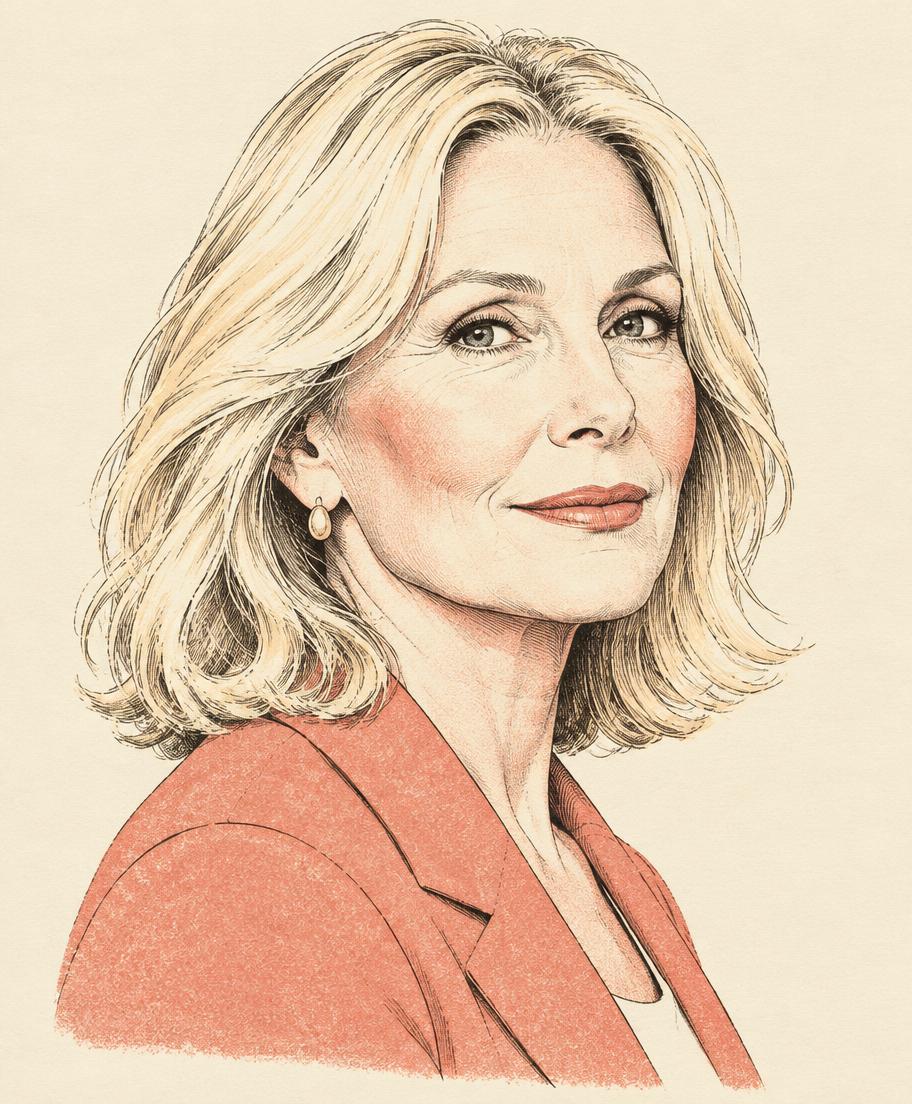
Actor
Meryl Streep
The most-nominated performer in Academy Awards history, known for her range across four decades of film and stage.
Read biography ↗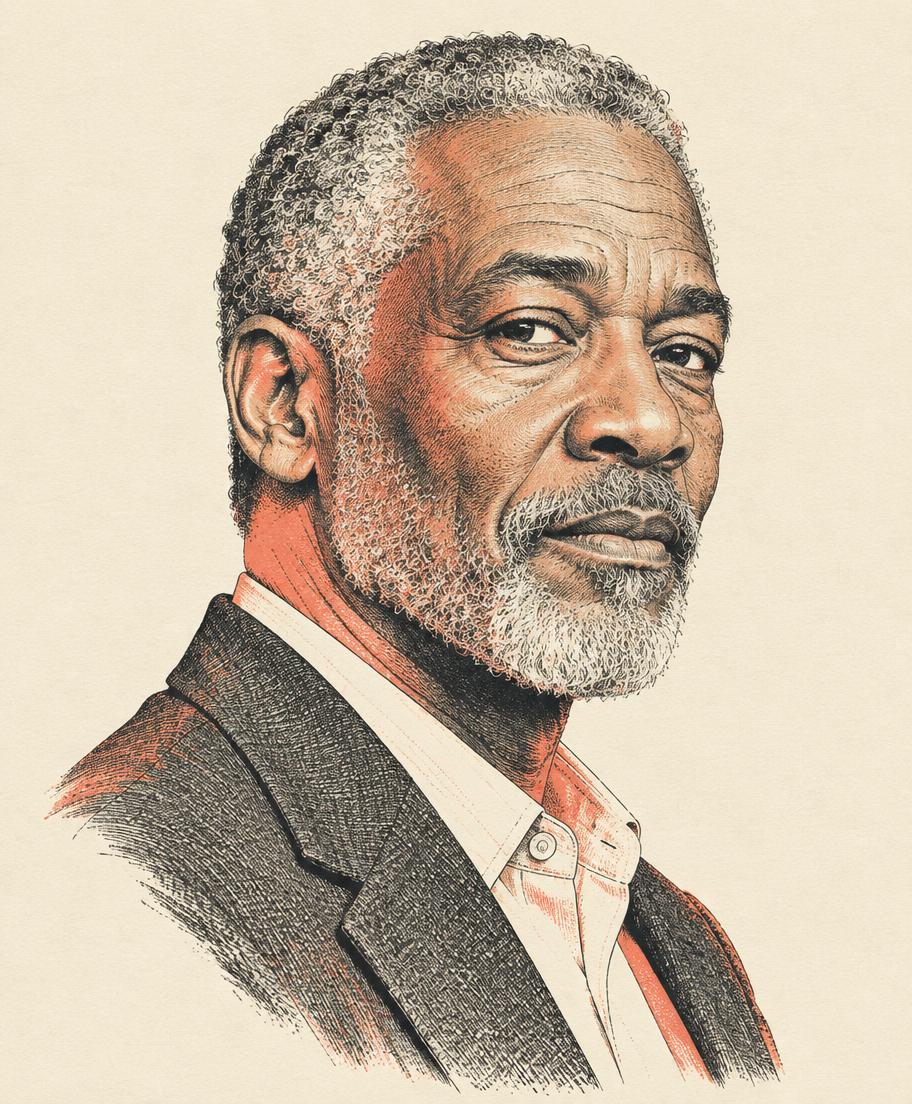
Actor and director
Denzel Washington
An American actor and director whose screen work spans Glory, Malcolm X and Training Day, alongside acclaimed stage performances.
Read biography ↗