French writer
Michel Houellebecq
Michel Houellebecq is a French author of novels, poems, and essays, as well as an occasional actor, filmmaker, and singer.
By globalcelebwiki Editorial Desk, adapted from Wikipedia · Published 29 September 2026
- Profession
- French writer
- Born
- 26 February 1956
- Birthplace
- Saint-Pierre
- Nationality
- French

Overview
Michel Houellebecq (French pronunciation: [miʃɛl wɛlbɛk]; born Michel Thomas on 26 February 1956) is a French author of novels, poems, and essays, as well as an occasional actor, filmmaker, and singer. His first book was a monograph on the horror writer H. P. Lovecraft. Houellebecq published his first novel Whatever in 1994 and his second, Atomised, in 1998, to international fame as well as controversy. He has published several books of poetry, including The Art of Struggle in 1996.
An offhand remark about Islam during a publicity tour for his 2001 novel Platform led to Houellebecq being taken to court for inciting racial hatred. He was eventually cleared of all charges. He subsequently moved to Ireland for several years, before moving back to France. In 2010, he published The Map and the Territory, which won the prestigious Prix Goncourt. In 2015, his novel Submission sparked controversy for its depiction of Islam and was accused of plagiarism in a lawsuit later deemed inadmissible. Annihilation was published in 2022. He was described in 2015 as "France's biggest literary export and, some say, greatest living writer" and called himself "probably islamophobic". In a 2017 Deutsche Welle article, he is dubbed the "undisputed star, and enfant terrible, of modern French literature".
Early life and education
Houellebecq was born Michel Thomas on the French island of Réunion in 1956. His mother Lucie Ceccaldi was a French physician of Corsican descent, born in Algeria, his father René Thomas was a ski instructor and mountain guide. Houellebecq's official date of birth is 26 February 1956, although he has sometimes stated that he may have actually been born in 1958.
He lived in Algeria from the age of five months until 1961, with his paternal grandmother. In a lengthy autobiographical article published on his website (now defunct), he states that his parents "lost interest in [his] existence pretty quickly", and at the age of six, he was sent to France to live with his paternal grandmother, a communist, while his mother left to live a hippie lifestyle in Brazil with her recent boyfriend. His grandmother's maiden name was Houellebecq, which he took as his pen name. Later, he went to Lycée Henri Moissan, a high school at Meaux north-east of Paris, as a boarder. He then went to Lycée Chaptal in Paris to follow preparation courses in order to qualify for grandes écoles (elite schools). He began attending the Institut National Agronomique Paris-Grignon in 1975. He started a literary review called Karamazov (named after Fyodor Dostoevsky's last novel) and wrote poetry. He graduated in 1980.
Career
Houellebecq worked as a computer administrator in Paris, including at the French National Assembly to support himself as a writer. His first poems appeared in 1985 in the magazine La Nouvelle Revue. Six years later, in 1991, he published a biographical essay on the horror writer H. P. Lovecraft, a teenage passion, with the programmatic subtitle Against the World, Against Life. A short poetical essay named Rester vivant : méthode (To Stay Alive) appeared the same year, dealing with the art of writing as a way of life – or rather, a way of not-dying and being able to write in spite of apathy and disgust for life. It was followed by his first collection of poetry, La poursuite du bonheur (The pursuit of happiness).
In 1994 his debut novel Extension du domaine de la lutte was published and he started to gain fame. Eventually he became the so-called "pop star of the single generation".
Throughout the 1990s, Houellebecq published several books of poetry, including The Art of Struggle in 1996, which, in a 2005 video interview for the magazine Les Inrockuptibles, he cited as his most accomplished book to date, the one he would usually choose if compelled to read whatever he wanted among his published works, and articles in magazines such as Les Inrockuptibles or more confidential literary publications such as L'Infini edited by Philippe Sollers). Most of those texts were later collected in Interventions (1998, expanded in 2009 and 2020).
At that time, he lived at the same address as fellow writer Marc-Édouard Nabe, at 103, rue de la Convention in Paris. Nabe wrote about this proximity in Le Vingt-Septième Livre (2006), comparing both neighbours' careers and the way their writings were met by critics and audiences.
An offhand remark about Islam during a publicity tour for his 2001 novel Plateforme led to Houellebecq being taken to court for inciting racial hatred. He was eventually cleared of all charges. He subsequently moved to Ireland for several years, before moving back to France.
Works
His debut novel Extension du domaine de la lutte was published by Maurice Nadeau, a first-person narrative, alternating between realistic accounts of the (unnamed) protagonist's bleak and solitary life as a computer programmer, and his idiosyncratic musings about society, some of which are presented in the form of "animal fictions"; he teams up with an even more desperate colleague (he is a virgin at the age of 28) who later gets killed in a car accident, which triggers the narrator's mental breakdown and eventual admission in a psychiatric hospital; even there, he theorizes about his condition being the direct result of the contemporary social configuration, rather than a personal failure or mental illness.
In 1998 his second novel, Les Particules Élémentaires translated by Frank Wynne and published in the English-speaking world as Atomised in the UK, or The Elementary Particles in the US was a breakthrough, bringing him national and soon international fame and controversy for its intricate mix of brutally honest social commentary and pornographic depictions (two years earlier, in 1996, while working on that novel, being interviewed by Andrew Hussey, he had presciently said: "It will either destroy me or make me famous.") It narrates the fate of two half brothers who grew up in the troubled 1960s: Michel Djerzinski, who became a prominent biologist, highly successful as a scientist but utterly withdrawn and depressed, and Bruno Clément, a French teacher, deeply disturbed and obsessed by sex; Djerzinski eventually triggers what is labelled as the "third metaphysical mutation" by retro-engineering the human species into immortal neo-humans. The book won the 1998 Prix Novembre (which was renamed Prix Décembre, following the resignation of its founder who disapproved of the prize being given to Houellebecq), missing the more prestigious Prix Goncourt for which it was the favourite. The novel became an instant "nihilistic classic" and was mostly praised for the boldness of its ideas and thought-provoking qualities, although it was also heavily criticized for its relentless bleakness and vivid depictions of racism, paedophilia, and torture, as well as for being an apology for eugenics. (Michiko Kakutani described it in The New York Times as "a deeply repugnant read".) The novel won Houellebecq (along with his translator, Frank Wynne) the International Dublin Literary Award in 2002.
In 2000, Houellebecq published the short fiction Lanzarote published in France with a volume of his photographs, in which he explores a number of the themes he would develop in later novels, including sex tourism and fringe religions.
His subsequent novel, Plateforme (2001), was another critical and commercial success. A first-person romance narrated by a 40-year-old male arts administrator named Michel, who shares many real-life characteristics with the author, including his apathy and low self-esteem, it includes a depiction of life as hopeless, as well as numerous sex scenes, some of which display an approving attitude towards prostitution and sex tourism.
The novel's explicit criticism of Islam—the story ends with the depiction of a terrorist attack on a sex tourism venue, later compared to the Bali bombings which happened the following year—together with an interview its author gave to the magazine Lire in which he described Islam as "the dumbest religion," which remark led to accusations of incitement to ethnic or racial hatred against Houellebecq by several organisations, including France's Human Rights League, the Mecca-based World Islamic League as well as the mosques of Paris and Lyon. Charges were brought to trial, but a panel of three judges, delivering their verdict to a packed Paris courtroom, acquitted the author of having provoked 'racial' hatred, ascribing Houellebecq's opinions to the legitimate right of criticizing religions. The huge controversy in the media subsided following the terrorist attacks of September 11, 2001.
Personal life
In 1980, age 24, Houellebecq married for the first time and had a son; he divorced, and became depressed.
In 1998 he married his second wife, Marie-Pierre Gauthier. They divorced in 2010.
Adaptations
Extension du domaine de la lutte has been adapted into a film with the same title by Philippe Harel, and later adapted as a play in Danish by Jens Albinus for the Royal Danish Theatre.
The English translation of his novel Platform was adapted as a play by the theatre company Carnal Acts for the Institute of Contemporary Arts (ICA) in London in December 2004. A Spanish adaptation of the novel by Calixto Bieito, performed by Companyia Teatre Romea, premiered at the 2006 Edinburgh International Festival. Houellebecq and Bieito appeared together that same year in a TV program named Au cœur de la nuit / Durch die Nacht (Through the night) for the French-German channel Arte.
Along with Loo Hui Phang, Houellebecq wrote the screenplay for the film Monde extérieur (2002) by David Rault and David Warren.
Atomised has been made into a German film, Elementarteilchen, directed by Oskar Roehler, starring Moritz Bleibtreu and Franka Potente. The film premiered in 2006 at the 56th Berlin International Film Festival. It was poorly received and generally considered a watered-down take on the novel's bleakness and thought-provoking ideas.
The film La Possibilité d'une île, directed by Houellebecq himself and based on his novel, premiered in France on 10 September 2008. It was a critical and commercial failure, sometimes even considered one of the worst films ever made in France, alongside Bernard Henri Levy's Le Jour et la Nuit, although some authors found him intriguing and recognized redeeming qualities.
Views on politics and religion
In 2002, during an interview about his book Platform published in the literary magazine Lire, Houellebecq remarked:
Islam is a dangerous religion, and has been from the moment it appeared. Fortunately, it is doomed. On one hand, because God does not exist, and even if someone is an idiot, he will eventually realize that. In the long run, the truth will triumph. On the other hand, Islam is undermined from the inside by capitalism. We can only hope that it will triumph rapidly. Materialism is a lesser evil. Its values are contemptible, but nevertheless less destructive, less cruel than those of Islam.
He faced trial on charges of racial hatred after calling Islam "the dumbest religion" ("la religion la plus con") in the same 2002 interview. He told a court in Paris that his words had been twisted, saying: "I have never displayed the least contempt for Muslims [but] I have as much contempt as ever for Islam." The court acquitted him. He was sued by a civil-rights group for hate speech and won on the grounds of freedom of expression. Houellebecq extended his critique to monotheistic religions in general: "The fundamental monotheistic texts preach neither peace nor love nor tolerance. From the start, they were texts of hatred." In what he has said will be his last novel, Anéantir, Houellebecq has seemingly softened his view on Christianity, though by no means seems to be a convert.
In 2014, Houellebecq drew up a "project for a new constitution" based on direct democracy which would render the president of the republic elected for life, but instantly revocable by a simple popular referendum, and would permit the people to elect judges. During his 21 June 2016 appearance on Le Petit Journal, Houellebecq said that he voted for the Socialist Party ticket headed by Anne Hidalgo and Jérôme Coumet in the 2014 Paris municipal election. In 2017, Houellebecq explained that he "doesn't believe in an ideological vote, but a vote based on class" and that "there is a class which votes for Le Pen, a class which votes for Mélenchon, a class which votes for Macron, and a class which votes for Fillon. I am part of the France which votes for Macron, because I am too rich to vote for Le Pen or Mélenchon."
In a 2019 interview, Houellebecq described his views on Catholicism and Europe's need for the Catholic faith.
Selected publications
H. P. Lovecraft: Against the World, Against Life (1991, monograph, French: H. P. Lovecraft : Contre le monde, contre la vie)
Whatever (1994, novel, French: Extension du domaine de la lutte)
The Art of Struggle (1996, poems, French: Le Sens du combat)
Atomised (1998, novel, French: Les Particules élémentaires)
Interventions (1998, collection of various texts, expanded in 2009 and 2020)
Sources and references
Spotted something wrong? Report a correction.
Related profiles
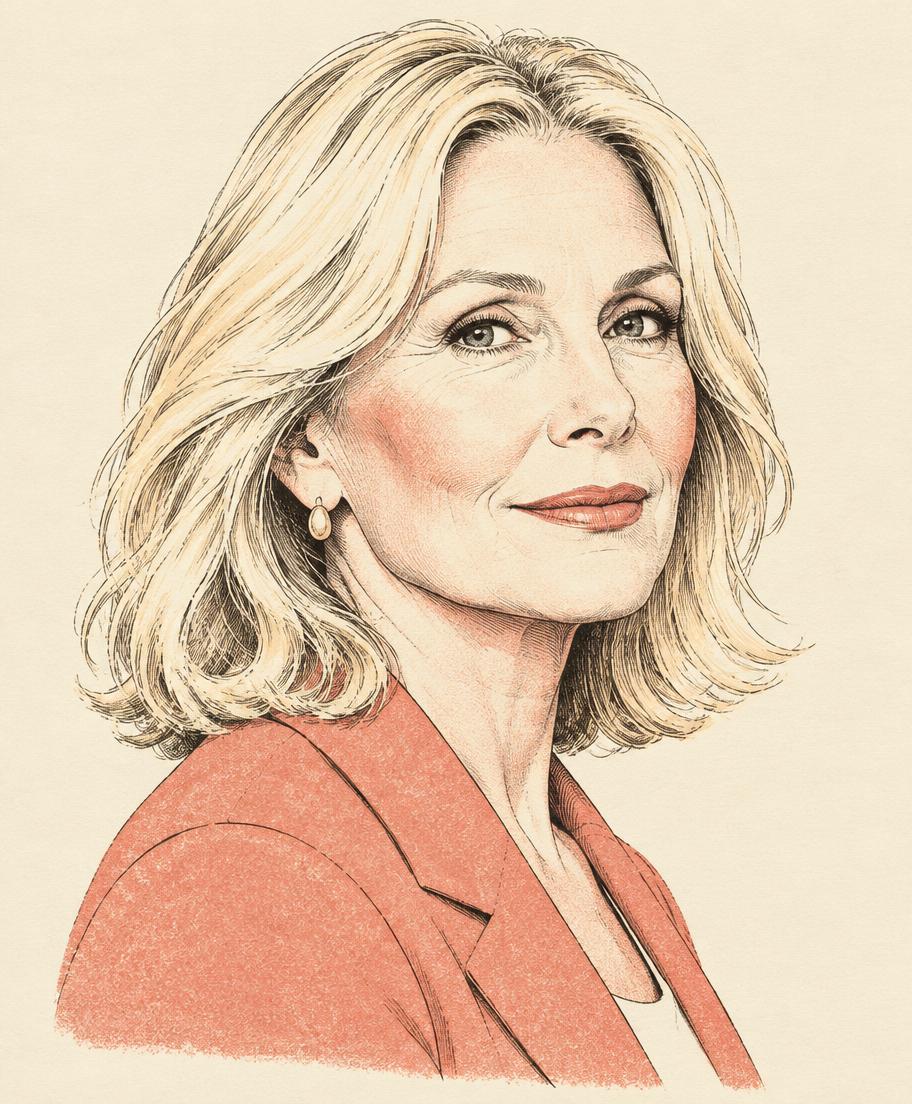
Actor
Meryl Streep
The most-nominated performer in Academy Awards history, known for her range across four decades of film and stage.
Read biography ↗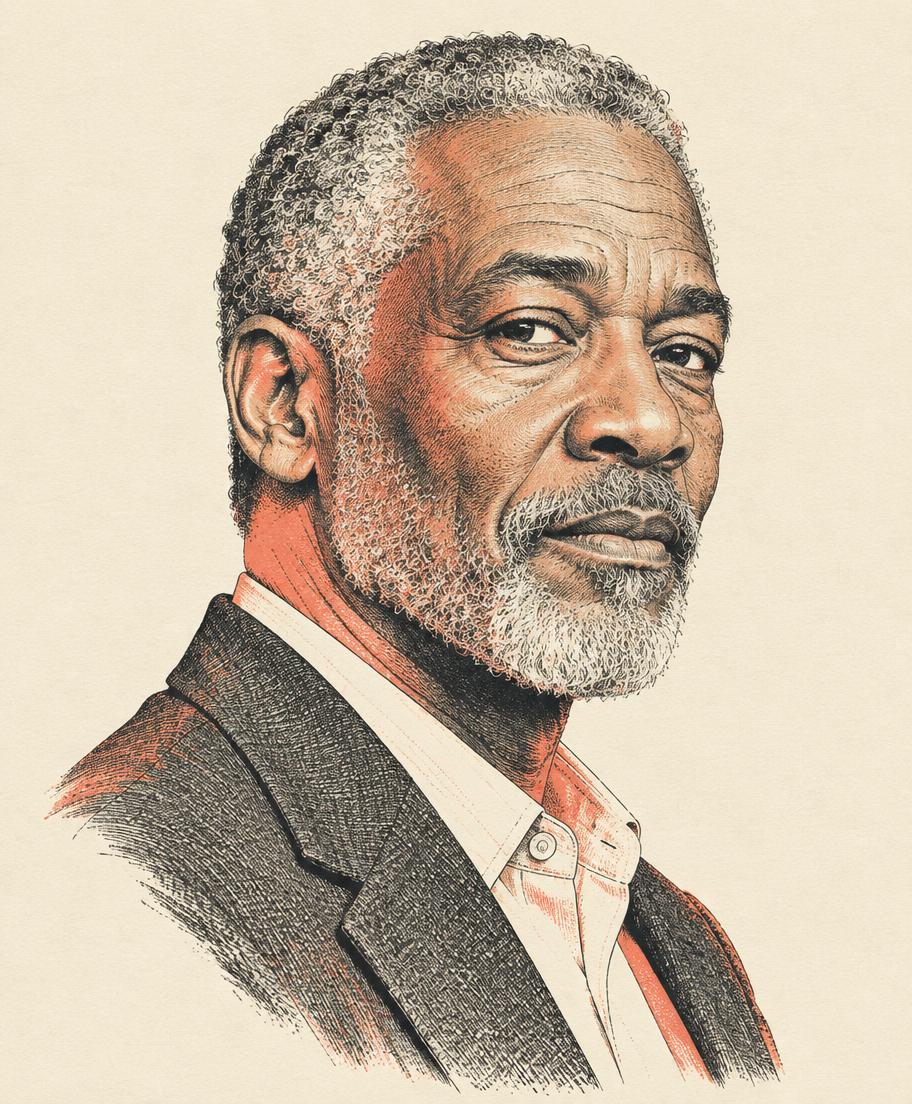
Actor and director
Denzel Washington
An American actor and director whose screen work spans Glory, Malcolm X and Training Day, alongside acclaimed stage performances.
Read biography ↗