Swiss and Austrian film and stage actor (1930–2014)
Maximilian Schell
Maximilian Schell was a Swiss actor, theatre director, filmmaker, and musician of Austrian origin.
By globalcelebwiki Editorial Desk, adapted from Wikipedia · Published 29 September 2026
- Profession
- Swiss and Austrian film and stage actor (1930–2014)
- Born
- 8 December 1930
- Birthplace
- Vienna
- Nationality
- Swiss

Overview
Maximilian Schell (8 December 1930 – 1 February 2014) was a Swiss actor, theatre director, filmmaker, and musician of Austrian origin. He was one of the most internationally acclaimed German-speaking actors of his generation, earning accolades for his work on both screen and stage. Born and initially raised in Vienna, where his parents were involved in the arts, he grew up surrounded by performance and literature. While he was still a child, his family fled to Switzerland in 1938 when Austria was annexed by Nazi Germany, and they settled in Zürich. After the Second World War, Schell took up acting and directing full-time.
Schell won the Academy Award for Best Actor for playing a lawyer in the legal drama Judgment at Nuremberg (1961). He was Oscar-nominated for playing a character with multiple identities in The Man in the Glass Booth (1975) and for playing a man resisting Nazism in Julia (1977). Fluent in both English and German, Schell earned top billing in a number of Nazi-era themed films. He acted in films such as Topkapi (1964), The Deadly Affair (1967), Counterpoint (1968), Simón Bolívar (1969), The Odessa File (1974), A Bridge Too Far (1977), and Deep Impact (1998). He made his film directorial debut with the period romantic drama First Love (1970), and would be nominated for the German Film Award for Best Director three times.
On television, he received two Primetime Emmy Award nominations for the NBC film Miss Rose White and the HBO television film Stalin (1992), the later of which earned him the Golden Globe Award for Best Supporting Actor – Series, Miniseries or Television Film. He also portrayed Otto Frank in the TV film The Diary of Anne Frank (1980), the Russian emperor Peter the Great in the NBC series Peter the Great (1986), Frederick the Great in the British series Young Catherine (1991), and Brother Jean le Maistre in the miniseries Joan of Arc (1999).
Schell also performed in a number of stage plays, including a celebrated performance as Prince Hamlet, and was a director of stage plays and operas. He was an accomplished pianist and conductor, performing with Claudio Abbado and Leonard Bernstein, and with orchestras in Berlin and Vienna. The Deutsches Filminstitut called him "a universal artist." His elder sister was actress Maria Schell; he directed the documentary tribute My Sister Maria in 2002.
Early life and education
Schell was born in Vienna, Austria, the son of Margarethe (née Noe von Nordberg), an actress who ran an acting school, and Hermann Ferdinand Schell, a Swiss poet, novelist, playwright, and pharmacy owner. Though later in his career he would play several Jewish characters, his parents were both Roman Catholic, and Schell stated he had no known Jewish ancestry. His elder sister Maria Schell was also an actress, as were their siblings, Carl (1927–2019) and Immaculata "Immy" Schell (1935–1992).
Schell's father was never enthusiastic about young Maximilian becoming an actor like his mother, feeling that it could not lead to "real happiness". However, Schell was surrounded by acting in his early youth:
I grew up in a theatre atmosphere and took it for granted. I remember the theatre, as a child, the way most people remember their mother's cooking. Acting was all around me, and so was poetry. I made my debut in the theatre at the age of three, in Vienna ...
The Schell family fled from Vienna in 1938 to get "away from Hitler" after the Anschluss, when Austria was annexed by Nazi Germany. They resettled in Zürich, Switzerland.
In Zürich, Schell "grew up reading the classics" and, when he was ten, wrote his first play. Schell recalls that as a child, growing up surrounded by the theatre, he took acting for granted and did not want to become an actor at first: "What I wanted was to become a painter, a musician, or a playwright," like his father.
Schell's film debut was in the German anti-war film Kinder, Mütter und ein General (Children, Mothers, and a General, 1955). It was the story of five mothers who confronted a German general at the front line, after learning that their sons, some as young as 15, had been "slated to be cannon fodder on behalf of the Third Reich." The film co-starred Klaus Kinski as an officer, with Schell playing the part of an officer-deserter. The story, which according to one critic, "depicts the insanity of continuing to fight a war that is lost," would become a "trademark" for many of Schell's future roles: "Schell's sensitivity in his portrayal of a young deserter disillusioned with fighting became a trademark of his acting."
Schell subsequently acted in seven more films made in Europe before going to the U.S. Among those was The Plot to Assassinate Hitler (also 1955). Later in the same year he had a supporting role in Jackboot Mutiny, in which he plays "a sensitive philosopher", who uses ethics to privately debate the arguments for assassinating Hitler.
In 1958 Schell was invited to the United States to act in the Broadway play, "Interlock" by Ira Levin, in which Schell played the role of an aspiring concert pianist. He made his Hollywood debut in the World War II film, The Young Lions (1958), as the commanding German officer in another anti-war story, with Marlon Brando and Montgomery Clift. German film historian Robert C. Reimer writes that the film, directed by Edward Dmytryk, again drew on Schell's German characterisation to "portray young officers disillusioned with a war that no longer made sense."
In 1960, Schell returned to Germany and played the title role in William Shakespeare's Hamlet for German TV, a role that he would play on two more occasions in live theatre productions during his career. Along with Laurence Olivier, Schell is considered "one of the greatest Hamlets ever," according to one writer. Schell recalled that when he played Hamlet for the first time, "it was like falling in love with a woman. ... not until I acted the part of Hamlet did I have a moment when I knew I was in love with acting." Schell's performance of Hamlet was featured as one of the last episodes of the American comedy series Mystery Science Theater 3000 in 1999.
In 1959, Schell acted in the role of a defence attorney on a live TV production, Judgment at Nuremberg, a fictionalized re-creation of the Nuremberg War Trials, in an edition of Playhouse 90. His performance in the TV drama was considered so good that he and Werner Klemperer were among the only members of the original cast selected to play the same parts in the 1961 film version. He won the Academy Award for Best Actor, which was the first win for a German-speaking actor since World War II. After winning the New York Film Critics award for his role, Schell recalled the pride he felt upon receiving a letter from his older sister Maria Schell, who was already an award-winning actress, "I received the most wonderful letter from Maria. She wrote, 'Now, when you have my letter in your hand, a beautiful day is coming for you. I will be with you, proud, because I knew such recognition would come one day, leading to something even greater and better ... not only because you are close to me but because I count you among the truly great actors, and it is wonderful that besides that you are my brother.' Maria and I are very close".
According to Reimer, Schell gave a "bravura performance," where he tried to defend his clients, Nazi judges, "by arguing that all Germans share a collective guilt" for what happened. Biographer James Curtis notes that Schell prepared for his part in the movie by "reading the entire forty-volume record of the Nuremberg trials." Author Barry Monush describes the impact of Schell's acting, "Again, on the big screen, he was nothing short of electrifying as the counselor whose determination to place the blame for the Holocaust on anyone else but his clients, and brings morality into question".
Producer-director Stanley Kramer assembled a star-studded ensemble cast which included Spencer Tracy and Burt Lancaster. They "worked for nominal wages out of a desire to see the film made and for the opportunity to appear in it," notes film historian George McManus. Actor William Shatner remembers that, prior to the actual filming, "we understood the importance of the film we were making." It was nominated for eleven Academy Awards, winning two. In 2011, Schell appeared at a 50th anniversary tribute to the film and his Oscar win, held in Los Angeles at the Academy of Motion Picture Arts and Sciences, where he spoke about his career and the film.
Beginning in 1968 Schell began writing, producing, directing and acting in a number of his own films: Among those were The Castle (1968), a German film based on the novel by Franz Kafka, about a man trapped in a bureaucratic nightmare. Soon after he made Erste Liebe (First Love) (1970), based on a novel by Ivan Turgenev. The film was nominated for the Academy Award for Best Foreign Language Film.
Schell's next film, The Pedestrian (1974), is about a German tycoon "haunted by his Nazi past". In this film, notes one critic, "Schell probes the conscience and guilt in terms of the individual and of society, reaching to the universal heart of responsibility and moral inertia." It was nominated for the Best Foreign Language Film Oscar and was a "great and commercial success in Germany," notes Roger Ebert.
He took roles such as the Russian emperor in the television miniseries, Peter the Great (1986), opposite Laurence Olivier, Vanessa Redgrave, and Trevor Howard, which won an Emmy Award; a comedy role with Marlon Brando in The Freshman (1990); Reese Witherspoon's surrogate grandfather in A Far Off Place; a treacherous Cardinal in John Carpenter's Vampires (1998); as Frederick the Great in a TV film, Young Catherine (1991); as Vladimir Lenin in the TV series, Stalin (1992), for which he won the Golden Globe Award; a Russian KGB colonel in Candles in the Dark (1993); the Pharaoh in Abraham (1994); and Tea Leoni's father in the science fiction thriller, Deep Impact (1998).
From the 1990s until late in his career, Schell appeared in many German-language made-for-TV films, such as the 2003 film Alles Glück dieser Erde (All the Luck in the World) opposite Uschi Glas and in the television miniseries Die Rückkehr des Tanzlehrers (2004), which was based on Henning Mankell's novel The Return of the Dancing Master. In 2006 he appeared in the stage play of Arthur Miller's Resurrection Blues, directed by Robert Altman, which played in London at the Old Vic. In 2007, he played the role of Albert Einstein on the German television series Giganten (Giants), which enacted the lives of people important in German history.
Schell also served as a writer, producer and director for a variety of films, including the documentary film Marlene (1984), with the participation of Marlene Dietrich. It was nominated for an Oscar, received the New York Film Critics Award and the German Film Award. Originally, Dietrich, then 83 years of age, had agreed to allow Schell to interview and film her in the privacy of her apartment. However, after he began filming, she changed her mind and refused to allow any actual video footage of her be shown. During a videotaped interview, Schell described the difficulties he had while making the film.
Schell creatively showed only silhouettes of her along with old film clips during their interview soundtrack. According to one review, "the true originality of the movie is the way it pursues the clash of temperament between interviewer and star ... he draws her out, taunting her into a fascinating display of egotism, lying and contentiousness."
Schell produced My Sister Maria in 2002, an intimate documentary about his sister, the noted actress Maria Schell. In the film, he chronicles her life, career and eventual diminished capacity due to illness. The film, made three years before her death, shows her mental and physical frailty, leading to her withdrawing from the world. In 2002, upon the completion of the film, they both received Bambi Awards, and were honored for their lifetime achievements and in recognition of the film.
Schell was a semi-professional pianist for much of his life. He had a piano when he lived in Munich and said that he would play for hours at a time for his own pleasure and to help him relax: "I find I need to rest. An actor must have pauses in between work, to renew himself, to read, to walk, to chop wood." Conductor Leonard Bernstein claimed that Schell was a "remarkably good pianist." In 1982 on a program filmed for the U.S. television network PBS, Schell read from Beethoven's letters to the audience before Bernstein conducted the Vienna Philharmonic playing Beethoven symphonies.
In 1983, he and Bernstein co-hosted an 11-part TV series, Bernstein/Beethoven, featuring nine live symphonies, along with discussions between Bernstein and Schell about Beethoven's works.
On other occasions, Schell worked with Italian conductor Claudio Abbado and the Berlin Philharmonic, which included a performance in Chicago of Igor Stravinsky's Oedipus Rex and another in Jerusalem of Arnold Schoenberg's A Survivor from Warsaw. Schell also produced and directed a number of live operas, including Richard Wagner's Lohengrin for the Los Angeles Opera. He worked on the film project Beethoven's Fidelio, with Plácido Domingo and Kent Nagano.
Schell was a guest professor at the University of Southern California and was awarded an Honorary Doctorate from Spertus Institute for Jewish Learning and Leadership in Chicago.
Civil honours
2002: Austrian Cross of Honour for Science and Art, 1st class
2002: Austrian Cross of Honour for Science and Art, 1st class
2011: Honorary Award of the Bernhard Wicki Film Award – The Bridge
During the 1960s Schell had a three-year-long affair with Soraya Esfandiary-Bakhtiary, former second wife of Mohammad Reza Pahlavi, the last Shah of Iran. He also was rumored to have been engaged to the first African-American Supermodel Donyale Luna in the mid 1960s. In 1971 he had an affair with Neile Adams, according to her. In 1985, he met the Russian actress Natalya Andrejchenko, whom he married in June 1985; their daughter Nastassja was born in 1989. After 2002, separated from his wife (whom he divorced in 2005), Schell had a relationship with the Austrian art historian Elisabeth Michitsch. In 2008 he became romantically involved with German opera singer Iva Mihanovic, who was 48 years his junior. They eventually married on 20 August 2013.
Illness and death
Schell died at the age of 83 on 1 February 2014, in Innsbruck, Austria, after a "sudden and serious illness". The German television news service Tagesschau reported that he had been receiving treatment for pneumonia. His funeral was attended by Waltraud Haas, Christian Wolff, Karl Spiehs, Lawrence David Foldes, Elisabeth Endriss, and Peter Kaiser. His grave is in Preitenegg/Carinthia (Austria).
Actor Jim Beaver, who studied under Schell at the University of Southern California, eulogized him as "one of the greatest actors of his generation, an astonishing performer of enormous power and breadth."
Partial stage credits
A non-exhaustive list of Maximillian Schell's theatre credits, both as actor and director:
Sources and references
Spotted something wrong? Report a correction.
Related profiles
Actor
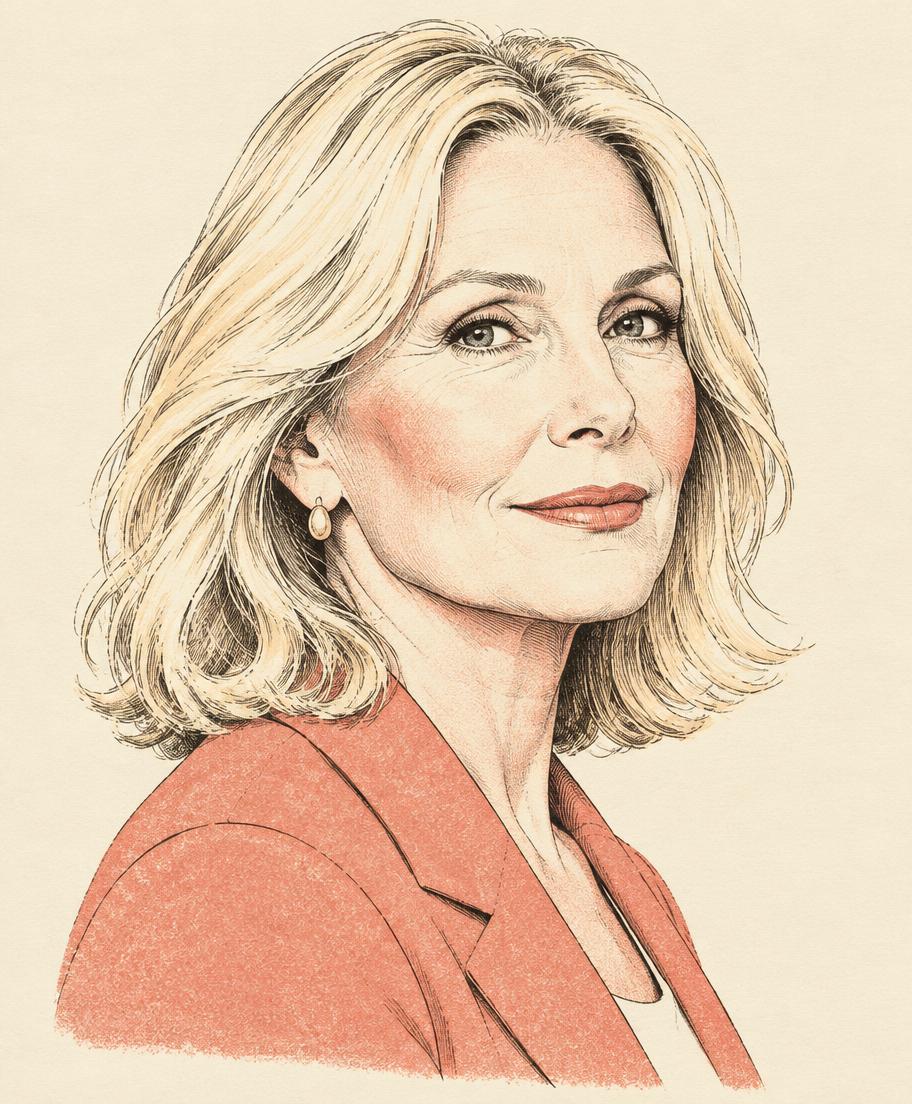
Meryl Streep
The most-nominated performer in Academy Awards history, known for her range across four decades of film and stage.
Read biography ↗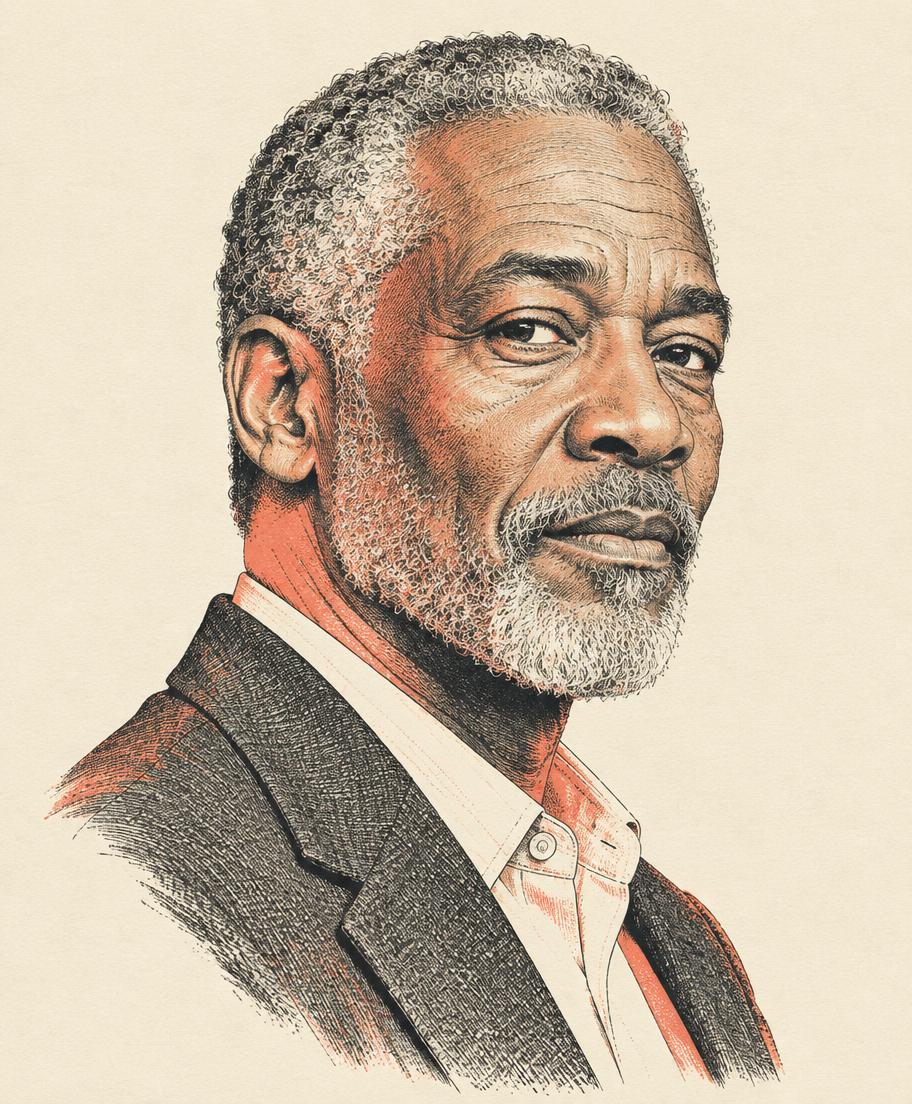
Actor and director
Denzel Washington
An American actor and director whose screen work spans Glory, Malcolm X and Training Day, alongside acclaimed stage performances.
Read biography ↗