French actor (born 1948)
Gérard Depardieu
Gérard Xavier Marcel Depardieu is a French actor.
By globalcelebwiki Editorial Desk, adapted from Wikipedia · Published 29 September 2026
- Profession
- French actor (born 1948)
- Born
- 27 December 1948
- Birthplace
- Châteauroux
- Nationality
- Russian

Overview
Gérard Xavier Marcel Depardieu (UK: , US: , French: [ʒeʁaʁ ɡzavje maʁsɛl dəpaʁdjø] ; born 27 December 1948) is a French actor. Considered an icon of French cinema in the same way as Jean Gabin and Alain Delon, he has appeared in over 200 films since 1967, mostly in leading roles. Depardieu has worked with more than 150 film directors, including major filmmakers such as François Truffaut, Ridley Scott, Peter Weir and Bernardo Bertolucci. He is the second highest-grossing actor in the history of French cinema behind Louis de Funès, with roughly 60 of his films selling more than one million admissions in France. His roles include numerous portrayals of well-known historical and fictitious figures including Cyrano de Bergerac, Georges Danton, Christopher Columbus, Jean Valjean, Edmond Dantès and Porthos, as well as Obelix in four of the live action Asterix films. Beyond acting, Depardieu is a film producer, businessman and vineyard owner. He has occasionally directed films and performed as a singer. His body of work includes extensive television productions, several records and, as of 2025, 19 stage plays and 9 books.
Growing up in poverty in Châteauroux, central France, Depardieu experienced a difficult youth and was a juvenile delinquent before settling in Paris, where he became an actor. His breakthrough came in 1974 with the film Going Places, which propelled him to overnight stardom. He quickly established himself as major figure in European cinema and demonstrated his versatility by appearing in a wide variety of films, spanning both mainstream and auteur productions. He has received acclaim for his performances in The Last Metro (1980), where he won the César Award for Best Actor, Police (1985), for which he won the Volpi Cup for Best Actor, Jean de Florette (1986), and Cyrano de Bergerac (1990), where he won the Best Actor award at the Cannes Film Festival and his second César Award for Best Actor as well as garnering a nomination for the Academy Award for Best Actor. He started a Hollywood career with Green Card (1990), winning a Golden Globe Award for Best Actor, and later appeared in several high-budget English-language films, including 1492: Conquest of Paradise (1992), The Man in the Iron Mask (1998), and Life of Pi (2012).
Besides his acting accolades, Depardieu has garnered many honors, including appointments as a Chevalier of the Légion d'honneur and the Ordre national du Mérite. He was granted citizenship of Russia in January 2013 (officially adopted name in Russian: Жерар Ксавие Депардьё, romanized: Zherar Ksavie Depardyo). During the early 2010s, his tax exile in Russia and his support of Vladimir Putin caused controversy in France.
Depardieu was accused of sexual misconduct as early as the 1990s, though this did not develop into formal complaints until the late 2010s. In December 2020, French authorities charged him with rape. Depardieu denied any wrongdoing but a number of controversies, not limited to the accusations of rape, have since damaged his popularity in France and abroad. This resulted in several of his honors being rescinded in 2023, notably the National Order of Quebec. In May 2025, he was convicted of sexual assault against two women in a separate case. He has appealed against his sentencing.
Early life
Gérard Xavier Marcel Depardieu was born on 27 December 1948 in Châteauroux, Indre, France, to a working-class, low-income family. He is the third of six children of Anne Jeanne Josèphe (née Marillier), a stay-at-home mother known as "La Lilette", and René Maxime Lionel Depardieu (better known in his neighborhood as "Dédé" because he could write only two letters), a metal worker and volunteer fireman. Not wishing to have another child at the time, Depardieu's mother tried unsuccessfully to abort him.
Depardieu grew up in poverty in a two-room apartment at 39 rue du Maréchal-Joffre, Châteauroux, with his five siblings. His mother was not very affectionate, and sometimes violent to her children. His father, who struggled with a severe alcohol addiction, was often absent from home. Depardieu helped his mother when she was in labor with his younger brothers and sisters. His family eventually nicknamed him "Pétard" or "Pétarou", because of the habit he had acquired of breaking wind incessantly. Depardieu's parents were both born in 1923; Anne died of a heart attack in 1988; René, who suffered from cirrhosis, died two months after her.
Depardieu spent more time on the streets than in school, leaving at the age of 13. Practically illiterate and struggling with a stutter, he learned to read only later. In his 2014 autobiography, Ça s'est fait comme ça, Depardieu revealed that he had prostituted himself as a child, starting when he was 10 years old and could already pass as 15. He would sometimes rob his clients. He was later employed at a printworks, and took part in boxing matches in his spare time. He also supported himself by working as a beach attendant during summers.
During his difficult adolescence, Depardieu turned to theft and smuggling, selling goods like cigarettes and alcohol to the G.I.s at the large American air base of Châteauroux-Déols. He also acted as a bodyguard for two prostitutes who traveled down from Paris on the G.I.s' payday. Depardieu later credited those two women with teaching him about sex. In a 2005 interview, he stated that he was arrested multiple times and put on probation at one point, but never went to prison. He contradicted this in his 2014 autobiography, revealing that he had served three months for car theft at age 16. In 1968, Depardieu's childhood best friend and fellow Châteauroux hoodlum, Jacky Merveille, died in a car accident. This prompted Depardieu—who had relocated to Paris by that time—to reconsider his future and make something of his life.
As a teenager, Depardieu befriended Michel Pilorgé, a slightly older boy from a more affluent background. In 1965, Pilorgé, whose family owned a flat in Paris and who planned to settle in the capital to become an actor, invited Depardieu, then 16, to come along. Depardieu accepted and left Châteauroux for Paris. Out of curiosity, he began attending the acting class Pilorgé was taking at the Théâtre National Populaire. One day the teacher, Lucien Arnaud, noticed Depardieu and asked him to perform. The experience helped trigger Depardieu's vocation.
Depardieu next took acting classes with Jean-Laurent Cochet while making a living as a door-to-door salesman. To compensate for his lack of formal education, he studied the classics intensely. At Cochet's request, he underwent therapy with Alfred A. Tomatis to correct his disastrous diction. Depardieu later said that working on theatre texts had taught him to "read and speak".
Depardieu became the boyfriend, and later husband, of actress Élisabeth Guignot, whom he had met at Cochet's class. She introduced him to the Parisian bourgeoisie and entertainment circles, including directors Jacques Demy and Agnès Varda, whose children he occasionally babysat for spare change. In 1966, Guignot also brought him on the first film project he worked on, Christmas Carole, directed by Varda, where he was cast as a beatnik. The film was never completed due to a lack of funding and distribution deal. In 1967, Depardieu made his first actual screen appearance in the short film Le Beatnik et le minet, directed by Roger Leenhardt; his diction was still so bad at the time that his voice had to be dubbed by another actor.
Depardieu's stage work also included performing in café-théâtres. This led him to appear regularly at the Café de la Gare, where he met future onscreen co-stars Patrick Dewaere, Coluche, and Miou-Miou. He quickly earned a reputation for his "instinctive" approach to acting. The first feature film he worked on was Michel Audiard's crime spoof Le Cri du cormoran le soir au-dessus des jonques, released in 1971. That same year, Jean-Louis Livi became his agent and "mentor", introducing him to Artmedia, France's leading talent agency. Around 1972, theatre director Claude Régy became enthusiastic about Depardieu, whom he found "extraordinary" and gifted in an "abnormal" way: he cast him in several plays, including Peter Handke's The Ride across Lake Constance, a production Depardieu later credited with jump-starting his career. Depardieu’s supporting role in the crime film Le Tueur (1972) impressed its veteran star, Jean Gabin, who imposed him on the directors of two subsequent films. For his stage work, Depardieu received the Gérard Philipe Prize in 1973, awarded by the City of Paris to distinguish promising theatre performers.
In his early career, Depardieu was often cast as a hoodlum or petty criminal in supporting roles on film and television. He portrayed a similar figure in the film where he had his first major role, Bertrand Blier's raunchy and controversial comedy Les Valseuses (Going Places, 1974). Blier was initially reluctant about casting Depardieu but the actor, who felt that the character's background strongly resembled his own, pestered him until he won the role. The film, in which Depardieu co-starred with Dewaere and Miou-Miou, was a huge box office success in France, gaining a cult following and making instant stars of the three actors. Depardieu and Blier subsequently had a long working relationship, making eight more films together.
Depardieu followed his 1974 breakthrough by appearing during the same year in Claude Sautet's Vincent, François, Paul and the Others, alongside an ensemble cast of established actors. Also a box-office hit, the film became a classic of French cinema.
From the outset, Depardieu distinguished himself as an unusually prolific and versatile actor, starring in several films a year and alternating between mainstream productions and more demanding avant-garde films. His other prominent films during the 1970s included the psychological thriller 7 morts sur ordonnance (1975) which earned him his first César Award nomination. In 1976, he starred in Barbet Schroeder's controversial erotic drama Maîtresse, and in André Téchiné's romantic thriller Barocco where he co-starred with Isabelle Adjani. Also in 1976, Depardieu played a lead role alongside Robert De Niro in Bernardo Bertolucci's two-part Italian historical epic 1900, featuring an international ensemble cast that included Donald Sutherland, Stefania Sandrelli, Dominique Sanda, and Burt Lancaster. Although the film's five-hour length and Marxist-influenced content caused controversy upon release, it was later regarded as a classic.
While Claude Miller's thriller This Sweet Sickness (1977), where Depardieu starred as a deranged antihero, was a box-office failure, it nonetheless earned the actor another César Award nomination. During this period, Depardieu also appeared in several experimental projects, including two films by Marco Ferreri, The Last Woman (1976) and Bye Bye Monkey (1978), and two by Marguerite Duras, The Lorry (1977) and Baxter, Vera Baxter (1978). Additionally, he reunited with Bertrand Blier and Patrick Dewaere on the quirky sex comedy Get Out Your Handkerchiefs (1978), which won the Academy Award for Best International Feature Film. The following year, he collaborated with Blier again on the surreal dark comedy Buffet froid (Cold Cuts, 1979), which later became a cult film in France.
In 1980, Depardieu achieved widespread acclaim and commercial success across several prominent films, starring in Alain Resnais's internationally successful My American Uncle and partnering with Isabelle Huppert in Maurice Pialat's Loulou, a drama that initiated a long-running four-film collaboration with the director. He also starred alongside Catherine Deneuve in François Truffaut's The Last Metro, a romantic drama set in Nazi-occupied Paris. The film was a major box-office success and earned Depardieu his first César Award for Best Actor. Later that year, Depardieu reunited with Deneuve in Claude Berri's romance film Je vous aime. He subsequently formed a long professional partnership with Berri, and co-starred with Deneuve in six more films. Still in 1980, he co-starred with Coluche in the box-office hit Inspector Blunder, a crime comedy produced by Berri where he played the antagonist.
That same year, Depardieu also tried his hand at singing and released several records—including a rock song he performed in Je vous aime—and an LP featuring lyrics written by his wife. Later in his career, he occasionally participated in musical projects. Nevertheless, he remained modest about his abilities as a singer, stating in 2017, "I don't know if I'm singing in tune. Plus, I don't give a fuck."
Throughout the early 1980s, Depardieu sustained a prolific run of critical and commercial hits, including his second and last film with François Truffaut, the romantic drama The Woman Next Door (1981) opposite Fanny Ardant. Other notable films included the period drama The Return of Martin Guerre (1982) alongside Nathalie Baye, and Andrzej Wajda's historical drama Danton (1983). During this era, he also starred in a pair of successful features directed by Alain Corneau, the crime film Choice of Arms (1981), where he played a violent gangster opposite Yves Montand and Catherine Deneuve, and the war drama Fort Saganne (1984), which reunited him once more with Deneuve and co-starred Sophie Marceau. One major disappointment during that period was Jean-Jacques Beineix's The Moon in the Gutter (1983); the film failed to meet box-office expectations and was later openly disparaged by the actor.
Also in 1984, Depardieu made his directorial debut with Le tartuffe, an adaptation of Molière's classic play in which he starred as the title character; Depardieu conceived it as a filmed version of the play, which he was performing at the time at the National Theatre of Strasbourg. The reception was disappointing for both the play and the film. Depardieu rarely returned to directing thereafter. He next reunited with Sophie Marceau in the crime drama Police (1985), his second film with Maurice Pialat. For his performance in that film, he was awarded the Volpi Cup for Best Actor at the Venice Film Festival.
Already an established dramatic performer, Depardieu extended his range and box office appeal throughout the 1980s by appearing in a series of highly successful, family-friendly comedies. Following Inspector Blunder in 1980, he co-starred with Pierre Richard in three comedy films directed by Francis Veber, La Chèvre (1981), Les Compères (1983) and Les Fugitifs (1986), that were major commercial hits in France. In these pairings, Depardieu played the straight man to Richard's bumbling characters. By the mid-1980s, Depardieu had cemented his status as one of the most bankable and sought-after stars in French cinema.
In 1990, Depardieu received particular notice for his starring role in Jean-Paul Rappeneau's Cyrano de Bergerac, based on Edmond Rostand's 1897 play. The film was a major international box office success and won critical acclaim: Depardieu's performance as Cyrano earned him his second César Award for Best Actor, the Cannes Film Festival Award for Best Actor, the London Film Critics' Circle Award for Actor of the Year, as well as a nomination for the Academy Award for Best Actor. Later that year, Depardieu appeared in the ensemble cast of Uranus, a satirical drama about postwar France directed by Claude Berri.
Depardieu's next film was the American romantic comedy Green Card, directed by Peter Weir and co-starring Andie MacDowell. As his first Hollywood picture, it was specifically conceived as a vehicle to introduce him to a wide English-speaking audience, with a role written to accommodate his limited command of the language. Released on the heels of Cyrano de Bergerac's success, that film allowed Depardieu to be briefly promoted in the American media as the next major cinematic export. Despite his good professional relationship with Weir, Depardieu remained unsure about wanting a Hollywood career and struggled to adapt to American customs and working methods.
Though Green Card performed moderately at the U.S. box office, it was an international success and earned Depardieu a Golden Globe Award for Best Actor. However, Depardieu's momentum was cut short when remarks he had made in a 1978 interview about raping women during his teenage years re-emerged in the American press. The resulting controversy damaged his nascent Hollywood career. The French media speculated that the backlash prevented him from winning the Academy Award for Cyrano de Bergerac. Director Jean-Paul Rappeneau later stated that the scandal had also cost Cyrano the Oscar for Best International Feature Film.
In 1991, Depardieu starred in two successful French films, the comedy My Father the Hero and Alain Corneau's critically-acclaimed period drama Tous les Matins du Monde. In the latter film, he and his son Guillaume portrayed the same character at different ages. Depardieu next started filming Ridley Scott's historical epic 1492: Conquest of Paradise, in which he starred as Christopher Columbus. Released in 1992 to celebrate the 500th anniversary of Columbus' voyage, it flopped in the United States but performed well in Europe. While Scott later mentioned the film as one he was proud of, he acknowledged that Depardieu's accent in English had worked against it. Also in 1992, Depardieu was the Jury President for the Cannes film festival.
Depardieu also developed a passion for the films directed by John Cassavetes. In the early 1990s, together with Jean-Louis Livi, he bought the distribution rights for most of Cassavetes' films, including some that had never been released in France, to introduce them to a new audience. He later co-produced and appeared in Nick Cassavetes' first film as a director, Unhook the Stars (1996) and co-produced his next film, She's So Lovely (1997).
By the mid-2000s, though Depardieu remained prolific, many of the films he starred in were less successful internationally than before. He readily admitted that some were of poor quality. In 2004, the big-budget action comedy San-Antonio was a major box-office failure in France. Originally cast as the protagonist, Depardieu contributed to the production's troubles by being unable to lose weight for his role as planned, which caused him to be recast as the hero's overweight sidekick.
Despite these setbacks, Depardieu enjoyed several commercial and critical successes during this period. Notable roles included the crime film The 36 (2004), where he played a villainous character opposite Daniel Auteuil, and the romantic drama When I Was a Singer (2006) alongside Cécile de France, a performance that won him the Lumière Award for Best Actor. He also starred in Claude Chabrol's last film, the murder mystery Bellamy (2009), and took on supporting parts in La Vie en Rose (2007) and Mesrine (2008). His rare English-language appearances at the time included a supporting role as a French chef alongside Queen Latifah in Last Holiday (2006) and his turn as a brutish antagonist in Ang Lee's Life of Pi (2012).
In 2010, Depardieu played starring roles in two successful films, the comedy Potiche alongside Catherine Deneuve, and the comedy drama My Afternoons with Margueritte. That same year, he portrayed the title author in the biographical film Dumas and starred in the surprise success Mammuth, a quirky, low-budget dramedy for which he had agreed to work at the union minimum wage in exchange for a percentage of the revenue.
Throughout the early 2010s, Depardieu's popularity in France suffered from the controversies following his tax exile first in Belgium then in Russia, and his public praise of Vladimir Putin. Several of his films performed disastrously at the French box office, including the period drama The Man Who Laughs (2012) which was released in the midst of the controversy. Depardieu was next featured in several projects aimed at international markets, some of which were poorly received. In 2014, he starred in a thinly disguised portrayal of disgraced former IMF chief Dominique Strauss-Kahn in Abel Ferrara's controversial Welcome to New York; due to its subject matter, that film faced an industry boycott in France, which it bypassed by being released exclusively on VOD. Later that year, Depardieu appeared in United Passions, a promotional film about the history of FIFA that bombed at the box office and was lambasted by critics. He co-directed and starred in La Voix des steppes, a French-Kazakh project that remains unreleased as of 2026. Also in 2014, the crime film Viktor, an English-language Russian production, flopped in its limited U.S. release, failed to secure a release in France and was ridiculed by several French media. That same year, Depardieu filmed scenes for the Italian-produced science fiction film Creators: The Past which sat unreleased until 2020 and later generated controversy due to its conspiracist content and a fraud lawsuit filed by its disgruntled investors.
Later on, Depardieu made two films with director Guillaume Nicloux, the drama Valley of Love where he co-starred with Isabelle Huppert (2015), and the low-budget, VOD-released The End (2016). While neither was a box-office success, they marked a critical comeback for the actor, earning him nominations for the César Award for Best Actor (for the first film) and the Lumière Award for Best Actor (for both films). He went on to make two more films with Nicloux, including Thalasso (2019) where he co-starred with author Michel Houellebecq.
Depardieu's next films included the drama Home Front (2020) and the critically acclaimed literary adaptation Lost Illusions (2021). In 2022, he appeared in starring roles in the successful comedy Retirement Home alongside Kev Adams, the mystery film Maigret, and the drama The Green Shutters. His public image was then severely impacted by allegations of rape and sexual assault. In April 2023, he was excluded from the promotion of his latest film, Umami. Later that year, his public performances of Barbara's songs were disrupted by feminists, causing the cancellation of several shows.
As a result of these allegations and the criminal charges brought against him, Depardieu was ostracised by most French filmmakers; in March 2025, while he was on trial, reports highlighted that he had not worked on a film set since the completion of The Green Shutters in 2021. However, in May 2025, he began production on his first film in four years, Elle regardait sans plus rien voir, a Portuguese-French coproduction directed by his longtime friend and supporter Fanny Ardant. In 2026, he appeared as a guest star in the Algerian historical epic Ahmed Bey, a production that had been completed in 2018 but delayed in release. The film debuted exclusively in Algerian theaters.
Artistry and public persona
Since his acting breakthrough, Depardieu has been noted for combining a brute physical presence with an ability to express a delicate emotional sensibility. This friction allowed him to navigate between different film genres and to play a wide variety of roles, including romantic lead and threatening antagonist. A 2021 article defined his acting style as "raw, tactile, and physically commanding" and "characterized by an outsized screen presence and deep emotional intensity". A 2013 piece in The Guardian commented that Depardieu "can certainly do humble, gentle giant, amoral, uncouth, even thuggish, but critics have always credited him with an underlying sensitivity and intelligence." His vast cinematic output, collaborations with major directors, number of awards, and box office appeal allowed him to be recognized as a key figure — even a "monument" — of French cinema and contemporary culture.
Depardieu's physicality was always a core element of his star image. His hulking figure and his rugged, unconventional looks combined with his genuine proletarian background to give him the aura of what the Los Angeles Times called a French "working-class hero". This appeal persisted even after Depardieu's considerable weight gain in later years: critics occasionally mentioned the actor's massive girth as a source of additional curiosity, and as an extension of his screen presence. A 2015 article in Screen analyzed the film Mammuth (2010) as built in part on the scrutiny of, and fascination with its star's "dramatically altered" and "bloated" body.
Despite widespread acclaim for his acting talent, Depardieu became in later years increasingly reluctant —or unable— to memorize his dialogue. He long used cue cards to address this; in 2004, while he was performing the play The Beast in the Jungle in Paris, it was reported that he was relying on an earpiece to deliver his lines. At the time, this was attributed to Depardieu's work overload, or to physical pain following a traffic accident. It sparked controversy in France, leading author Pierre Assouline to write in Le Monde that Depardieu was now less an actor than a businessman. From the 2010s, Depardieu openly used an earpiece on film sets. Director Bertrand Blier, a longtime collaborator of Depardieu, speculated that this was due to laziness on the part of the actor, but clarified that Depardieu otherwise remained professional and closely involved in preparing his scenes. Depardieu argued that it allowed his acting to remain spontaneous. In 2015, while promoting the film Valley of Love, he acknowledged having used an earpiece during the entire production, stating: "I don't want to memorize dialogues; it distorts the thought".
Depardieu's larger-than-life persona and "rumbustious screen presence" earned him a public image that The Guardian summed up as a "jolly Gallic giant". From the 2010s onward, however, his publicized alcohol issues, increasingly eccentric behavior, and tax exile gradually turned him into a polarizing figure in France. Several media outlets commented that over time the actor's filmography had become very uneven, and some of his performances uninspired. Depardieu's personal volatility was illustrated over the years by several erratic episodes, as well as a series of drunk driving accidents. In 2011, he was removed from a Cityjet flight to Dublin after refusing to sit down due to being refused access to the toilet, and urinating in a bottle. He apologized for the incident, which his fellow actor Édouard Baer attributed to prostate issues. In 2024, in the midst of Depardieu's sexual misconduct controversy, Italian paparazzo Rino Barillari filed a complaint against the actor whom he accused of punching him in Rome. The matter was eventually settled out of court and the two men publicly reconciled in 2026.
For many years, Depardieu's prominent status in French mainstream culture kept the public tolerant of his excesses. Commenting on the French public's complex relationship with Depardieu, journalist Agnès Poirier said in 2022: "He is the best of us and he's the worst of us. He is France incarnate. As Cyrano and in other roles, he is the French persona, in all its glory and awfulness."
In 1970, Depardieu married actress Élisabeth Guignot, later known professionally as Élisabeth Depardieu. They had two children: Guillaume (1971–2008) and Julie (b. 1973), both of whom also became actors. The couple also appeared onscreen together several times, most notably in Jean de Florette where they played husband and wife. Although they separated in the early 1990s, their divorce was not finalized until 2006, following a lengthy court dispute.
As his marriage deteriorated, Depardieu met model Karine Silla (sister of producer Virginie Besson-Silla) and began a relationship with her. In 1992, while Depardieu was separated from Guignot, he and Silla had a daughter, Roxane. Silla remained Depardieu's partner until 1996. Also in 1996, Depardieu and his wife permanently separated following attempts at reconciliation.
According to Depardieu's account, a doctor complimented him in his youth on his exceptional physical constitution, telling him he could expect to live to be 120. By his own admission, however, the actor combined this with an unhealthy lifestyle.
Depardieu was always noted for his excessive drinking. According to his friend Marc Esposito, around the early 1980s he also developed a habit of snorting heroin, which he eventually overcame. A 2024 biography reported that Depardieu's already heavy drinking worsened after his son Guillaume died in 2008. In 2014, Depardieu stated that he drank up to 14 bottles of alcohol daily; he would start at 10:00 a.m. with champagne, wine, and pastis, and end the day with vodka, whisky, or both. He remarked: "I'm never totally drunk, just a bit of a pain in the ass"
This severe alcohol consumption resulted in numerous road incidents over the decades. In 1998, Depardieu had a motorcycle accident with a high blood alcohol content of 2.5 g/L on the way to the shooting of Asterix and Obelix vs. Caesar. He was prescribed forty days off work. In 2012, Depardieu was hit by a car while riding his scooter in Paris. The same year, while intoxicated with 1.8 g/L of alcohol in his blood, he had another scooter accident, without injury and without collision with another party. In 2013, it was reported that he had been involved in at least seven motorcycle or scooter accidents since the 2000s.
In addition to his alcohol misuse, Depardieu has become known for eating in large quantities—something he readily admits. In 2015, Laurent Audiot, chef of the Parisian restaurant La Fontaine Gaillon, compared Depardieu to the gluttonous giant Gargantua, saying that "he has excessive energy and he compensates with food, but sometimes it takes on incredible proportions".
Depardieu's drinking and eating habits eventually caused noticeable weight gain from the 1990s onward. He managed several times to lose the weight through strict diets, only to regain it later. In 2000, he underwent heart bypass surgery after two weeks of chest pains. Throughout the 2000s Depardieu became permanently, then severely overweight. In 2008, he was reported to have reached 150 kilograms (330 lb). In a 2014 film review, The Hollywood Reporter called Depardieu "morbidly obese".
In 2012, after French President François Hollande introduced a plan to tax high incomes at 75%, Depardieu registered as a resident of Néchin, Belgium in a tax avoidance move. French Prime Minister Jean-Marc Ayrault criticised Depardieu's move as "shabby" and unpatriotic. On 15 December, Depardieu said that he felt "insulted" by Ayrault's remarks, commented that in the eyes of the French government, "success, creation, talent, anything different, must be punished", and stated he would be handing back his French passport.
On 20 December, Russian President Vladimir Putin offered Depardieu citizenship, which the actor accepted. On 3 January 2013,the Kremlin leader signed an Executive Order officially granting it. Two days later, Depardieu met with Putin at the latter's residence in Sochi, to receive his Russian passport. The resulting controversy harmed Depardieu's public image in France.
Also in January 2013, Depardieu was appointed a cultural ambassador for Montenegro, a country where he had similarly considered becoming a tax resident, or obtaining a passport. This caused some backlash in Montenegro, where several intellectuals penned an op-ed arguing that Depardieu had no connection to the country and that his appointment was a mere public relations stunt on the part of the Montenegrin government.
Depardieu registered as a resident of Saransk, Russia. There, he received a preferential tax treatment, becoming subject to a 6% tax rate, half as high as the majority of other Russian tax residents. In 2018, he stated that he wished to become a citizen of Turkey.
In 2022, Depardieu revealed in an interview that he had become a citizen of the United Arab Emirates, although he did not specify when this occurred. In the same interview, he said that he had retained his French passport, even though he wished to live "less and less" in France. Depardieu's friend Guy Roux said that the actor's resentment of France stemmed from the 2008 death of his son Guillaume, which he blamed on the French judiciary.
In 1987, Depardieu published an op-ed in the left-wing newspaper Libération in support of socialist French President François Mitterrand, announcing that he would be "voting for the first time" on the occasion of Mitterrand's 1988 reelection bid. He later said that he had abstained that year. In 1993, he expressed support for the French Communist Party. Later on, he supported conservative President Jacques Chirac. Following the 2002 presidential election, he again supported the Communist Party, then on the verge of bankruptcy after its electoral failure, by donating €10,000. In 2010, he said that right-wing President Nicolas Sarkozy was the only politician he appreciated. In 2012, during Sarkozy's unsuccessful bid for reelection, Depardieu publicly endorsed him and spoke at one of his rallies. He later said that he had been "drunk" that day.
Since the 1990s, Depardieu has publicly associated himself with authoritarian leaders, based on his economic interests.During that decade, while investing into an oil exploration project in Cuba, he met then-President Fidel Castro and expressed his sympathy for him. In 1998, he supported Slovak Prime Minister Vladimír Mečiar's bid for reelection. It was later revealed that Depardieu had been paid €45,000 for his endorsement of Mečiar, which he acknowledged in 2004. Depardieu eventually said he had realised afterwards that Mečiar was "a real fascist". Depardieu also expressed support for Algerian President Abdelaziz Bouteflika after investing into vineyards in Algeria. His associations with political strongmen were long tolerated by the French general public.
One day after being granted Russian citizenship by Vladimir Putin, Depardieu penned an open letter to the Russian President, praising him and calling Russia "a great democracy". His support for Putin was widely condemned in France by a broad spectrum of political actors, and the open letter drew ridicule from the Russian opposition. Depardieu granted his first extensive interview after becoming a Russian national to the state-owned news channel Russia-24, where he dismissed Putin's opponents, stating, "The Russian opposition has no programme; it has nothing". In his autobiography, he commented that Putin "immediately liked [his] hooligan side." Depardieu subsequently made public appearances with Putin's allies, Chechen leader Ramzan Kadyrov and Belarusian President Alexander Lukashenko, expressing his support for them. In August 2015, Depardieu's films were banned from television and cinemas in Ukraine after he said "I love Russia and Ukraine, which is part of Russia". Following his acquisition of Russian citizenship, Depardieu also expressed anti-American sentiment: in 2015, while in Moscow where he was performing a play, he called the United States "a people who have constantly destroyed others".
One of Depardieu's biographers, Bernard Violet, stated that the actor's fascination with dictators stemmed in part from his interest in extraordinary characters, whom he saw as "shakespearean monsters", and also from his taste for provocation. Another biographer, Lionel Duroy, said that Depardieu had no understanding of politics and was totally naive in this area.
In a 2021 interview, Depardieu said that he disliked dictators, had never met one, and did not consider Putin to be one. In March 2022, following the Russian invasion of Ukraine and while keeping his Russian passport and tax residency, he distanced himself from Putin, condemning the military action and accusing the Russian President of "crazy, unacceptable excesses".
Though not baptized at birth, Depardieu had a Catholic upbringing. In the 2010s, he revealed that as a young man, he had converted to Islam as part of his interest in spirituality. Depardieu credited an Umm Kulthum concert that he attended in Paris in 1965 with starting his interest in Islam. According to Depardieu, this conversion took place in the late 1960s, though he also said in some interviews that it had occurred during the 1970s. He "was a Muslim for two years" before giving up due to his inability to learn Arabic. He later expressed interests in Buddhism and Hinduism.
In 2003, following an encounter with Pope John Paul II, Depardieu gave public readings of Saint Augustine's Confessions at the Notre-Dame Cathedral. Over the years, he gave several other readings of Saint Augustine's works. In September 2020, Depardieu converted to Eastern Orthodox Christianity at the Alexander Nevsky Cathedral in Paris.
In 1983, Depardieu created the company DD Productions to co-produce films and rent filming equipment. Owning shares of the films he starred in allowed him to earn additional income from box office receipts, home video and television broadcasts.
Apart from his film career, Depardieu is also a viticulturist, having invested in vineyards since the late 1980s. He has owned the Château de Tigné (Tigné Castle) in the Loire Valley since 1989, producing wine on the estate. His other wine properties include estates in the Médoc, Hérault, Burgundy, Eastern Europe, the Maghreb, and South America.
In 2003, Depardieu bought La Fontaine Gaillon, a luxury restaurant in the 2nd arrondissement of Paris. Its wine cellar, which consisted of bottles of Château Haut-Brion, Château Latour, Meursault and Saint-Émilion, was recognized by the Gault Millau guide. Over the years, Depardieu's assets in Paris also included another French cuisine restaurant, a Japanese delicatessen, a wine bar, and a seafood shop. By 2012, he employed over a hundred people in France through fifteen companies.
Over time, Depardieu diversified by investing in a variety of ventures, including an unsuccessful oil exploration project in Cuba in the late 1990s. In the same decade, he partnered with Planet Hollywood to supply them with wine. He has also generated substantial income from commercials and advertising campaigns. In the early 1990s, he starred in two Barilla commercials, directed respectively by Ridley Scott and David Lynch. He was later featured in various campaigns aimed exclusively at Eastern European markets. In 2013, Depardieu's wealth was estimated at US$200 million. He said that the 2006 divorce settlement with his wife cost him €15 million.
Depardieu also owned a hôtel particulier built in 1805 in the 6th arrondissement of Paris, which was valued at €50 million ($53.5 million).
Depardieu has a passion for gastronomy, in particular for traditional French cuisine, and is a connoisseur of wine. He is an amateur gourmet cook himself and published a cookbook in 2005. For about a decade, starting in the 1990s, he organized a yearly event promoting rosé wine at his Château de Tigné. In 2015 and 2016, he starred alongside La Fontaine Gaillon chef Laurent Audiot in the documentary series À pleines dents, broadcast on Arte. The show followed the pair as they traveled to explore French and European culinary traditions.
He is also a collector of fine art and motorcycles. In September 2023, he auctioned 250 art pieces from his extensive collection, including works by Auguste Rodin, Ossip Zadkine, and Alexander Calder, generating a reported €4 million.
Depardieu is a football enthusiast; as a teenager, he played as a goalkeeper for LB Châteauroux's youth team. He was for a time a supporter of AJ Auxerre, particularly during their 1995-96 season that saw them win the Ligue 1 title and the Coupe de France. Over the years he has supported other teams, including Red Star FC and Olympique de Marseille.
Awards and honors
Depardieu has been nominated for the César for Best Actor in a Leading Role 17 times during his career and won it twice, in 1981 and 1991. He was also nominated for an Oscar in 1990 for his role in Cyrano de Bergerac.
Besides his acting accolades, he has been awarded the following order of merits and honors:
1985: Chevalier (Knight) of the Ordre national du Mérite
1996: Chevalier (Knight) of the Légion d'honneur
2019: Tourism ambassador in France for Uzbekistan
Musical recordings
1980 : OK Cafard (Je suis noir), lyrics by Élisabeth Depardieu (single)
1980 : Ils ont dit moteur... Coupez !, lyrics by Élisabeth Depardieu and Jean-Claude Mejstelman (LP)
1980 : Comédien Comédien, lyrics by Élisabeth Depardieu (single)
1980 : La P'tite Agathe, lyrics by Serge Gainsbourg (single, soundtrack from the film Je vous aime)
1986 : Lily passion, by and with Barbara (show recording)
Books
Lettres volées, Lattès, 1988, ISBN 978-2709607438
Vivant !, with Laurent Neumann, Plon, 2004, ISBN 978-2290347430
Lire Saint Augustin, with André Mandouze, Desclée De Brouwer, 2004, ISBN 978-2220055039
Ma cuisine, France Loisirs, 2005, ISBN 978-2-263-03868-6
Depardieu grandeur nature, with Richard Mellou, Flammarion, 2009, ISBN 978-2081228245
Sources and references
Spotted something wrong? Report a correction.
Related profiles
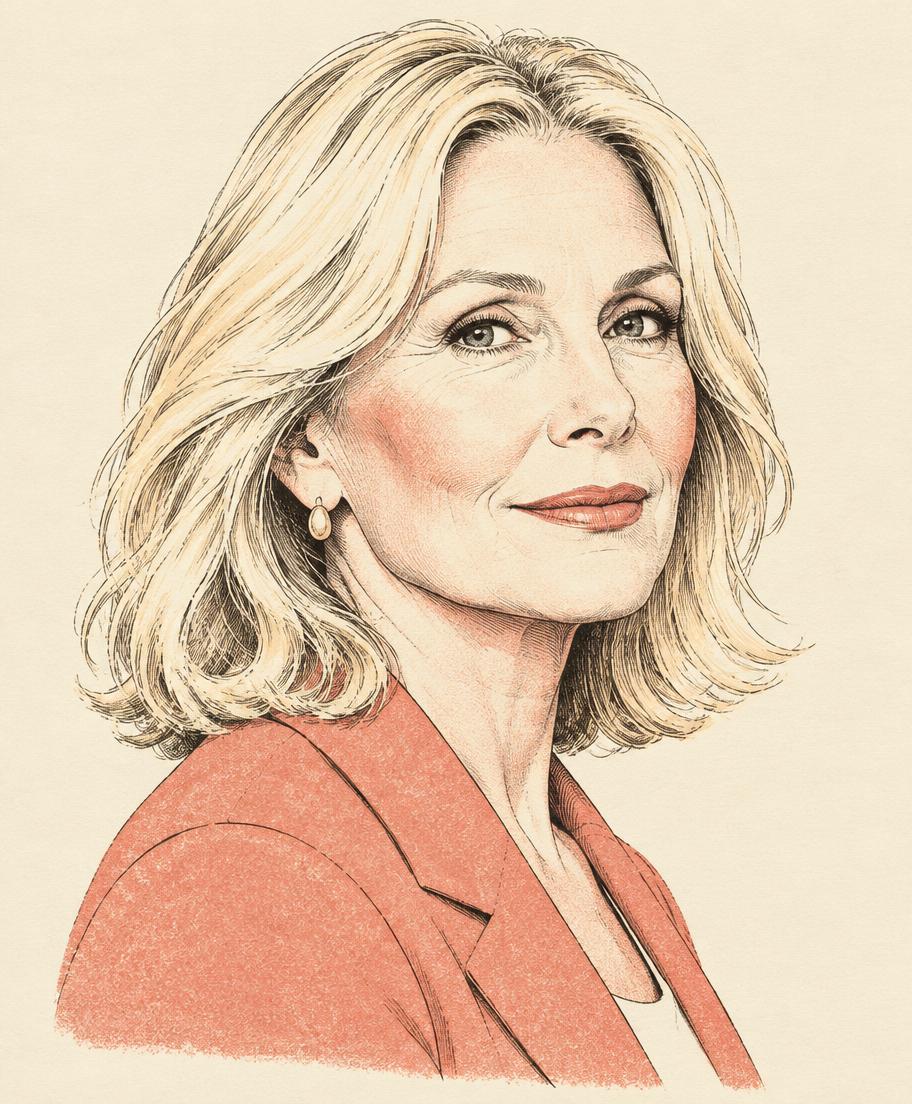
Actor
Meryl Streep
The most-nominated performer in Academy Awards history, known for her range across four decades of film and stage.
Read biography ↗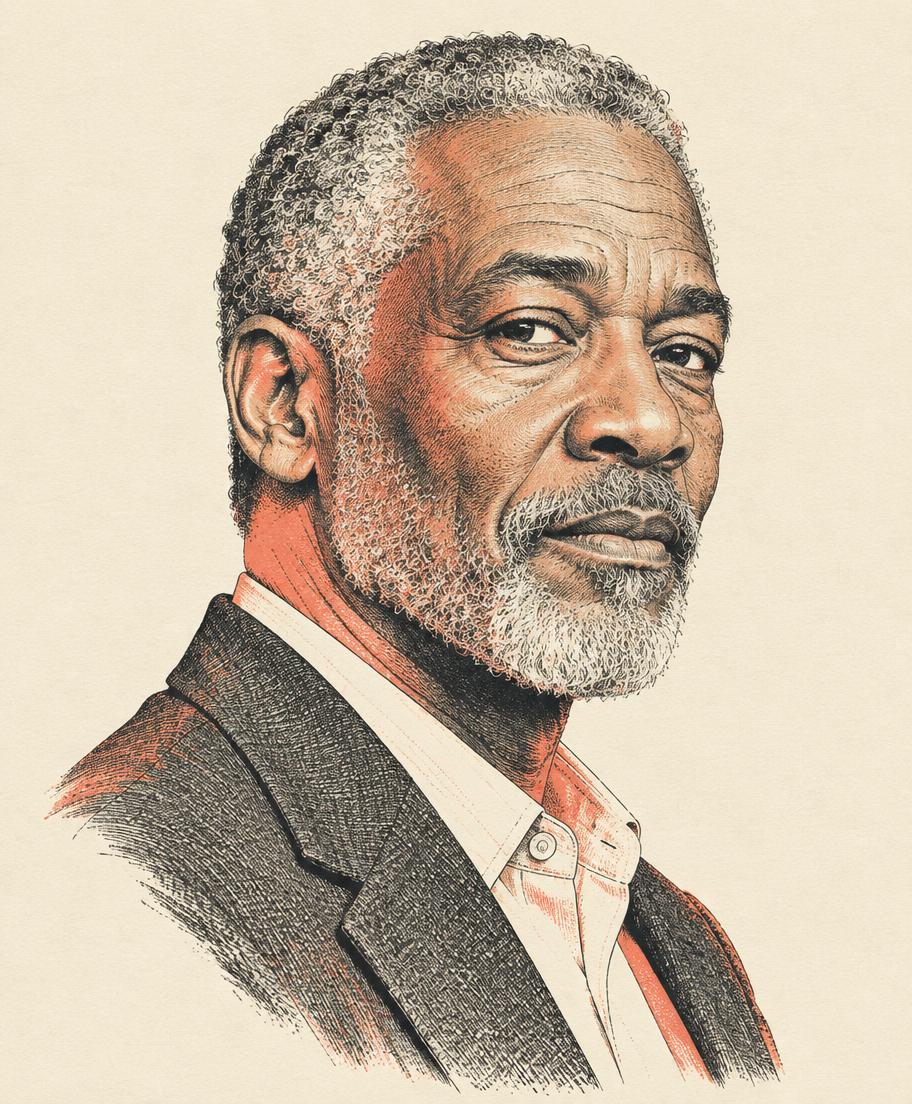
Actor and director
Denzel Washington
An American actor and director whose screen work spans Glory, Malcolm X and Training Day, alongside acclaimed stage performances.
Read biography ↗