German novelist and Nobel Prize laureate (1875–1955)
Thomas Mann
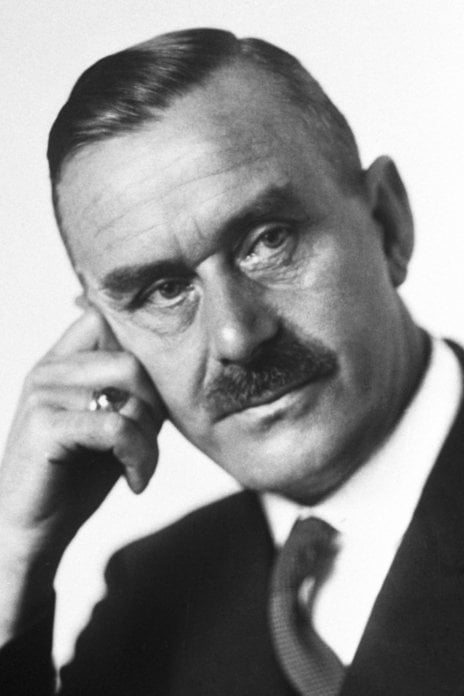
Paul Thomas Mann was a German novelist, short story writer, social critic, philanthropist, essayist, and the 1929 Nobel Prize in Literature laureate.
By globalcelebwiki Editorial Desk, adapted from Wikipedia · Published 29 September 2026
- Profession
- German novelist and Nobel Prize laureate (1875–1955)
- Born
- 6 June 1875
- Birthplace
- Lübeck
- Nationality
- American
Overview
Paul Thomas Mann (6 June 1875 – 12 August 1955) was a German novelist, short story writer, social critic, philanthropist, essayist, and the 1929 Nobel Prize in Literature laureate. His highly symbolic and ironic epic novels and novellas are noted for their insight into the psychology of the artist and the intellectual. His analysis and critique of the European and German soul used modern versions of German and Biblical stories, as well as the ideas of Johann Wolfgang von Goethe, Friedrich Nietzsche, and Arthur Schopenhauer.
The Mann family was part of the Hanseatic class. He portrayed both his family and the influential class in his first novel, Buddenbrooks (1901). Other major novels include The Magic Mountain (1924), the tetralogy Joseph and His Brothers (1933–1943), and Doctor Faustus (1947). He also wrote short stories and novellas, including Death in Venice (1912).
His older brother was novelist Heinrich Mann. Three of Mann's six children – Erika Mann, Klaus Mann and Golo Mann – also became significant German writers.
When Adolf Hitler came to power in 1933, Mann fled to Switzerland. When World War II broke out in 1939, he moved to the United States, returning to Switzerland after the war in 1952. Mann is one of the best-known exponents of the so-called Exilliteratur, German literature written in exile by those who opposed the Hitler regime.
Life
Paul Thomas Mann was born to a Hanseatic family in Lübeck, the second son of Thomas Johann Heinrich Mann (a senator and a grain merchant) and his wife Júlia da Silva Bruhns, a Brazilian woman of German, Portuguese and Native Brazilian ancestry, who emigrated to Germany with her family when she was seven years old. His mother was Roman Catholic but Mann was baptised into his father's Lutheran religion. Mann's father died in 1891, and after that his trading firm was liquidated. The family subsequently moved to Munich. Mann first studied science at a Lübeck Gymnasium (secondary school), then attended the Ludwig-Maximilians-Universität München as well as the Technische Hochschule München, where, in preparation for a journalism career, he studied history, economics, art history and literature.
Mann lived in Munich from 1891 until 1933, with the exception of a year spent in Palestrina, Italy, with his elder brother, the novelist Heinrich. Thomas worked at the South German Fire Insurance Company in 1894–95. His career as a writer began when he wrote for the magazine Simplicissimus. Mann's first short story, "Little Herr Friedemann" (Der Kleine Herr Friedemann), was published in 1898.
In 1905, Mann married Katia Pringsheim, who came from a wealthy, secular Jewish industrialist family. She later joined the Lutheran church. The couple had six children: Erika (b. 1905), Klaus (b. 1906), Golo (b. 1909), Monika (b. 1910), Elisabeth (b. 1918) and Michael (b. 1919).
Due to the Pringsheim family's wealth, Katia Mann was able to purchase a summer property in Bad Tölz in 1908, on which they built a country house the following year, which they kept until 1917. In 1914 they also purchased a villa in Munich (at Poschinger Str in the borough of Bogenhausen, today 10 Thomas-Mann-Allee) where they lived until 1933.
In 1912, Katia was treated for what was incorrectly diagnosed as tuberculosis for a few months in a sanatorium in Davos, Switzerland, where Thomas Mann visited her for a few weeks. This inspired him to write his 1924 novel The Magic Mountain. He was also appalled by the risk of international confrontation between Germany and France, following the Agadir Crisis in Morocco, and later by the outbreak of the First World War. The novel ends with the outbreak of this war, in which the hero enlists, with his survival uncertain.
As a "German patriot", Mann had the proceeds from their summer house used in 1917 to subscribe to war bonds, which lost their face value after the war was lost. His father-in-law did the same, which caused a loss of a major part of the Pringsheim family's wealth. The disastrous inflation of 1923 and 1924 resulted in additional high losses. The sales success of his novel The Magic Mountain, published in 1924, improved his financial situation again, as did the award of the Nobel Prize in Literature in 1929. He used the prize money to build a cottage in the fishing village of Nida, Lithuania on the Curonian Spit, where there was a German art colony and where he spent the summers of 1930–1932 working on Joseph and His Brothers. Today, the cottage is a cultural center dedicated to him, with a small memorial exhibition.
In February 1933, having finished a book tour to Amsterdam, Brussels and Paris, Thomas Mann moved to Arosa (Switzerland) when Hitler took power, and Mann heard from his eldest children, Klaus and Erika in Munich, that it would not be safe for him to return to Germany. His political views (see chapter below) had made him an enemy of the Nazis. He was doubtful at first, because, with a certain naïveté, he could not imagine the violence of the overthrow and the persecution of opponents of the regime, but the children insisted, and their advice later turned out to be accurate when it emerged that even their driver-caretaker had become an informant and that Mann's immediate arrest would have been very likely. The family (except these two children, who went to Amsterdam) emigrated to Küsnacht, near Zürich, Switzerland, after a stopover in Sanary-sur-Mer, France. The son Golo managed, at great risk, to smuggle the already completed chapters of the Joseph novel and the (sensitive) diaries into Switzerland. The Bavarian Political Police searched Mann's house in Munich and confiscated the house, its inventory and the bank accounts. At the same time, an arrest warrant was issued. Mann was also no longer able to use his holiday home in Lithuania because it was only a few hundred yards from the German border and he seemed to be at risk there. When all members of the Poetry Section at the Prussian Academy of Arts were asked to make a declaration of loyalty to the National Socialist government, Mann declared his resignation on 17 March 1933.
The writer's freedom of movement was reduced when his German passport expired. The Manns traveled to the United States for the first two times in 1934 and 1935. There was great interest in the prominent writer; the authorities allowed him entry without a valid passport. He received Czechoslovak citizenship and a passport in 1936, even though he had never lived there. A few weeks later the German citizenship of Mann, his wife Katia, and their children Golo, Elisabeth and Michael were revoked, and the Nazi government expropriated the family home in Munich, which Reinhard Heydrich in particular insisted on. It had already been confiscated and forcibly rented out in 1933. In December 1936, the University of Bonn withdrew the honorary doctorate awarded to Mann in 1919; on 13 December 1946, after the defeat of Nazi Germany, it was reinstated.
In 1939, following the German occupation of Czechoslovakia, Mann emigrated to the United States, while his in-laws only managed, thanks to high-ranking connections, to leave Germany for Zurich in October 1939. The Manns moved to Princeton, New Jersey, where they lived on 65 Stockton Street and he began to teach at Princeton University. In 1941 he was designated consultant in German Literature, later Fellow in Germanic Literature, at the Library of Congress. In 1942, the Mann family moved to 1550 San Remo Drive in the Pacific Palisades neighborhood of Los Angeles, California. The Manns were prominent members of the German expatriate community of Los Angeles and frequently met other émigrés at the house of Salka and Bertold Viertel in Santa Monica, and at the Villa Aurora, the home of fellow German exile Lion Feuchtwanger. Thomas Mann's always difficult relationship with his brother Heinrich, who envied Thomas's success and wealth and also differed politically, hardly improved when the latter arrived in California, poor and sickly, in need of support. On 23 June 1944, Thomas Mann was naturalized as a citizen of the United States. The Manns lived in Los Angeles until 1952.
The outbreak of World War II, on 1 September 1939, prompted Mann to offer anti-Nazi speeches in German to the German people via the BBC. In October 1940, he began monthly broadcasts, recorded in the U.S. and flown to London, where the BBC German Service broadcast them to Germany on the longwave band. In these eight-minute addresses, Mann condemned Hitler and his "paladins" as crude philistines completely out of touch with European culture. In one noted speech, he said: "The war is horrible, but it has the advantage of keeping Hitler from making speeches about culture."
Mann was one of the few publicly active opponents of Nazism among German expatriates in the U.S. In a BBC broadcast of 30 December 1945, after the defeat of Germany, Mann said he understood why those peoples that had suffered from the Nazi regime would embrace the idea of German collective guilt. But he also thought that many enemies might now have second thoughts about "revenge". And he expressed regret that such judgement cannot be based on the individual:
Those, whose world became grey a long time ago when they realized what mountains of hate towered over Germany; those, who a long time ago imagined during sleepless nights how terrible would be the revenge on Germany for the inhuman deeds of the Nazis, cannot help but view with wretchedness all that is being done to Germans by the Russians, Poles, or Czechs as nothing other than a mechanical and inevitable reaction to the crimes that the people have committed as a nation, in which unfortunately individual justice, or the guilt or innocence of the individual, can play no part.
With the start of the Cold War, he was increasingly frustrated by rising McCarthyism. As a "suspected communist", he was required to testify to the House Un-American Activities Committee, where he was termed "one of the world's foremost apologists for Stalin and company". He was listed by HUAC as being "affiliated with various peace organizations or Communist fronts". Being in his own words a non-communist, rather than an anti-communist, Mann openly opposed the allegations: "As an American citizen of German birth, I finally testify that I am painfully familiar with certain political trends. Spiritual intolerance, political inquisitions, and declining legal security, and all this in the name of an alleged 'state of emergency'. ... That is how it started in Germany." As Mann joined protests against the jailing of the Hollywood Ten and the firing of schoolteachers suspected of being Communists, he found "the media had been closed to him". Finally, he was forced to quit his position as Consultant in Germanic Literature at the Library of Congress, and in 1952, he returned to Europe, to live in Kilchberg, near Zürich, Switzerland. Here he initially lived in a rented house and bought his last house there in 1954 (which later his widow and then their son Golo lived in until their deaths). He never again lived in Germany, though he regularly traveled there. His most important German visit was in 1949, at the 200th birthday of Johann Wolfgang von Goethe, attending celebrations in Frankfurt am Main (then West Germany) and Weimar (then East Germany), as a statement that German culture extended beyond the new political borders. He also visited Lübeck, where he saw his parents' house, which was partially destroyed by the bombing of Lübeck in World War II (and only later rebuilt). The city welcomed him warmly, but the patrician hanseatic families gave him a reserved welcome, since the publication of Buddenbrooks they had resented him for daring to describe their caste with some mockery, as they at least felt about it.
Along with Albert Einstein, Mann was one of the sponsors of the Peoples' World Convention (PWC), also known as Peoples' World Constituent Assembly (PWCA), which took place in 1950–51 at Palais Electoral, Geneva, Switzerland.
Following his 80th birthday, Mann went on vacation to Noordwijk in the Netherlands. On 18 July 1955, he began to experience pain and unilateral swelling in his left leg. The condition of thrombophlebitis was diagnosed by Dr. Mulders from Leiden and confirmed by Dr. Wilhelm Löffler. Mann was transported to a Zürich hospital, but soon developed a state of shock. On 12 August 1955, he died. Postmortem, his condition was found to have been misdiagnosed. The pathologic diagnosis, made by Christoph Hedinger, showed he had actually suffered a perforated iliac artery aneurysm resulting in a retroperitoneal hematoma, compression and thrombosis of the iliac vein. (At that time, lifesaving vascular surgery had not been developed.) On 16 August 1955, Thomas Mann was buried in the Kilchberg village cemetery.
Mann's work influenced many later authors, such as Yukio Mishima. Joseph Campbell also stated in an interview with Bill Moyers that Mann was one of his mentors. Many institutions are named in his honour, for instance the Thomas Mann Gymnasium of Budapest.
Career
Blanche Knopf of Alfred A. Knopf publishing house was introduced to Mann by H.L. Mencken while on a book-buying trip to Europe. Knopf became Mann's American publisher, and Blanche hired scholar Helen Tracy Lowe-Porter to translate Mann's books in 1924. Lowe-Porter subsequently translated Mann's complete works. Blanche Knopf continued to look after Mann. After Buddenbrooks proved successful in its first year, the Knopfs sent him an unexpected bonus. Later in the 1930s, Blanche helped arrange for Mann and his family to emigrate to America.
Mann was awarded the Nobel Prize in Literature in 1929, after he had been nominated by Anders Österling, member of the Swedish Academy, principally in recognition of his popular achievements with Buddenbrooks (1901), The Magic Mountain (Der Zauberberg, 1924), and his numerous short stories. (Due to the personal taste of an influential committee member, only Buddenbrooks was cited at any great length.) Based on Mann's own family, Buddenbrooks relates the decline of a merchant family in Lübeck over the course of four generations. The Magic Mountain (Der Zauberberg, 1924) follows an engineering student who, planning to visit his tubercular cousin at a Swiss sanatorium for only three weeks, finds his departure from the sanatorium delayed. During that time, he confronts medicine and the way it looks at the body and encounters a variety of characters, who play out ideological conflicts and discontents of contemporary European civilization. The tetralogy Joseph and His Brothers is an epic novel written over a period of sixteen years and is one of the largest and most significant works in Mann's oeuvre. Later novels included Lotte in Weimar (1939), in which Mann returned to the world of Goethe's novel The Sorrows of Young Werther (1774); Doctor Faustus (1947), the story of the fictitious composer Adrian Leverkühn and the corruption of German culture in the years before and during World War II; and Confessions of Felix Krull (Bekenntnisse des Hochstaplers Felix Krull, 1954), which was unfinished at Mann's death. These later works prompted two members of the Swedish Academy to nominate Mann for the Nobel Prize in Literature a second time, in 1948.
Influence
The writer Theodor Fontane, who died in 1898, had a particular stylistic influence on Thomas Mann. Of course, Mann always admired and emulated Goethe, the German "poet prince". The Danish author Herman Bang, with whom he felt a kindred spirit, had a certain influence, especially on the novellas. The pessimistic philosopher Arthur Schopenhauer provided philosophical inspiration for the Buddenbrooks' narrative of decline, especially with his two-volume work The World as Will and Representation, which Mann studied closely while writing the novel. Russian narrators should also be mentioned, he admired the Russian Literature's ability for self-criticism, at least during the 19th century, in Nikolai Gogol, Ivan Goncharov and Ivan Turgenev. Mann believed that in order to make a bourgeois revolution, the Russians had to forget Dostoevsky. He particularly loved Leo Tolstoy, whom he considered an anarchist and whom he lovingly and mockingly admired for his "courage to be boring."
Throughout Mann's Dostoevsky essay, he finds parallels between the Russian and the sufferings of Friedrich Nietzsche. Speaking of Nietzsche, he says, "his personal feelings initiate him into those of the criminal ... in general all creative originality, all artist nature in the broadest sense of the word, does the same. It was the French painter and sculptor Degas who said that an artist must approach his work in the spirit of the criminal about to commit a crime." Nietzsche's influence on Mann runs deep in his work, especially in Nietzsche's views on decay and the proposed fundamental connection between sickness and creativity. Mann believed that disease should not be regarded as wholly negative. In his essay on Dostoevsky, we find: "but after all and above all it depends on who is diseased, who mad, who epileptic or paralytic: an average dull-witted man, in whose illness any intellectual or cultural aspect is non-existent; or a Nietzsche or Dostoyevsky. In their case something comes out in illness that is more important and conducive to life and growth than any medical guaranteed health or sanity.... [I]n other words: certain conquests made by the soul and the mind are impossible without disease, madness, crime of the spirit."
Thematic and stylistic focuses
Many of Thomas Mann's works have the following similarities:
A "gravely-mischievous" style that is very popular with readers, with superficial solemnity and an underlying ironic humor, mostly benevolent, never drastic or bitter and only rarely degenerating into the macabre. Thomas Mann took this "mild irony" from his literary predecessor and role model Theodor Fontane, at first in Buddenbrooks where it is modified into local sedateness through Low German sprinkles and quotations. He continued this style, with variations, throughout his life (the contemporary, much more avant-garde author Alfred Döblin mocked that Mann had "elevated the pressed crease to a style principle"). In Joseph and His Brothers the tone takes on something fairytale-biblical, but here too the irony often shines through. In Doctor Faustus, Thomas Mann adopts a predominantly serious tone in view of the sinister theme, although the critical irony does not completely disappear there either, for which the description of the nationalist milieu in the Weimar Republic in particular provides ample reason.
The amusingly entertaining, mostly ironic descriptions of contemporaries as well as people of the past and their views and lifestyles based on his own observations or research, often very detailed, similar to his contemporary Marcel Proust, are combined with various profound components: in Buddenbrooks with the motif of economic and spiritual decline of a family, in The Magic Mountain with the philosophical disputes of the time before the First World War, in Lotte in Weimar with the circumstances of Goethe's Weimar Classicism and the complicated effect between real and literary love, in Joseph and his brothers with biblical-mythical motifs and the question of origins as well as the eternal recurrence of the same "mythical" stories, in Doctor Faustus with the historical-political circumstances of the rise, success and fall of Nazism.
Attachment to home regions: Lübeck (Buddenbrooks, Tonio Kröger) and Munich (Gladius Dei, At the Prophet, Disorder and Early Suffering) are in the foreground of important works.
Classical music already plays a central role in Buddenbrooks and Tristan (Mann loved Richard Wagner's operas and, in his 1933 essay The Suffering and Greatness of Richard Wagner, defended him against the Nazis' attempt to appropriate Wagner as a nationalist icon) and Neue Musik plays the main role in Doctor Faustus (about which Mann sought advice from Theodor W. Adorno and gave his hero's music features of Arnold Schoenberg's compositional style).
Political views
During World War I, Mann supported the conservatism of Kaiser Wilhelm II, attacked liberalism, and supported the war effort, calling the Great War "a purification, a liberation, an enormous hope". In his 600-page-long work Reflections of a Nonpolitical Man (1918), Mann presented his conservative, anti-modernist philosophy: spiritual tradition over material progress, German patriotism over egalitarian internationalism, and rooted culture over rootless civilisation.
In "On the German Republic" (Von Deutscher Republik, 1922), Mann called upon German intellectuals to support the new Weimar Republic. The work was delivered at the Beethovensaal in Berlin on 13 October 1922, and published in Die neue Rundschau in November 1922. In the work, Mann developed his eccentric defence of the Republic based on extensive close readings of Novalis and Walt Whitman. Also in 1921, he wrote an essay Mind and Money in which he made a very open assessment of his family background: "In any case, I am personally indebted to the capitalist world order from the past, which is why it will never be appropriate for me to spit on it as it is à la mode these days". Thereafter, his political views gradually shifted toward liberal-left. He especially embraced democratic principles when the Weimar Republic was established.
Mann initially gave his support to the left-liberal German Democratic Party before urging unity behind the Social Democrats, probably less for ideological reasons, but because he only trusted it to provide sufficient mass and resistance to the growing Nazism. In 1930, he gave a public address in Berlin titled An Appeal to Reason, in which he strongly denounced Nazism and encouraged resistance by the working class. This was followed by numerous essays and lectures in which he attacked the Nazis. At the same time, he expressed increasing sympathy for socialist ideas. When the Nazis came to power in 1933, Mann and his wife were on holiday in Switzerland. Due to his strident denunciations of Nazi policies, his son Klaus advised him not to return. In contrast to those of his brother Heinrich and his son Klaus, Mann's books were not among those burnt publicly by Hitler's regime in May 1933, possibly since he had been the Nobel laureate in literature for 1929. In 1936, the Nazi government officially revoked his German citizenship.
During the war, Mann made a series of anti-Nazi radio-speeches, published as Listen, Germany! in 1943. They were recorded on tape in the United States and then sent to the United Kingdom, where the British Broadcasting Corporation transmitted them, hoping to reach German listeners.
Mann expressed his belief in the collection of letters written in exile, Listen, Germany! (Hör zu, Deutschland!) that equating Soviet communism with Nazi fascism on the basis that both are totalitarian systems was either superficial or insincere in showing a preference for Nazism. He clarified this view during a German press interview in July 1949, declaring that he was not a communist but that communism at least had some relation to ideals of humanity and of a better future. He said that the transition of the communist revolution into an autocratic regime was a tragedy while Nazism was only "devilish nihilism".
1896: "Little Herr Friedemann" (Der kleine Herr Friedemann)
1897: "Luischen" ("Little Lizzy" in H. T. Lowe-Porter's translation; "Louisey" in Damion Searls') – published in 1900
1899: "The Wardrobe" (Der Kleiderschrank)
1899: "Avenged (Study for a Novella)" (Gerächt)
1900: "The Road to the Churchyard/The Way to the Churchyard" (Der Weg zum Friedhof)
1905: The Blood of the Walsungs (Wӓlsungenblut) (2nd Edition: 1921)
1911: Felix Krull (Bekenntnisse des Hochstaplers Felix Krull) – published in 1922
1912: Death in Venice (Der Tod in Venedig)
1918: A Man and His Dog/Bashan and I (Herr und Hund)
1925: Disorder and Early Sorrow in H. T. Lowe-Porter's translation; Early Sorrow in Herman George Scheffauer's; Chaotic World and Childhood Sorrow in Damion Searls' (Unordnung und frühes Leid)
1901: Buddenbrooks (Buddenbrooks – Verfall einer Familie)
1924: The Magic Mountain (Der Zauberberg)
1939: Lotte in Weimar: The Beloved Returns
1949: Die Entstehung des Doktor Faustus – autobiographical non-fiction book about the novel. Published in 1961 as The Story of a Novel: The Genesis of Doctor Faustus
1954: Confessions of Felix Krull (Bekenntnisse des Hochstaplers Felix Krull. Der Memoiren erster Teil; expanded from 1911 short story), unfinished
Joseph and His Brothers (Joseph und seine Brüder) (1933–43)
The Stories of Jacob (Die Geschichten Jaakobs) (1933)
Joseph in Egypt (Joseph in Ägypten) (1936)
Joseph the Provider (Joseph, der Ernährer) (1943)
1954: Luther's Marriage (Luthers Hochzeit) (fragment – unfinished)
1919: The Song of the Child: An Idyll (Gesang vom Kindchen)
1915: "Frederick and the Great Coalition" (Friedrich und die große Koalition)
1918: Reflections of a Nonpolitical Man (Betrachtungen eines Unpolitischen)
1922: "On the German Republic" (Von deutscher Republik)
1930: "A Sketch of My Life" (Lebensabriß) – autobiographical
1933: "The Suffering and Greatness of Richard Wagner" (Leiden und Größe Richard Wagners)
1922: Stories of Three Decades (trans. Helen Tracy Lowe-Porter). Includes 24 stories written from 1896 to 1922. First American edition published in 1936.
1963: Death in Venice and Seven Other Stories (trans. Helen Tracy Lowe-Porter). Includes: "Death in Venice"; "Tonio Kröger"; "Mario and the Magician"; "Disorder and Early Sorrow"; "A Man and His Dog"; "The Blood of the Walsungs"; "Tristan"; "Felix Krull".
1970: Tonio Kröger and Other Stories (trans. David Luke). Includes: "Little Herr Friedemann"; "The Joker"; "The Road to the Churchyard"; "Gladius Dei"; "Tristan"; "Tonio Kroger".
Republished in 1988 as "Death in Venice and Other Stories" with the addition of the eponymous story.
1997: Six Early Stories (trans. Peter Constantine). Includes: "A Vision: 'Prose Sketch'"; "Fallen"; "The Will to Happiness"; "Death"; "Avenged: 'Study for a Novella'"; "Anecdote".
The metadatabase TMI-Research brings together archival materials and library holdings of the network "Thomas Mann International". The network was founded in 2017 by the five houses Buddenbrookhaus/Heinrich-und-Thomas-Mann-Zentrum (Lübeck), the Monacensia im Hildebrandhaus (Munich), the Thomas Mann Archive of the ETH Zurich (Zurich/Switzerland), the Thomas Mann House (Los Angeles/USA) and the Thomo Manno kultūros centras/Thomas Mann Culture Centre (Nida/Lithuania). The houses stand for the main stations of Thomas Mann's life. The platform, which is hosted by ETH Zurich, allows research in the collections of the network partners across all houses. The database is freely accessible and contains over 165,000 records on letters, original editions, photographs, monographs and essays on Thomas Mann and the Mann family. Further links take you to the respective source databases with contact options and further information.
Sources and references
Spotted something wrong? Report a correction.
Related profiles

Singer and songwriter
Beyoncé
A singer, songwriter and performer whose career spans Destiny's Child and a run of genre-shifting solo albums.
Read biography ↗
Cellist
Yo-Yo Ma
A cellist known for his recordings of the Bach cello suites and for decades of cross-cultural musical collaboration.
Read biography ↗
British singer (1949–2012)
Robin Gibb
Robin Hugh Gibb was a British singer and songwriter.
Read biography ↗