French author (1866-1944)
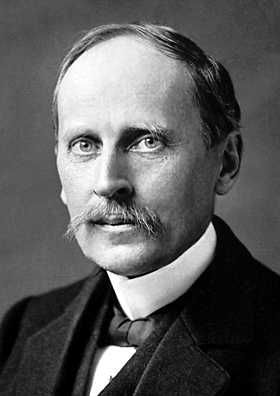
Romain Rolland
Romain Rolland was a French dramatist, novelist, essayist, art historian and mystic who was awarded the Nobel Prize for Literature in 1915 "as a tribute to the lofty idealism of his literary production and to the sympathy and love of truth with which he has de
By globalcelebwiki Editorial Desk, adapted from Wikipedia · Published 29 September 2026
- Profession
- French author (1866-1944)
- Born
- 29 January 1866
- Birthplace
- Clamecy
- Nationality
- French
Overview
Romain Rolland (French: [ʁɔmɛ̃ ʁɔlɑ̃]; 29 January 1866 – 30 December 1944) was a French dramatist, novelist, essayist, art historian and mystic who was awarded the Nobel Prize for Literature in 1915 "as a tribute to the lofty idealism of his literary production and to the sympathy and love of truth with which he has described different types of human beings".
He was an admirer of Mahatma Gandhi and Rabindranath Tagore, wrote a still relevant biography of Gandhi, and is also noted for his correspondence with numerous writers and thinkers across the globe including Maxim Gorki, Rabindranath Tagore and Sigmund Freud.
Biography
Rolland was born in Clamecy, Nièvre into a family that had both wealthy townspeople and farmers in its lineage. Writing introspectively in his Voyage intérieur (1942), he sees himself as a representative of an "antique species". He would cast these ancestors in Colas Breugnon (1919).
Accepted to the École normale supérieure in 1886, he first studied philosophy, but his independence of spirit led him to abandon that so as not to submit to the dominant ideology. He received his degree in history in 1889 and spent two years in Rome, where his encounter with Malwida von Meysenbug–who had been a friend of Nietzsche and of Wagner–and his discovery of Italian masterpieces were decisive for the development of his thought. When he returned to France in 1895, he received his doctoral degree with his thesis Les origines du théâtre lyrique moderne. Histoire de l'opéra en Europe avant Lulli et Scarlatti (The origins of modern lyric theatre. A History of Opera in Europe before Lully and Scarlatti). For the next two decades, he taught at various lycées in Paris before directing the newly established music school of the École des Hautes Études Sociales from 1902 to 1911. In 1903 he was appointed to the first chair of music history at the Sorbonne, he also directed briefly in 1911 the musical section at the French Institute in Florence.
His first book was published in 1902 when he was 36 years old. Through his advocacy for a 'people's theatre', he made a significant contribution towards the democratisation of the theatre. As a humanist, he embraced the work of the Indian philosophers ("Conversations with Rabindranath Tagore" and Mohandas Gandhi). Rolland was strongly influenced by the Vedanta philosophy of India, primarily through the works of Swami Vivekananda.
A demanding, yet timid, young man, he did not like teaching. He was not indifferent to youth: Jean-Christophe, Olivier and their friends, the heroes of his novels, are young people. But with real-life persons, youths as well as adults, Rolland maintained only a distant relationship. He was first and foremost a writer. Assured that literature would provide him with a modest income, he resigned from the university in 1912. In 1920, Rolland used the phrase, "Pessimism of the intellect, optimism of the will" in a review, which Antonio Gramsci adopted from him as a formula for intellectual perseverance during hard times.
Romain Rolland was a lifelong pacifist. He was one of the few major French writers to retain his pacifist internationalist values; he moved to Switzerland. He protested against the first World War in Au-dessus de la mêlée (1915), Above the Battle (Chicago, 1916). In 1924, his book on Gandhi contributed to the Indian nonviolent leader's reputation and the two men met in 1931. Rolland was a vegetarian.
People's theatre
Rolland's most significant contribution to the theatre lies in his advocacy for a "popular theatre" in his essay The People's Theatre (Le Théâtre du peuple, 1902). "There is only one necessary condition for the emergence of a new theatre", he wrote, "that the stage and auditorium should be open to the masses, should be able to contain a people and the actions of a people". The book was not published until 1913, but most of its contents had appeared in the Revue d'Art Dramatique between 1900 and 1903. Rolland attempted to put his theory into practice with his melodramatic dramas about the French Revolution, Danton (1900) and The Fourteenth of July (1902), but it was his ideas that formed a major reference point for subsequent practitioners.
The essay is part of a more general movement around the turn of that century towards the democratization of the theatre. The Revue had held a competition and tried to organize a "World Congress on People's Theatre", and a number of People's Theatres had opened across Europe, including the Freie Volksbühne movement ('Free People's Theatre') in Germany and Maurice Pottecher's Théâtre du Peuple in France. Rolland was a disciple of Pottecher and dedicated The People's Theatre to him.
Rolland's approach is more aggressive, though, than Pottecher's poetic vision of theatre as a substitute 'social religion' bringing unity to the nation. Rolland indicts the bourgeoisie for its appropriation of the theatre, causing it to slide into decadence, and the deleterious effects of its ideological dominance. In proposing a suitable repertoire for his people's theatre, Rolland rejects classical drama in the belief that it is either too difficult or too static to be of interest to the masses. Drawing on the ideas of Jean-Jacques Rousseau, he proposes instead "an epic historical theatre of 'joy, force and intelligence' which will remind the people of its revolutionary heritage and revitalize the forces working for a new society" (in the words of Bradby and McCormick, quoting Rolland). Rolland believed that the people would be improved by seeing heroic images of their past. Rousseau's influence may be detected in Rolland's conception of theatre-as-festivity, an emphasis that reveals a fundamental anti-theatrical prejudice: "Theatre supposes lives that are poor and agitated, a people searching in dreams for a refuge from thought. If we were happier and freer we should not feel hungry for theatre. [...] A people that is happy and free has need of festivities more than of theatres; it will always see in itself the finest spectacle".
Rolland's dramas have been staged by some of the most influential theatre directors of the twentieth century, including Max Reinhardt and Erwin Piscator. Piscator directed the world première of Rolland's pacifist drama The Time Will Come (Le Temps viendra, written in 1903) at Berlin's Central-Theater, which opened on 17 November 1922 with music by K Pringsheim and scenic design by O Schmalhausen and M Meier. The play addresses the connections between imperialism and capitalism, the treatment of enemy civilians, and the use of concentration camps, all of which are dramatised via an episode in the Boer War. Piscator described his treatment of the play as "thoroughly naturalistic", whereby he sought "to achieve the greatest possible realism in acting and decor". Despite the play's overly-rhetorical style, the production was reviewed positively.
Novels
Rolland's most famous novel is the 10-volume novel sequence Jean-Christophe (1904–1912), which brings "together his interests and ideals in the story of a German musical genius who makes France his second home and becomes a vehicle for Rolland's views on music, social matters and understanding between nations". His other novels are Colas Breugnon (1919), Clérambault (1920), Pierre et Luce (1920) and his second roman-fleuve, the 7-volume L'âme enchantée (1922–1933).
Academic career
He became a history teacher at Lycée Henri IV, then at the Lycée Louis le Grand, and a member of the École française de Rome, then a professor of the History of Music at the Sorbonne, and History Professor at the École Normale Supérieure.
Correspondence with Richard Strauss
In 1899 Rolland started what became a voluminous correspondence with the German composer Richard Strauss (the English translation, by Rollo Myers, runs to 239 pages, including some diary entries). At the time, Strauss was a celebrated conductor of works by Wagner, Liszt, Mozart, and of his own tone poems. In 1905, Strauss completed his opera Salome, based on the verse play by Oscar Wilde, originally written in French. Strauss based his version of Salome on Hedwig Lachmann's German translation which he had seen performed in Berlin in 1902. Out of respect for Wilde, Strauss wanted to create a parallel French version, to be as close as possible to Wilde's original text, and he wrote to Rolland requesting his help on this project.
Rolland was initially reluctant, but a lengthy exchange ensued, occupying 50 pages of the Myers edition, and in the end Rolland made 191 suggestions for improving the Strauss/Wilde libretto. The resulting French version of Salome received its first performance in Paris in 1907, two years after the German premiere. Thereafter, Rolland's letters regularly discussed Strauss's operas, including the occasional criticism of Strauss's librettist, Hugo von Hofmannsthal: "I only regret that the great writer who gives you such brilliant libretti too often lacks a sense of the theatre."
Rolland was a pacifist and concurred with Strauss when the latter refused to sign the Manifesto of German artists and intellectuals supporting the German role in World War I. Rolland noted Strauss's response in his diary entry for October 1914: "Declarations about war and politics are not fitting for an artist, who must give his attention to his creations and his works."(Myers p. 160)
Correspondence with Freud
1923 saw the beginning of a correspondence between psychoanalyst Sigmund Freud and Rolland, who found that the admiration that he showed for Freud was reciprocated in equal measures (Freud proclaiming in a letter to him: "That I have been allowed to exchange a greeting with you will remain a happy memory to the end of my days."). This correspondence introduced Freud to the concept of the "oceanic feeling" that Rolland had developed through his study of Eastern mysticism. Freud opened his next book Civilization and its Discontents (1929) with a debate on the nature of this feeling, which he mentioned had been noted to him by an anonymous "friend". This friend was Rolland. Rolland would remain a major influence on Freud's work, continuing their correspondence right up to Freud's death in 1939.
Sources and references
Spotted something wrong? Report a correction.
Related profiles

Singer and songwriter
Beyoncé
A singer, songwriter and performer whose career spans Destiny's Child and a run of genre-shifting solo albums.
Read biography ↗
Cellist
Yo-Yo Ma
A cellist known for his recordings of the Bach cello suites and for decades of cross-cultural musical collaboration.
Read biography ↗
British singer (1949–2012)
Robin Gibb
Robin Hugh Gibb was a British singer and songwriter.
Read biography ↗