Polish-born German literary critic (1920–2013)
Marcel Reich-Ranicki
Marcel Reich-Ranicki was a Polish-born German literary critic and member of the informal literary association Gruppe 47.
By globalcelebwiki Editorial Desk, adapted from Wikipedia · Published 29 September 2026
- Profession
- Polish-born German literary critic (1920–2013)
- Born
- 2 June 1920
- Birthplace
- Włocławek
- Nationality
- German
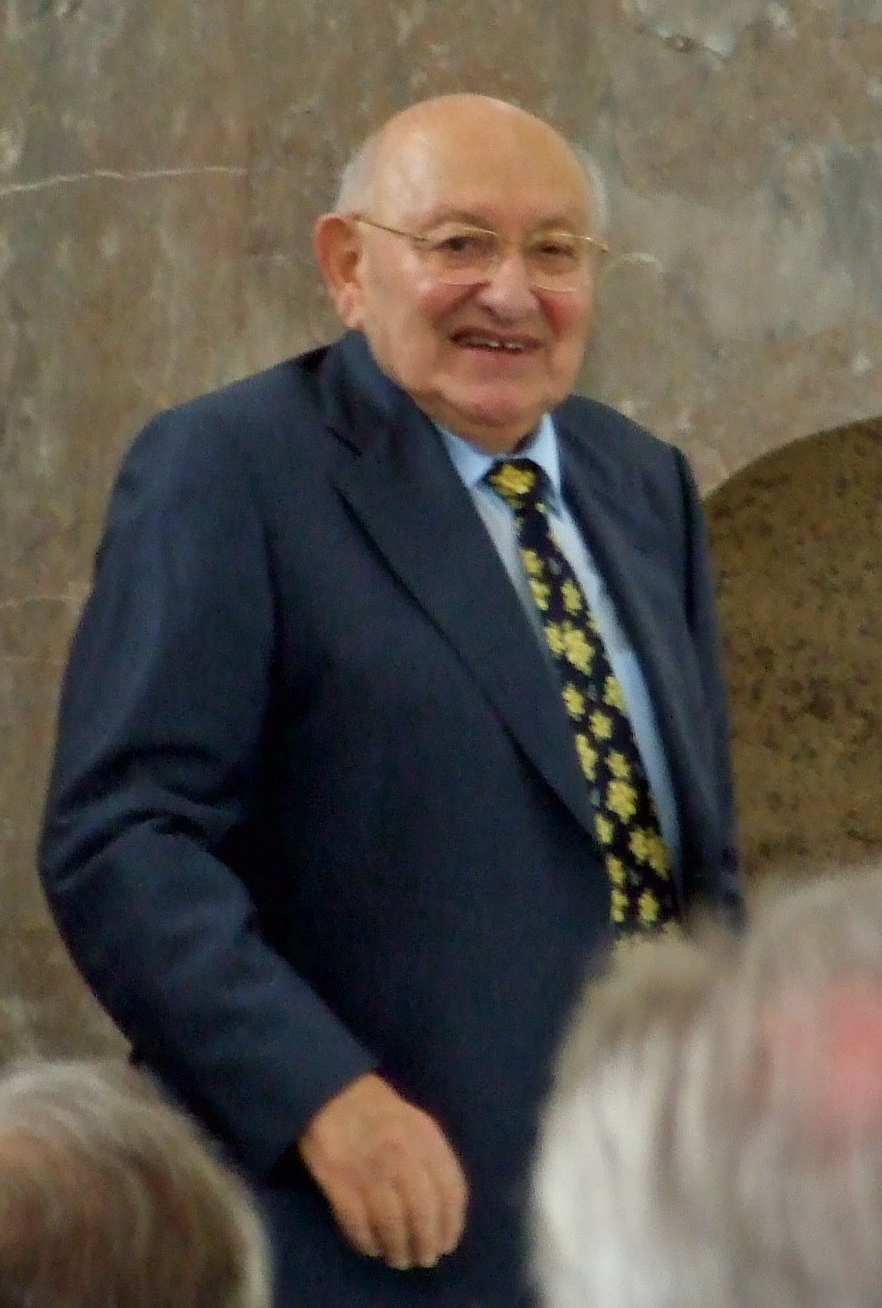
Overview
Marcel Reich-Ranicki (German: [maʁˈsɛl ˌʁaɪçʁaˈnɪtskiː]; born Marceli Reich; 2 June 1920 – 18 September 2013) was a Polish-born German literary critic and member of the informal literary association Gruppe 47. He was regarded as one of the most influential contemporary literary critics in the field of German literature and has often been called Literaturpapst ("Pope of Literature") in Germany. His TV appearances (including the literature TV show Das literarische Quartett) made Reich-Ranicki a household name even among non-readers; in 2010, a survey found that 98% of Germans had heard of him.
Early life
Marcel Reich was born on 2 June 1920 in Włocławek, Poland, to David Reich, a Polish Jewish merchant, and his wife, Helene (née Auerbach) Reich, who came from a German Jewish family (his cousin was the painter Frank Auerbach). Reich and his family moved to Berlin in 1929. He attended a German school there, but was later sent to Berlin to study.
Reich dedicated himself to the reading of German classics and practicing the theatre. The literary critic Volker Weidermann wrote that "he found his salvation in literature". As a Jew he was unable to enroll at university and was then expelled back to Poland in 1938.. In his 1999 autobiography, The Author of Himself, Ranicki affirmed, "I had a ticket for [a] première that evening – I wouldn't be needing it."
In November 1940, Reich and his parents found themselves in the Warsaw Ghetto, during which time he worked for the Judenrat as a chief translator, and contributed to the collaborative newspaper Gazeta Żydowska (The Jewish Newspaper) as a music critic. Reich's translation work made him an eyewitness to meetings between the Jewish and Nazi authorities. Ranicki's sister left for England shortly before the war started, but his parents and brother decided not to leave, and did not survive. His parents died in the Treblinka concentration camp. Ranicki himself married his wife Teofila, and in 1943, they escaped the Ghetto.
In 1944, he joined the Polish People's Army, and became an officer in Urząd Bezpieczeństwa, the Soviet-controlled Polish secret police, known for using torture and human rights violations, where he worked in the censorship department. He joined the communist Polish Workers' Party after the war.
From 1948 to 1949, he was a Polish diplomat and intelligence worker (operating under the pseudonym "Ranicki") in London. The couple's only child, Andrew Ranicki, a topologist and mathematics professor, was born in London in 1948. Reich was recalled from London in 1949, sacked from the intelligence service, and expelled from the Party on charges of "ideological estrangement", for which he was also jailed for a short time.
Frustrated by the curtailment of his liberty in the People's Republic of Poland he emigrated in 1958 with his wife and son to the Federal Republic of Germany (West Germany), living in the city of Hamburg. Here he began writing for leading West German periodicals, including Die Welt and the Frankfurter Allgemeine Zeitung. In Poland, he had published under the pseudonym "Ranicki" (his intelligence codename). On the advice of the arts editor of the Frankfurter Allgemeine, he adopted the name Marcel Reich-Ranicki professionally. From 1963 to 1973, he was literary critic for the West German weekly Die Zeit, published in Hamburg.
In 1973, he moved to Frankfurt, where, from 1973 to 1988, he was head of the literature staff at the daily Frankfurter Allgemeine Zeitung. Reich-Ranicki would go on to write and edit for the Frankfurter Allgemeine Zeitung for the rest of his life. In 1969 he taught at Vermont. From 1971 to 1975, he held visiting professorships at Stockholm and Uppsala.
In 1974, he was awarded an honorary professorship at the University of Tübingen, West Germany. In 1990 and 1991, he received the Heinrich-Hertz visiting professorship of the University of Karlsruhe, and in 1991 and 1992, he received the Heinrich-Heine visiting professorship at the University of Düsseldorf.
From 1988 to 2001, Reich-Ranicki hosted the literary talk show Literarisches Quartett on German public television. He became a household name in Germany; according to a survey, 98% of Germans knew his name. In Summer 2000, fellow panelist Sigrid Löffler left the panel, complaining that Reich-Ranicki had put forward Haruki Murakami's erotic novel South of the Border, West of the Sun for discussion, which Löffler disliked. Reich-Ranicki answered that she had a problem with erotic literature in general. Although differences over Murakami provided a catalyst for Löffler's widely publicised departure from the programme, it does appear that tensions between Löffler and Reich-Ranicki were more broadly based and longstanding, having indeed nourished the programme's dynamic over the years. In 2002, the show was followed by a similar but short-lived programme, Reich-Ranicki Solo, which consisted of him talking about old and new books in front of a studio audience. Jack Zipes wrote: "On his television show, Reich-Ranicki often played the clown, a mixture of Milton Berle and Jack Benny, but you always had to take him seriously because his knowledge of German culture was so comprehensive."
In 1993, the weekly Der Spiegel gave him a dossier of about fifteen pages, under the title "The Lord of Books", tracing his career, first to Die Zeit, then to the Frankfurter Allgemeine Zeitung. Many writers, and readers too, disagreed with some traits of his complex personality, while universally recognizing his culture and passion for German literature.
Reich-Ranicki died on 18 September 2013 in Frankfurt, having previously been diagnosed with prostate cancer. German Chancellor Angela Merkel paid tribute: "We lose in him a peerless friend of literature, but also of freedom and democracy. I will miss this passionate and brilliant man." The Süddeutsche Zeitung described Reich-Ranicki as "the man who taught us how to read."
Marcel's son, Andrew Ranicki (1948–2018), was a professor of mathematics at the University of Edinburgh. Marcel's wife, Teofila Reich-Ranicki, predeceased her husband by two years, dying in 2011. According to The Economist, "He appreciated Jewish culture, especially its way with words, but found religion pointless and, after Warsaw, God inconceivable."
Relationships with authors
As a tough critic, Reich-Ranicki had a difficult relationship with other authors. Following the publication of Too Far Afield by his fellow Gruppe 47 member Günter Grass, Reich-Ranicki appeared on the cover of the magazine Der Spiegel, tearing the novel apart. The magazine included his unfavorable review of the book. Reich-Ranicki praised Grass' next book, Crabwalk. Another frequent target of Reich-Ranicki was writer Martin Walser. In 2002, Walser published the crime novel Death of a Critic (Tod eines Kritikers) as a revenge against Reich-Ranicki. In the book, a prominent, bigoted critic named André Ehrl-König – who shares many similarities with Reich-Ranicki – is murdered. The novel became a hot topic of debate in Germany.
Australian writer Clive James stated: "Every living German writer wants his praise, but it has always been hard to get: the reason, of course, why they would like to have it."
Sources and references
Spotted something wrong? Report a correction.
Related profiles

Singer and songwriter
Beyoncé
A singer, songwriter and performer whose career spans Destiny's Child and a run of genre-shifting solo albums.
Read biography ↗
Cellist
Yo-Yo Ma
A cellist known for his recordings of the Bach cello suites and for decades of cross-cultural musical collaboration.
Read biography ↗
British singer (1949–2012)
Robin Gibb
Robin Hugh Gibb was a British singer and songwriter.
Read biography ↗