Indian politician and activist (1878–1972)
C. Rajagopalachari
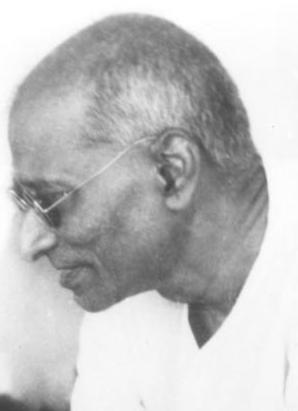
Chakravarti Rajagopalachari, popularly known as Rajaji or C.R., also known as Mootharignar Rajaji, was an Indian statesman, writer, lawyer, and Indian independence activist.
By globalcelebwiki Editorial Desk, adapted from Wikipedia · Published 29 September 2026
- Profession
- Indian politician and activist (1878–1972)
- Born
- 10 December 1878
- Birthplace
- Thorapalli
- Nationality
- Indian
Overview
Chakravarti Rajagopalachari (10 December 1878 – 25 December 1972), popularly known as Rajaji or C.R., also known as Mootharignar Rajaji (Rajaji, the Scholar Emeritus), was an Indian statesman, writer, lawyer, and Indian independence activist. Rajagopalachari was the last Governor-General of India, serving until the abolition of that office upon India becoming a republic in 1950. He was the only Indian-born Governor-General or Viceroy of India; all previous holders of these posts had been British nationals. He was an accomplished writer and one of the first recipients of India's highest civilian award, the Bharat Ratna. He was close to both Gandhi and Nehru. He vehemently opposed the use of nuclear weapons, and was a proponent of world peace and disarmament, until his death at the age of 94 in 1972.
Rajagopalachari also served—at different times—as leader of the Indian National Congress, Premier of the Madras Presidency, Governor of West Bengal (he was serving in this post when appointed by the King to take over from Lord Mountbatten), a member of the national cabinet as Minister for Home Affairs of the Indian Union, and as Chief Minister of Madras State. Rajagopalachari founded the Swatantra Party in 1959.
Rajagopalachari was born in the Thorapalli village of Hosur taluk in the Krishnagiri district of Tamil Nadu. He was a sickly child, and his parents constantly feared that he might not live long. He was educated at Central College, Bengaluru, and Presidency College, Madras. In the 1900s he started legal practice at the Salem court. On entering politics, he became a member and later Chairperson of the Salem municipality. One of Mahatma Gandhi's earliest political lieutenants, he joined the Indian National Congress and participated in the agitations against the Rowlatt Act, joining the non-cooperation movement, the Vaikom Satyagraha, and the Civil Disobedience movement. In 1930, Rajagopalachari risked imprisonment when he led the Vedaranyam Salt Satyagraha in response to the Dandi March. In 1937, Rajagopalachari was elected Prime minister of the Madras Presidency and served until 1940, when he resigned due to Britain's declaration of war on Germany. He later advocated co-operation over Britain's war effort and opposed the Quit India Movement. He favoured talks with both Muhammad Ali Jinnah and the Muslim League and proposed what later came to be known as the C. R. formula. In 1946, Rajagopalachari was appointed Minister of Industry, Supply, Education and Finance in the Interim Government of India, and then as the Governor of West Bengal from 1947 to 1948, Governor-General of India from 1948 to 1950, Union Home Minister from 1951 to 1952 and as Chief Minister of Madras State from 1952 to 1954. In 1959, he resigned from the Indian National Congress and founded the Swatantra Party, which fought against Congress in the 1962, 1967 and 1971 elections. Rajagopalachari was instrumental in setting up a united Anti-Congress front in Madras State under C. N. Annadurai, which swept the 1967 elections. He died on 25 December 1972 at the age of 94 and received a state funeral.
Rajagopalachari was an accomplished writer who made lasting contributions to Indian English literature and is also credited with the composition of the song Kurai Onrum Illai set to Carnatic music. He pioneered temperance and temple entry movements in India and advocated Dalit upliftment. He has been criticized for introducing the compulsory study of Hindi and the Madras Scheme of Elementary Education in Madras State, which have been criticised as hereditary education policy designed to perpetuate caste hierarchy. Critics have often attributed his pre-eminence in politics to his standing as a favourite of both Mahatma Gandhi and Jawaharlal Nehru. Rajagopalachari was described by Gandhi as the "keeper of my conscience". During his lifetime, he also acquired the nickname 'Mango of Salem'.
Early life
Rajagopalachari was born to Chakravarti Venkatarya Achari (Iyengar) and his wife Singaramma on 10 December 1878 in Thorapalli village on the outskirts of Hosur, in Hosur taluk, Krishnagiri district, Madras Presidency, British Raj. His father was the munsiff of Thorapalli. He hailed from a Hindu Brahmin family belonging to the Sri Vaishnava sect. The couple already had two sons, Narasimhachari and Srinivasa.
A weak and sickly child, Rajagopalachari was a constant worry to his parents who feared that he might not live long. As a young child, he was admitted to a village school in Thorapalli then at the age of five moved with his family to Hosur where Rajagopalachari enrolled at R. V. Government Boys Higher Secondary School. He passed his matriculation examinations in 1891 and graduated in arts from Central College, Bangalore in 1894. Rajagopalachari graduated in law from Presidency College, Madras in 1897.
Rajagopalachari married Alamelu Mangalamma in 1897 when she was ten years old and she gave birth to her son a day after her thirteenth birthday. The couple had five children, three sons: C. R. Narasimhan, C. R. Krishnaswamy, and C. R. Ramaswami, and two daughters: Lakshmi Gandhi (née Rajagopalachari) and Namagiri Ammal. Mangamma died in 1916 whereupon Rajagopalachari took sole responsibility for the care of his children. His son Chakravarti Rajagopalachari Narasimhan was elected to the Lok Sabha from Krishnagiri in the 1952 and 1957 elections and served as a member of parliament for Krishnagiri from 1952 to 1962. He later wrote a biography of his father. Rajagopalachari's daughter Lakshmi married Devdas Gandhi, son of Mahatma Gandhi while his grandsons include biographer Rajmohan Gandhi, philosopher Ramchandra Gandhi and former governor of West Bengal Gopalkrishna Gandhi. Rajagopalachari's great-grandson, Chakravarti Rajagopalachari Kesavan, is a spokesperson of the Congress Party and Trustee of the Tamil Nadu Congress Committee.
Indian Independence Movement
Rajagopalachari's interest in public affairs and politics began when he commenced his legal practice in Salem in 1900. At the age of 28, he joined the Indian National Congress and participated as a delegate in the 1906 Calcutta session. Inspired by Indian independence activist Bal Gangadhar Tilak, he later became a member of the Salem municipality in 1911. In 1917, he was elected chairman of the municipality and served from 1917 to 1919 during which time he was responsible for the election of the first Dalit member of the Salem municipality. In 1917, he defended Indian independence activist P. Varadarajulu Naidu against charges of sedition and two years later participated in the agitations against the Rowlatt Act. Rajagopalachari was a close friend of the founder of Swadeshi Steam Navigation Company V. O. Chidambaram Pillai as well as greatly admired by Indian independence activists Annie Besant, Subramania Bharati and C. Vijayaraghavachariar.
After Mahatma Gandhi joined the Indian independence movement in 1919, Rajagopalachari became one of his followers. He participated in the non-cooperation movement and gave up his law practice. In 1921, he was elected to the Congress Working Committee and served as the General Secretary of the party before making his first major breakthrough as a leader during the 1922 Indian National Congress session at Gaya when he strongly opposed collaboration with the colonial administration and participation in the diarchial legislatures established by the Government of India Act 1919. While Gandhi was in prison, Rajagopalachari led the group of "No-Changers", individuals against contesting elections for the Imperial Legislative Council and other provincial legislative councils, in opposition to the "Pro-changers" who advocated council entry. When the motion was put to the vote, the "No-changers" won by 1,748 to 890 votes resulting in the resignation of important Congress leaders including Pandit Motilal Nehru and C. R. Das, the President of the Indian National Congress. When the Indian National Congress split in 1923, Rajagopalachari was a member of the Civil Disobedience Enquiry Committee. He was also involved in the Vaikom Satyagraha movement against untouchability during 1924–25. In a public speech on 27 May 1924, he reassured the anxious upper caste Hindus in Vaikom, "Mahatmaji does not want the caste system abolished but holds that untouchability should be abolished...Mahatmaji does not want you to dine with the Thiyyas or the Pulayas. What he wants is that we must be prepared to go near or touch other human beings as you go near a cow or a horse".
In the early 1930s, Rajagopalachari emerged as one of the major leaders of the Tamil Nadu Congress. When Gandhi organised the Dandi march in 1930, Rajagopalachari broke the salt laws at Vedaranyam, near Nagapattinam, along with Indian independence activist Sardar Vedaratnam. Rajagopalachari was sentenced to six-months of rigorous imprisonment and was sent to the Trichinopoly Central Prison. He was subsequently elected President of the Tamil Nadu Congress Committee. Following the enactment of the Government of India Act in 1935, Rajagopalachari was instrumental in getting the Indian National Congress to participate in the 1937 general elections.
Madras Presidency 1937–1939
The Indian National Congress first came to power in the Madras Presidency (also called Madras Province by the British), following the Madras elections of 1937. Except for a six-year period when Madras was under the Governor's direct rule, the Congress administered the Madras Presidency until India became independent on 15 August 1947 as the Dominion of India. At the age of 59, Rajagopalachari won the Madras University seat and entered the Assembly as the first Premier of the Madras Presidency from the Congress party.
In 1938, when Dalit members of the Madras Legislative Council proposed a Temple Entry Bill, Congress Prime Minister Rajagopalachari asked them to withdraw it. Rajagopalachari issued the Temple Entry Authorization and Indemnity Act 1939, under which restrictions were removed on Dalits and Shanars entering Hindu temples. In the same year, the Meenakshi temple at Madurai was also opened to the Dalits and Shanars. In March 1938, Rajagopalachari introduced the Agricultural Debt Relief Act, to ease the burden of debt on the province's peasant population.
He also introduced prohibition, along with a sales tax to compensate for the loss of government revenue that resulted from the ban on alcohol. The Provincial Government shut down hundreds of government-run primary schools, citing lack of funds. His opponents said that this deprived many low-caste and Dalit students of their education. His opponents also attributed casteist motives to his government's implementation of Gandhi's Nai Talim scheme into the education system.
Rajagopalachari's tenure as Prime Minister of Madras is largely remembered for the compulsory introduction of Hindi in educational institutions, which made him highly unpopular. This measure sparked off widespread anti-Hindi protests, which led to violence in some places and the jailing of over 1,200 men, women and children who took part in the unrest. Two protesters, Thalamuthu Nadar and Natarasan, were killed during the protests. Dravidar Kazhagam founder Periyar E.V. Ramasamy opposed the decision of C. Rajagopalachari to make learning Hindi compulsory in schools in 1937. During the anti-Hindi agitations, Rajagopalachari was constantly identified as an enemy and destroyer of Tamil thai. The opposition to Rajagopalachari grew because he continued to openly criticize the Anti-Hindi agitation of 1937–40 in the most elitist terms and casually ignored the death of a young protester in 1938 when he was asked about it.
In 1940, Congress ministers resigned in protest over the declaration of war on Germany without their consent, leaving the governor to take over the reins of the administration. On 21 February 1940, the unpopular new law on the use of Hindi was quickly repealed by the Governor of Madras. Despite its numerous shortcomings, Madras under Rajagopalachari was still considered by political historians as the best-administered province in British India.
Second World War
Some months after the outbreak of the Second World War, Rajagopalachari resigned as premier along with other members of his cabinet in protest at the declaration of war by the Viceroy of India. Rajagopalachari was arrested in December 1940, in accordance with the Defence of India rules, and sentenced to one year in prison. However, subsequently, Rajagopalachari differed in opposition to the British war effort. He also opposed the Quit India Movement and instead advocated dialogue with the British. He reasoned that passivity and neutrality would be harmful to India's interests at a time when the country was threatened with invasion. He also advocated dialogue with the Muslim League, which was demanding the partition of India. He subsequently resigned from the party and the assembly following differences over resolutions passed by the Madras Congress legislative party and disagreements with the leader of the Madras provincial Congress K. Kamaraj.
Following the end of the war in 1945, elections followed in the Madras Presidency in 1946. During the last years of the war, Kamaraj was requested by Nehru, Sardar Vallabhbhai Patel and Maulana Abul Kalam Azad to make Rajagopalachari the Premier of Madras Presidency. Kamaraj, President of the Tamil Nadu Congress Committee, was forced to make Tanguturi Prakasam as Prime Ministerial candidate, by the elected members, to prevent Rajagopalachari from winning. However, Rajagopalachari did not contest the elections, and Prakasam was elected.
Rajagopalachari was instrumental in initiating negotiations between Gandhi and Jinnah. In 1944, he proposed a solution to the Indian Constitutional tangle. In the same year, he proposed an "absolute majority" threshold of 55 per cent when deciding whether a district should become part of India or Pakistan, triggering a huge controversy among nationalists.
From 1946 to 1947, Rajagopalachari served as the Minister for Industry, Supply, Education, and Finance in the Interim Government headed by Jawaharlal Nehru.
Governor of West Bengal 1947–1948
When India and Pakistan attained independence, the province of Bengal was partitioned into two, with West Bengal becoming part of India and East Bengal part of Pakistan. At that time, Rajagopalachari was appointed as the first Governor of West Bengal.
Disliked by the Bengali political class for his criticism of Subhas Chandra Bose during the 1939 Tripuri Congress session, Rajagopalachari's appointment as Governor of West Bengal was protested by Bose's brother Sarat Chandra Bose. During his tenure as governor, Rajagopalachari's priorities were to deal with refugees and to bring peace and stability in the aftermath of the Calcutta riots. He declared his commitment to neutrality and justice at a meeting of Muslim businessmen: "Whatever may be my defects or lapses, let me assure you that I shall never disfigure my life with any deliberate acts of injustice to any community whatsoever." Rajagopalachari was also strongly opposed to proposals to include areas from Bihar and Odisha as part of the province of West Bengal. One such proposal by the editor of a newspaper led to the reply:
"I see that you are not able to restrain the policy of agitation over inter-provincial boundaries. It is easy to yield to the current pressure of opinion and it is difficult to impose on enthusiastic people any policy of restraint. But I earnestly plead that we should do all we can to prevent ill-will from hardening into a chronic disorder. We have enough ill-will and prejudice to cope with. Must we hasten to create further fissiparous forces?"
Despite the general attitude of the Bengali political class, Rajagopalachari was highly regarded and respected by Chief Minister Prafulla Chandra Ghosh and his ministry.
Governor-General of India 1948–1950
From 10 until 24 November 1947, Rajagopalachari served as Acting Governor-General of India in the absence of the Governor-General Lord Mountbatten, who was on leave in England to attend the marriage of Princess Elizabeth to Mountbatten's nephew Prince Philip. Rajagopalachari led a very simple life in the viceregal palace, washing his own clothes and polishing his own shoes. Impressed with his abilities, Mountbatten made Rajagopalachari his second choice to succeed him after Vallabhbhai Patel, when he was to leave India in June 1948. Rajagopalachari was eventually chosen as the governor-general when Nehru disagreed with Mountbatten's first choice, as did Patel himself. He was initially hesitant but accepted when Nehru wrote to him, "I hope you will not disappoint us. We want you to help us in many ways. The burden on some of us is more than we can carry." Rajagopalachari then served as Governor-General of India from June 1948 until 26 January 1950 and was not only the last Governor-General of India but the only Indian citizen ever to hold the office.
By the end of 1949, an assumption was made that Rajagopalachari, already Governor-General, would continue as president. Backed by Nehru, Rajagopalachari wanted to stand for the presidential election but later withdrew, due to the opposition of a section of the Indian National Congress mostly made up of North Indians who were concerned about Rajagopalachari's non-participation during the Quit India Movement.
Role in Constituent Assembly
He was elected to the Constituent Assembly of India from Madras. He was a part of Advisory Committee and Sub-Committee on Minorities. He debated on issues relating to rights of religious denominations.
Sources and references
Spotted something wrong? Report a correction.
Related profiles

Singer and songwriter
Beyoncé
A singer, songwriter and performer whose career spans Destiny's Child and a run of genre-shifting solo albums.
Read biography ↗
Cellist
Yo-Yo Ma
A cellist known for his recordings of the Bach cello suites and for decades of cross-cultural musical collaboration.
Read biography ↗
British singer (1949–2012)
Robin Gibb
Robin Hugh Gibb was a British singer and songwriter.
Read biography ↗