British Liberal prime minister (1809–1898)
William Ewart Gladstone
William Ewart Gladstone was a four-time prime minister of the United Kingdom.
By globalcelebwiki Editorial Desk, adapted from Wikipedia · Published 29 September 2026
- Profession
- British Liberal prime minister (1809–1898)
- Born
- 29 December 1809
- Birthplace
- Liverpool
- Nationality
- British

Overview
William Ewart Gladstone ( YOO-ərt GLAD-stən; 29 December 1809 – 19 May 1898) was a four-time prime minister of the United Kingdom. He began in politics as a Conservative Member of Parliament (MP) for Newark and ended as the face of the Liberal Party. His four non-consecutive terms — the most of any British prime minister — took place between 1868 and 1894. He also served four times as Chancellor of the Exchequer, five times as Leader of the House of Commons, and MP for over 60 years, from 1832 to 1846 and from 1847 to 1895, representing a total of five constituencies. His political career thus spanned nearly the entire Victorian era.
Gladstone was born in Liverpool to the prominent Scottish merchant and slaveholder Sir John Gladstone. A graduate of Eton and Oxford, Gladstone first entered the House of Commons in 1832 as a High Tory, a grouping that joined the Conservative Party under Sir Robert Peel in 1834. Gladstone served as a minister in both of Peel's governments, and in 1846 joined the breakaway Peelite faction that merged into the new Liberal Party in 1859. He was chancellor under Lord Aberdeen (1852–1855), Lord Palmerston (1859–1865) and Lord Russell (1865–1866). Gladstone's own political doctrine – which promoted equality of opportunity and the repeal of taxes and protectionist trade barriers – came to be known as Gladstonian liberalism.
In 1868, Gladstone became prime minister for the first time. His ministry passed many reforms, including the disestablishment of the Church of Ireland and the introduction of secret voting. After electoral defeat in 1874, Gladstone resigned as leader of the Liberal Party. From 1876 he began a comeback based on moral opposition to the Ottoman Empire's massacres of Bulgarians. Gladstone's Midlothian speaking campaign of 1879–1880 is considered the first modern political campaign in Britain, and his popularity among the working class earned him the sobriquet "The People's William". After the 1880 general election, Gladstone returned as party leader and formed his second ministry (1880–1885), which saw the passage of the Third Reform Act as well as crises in Ireland — where his government passed repressive measures but also improved the legal rights of tenant farmers — and Egypt, where public outrage at the death of General Gordon in the Siege of Khartoum forced him to resign.
Gladstone's brief 1886 premiership was dominated by his proposal of home rule for Ireland that was defeated in the House of Commons and caused Liberal Unionists to break from his party. This helped keep the Liberals out of office for 20 years, barring the minority cabinet Gladstone formed in 1892. This time, the Government of Ireland Bill 1893 passed through the Commons but was defeated by a wide margin in the House of Lords. Gladstone resigned in March 1894, aged 84, as the oldest ever prime minister. His successor, Lord Rosebery, was defeated in a landslide in the subsequent year's election. Gladstone left Parliament in 1895 and died three years later.
A powerful orator, Gladstone was called by some the "G.O.M." (to his supporters, the "Grand Old Man"; to his rivals, "God's Only Mistake"). Historians often rank Gladstone as one of the greatest prime ministers in British history. His devoutness, charitable work (particularly with fallen women) and nonfiction texts on subjects ranging from the Oxford Movement to classical civilisation have also attracted attention.
Early life
William Ewart Gladstone was born on 29 December 1809 at 62 Rodney Street in Liverpool, the fourth son of Sir John Gladstone, a wealthy Scottish merchant, slave owner, planter and Tory politician; and his second wife, Anne MacKenzie Robertson. He was named after a close friend of his father, William Ewart, another Liverpool merchant and the father of William Ewart, later a Liberal politician. In 1835, the family name was changed from Gladstones to Gladstone by royal licence. His father was made a baronet, of Fasque and Balfour, in 1846.
Although born and raised in Liverpool, William Gladstone was of purely Scottish ancestry. His grandfather Thomas Gladstones was a prominent merchant from Leith, and his maternal grandfather, Andrew Robertson, was Provost of Dingwall and a Sheriff-Substitute of Ross-shire. His biographer John Morley described him as "a highlander in the custody of a lowlander", and an adversary as "an ardent Italian in the custody of a Scotsman". One of his earliest childhood memories was being made to stand on a table and say "Ladies and gentlemen" to the assembled audience, probably at a gathering to promote the election of George Canning as MP for Liverpool in 1812. In 1814, young "Willy" visited Scotland for the first time, as he and his brother John travelled with their father to Edinburgh, Biggar and Dingwall to visit their relatives. Willy and his brother were both made freemen of the burgh of Dingwall. In 1815, Gladstone also travelled to London and Cambridge for the first time with his parents. While in London, he attended a service of thanksgiving with his family at St Paul's Cathedral following the Battle of Waterloo, where he saw the Prince Regent.
William Gladstone was educated from 1816 to 1821 at a preparatory school at the vicarage of St. Thomas' Church at Seaforth, close to his family's residence, Seaforth House. In 1821, William followed in the footsteps of his elder brothers and attended Eton College before matriculating in 1828 at Christ Church, Oxford, where he read Classics and Mathematics, although he had no great interest in the latter subject. In December 1831, he achieved the double first-class degree he had long desired. Gladstone served as President of the Oxford Union, where he developed a reputation as an orator, which followed him into the House of Commons. At university, Gladstone was a Tory and denounced Whig proposals for parliamentary reform in a famous debate at the Oxford Union in May 1831. On the second day of the three-day debate on the Whig Reform Bill Gladstone moved the motion:
That the Ministry has unwisely introduced, and most unscrupulously forwarded, a measure which threatens not only to change the form of our Government, but ultimately to break up the very foundations of social order, as well as materially to forward the views of those who are pursuing the project throughout the civilised world.
Gladstone's 45-minute speech made a great impression on those present and his Amendment carried 94 votes to 38. Among those impressed was Lord Lincoln, who told his father the Duke of Newcastle about it, and it was through this recommendation that the Duke offered Gladstone the safe seat of Newark which he then controlled.
When Gladstone was 22 the Duke of Newcastle, a Conservative party activist, provided him with one of two seats at Newark where he controlled about a fourth of the very small electorate. The Duke spent thousands of pounds entertaining the voters. Gladstone displayed remarkably strong technique as a campaigner and stump speaker. He won his seat at the 1832 United Kingdom general election with 887 votes. After new bills to protect child workers were proposed following the publication of the Sadler report, he voted against the 1833 Factory Acts that would regulate the hours of work and welfare of minors employed in cotton mills.
Gladstone was an intense opponent of the opium trade. Referring to the opium trade between British India and Qing China, Gladstone described it as "infamous and atrocious". Gladstone emerged as a fierce critic of the Opium Wars, which Britain waged to re-legalise the British opium trade into China, which had been made illegal by the Chinese government. He publicly lambasted the wars as "Palmerston's Opium War" and said that he felt "in dread of the judgements of God upon England for our national iniquity towards China" in May 1840. A famous speech was made by Gladstone in Parliament against the First Opium War. Gladstone criticised it as "a war more unjust in its origin, a war more calculated in its progress to cover this country with permanent disgrace". His hostility to opium stemmed from the effects of opium upon his sister Helen. Before 1841, Gladstone was reluctant to join the Peel government because of the First Opium War, which Palmerston had brought on.
Minister under Peel (1841–1846)
Gladstone was re-elected in 1841. In the second ministry of Robert Peel, he served as President of the Board of Trade (1843–1845).
Gladstone was responsible for the Railway Regulation Act 1844 (7 & 8 Vict. c. 85), regarded by historians as the birth of the regulatory state, of network industry regulation, of rate of return regulation, and telegraph regulation. Examples of its foresight are the clauses empowering the government to take control of railways in times of war, the concept of Parliamentary trains, limited in cost to a penny a mile, of universal service, and of control of the recently invented electric telegraph which ran alongside railway lines. Railways were the largest investment (as a percentage of GNP) in human history and this bill the most heavily lobbied in parliamentary history. Gladstone succeeded in guiding the Act through Parliament at the height of the railway bubble.
Gladstone became concerned with the situation of "coal whippers". These were the men who worked on London docks, "whipping" in baskets from ships to barges or wharves all incoming coal from the sea. They were called up and relieved through public houses, so a man could not get this job unless he had the favourable opinion of the publican, who looked most favourably upon those who drank. The man's name was written down and the "score" followed. Publicans issued employment solely on the capacity of the man to pay, and men were often drunk when they left the pub to work. They spent their savings on drinks to secure the favourable opinion of publicans and further employment.
Gladstone initiated the Coal Vendors Act 1843 (6 & 7 Vict. c. 2), which set up a central office for employment. When that act expired in 1856, a select committee was appointed by the Lords in 1857 to look into the question. Gladstone gave evidence to the committee, stating:
"I approached the subject in the first instance as I think everyone in Parliament of necessity did, with the strongest possible prejudice against the proposal [to interfere]; but the facts stated were of so extraordinary and deplorable a character, that it was impossible to withhold attention from them. Then the question being whether legislative interference was required I was at length induced to look at a remedy of an extraordinary character as the only one I thought applicable to the case ... it was a great innovation".
Return to the backbenches (1846–1851)
When Peel's government fell in 1846, Gladstone and other Peel loyalists followed their leader in separating from the protectionist Conservatives; instead offering tentative support to the new Whig prime minister Lord John Russell, with whom Peel had cooperated over the repeal of the Corn Laws. After Peel's death in 1850, Gladstone emerged as the leader of the Peelites in the House of Commons. He was re-elected for the University of Oxford (i.e. representing the MA graduates of the university) at the General Election in 1847 – Peel had once held the seat but had lost it because of his espousal of Catholic Emancipation in 1829. Gladstone became a constant critic of Lord Palmerston.
In 1847, Gladstone helped to establish Glenalmond College, then The Holy and Undivided Trinity College at Glenalmond. The school was set up as an episcopal foundation to spread the ideas of Anglicanism in Scotland, and to educate the sons of the gentry.
As a young man, Gladstone had treated his father's estate, Fasque, in Kincardineshire, southwest of Aberdeen, as home but, as a younger son, he would not inherit it. Instead, from the time of his marriage, he lived at his wife's family's estate at Hawarden in Flintshire, Wales. He never owned Hawarden, which belonged first to his brother-in-law Sir Stephen Glynne, and was then inherited by Gladstone's eldest son in 1874. During the late 1840s, when he was out of office, he worked extensively to turn Hawarden into a viable business.
In 1848, he founded the Church Penitentiary Association for the Reclamation of Fallen Women. In May 1849, he began his most active "rescue work", and met prostitutes late at night on the street, in his house or in their houses, writing their names in a private notebook. He aided the House of Mercy at Clewer near Windsor, which exercised extreme in-house discipline, and spent much time arranging employment for ex-prostitutes. In a "Declaration" signed on 7 December 1896, and only to be opened after his death, Gladstone wrote, "I desire to record my solemn declaration and assurance, as in the sight of God and before His Judgement Seat, that at no period of my life have I been guilty of the act which is known as that of infidelity to the marriage bed."
In 1850–51, Gladstone visited Naples, Italy, for the benefit of his daughter Mary's eyesight. Giacomo Lacaita, a legal adviser to the British embassy, was at the time imprisoned by the Neapolitan government, as were other political dissidents. Gladstone became concerned about the political situation in Naples, and the arrest and imprisonment of Neapolitan liberals. In February 1851, Gladstone visited the prisons where thousands of them were held, and was outraged. In April and July, he published two Letters to the Earl of Aberdeen, criticising the Neapolitan government and, in 1852, responded to his critics in An Examination of the Official Reply of the Neapolitan Government. Gladstone's first letter described what he saw in Naples as "the negation of God erected into a system of government".
Chancellor of the Exchequer (1852–1855)
In 1852, following the appointment of Lord Aberdeen as prime minister, head of a coalition of Whigs and Peelites, Gladstone became Chancellor of the Exchequer. The Whig Sir Charles Wood and the Tory Disraeli had both been perceived to have failed in the office and so this provided Gladstone with a great political opportunity.
His first budget in 1853 almost completed the work begun by Peel eleven years before in simplifying Britain's tariff of duties and customs.123 duties were abolished and 133 duties were reduced. The income tax had legally expired but Gladstone proposed to extend it for seven years to fund tariff reductions:
We propose, then, to re-enact it for two years, from April 1853 to April 1855, at the rate of 7d. in the £; from April 1855, to enact it for two more years at 6d. in the £; and then for three years more ... from April 1857, at 5d. Under this proposal, on 5 April 1860, the income tax will by law expire.
Gladstone wanted to maintain a balance between direct and indirect taxation and to abolish income tax. He knew that its abolition depended on a considerable retrenchment in government expenditure. He therefore increased the number of people eligible to pay it by lowering the threshold from £150 to £100. The more people that paid income tax, Gladstone believed, the more the public would pressure the government into abolishing it.
Gladstone argued that the £100 line was "the dividing line ... between the educated and the labouring part of the community" and that therefore the income taxpayers and the electorate were to be the same people, who would then vote to cut government expenditure.
Opposition (1855–1859)
The Conservative Leader Lord Derby became Prime Minister in 1858, but Gladstone – who like the other Peelites was still nominally a Conservative – declined a position in his government, opting not to sacrifice his free-trade principles.
Between November 1858 and February 1859, Gladstone, on behalf of Lord Derby's government, was made Extraordinary Lord High Commissioner of the Ionian Islands embarking via Vienna and Trieste on a twelve-week mission to the southern Adriatic entrusted with complex challenges that had arisen in connection with the future of the British protectorate of the United States of the Ionian Islands.
In 1858, Gladstone took up the hobby of tree felling, mostly of oak trees, an exercise he continued with enthusiasm until he was 81 in 1891. Eventually, he became notorious for this activity, prompting Lord Randolph Churchill to observe: For the purposes of recreation he has selected the felling of trees; and we may usefully remark that his amusements, like his politics, are essentially destructive. Every afternoon the whole world is invited to assist at the crashing fall of some beech or elm or oak. The forest laments in order that Mr Gladstone may perspire." Less noticed at the time was his practice of replacing the trees felled by planting new saplings.
Gladstone was a lifelong bibliophile. In his lifetime, he read around 20,000 books, and eventually owned a library of more than 32,000 volumes.
Chancellor of the Exchequer (1859–1866)
In 1859, Lord Palmerston formed a new mixed government with Radicals included, and Gladstone again joined the government (with most of the other remaining Peelites) as Chancellor of the Exchequer, to become part of the new Liberal Party.
Gladstone inherited a deficit of nearly £5,000,000, with income tax now set at 5d (fivepence). Like Peel, Gladstone dismissed the idea of borrowing to cover the deficit. Gladstone argued that "In time of peace nothing but dire necessity should induce us to borrow". Most of the money needed was acquired through raising the income tax to 9d. Usually, not more than two-thirds of a tax imposed could be collected in a financial year so Gladstone therefore imposed the extra four pence at a rate of 8d. during the first half of the year so that he could obtain the additional revenue in one year. Gladstone's dividing line set up in 1853 had been abolished in 1858 but Gladstone revived it, with lower incomes to pay 6½d. instead of 9d. For the first half of the year, the lower incomes paid 8d. and the higher incomes paid 13d. in income tax.
On 12 September 1859 the Radical MP Richard Cobden visited Gladstone, who recorded it in his diary: "... further conv. with Mr. Cobden on Tariffs & relations with France. We are closely & warmly agreed". Cobden was sent as Britain's representative to the negotiations with France's Michel Chevalier for a free trade treaty between the two countries. Gladstone wrote to Cobden:
... the great aim – the moral and political significance of the act, and its probable and desired fruit in binding the two countries together by interest and affection. Neither you nor I attach for the moment any superlative value to this Treaty for the sake of the extension of British trade. ... What I look to is the social good, the benefit to the relations of the two countries, and the effect on the peace of Europe.
Gladstone's budget of 1860 was introduced on 10 February along with the Cobden–Chevalier Treaty between Britain and France that would reduce tariffs between the two countries. This budget "marked the final adoption of the Free Trade principle, that taxation should be levied for Revenue purposes alone, and that every protective, differential, or discriminating duty ... should be dislodged". At the beginning of 1859, there were 419 duties in existence. The 1860 budget reduced the number of duties to 48, with 15 duties constituting the majority of the revenue. To finance these reductions in indirect taxation, the income tax, instead of being abolished, was raised to 10d. for incomes above £150 and at 7d. for incomes above £100.
Palmerston's government adopted a position of British neutrality throughout the war while declining to recognise the independence of the Confederacy. In October 1862 Gladstone made a speech in Newcastle in which he said that Jefferson Davis and the other Confederate leaders had "made a nation", and that the Confederacy seemed certain to succeed in asserting its independence from the North, and that the time might come when it would be the duty of the European powers to "offer friendly aid in compromising the quarrel." The speech caused consternation on both sides of the Atlantic and led to speculation that Britain might be about to recognise the Confederacy. Gladstone was accused of sympathising with the South, a charge he rejected. Gladstone was forced to clarify in the press that his comments in Newcastle had not been intended to signal a change in government policy, but to express his belief that the North's efforts to defeat the South would fail, due to the strength of Southern resistance.
In May 1864 Gladstone said that he saw no reason in principle why all mentally able men could not be enfranchised, but admitted that this would only come about once the working classes themselves showed more interest in the subject. Queen Victoria was not pleased with this statement, and an outraged Palmerston considered it a seditious incitement to agitation.
Gladstone's support for electoral reform and disestablishment of the (Anglican) Church of Ireland won support from Nonconformists but alienated him from constituents in his Oxford University seat, and he lost it in the 1865 general election. A month later he stood as a candidate in South Lancashire, where he was elected third MP (South Lancashire at this time elected three MPs). Palmerston campaigned for Gladstone in Oxford because he believed that his constituents would keep him "partially muzzled"; many Oxford graduates were Anglican clergymen at that time. A victorious Gladstone told his new constituency, "At last, my friends, I am come among you; and I am come – to use an expression which has become very famous and is not likely to be forgotten – I am come 'unmuzzled'."
On Palmerston's death in October, Earl Russell formed his second ministry. Russell and Gladstone (now the senior Liberal in the House of Commons) attempted to pass a reform bill, which was defeated in the Commons because the "Adullamite" Whigs, led by Robert Lowe, refused to support it. The Conservatives then formed a ministry, in which after a long parliamentary debate Disraeli passed the Reform Act 1867; Gladstone's proposed bill had been totally outmanoeuvred; he stormed into the chamber, but too late to see his arch-enemy pass the bill. Gladstone was furious; his animus commenced a long rivalry that would only end on Disraeli's death and Gladstone's encomium in the Commons in 1881.
Lord Russell retired in 1867 and Gladstone became leader of the Liberal Party. In 1868 the Irish Church Resolutions were proposed as a measure to reunite the Liberal Party in government (on the issue of disestablishment of the Church of Ireland – this would be done during Gladstone's First Government in 1869 and meant that Irish Roman Catholics did not need to pay their tithes to the Anglican Church of Ireland). When it was passed, Disraeli took the hint and called a General Election.
First premiership (1868–1874)
In the next general election in 1868, the South Lancashire constituency had been broken up by the Second Reform Act into two: South East Lancashire and South West Lancashire. Gladstone stood for South West Lancashire and for Greenwich, it being quite common then for candidates to stand in two constituencies simultaneously. To his great surprise he was defeated in South West Lancashire but, by winning in Greenwich, was able to remain in Parliament. He became prime minister for the first time and remained in office until 1874. Evelyn Ashley recorded that he had been felling a tree at Hawarden when brought the news that he was about to be appointed prime minister. He broke off briefly to declare "My mission is to pacify Ireland" before resuming his exertions.
In the 1860s and 1870s, Gladstonian Liberalism was characterised by a number of policies intended to improve individual liberty and loosen political and economic restraints. First was the minimisation of public expenditure on the premise that the economy and society were best helped by allowing people to spend as they saw fit. Secondly, his foreign policy aimed at promoting peace to help reduce expenditures and taxation and enhance trade. Thirdly, laws that prevented people from acting freely to improve themselves were reformed. When an unemployed miner (Daniel Jones) wrote to him to complain of his unemployment and low wages, Gladstone gave what H.C.G. Matthew has called "the classic mid-Victorian reply" on 20 October 1869:
The only means which have been placed in my power of 'raising the wages of colliers' has been by endeavouring to beat down all those restrictions upon trade which tend to reduce the price to be obtained for the product of their labour, & to lower as much as may be the taxes on the commodities which they may require for use or for consumption. Beyond this I look to the forethought not yet so widely diffused in this country as in Scotland, & in some foreign lands; & I need not remind you that in order to facilitate its exercise the Government have been empowered by Legislation to become through the Dept. of the P.O. the receivers & guardians of savings.
Gladstone's first premiership instituted reforms in the British Army, civil service, and local government to cut restrictions on individual advancement. The Local Government Board Act 1871 put the supervision of the Poor Law under the Local Government Board (headed by G.J. Goschen) and Gladstone's "administration could claim spectacular success in enforcing a dramatic reduction in supposedly sentimental and unsystematic outdoor poor relief, and in making, in co-operation with the Charity Organization Society (1869), the most sustained attempt of the century to impose upon the working classes the Victorian values of providence, self-reliance, foresight, and self-discipline".
Gladstone was associated with the Charity Organization Society's first annual report in 1870. Some leading Conservatives at this time were contemplating an alliance between the aristocracy and the working class against the capitalist class, an idea called the New Social Alliance. At a speech at Blackheath on 28 October 1871, he warned his constituents against these social reformers:
Sources and references
Spotted something wrong? Report a correction.
Related profiles
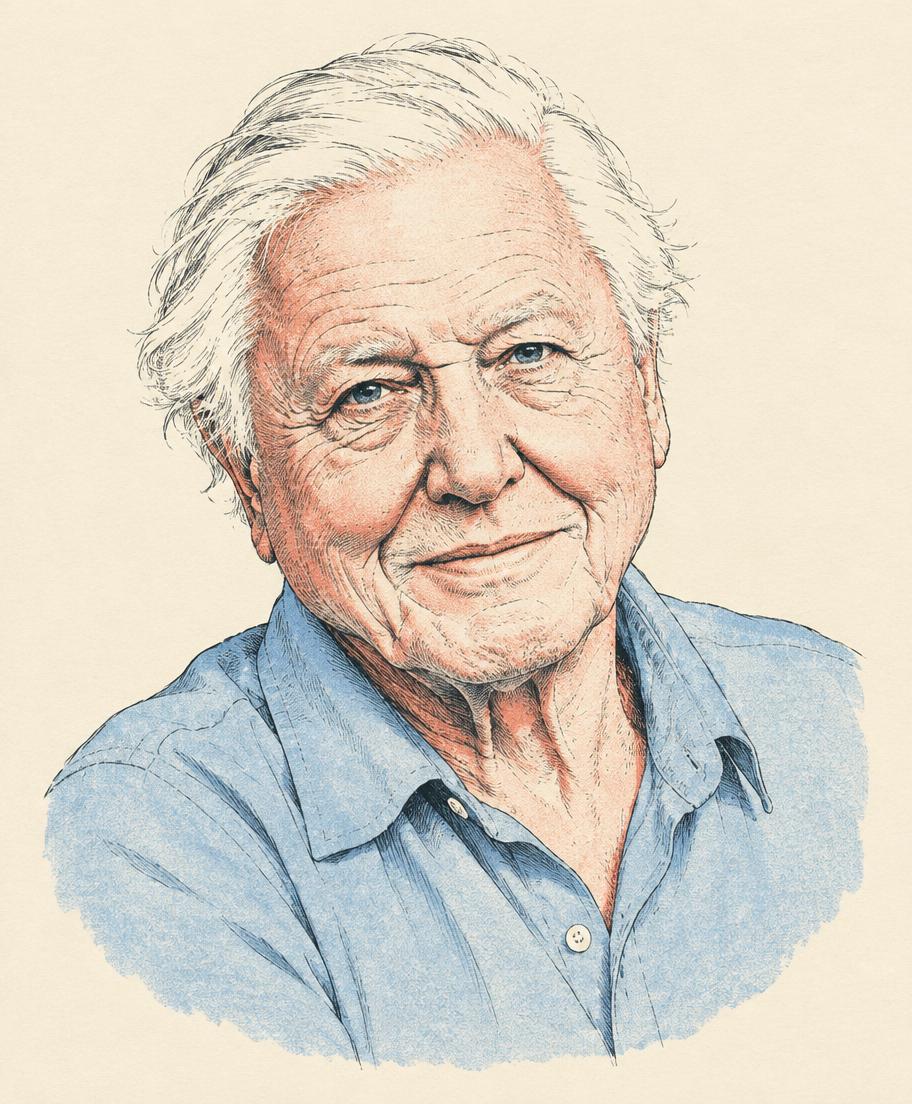
Broadcaster and natural historian
David Attenborough
The broadcaster whose natural history series have shaped how audiences understand life on Earth.
Read biography ↗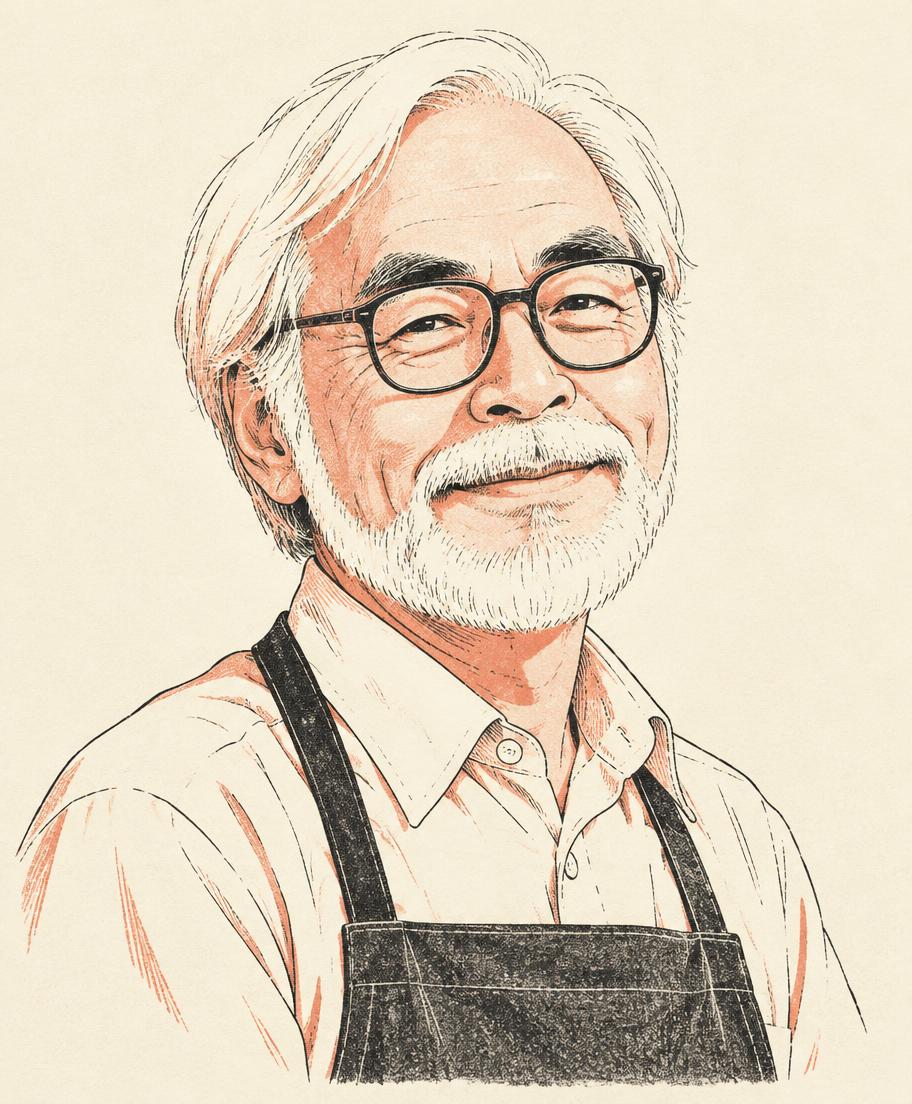
Animator and film director
Hayao Miyazaki
The animator and co-founder of Studio Ghibli whose hand-drawn films reached audiences worldwide.
Read biography ↗
Pope
Benedict I
Pope Benedict I was the bishop of Rome from 2 June 575 to his death on 30 July 579.
Read biography ↗