Italian philosopher, theologian, astrologer, and poet (1568-1639)
Tommaso Campanella
Tommaso Campanella, baptized Giovanni Domenico Campanella, was an Italian Dominican friar, philosopher, theologian, astrologer, and poet.
By globalcelebwiki Editorial Desk, adapted from Wikipedia · Published 29 September 2026
- Profession
- Italian philosopher, theologian, astrologer, and poet (1568-1639)
- Birthplace
- Stilo
- Nationality
- Kingdom of Naples

Overview
Tommaso Campanella (Italian: [tomˈmaːzo kampaˈnɛlla]; 5 September 1568 – 21 May 1639), baptized Giovanni Domenico Campanella, was an Italian Dominican friar, philosopher, theologian, astrologer, and poet.
Campanella was prosecuted by the Roman Inquisition for heresy in 1594 and was confined to house arrest for two years. Accused of conspiring against the Spanish rulers of Calabria in 1599, he was tortured and sent to prison, where he spent 27 years. He wrote his most significant works during this time, including The City of the Sun, a utopia describing an egalitarian theocratic society where property is held in common.
Biography
Born into poverty in Stignano, in the province of Reggio di Calabria in Calabria, southern Italy, Campanella was a child prodigy. Son of an illiterate cobbler, he entered the Dominican Order before the age of fourteen, taking the name of fra' Tommaso in honour of Thomas Aquinas. He studied theology and philosophy with several masters.
Early on, he became disenchanted with the Aristotelian orthodoxy and attracted by the empiricism of Bernardino Telesio (1509–1588), who taught that knowledge is sensation and that all things in nature possess sensation. Campanella wrote his first work, Philosophia sensibus demonstrata ("Philosophy demonstrated by the senses"), published in 1592, in defence of Telesio.
In 1590 he was in Naples where he was initiated in astrology; astrological speculations would become a constant feature in his writings. Campanella's heterodox views, especially his opposition to the authority of Aristotle, brought him into conflict with the ecclesiastical authorities. Denounced to the Roman Inquisition, he was arrested in Padua in 1594 and cited before the Holy Office in Rome, he was confined in a convent until 1597.
After his liberation, Campanella returned to Calabria, where he was accused of leading a conspiracy against the Spanish rule in his hometown of Stilo. Campanella's aim was to establish a society based on the community of goods and wives, for on the basis of the prophecies of Joachim of Fiore and his own astrological observations, he foresaw the advent of the Age of the Spirit in the year 1600. Betrayed by two of his fellow conspirators, he was captured in 1599 and incarcerated in Naples, where he was tortured on the rack. Even from the confinement of the jail, Campanella managed to influence the intellectual history of the early seventeenth century, by maintaining epistolary contacts with European philosophers and scientists, Neapolitan cultural circles, and Caravaggio's commissioners. Finally, Campanella made a full confession and would have been put to death had he not feigned madness and set his cell on fire. He was tortured further, a total of seven times. Crippled and ill, Campanella was sentenced to life imprisonment.
Campanella spent twenty-seven years imprisoned in Naples, in various fortresses. During his detention, he wrote his most important works: The Monarchy of Spain (1600), Political Aphorisms (1601), Atheismus triumphatus (Atheism Conquered, 1605–1607), Quod reminiscetur (1606?), Metafisica (1609–1623), Theologia (1613–1624), and his most famous work, The City of the Sun (originally written in Italian in 1602; published in Latin in Frankfurt (1623) and later in Paris (1638).
Works
Prodromus philosophiae instaurandae, 1617
Apologia pro Galileo (in Latin). Frankfurt am Main: Gottfried Tampach. 1622.
La città del sole, 1602 (Latin Civitas solis, 1623)
Medicinalium libri (in Latin). Lugduni: ex officina Ioannis Pillehotte : sumptibus Ioannis Caffin, & Francisci Plaignard. 1635.
Metaphysica (in Latin). Vol. 1. Paris. 1638.
Sources and references
Spotted something wrong? Report a correction.
Related profiles
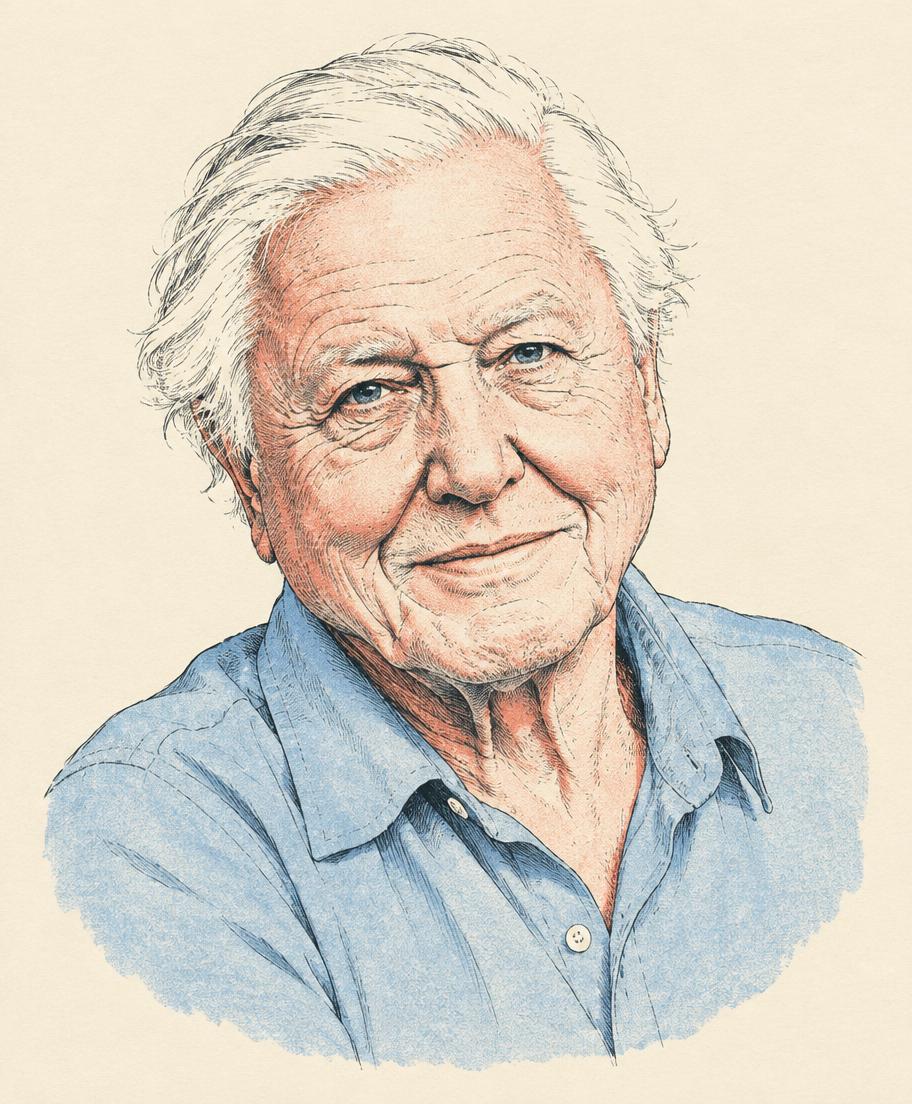
Broadcaster and natural historian
David Attenborough
The broadcaster whose natural history series have shaped how audiences understand life on Earth.
Read biography ↗
Animator and film director
Hayao Miyazaki
The animator and co-founder of Studio Ghibli whose hand-drawn films reached audiences worldwide.
Read biography ↗
Pope
Benedict I
Pope Benedict I was the bishop of Rome from 2 June 575 to his death on 30 July 579.
Read biography ↗