5th-century BC Athenian historian and general
Thucydides
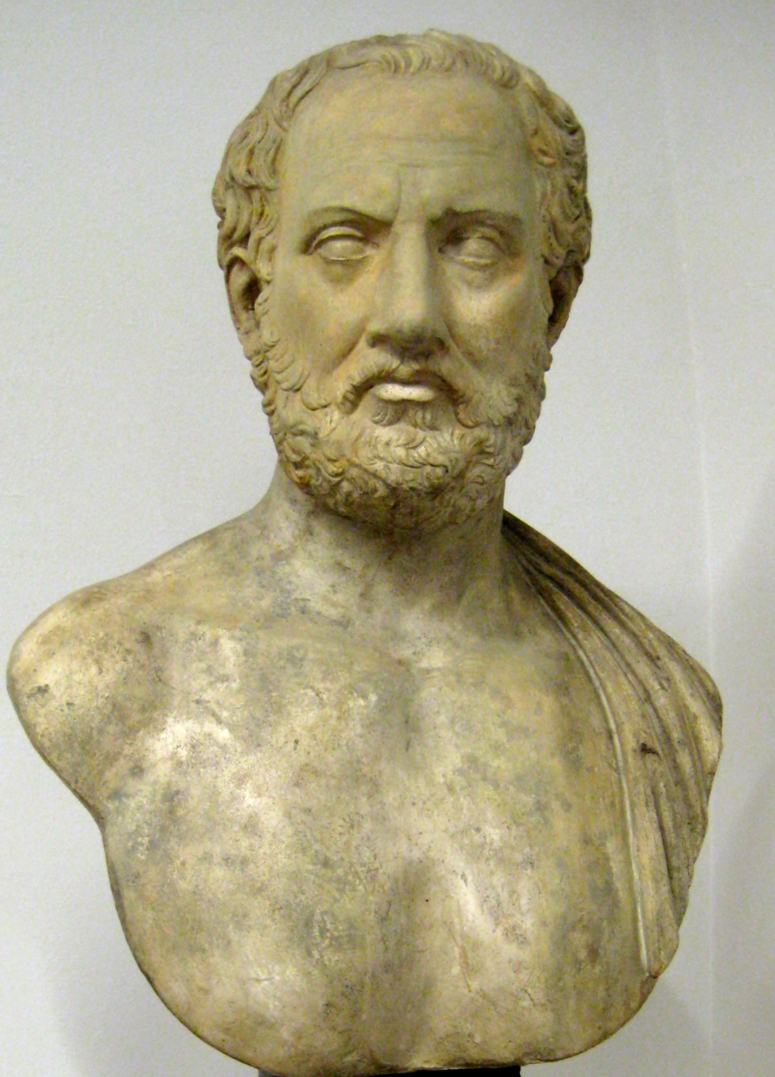
Thucydides was an Athenian historian and general.
By globalcelebwiki Editorial Desk, adapted from Wikipedia · Published 29 September 2026
- Profession
- 5th-century BC Athenian historian and general
- Birthplace
- Halimous
- Nationality
- Athenians
Overview
Thucydides ( thew-SID-ih-deez; Ancient Greek: Θουκυδίδης, romanised: Thoukudídēs [tʰuːkydǐdɛːs]; c. 460 – c. 400 BC) was an Athenian historian and general. His History of the Peloponnesian War recounts the 5th century BC war between Sparta and Athens until the year 411 BC. Thucydides has been dubbed the father of "scientific history" by those who accept his claims to have applied strict standards of impartiality and evidence-gathering and analysis of cause and effect, without reference to intervention by the gods, as outlined in his introduction to his work.
Thucydides has been called the father of the school of political realism, which views the political behaviour of individuals and the subsequent outcomes of relations between states as ultimately mediated by, and constructed upon, fear and self-interest. His text is still studied at universities and military colleges worldwide. The Melian dialogue is regarded as a seminal text of international relations theory, while his version of Pericles's Funeral Oration is widely studied by political theorists, historians, and students of the classics. More generally, Thucydides developed an understanding of human nature to explain behaviour in such crises as plagues, massacres, and wars.
Life
In spite of his stature as a historian, modern historians know relatively little about Thucydides's life. The most reliable information comes from his own History of the Peloponnesian War, in which he mentions his nationality, paternity, and birthplace. Thucydides says that he fought in the war, contracted the plague, and was exiled by the democracy. He may have also been involved in quelling the Samian Revolt.
Thucydides identifies himself as an Athenian, telling us that his father's name was Olorus and that he was from the Athenian deme of Halimous. According to one disputed anecdote, when Thucydides was 10–12 years old, he and his father were supposed to have gone to the agora of Athens where the young Thucydides heard a lecture by the historian Herodotus. According to some accounts, the young Thucydides wept with joy after hearing the lecture, deciding that writing history would be his life's calling. The same account also claims that after the lecture, Herodotus spoke with the youth and his father, stating: "Oloros your son yearns for knowledge." The episode is most likely from a later Greek or Roman account of his life.
He survived the Plague of Athens, which killed Pericles and many other Athenians. There is a first observation of acquired immunity. He also records that he owned gold mines at Scapte Hyle (literally "Dug Woodland"), a coastal area in Thrace, opposite the island of Thasos.
Because of his influence in the Thracian region, Thucydides was sent as a strategos (general) to Thasos in 424 BC. During the winter of 424–423 BC, the Spartan general Brasidas attacked Amphipolis, a half-day's sail west from Thasos on the Thracian coast, sparking the Battle of Amphipolis. Eucles, the Athenian commander at Amphipolis, sent to Thucydides for help. Brasidas, aware of the presence of Thucydides on Thasos and his influence with the people of Amphipolis, and afraid of help arriving by sea, acted quickly to offer moderate terms to the Amphipolitans for their surrender, which they accepted. Thus, when Thucydides arrived, Amphipolis was already under Spartan control.
Amphipolis was of considerable strategic importance, and news of its fall caused great consternation in Athens. The fall of the city was blamed on Thucydides, although he claimed that it was not his fault and that he had been unable to reach it in time. Because of his failure to save Amphipolis, he was exiled:
I lived through the whole of it, being of an age to comprehend events, and giving my attention to them in order to know the exact truth about them. It was also my fate to be an exile from my country for twenty years after my command at Amphipolis; and being present with both parties, and more especially with the Peloponnesians by reason of my exile, I had leisure to observe affairs somewhat particularly.
The History of the Peloponnesian War
Thucydides believed that the Peloponnesian War represented an event of unmatched importance. As such, he began to write the History at the onset of the war in 431 BC. He declared his intention was to write an account which would serve as "a possession for all time". The History breaks off near the end of the 21st year of the war (411 BC), in the wake of the Athenian defeat at Syracuse, and so does not elaborate on the final seven years of the conflict.
The History of the Peloponnesian War continued to be modified well beyond the end of the war in 404 BC, as exemplified by a reference at Book I.1.13. to the conclusion of the war. After his death, Thucydides's History was subdivided into eight books: its modern title is the History of the Peloponnesian War. This subdivision was most likely made by librarians and archivists, themselves being historians and scholars, most likely working in the Library of Alexandria.
Thucydides is generally regarded as one of the first true historians. Like his predecessor Herodotus, known as "the father of history", Thucydides places a high value on eyewitness testimony and writes about events in which he probably took part. He also assiduously consulted written documents and interviewed participants about the events that he recorded. Unlike Herodotus, whose stories often teach that a hubris invites the wrath of the deities, Thucydides does not acknowledge divine intervention in human affairs.
Thucydides exerted wide historiographical influence on subsequent Hellenistic and Roman historians, although the exact description of his style in relation to many successive historians remains unclear. Readers in antiquity often placed the continuation of the stylistic legacy of the History in the writings of Thucydides's putative intellectual successor Xenophon. Such readings often described Xenophon's treatises as attempts to "finish" Thucydides's History. Many of these interpretations, however, have garnered significant scepticism among modern scholars, such as Dillery, who spurn the view of interpreting Xenophon qua Thucydides, arguing that the latter's "modern" history (defined as constructed based on literary and historical themes) is antithetical to the former's account in the Hellenica, which diverges from the Hellenic historiographical tradition in its absence of a preface or introduction to the text and the associated lack of an "overarching concept" unifying the history.
A noteworthy difference between Thucydides's method of writing history and that of modern historians is Thucydides's inclusion of lengthy formal speeches that, as he states, were literary reconstructions rather than quotations of what was said—or, perhaps, what he believed ought to have been said. Arguably, had he not done this, the gist of what was said would not otherwise be known at all—whereas today there is a plethora of documentation—written records, archives, and recording technology for historians to consult. Therefore, Thucydides's method served to rescue his mostly oral sources from oblivion. We do not know how these historical figures spoke. Thucydides's recreation uses a heroic stylistic register. A celebrated example is Pericles' funeral oration, which heaps honour on the dead and includes a defence of democracy:
Philosophical outlook and influences
Paul Shorey calls Thucydides "a cynic devoid of moral sensibility". In addition, he notes that Thucydides conceived of human nature as strictly determined by one's physical and social environments, alongside basic desires. Francis Cornford was more nuanced: Thucydides's political vision was informed by a tragic ethical vision, in which:
Man, isolated from, and opposed to, Nature, moves along a narrow path, unrelated to what lies beyond and lighted only by a few dim rays of human 'foresight' (γνώμη/gnome), or by the false, wandering fires of Hope. He bears within him, self-contained, his destiny in his own character: and this, with the purposes which arise out of it, shapes his course. That is all, in Thucydides' view, that we can say: ‘except that, now and again, out of the surrounding darkness comes the blinding strokes of Fortune, unaccountable and unforeseen.'
Thucydides's work indicates an influence from the teachings of the Sophists that contributes substantially to the thinking and character of his History. Possible evidence includes his sceptical ideas concerning justice and morality. There are also elements within the History (such as his views on nature revolving around the factual, empirical, and the non-anthropomorphic) which suggest that he was at least aware of the views of philosophers such as Anaxagoras and Democritus. There is also evidence of his knowledge concerning some of the corpus of Hippocratic medical writings.
Thucydides was especially interested in the relationship between human intelligence and judgment, fortune and necessity, and the idea that history is too irrational and incalculable to predict.
Comparison with Herodotus
Thucydides and his immediate predecessor, Herodotus, both exerted a significant influence on Western historiography. Thucydides does not mention his counterpart by name, but his famous introductory statement is thought to refer to him:
To hear this history rehearsed, for that there be inserted in it no fables, shall be perhaps not delightful. But he that desires to look into the truth of things done, and which (according to the condition of humanity) may be done again, or at least their like, shall find enough herein to make him think it profitable. And it is compiled rather for an everlasting possession than to be rehearsed for a prize. (1:22)
Herodotus records in his Histories not only the events of the Persian Wars, but also geographical and ethnographical information, as well as the fables related to him during his extensive travels. Typically, he passes no definitive judgment on what he has heard. In the case of conflicting or unlikely accounts, he presents both sides, says what he believes and then invites readers to decide for themselves. Of course, modern historians would generally leave out their personal beliefs, which is a form of passing judgment upon the events and people about which the historian is reporting. The work of Herodotus is reported to have been recited at festivals, where prizes were awarded, as for example, during the games at Olympia.
Herodotus views history as a source of moral lessons, with conflicts and wars as misfortunes flowing from initial acts of injustice perpetuated through cycles of revenge. In contrast, Thucydides claims to confine himself to factual reports of contemporary political and military events, based on unambiguous, first-hand, eye-witness accounts, although, unlike Herodotus, he does not reveal his sources. Thucydides views life exclusively as political life, and history in terms of political history. Conventional moral considerations play no role in his analysis of political events while geographic and ethnographic aspects are omitted or, at best, of secondary importance. Subsequent Greek historians—such as Ctesias, Diodorus, Strabo, Polybius and Plutarch—held up Thucydides's writings as a model of truthful history. Lucian refers to Thucydides as having given Greek historians their law, requiring them to say what had been done (ὡς ἐπράχθη). Greek historians of the fourth century BC accepted that history was political and that contemporary history was the proper domain of a historian. Cicero calls Herodotus the "father of history"; yet the Greek writer Plutarch, in his Moralia (Ethics) denigrated Herodotus, notably calling him a philobarbaros, a "barbarian lover", to the detriment of the Greeks. Unlike Thucydides, however, these authors all continued to view history as a source of moral lessons, thereby infusing their works with personal biases generally missing from Thucydides's clear-eyed, non-judgmental writings focused on reporting events in a non-biased manner.
Due to the loss of the ability to read Greek, Thucydides and Herodotus were largely forgotten during the Middle Ages in Western Europe, although their influence continued in the Byzantine world. In Europe, Herodotus become known and highly respected only in the late-sixteenth and early-seventeenth century as an ethnographer, in part due to the discovery of America, where customs and animals were encountered that were even more surprising than what he had related. During the Reformation, moreover, information about Middle Eastern countries in the Histories provided a basis for establishing Biblical chronology as advocated by Isaac Newton.
Sources and references
Spotted something wrong? Report a correction.
Related profiles
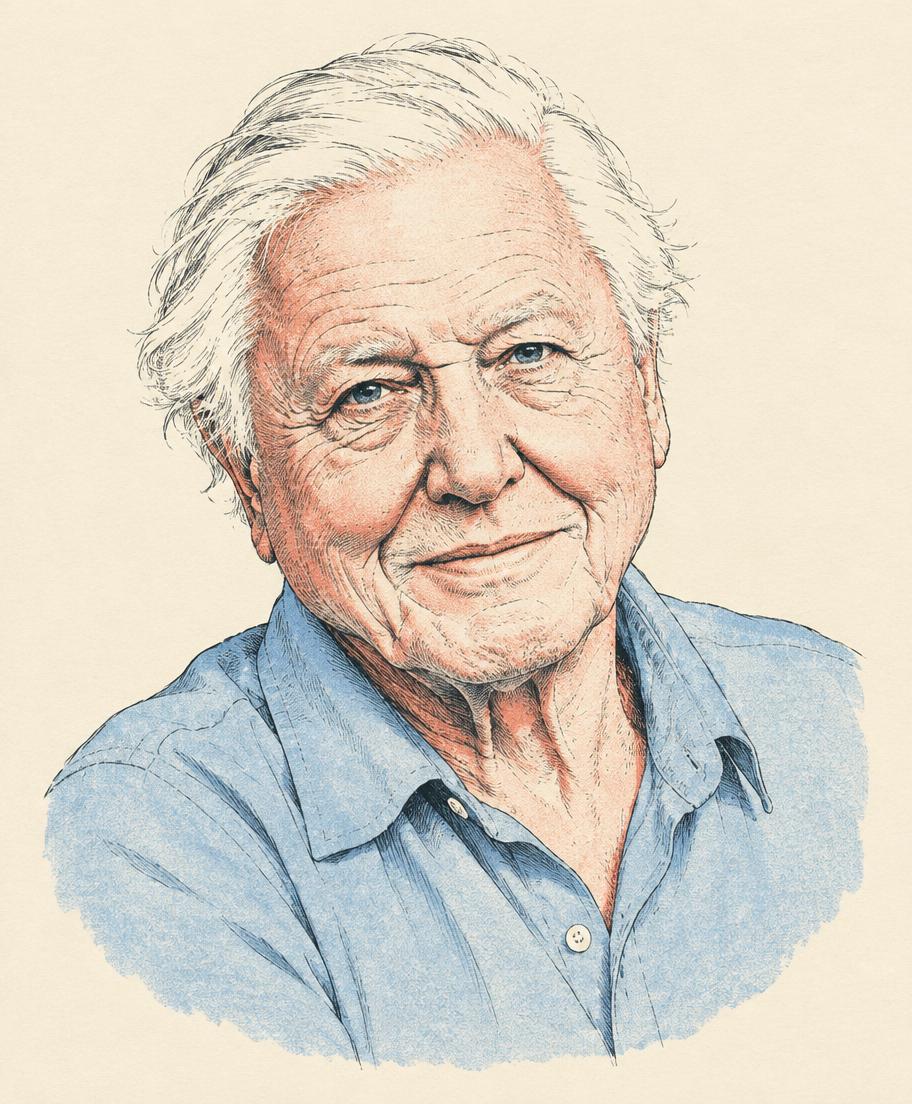
Broadcaster and natural historian
David Attenborough
The broadcaster whose natural history series have shaped how audiences understand life on Earth.
Read biography ↗
Animator and film director
Hayao Miyazaki
The animator and co-founder of Studio Ghibli whose hand-drawn films reached audiences worldwide.
Read biography ↗
Pope
Benedict I
Pope Benedict I was the bishop of Rome from 2 June 575 to his death on 30 July 579.
Read biography ↗