Roman comic playwright (2nd cent. BC)
Terence
Publius Terentius Afer, better known in English as Terence, was a playwright during the Roman Republic.
By globalcelebwiki Editorial Desk, adapted from Wikipedia · Published 29 September 2026
- Profession
- Roman comic playwright (2nd cent. BC)
- Birthplace
- Carthage
- Nationality
- Roman
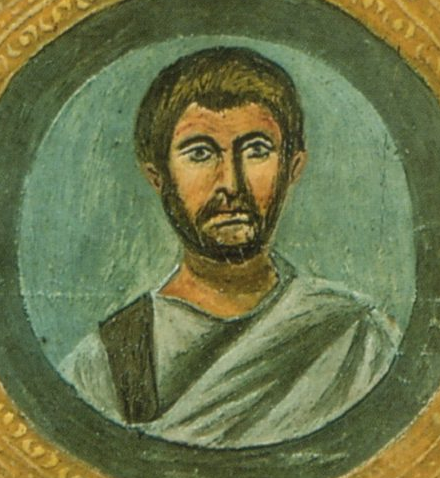
Overview
Publius Terentius Afer (; c. 195/185 – c. 159 BC), better known in English as Terence (), was a playwright during the Roman Republic. He was the author of six comedies based on Greek originals by Menander or Apollodorus of Carystus. All six of Terence's plays survive complete and were originally produced between 166 and 160 BC.
According to ancient authors, Terence was born in Carthage and was brought to Rome as a slave, where he gained an education and his freedom; around the age of 25, Terence is said to have made a voyage to the east in search of inspiration for his plays, where he died either of disease in Greece, or by shipwreck on the return voyage. However, Terence's traditional biography is often thought to consist of speculation by ancient scholars who lived too long after Terence to have access to reliable facts about his life.
Terence's plays quickly became standard school texts. He ultimately secured a place as one of the four authors taught to all grammar pupils in the Western Roman Empire, and retained a central place in the European school curriculum until the 19th century, exercising a formative influence on authors such as William Shakespeare and Molière.
Life and career
The manuscripts of Terence's plays contain didascaliae, or production notices, recording the dates, occasions, and personnel of early productions of the plays, and identifying the author of the Greek original. Other traditional information about the life of Terence derives from the Vita Terenti, a biography preserved in Aelius Donatus' commentary, and attributed by him to Suetonius. However, it is not likely that Terence's contemporaries would have considered a dramatist important enough to write down his biography for posterity, and the narrative given by Suetonius' sources is often construed as conjecture based on the play texts and didascaliae.
In the 2nd century BC, plays were regular features of four annual Roman festivals: the Ludi Romani (September), the Ludi Plebeii (November), the Ludi Apollinares (July), and the Ludi Megalenses (April); plays would also be staged at votive games, triumphs, and the more elaborate aristocratic funerals. Because the Roman calendar ran some two and a half months ahead of the Sun in the 160s, Terence's plays that premiered at the Megalensia, though officially scheduled in April, would actually have premiered in late January.
There was no permanent theatre in Rome until the construction of the Theatre of Pompey in 55 BC, and Terence's plays would have been performed on temporary wooden stages constructed for the occasion. The limited space available would probably have accommodated an audience of less than 2,000 persons at a given performance. Admission was free to the entire population, seemingly on a first-come-first-served basis, except for the reservation of seats for members of the Senate after 194 BC; descriptions of 2nd century theatre audiences refer to the presence of women, children, slaves, and the urban poor.
In Greek New Comedy, from which the Roman comic tradition derived, actors wore masks which were conventionally associated with stock character types. Ancient authors make conflicting statements on whether Roman actors also wore masks in the time of Terence. For a time, Christian Hoffer's 1877 dissertation On the Use of Masks in Publius Terentius' Comedies won universal acceptance for the view that masks were not worn at the original performances of the plays of Terence. However, most more recent authorities consider it highly likely that Roman actors of Terence's time did wear masks when performing this kind of play, and "hard to believe" or even "inconceivable" that they did not. Donatus states that the actors wore masks in the original productions of the Eunuchus and the Adelphoe.
According to the didascaliae, each of Terence's plays was originally produced by the acting company of Lucius Ambivius Turpio, and musical accompaniment for each of the plays was provided by a tibicen named Flaccus, a slave in the service of a certain Claudius. The traditional and generally accepted chronology of the plays established according to the didascaliae is as follows:
165 BC: abortive production of Hecyra at the Ludi Megalenses
163 BC: Heauton timorumenos at the Ludi Megalenses
161 BC: Eunuchus at the Ludi Megalenses; Phormio at the Ludi Romani
160 BC: Adelphoe, and second abortive production of Hecyra, at the funeral games of Aemilius Paullus; third (and successful) production of Hecyra at the Ludi Romani
The Greek plays which provided the Roman comedians with their material typically had a prologue which either preceded the play, or interrupted the first act after one or two scenes. In the plays of Plautus, the prologue usually, but not invariably, provides exposition of the plot; Terence abandons the traditional expository function of the prologue entirely and uses it to provide a different kind of entertainment centring on replies to criticism of his work.
Terence particularly refers the "slanders" he has suffered to a certain "old" and "spiteful" poet. Because Terence says this man was the translator of Menander's Phasma and Thesaurus (Eu. 9–10), Donatus (or an earlier commentator from whom Donatus gleaned this information) was able to identify him as Luscius Lanuvinus, although no names are used in the prologues. Nothing survives of Luscius' work save two lines of the Thesaurus quoted by Donatus, nor is anything known about Luscius independently of Terence's prologues except that Volcacius Sedigitus rated Luscius the ninth-best Latin comic poet (and Terence the sixth-best). Terence's description of Luscius as "old" may refer to a style of play-writing that Terence considered old-fashioned rather than to advanced age. Terence's judgement of Luscius' work is that "by translating them well and writing them badly, he has made good Greek plays into Latin ones that aren't good" (Eu. 7–8), and that Luscius' theatrical successes were due more to the efforts of the actors than of the author. (Ph. 9–11)
According to Suetonius, Terence was born in Carthage. He came to Rome as a slave in the household of an otherwise unknown senator named P. Terentius Lucanus, who educated him and freed him because of his talent and good looks. Terence then took the nomen "Terentius" from his patron. Possibly winning noblemen's favour by his youthful beauty, Terence became a member of the so-called Scipionic Circle.
When Terence offered his first play, Andria, to the aediles, they bade him first read it to Caecilius. Terence, shabbily dressed, went to the older poet's house when he was dining, and when Caecilius had heard only a few lines, he invited the young man to join him for the meal. The historicity of this meeting has been doubted on the grounds that it is improbable Terence, with his aristocratic patrons, would have been unable to dress himself decently for such an important interview; a suspiciously similar story is told about the tragedians Accius and Pacuvius; and Jerome's statement that Caecilius died the year after Ennius implies that Caecilius died two years before Andria was produced. However, Thomas Carney argues that Jerome's dating of Caecilius' death is not above suspicion, and besides, a delay of several years between this meeting and production is entirely plausible, as Caecilius may have been impressed by the novice playwright's work even while the discussion showed Terence the need for revision. R. C. Flickinger argues that the reported state of Terence's clothing shows that he had not yet become acquainted with his rich and influential patrons at the time of this meeting, and it was precisely Caecilius' death shortly thereafter, and the consequent loss of his support, which caused a two-year delay in production.
All six of Terence's plays pleased the people; the Eunuchus earned 8,000 nummi, the highest price that had ever been paid for a comedy at Rome, and was acted twice in the same day. Donatus, who appears to understand that Terence himself received this entire amount, interprets the price that Suetonius says was paid for the Eunuchus as 8,000 sesterces. However, Dwora Gilula argues that the term nummus, inscribed on the title page in 161 BC, would refer to a denarius, a coin containing a much larger quantity of silver, so that the price paid for the Eunuchus was really 32,000 sesterces.
When he was about the age of 25 (or, according to some manuscripts, 35), Terence travelled to Greece or Asia and never returned. Suetonius' sources disagree about the motive and destination of Terence's voyage, as well as about whether he died of illness in Greece, or died by shipwreck on the return voyage. Suetonius places Terence's death "in the consulship of Gnaeus Cornelius Dolabella and Marcus Fulvius Nobilior," i.e., in 159 BC. It is possible that the fateful voyage to Greece was a speculative explanation of why he wrote so few plays inferred from Terence's complaint in Eunuchus 41–3 about the limited materials at his disposal.
As transmitted in the manuscript tradition, the Vita attributes the claim to Q. Cosconius that Terence died by shipwreck while returning from Greece "cum C et VIII fabulis conversis a Menandro," an expression interpreted by some to refer to 108 new plays that Terence had adapted from Menander, but by Carney as "108 stories dramatised by Menander," who is credited with having written exactly this number of plays. If this number refers to new Terentian plays, it is improbable that Terence worked at such a rate after having previously finished less than one play a year, and some editors delete the number, supposing that the numeral CVIII is simply a double copying of the preposition CVM, subsequently rationalised as a number.
Ancient biographers' reports that Terence was born in Africa may be an inference from his name and not independent biographical information. His cognomen Afer ("the [North] African") may indicate that Terence hailed from ancient Libya. However, such names did not necessarily denote origin, and there were Romans who had this cognomen who were not Africans, such as Domitius Afer.
It has often been asserted on the basis of the name that Terence was of Berber descent, as the Romans distinguished between Berbers, called Afri in Latin, and Carthaginians, called Poeni. However, lexicographic evidence does not support the validity of this distinction during Terence's lifetime. If Terence was born as a slave in Carthage, it is possible his mother was an ethnic Italian brought there as a war captive by Hannibal. Carney argues that Terence must have been born from the Italiote Greek population enslaved by Hannibal, as this would explain his proficiency in Latin and Greek. F. H. Sandbach notes that in the modern world, it is rare, but not entirely unknown, for an author to achieve literary distinction in a second language.
Terence's date of birth is uncertain, though Sesto Prete infers from Terence's characterisation of himself as a "new" writer (Eu. 43), and of a rival poet as "old" (Hau. 23), that Terence was young when he wrote his plays in the 160s. Suetonius' statement that Terence died at about the age of 25 in 159 BC would imply that he was born in 184 BC, the same year as the death of Plautus, and was only 18 years old when he produced his first play. The variant reading that Terence was in his 30s when he died suggests instead that he was born ten years earlier in 194, which would appear to be supported by the statement attributed to Fenestella that Terence was older than Scipio and Laelius. Jerome's Chronicon places Terence's death in 158 BC.
Plays
Like Plautus, Terence adapted Greek plays from the late phases of Attic comedy. Unlike Plautus, however, Terence's writing style emphasized simple, conversational Latin, pleasant and direct, over visual humor.
Five of Terence's plays are about a pair of young men in love (in the Hecyra there is only one young man, who is already married, but who suspects his wife of infidelity). In all the plays there are two women involved, one a citizen, the other a prostitute. In four of the plays (not Hecyra nor Adelphoe) a recognition (anagnorisis or anagnorismos) occurs which proves that one of the girls is the long-lost daughter of a respectable citizen, thus clearing the way for her marriage.
A young Athenian, Pamphilus, is desperately in love with Glycerium, a foreign girl of low class, and has made her pregnant. But his father Simo wants him to marry the daughter of his friend Chremes. Meanwhile his friend Charinus is in love with the daughter that Pamphilus rejects. The wily slave Davus advises Pamphilus to agree to the marriage, believing that Chremes will object to it because of his affair with Glycerium, but the plan goes wrong when Chremes agrees to the marriage after all. Pamphilus is furious with Davus. Simo is also furious since he believes that birth of Glycerium's baby is just one of Davus's tricks. The situation is saved when, thanks to the arrival of a stranger from Andros, Chremes realises that Glycerium is his own long-lost daughter. The two young men get to marry the women of their choice and Davus is rescued from punishment.
Heauton Timorumenos (The Self-Tormentor) (163 BC)
An Athenian farmer, Chremes, asks his neighbour Menedemus why he works all day on his farm. Menedemus says he is punishing himself for allowing his anger over his son Clinia's love affair with a poor girl to push the boy into going abroad on military service; he misses him terribly. On returning home Chremes finds that Clinia has returned and is visiting Chremes' son Clitipho. Chremes' wily slave Syrus brings Clinia's girlfriend Antiphila to Chremes' house; but he also brings Clitipho's girlfriend, the courtesan Bacchis. To conceal Clitipho's affair, he says they will pretend to Chremes that Bacchis is Clinia's girlfriend, and that Antiphila is one of Bacchis's servants. In another ruse he suggests that Chremes should persuade Menedemus to buy Antiphila so that Clinia can stay with Bacchis. However, when Clitipho's mother discovers from a ring that Antiphila is her own daughter, whom Chremes had ordered to be exposed as a baby, this plan falls through. Undeterred, Syrus tricks Chremes into paying money to Bacchis for Antiphila's release. But when Chremes learns that it is Clitipho who is in love with Bacchis, he is furious, especially at the thought of how much Bacchis will cost. At first he threatens to disinherit Clitipho, but eventually he forgives him on condition that he agrees to marry a suitable girl at once. Clinia, meanwhile, is allowed to marry Antiphila. Syrus is also forgiven.
Ancient commentary
Jerome mentions in Contra Rufinum I.16 that "my teacher Donatus" had written a commentary on the comedies of Terence. Donatus' commentary does not survive in the form in which he originally wrote it. It is commonly believed that an unknown medieval scribe, using two or more manuscripts of Terence containing marginal notes excerpted from Donatus, copied the notes in order to reconstitute the commentary as a separate book, incorporating extraneous material in the process, assigning notes to verses where they did not originally belong, or including material that had been otherwise changed in the course of transmission. Citations from Donatus' commentary which are not found in the extant redaction occur in Priscian and in scholia to the Codex Bembinus and Codex Victorianus. Another ancient commentary is attributed to one Eugraphius, of whom nothing is known but his authorship of this commentary. Donatus' commentary on the Heauton timorumenos is lacking, but his references to this play in his commentary on other parts of the corpus and Eugraphius' commentary help to make up the gap.
In its extant form, Donatus' commentary is prefaced by Suetonius' Vita Terenti, a short essay on the genre of comedy and its differences from tragedy now commonly called De fabula, and a separate, shorter work on the same subject which in some manuscripts begins with the heading De comoedia. Friedrich Lindenbrog was able to identify the De fabula as the work of an earlier commentator on Terence named Evanthius (probably identical with the grammarian Evanthius said in Jerome's Chronicon to have died at Constantinople in AD 358) because the grammarian Rufinus of Antioch (5th cent. AD), in a work On the Metres of Terence, quotes the De fabula and ascribes it to Evanthius. Evanthius' work is otherwise lost. The De comoedia has continued to be considered the work of Donatus.
Manuscripts of Terence
The manuscripts of Terence can be divided into two main groups. One group has just one representative, the Codex Bembinus (known as A), dating to the 4th or early 5th century AD, and kept in the Vatican library. This book, written in rustic capitals, is one of the earliest surviving manuscripts of any Latin writer. It has the plays in the order An., Eu., Hau., Ph., Hec., Ad. Three small fragments of similar antiquity survive as well.
Approximately 650 manuscripts exist of later date. These are often known as the "Calliopian" manuscripts, based on subscriptions to the plays found in several of the earlier manuscripts indicating the text had been corrected by someone named Calliopius; nothing further is known of this individual. They date from the 9th century onwards and are written in minuscule letters. This group can be subdivided into three classes. The first class, known as γ (gamma), dates to the 9th, 10th, and 11th centuries and includes manuscripts P (Parisinus), C (Vaticanus), and possibly F (Ambrosianus), and E (Riccardianus) among others. They have the plays in the order An., Eu., Hau., Ad., Hec., Ph.. Manuscript C is the famous Codex Vaticanus Latinus 3868, which has illustrations which seem to be copied from originals dating in style to the mid-third century.
Another group, known as δ (delta), has the plays in alphabetical order: An., Ad., Eu., Ph.(=F), Hau., Hec. This consists of 3 or 4 10th-century manuscripts: D (Victorianus), G (Decurtatus), p (Parisinus), and perhaps also L (Lipsiensis).
All the remaining manuscripts belong to the "mixed" group and contain readings copied from both γ and δ, and so are of little value in establishing the text.
It is thought that the γ group and the δ group go back to two archetypes, both now lost, called Γ (Gamma) and Δ (Delta), and that both of these were copied from a single archetype, also now lost, known as Σ (sigma). According to A. J. Brothers, manuscript A, although it contains some errors, generally has a better text than Σ, which has a number of changes designed perhaps to make Terence easier to read in schools. Both A and the now lost Σ are believed to be derived from an even earlier archetype known as Φ (phi), the date of which is unknown.
Cultural legacy
At a relatively early date, Terence's play texts began to circulate as literary works for a reading public, as opposed to scripts for the use of actors. By the end of the 2nd century BC, Terence had been established as a literary "classic" and a standard school text. Cicero (born 106 BC) recalls that when he was a boy, his education in rhetoric included an assignment to recount Simo's narrative from the first scene of the Andria in his own words. Throughout the imperial period, Terence was second only to Vergil as the most widely known and read of Latin poets, and he remained a core school author while other Republican authors were displaced from the curriculum by Vergil and other Augustan poets. By the late 4th century AD, Terence had become one of the four main canonical school authors (the others being Cicero, Sallust, and Vergil), canonised in a celebrated work by Arusianus Messius, and later referred to by Cassiodorus as "Messius' quadriga." St Jerome, St Augustine of Hippo, and the pupils of a "grammarian" friend of St Sidonius Apollinaris were all set to read the Eunuchus in school, and in another of his letters, Sidonius describes reading the Hecyra together with his son at home.
Terence was one of the few canonical classical authors to maintain a continuous presence in medieval literacy, and the large number of surviving manuscripts bears witness to his great popularity. Adolphus Ward said that Terence led "a charmed life in the darkest ages of learning", a remark approved by E. K. Chambers, but Paul Theiner takes issue with this, suggesting that it is more appropriate to attribute "a charmed life" to authors who survived the Middle Ages by chance in a few manuscripts found in isolated libraries, whereas the broad and constant popularity of Terence "rendered elfin administrations quite unnecessary."
Roman students learning to write would regularly be assigned to copy edifying sententiae, or "maxims", a practice adopted from Greek paedagogy, and Terence was a rich source of such sententiae. Scores of Terentian maxims enjoyed such currency in late antiquity that they often lost nominal association with their author, with those who quoted Terence qualifying his words as a common proverb. Through the Middle Ages, Terence was frequently quoted as an authority on human nature and the mores of men, without regard for which character spoke the line or the original dramatic context, as long as the quotation was sententious in itself when separated from the rest of the play.
Augustine was a lifelong admirer of Terence's observations on the human condition, and 38 quotations from 28 distinct passages of Terence have been identified in Augustine's works. Notwithstanding his respect for Terence's moralising, when Augustine writes in the Confessions about his school days, he quotes the scene from the Eunuchus where Chaerea recounts how he and Pamphila looked together at a painting of Zeus intruding in the home of Danaë, after which Chaerea, emboldened by the example of the pagan god, took the opportunity to rape Pamphila. Augustine argues that it is not necessary for students to be exposed to such "vileness" (turpitudo) merely to learn vocabulary and eloquence.
In the 10th century, Hrotsvit of Gandersheim wrote six plays based on the lives of Christian saints, on the model of the six comedies of Terence. In a preface explaining her purpose in writing, Hrotsvit takes up Augustine's critique of the moral influence of the comedies, saying that many Christians attracted by Terence's style find themselves corrupted by his subject matter, and she has undertaken to write works in the same genre so that the literary form once used "to describe the shameless acts of licentious women" might be repurposed to glorify the chastity of holy virgins. As Terence's subject matter is trivial while Hrotsvit's is important, his plays are in verse while hers are in prose, her plays are written in the same style as other medieval literature and lack verbal reminiscences of Terence apart from some oaths and interjections, and she does not respect the unity of time or other ancient dramatic conventions, it has been argued that Terence's influence on Hrotsvit is superficial, and the only similarity between them is that they each wrote six plays.
Dacier, Anne, ed. (1688). Les comédies de Térence traduites en françois, avec des remarques, par Madame D***. Paris. 3 vols.
Bentley, Richard, ed. (1726). Publii Terentii Afri Comoediae. Cambridge.
Umpfenbach, Franz, ed. (1870). P. Terenti Comoediae. Berlin: Weidmannsche Buchhandlung.
Ashmore, Sidney G., ed. (1910). The Comedies of Terence (2nd ed.). New York: Oxford University Press.
Kauer, Robert; Lindsay, Wallace M., eds. (1926). P. Terenti Afri Comoediae (2nd ed.). Oxford: Clarendon Press.
Shipp, G. P., ed. (1960). Andria (2nd ed.). Melbourne: Oxford University Press.
Monti, Richard C., ed. (1986). Andria. Bryn Mawr Latin Commentaries. Bryn Mawr, PA.{{cite book}}: CS1 maint: location missing publisher (link) 2 vols.
Goldberg, Sander M., ed. (2022). Andria. Cambridge Greek and Latin Classics. Cambridge: Cambridge University Press.
Brothers, A. J., ed. (1988). The Self-Tormentor. Warminster: Aris & Phillips. ISBN 0-85668-302-7.
Fabia, Philippe, ed. (1895). Eunuchus. Paris: Armand Colin. Introduction and commentary in French.
Wessner, Paul, ed. (1902–1908). Aeli Donati Commentum Terenti. Leipzig: Teubner. 3 vols.
Wessner, Paul, ed. (1902). Aeli Donati Commentum Terenti. Vol. I. Leipzig: Teubner. Contains the Vita Terenti, excerpts from Evanthius of Constantinople, and commentary by Donatus on the Andria and Eunuchus.
Wessner, Paul, ed. (1905). Aeli Donati Commentum Terenti. Vol. II. Leipzig: Teubner. Contains commentary by Donatus on the Adelphoe, the Hecyra, and the Phormio.
Wessner, Paul, ed. (1908). Aeli Donati Commentum Terenti. Vol. III, pt. 1. Leipzig: Teubner. Contains commentary on all six plays by Eugraphius.
Vol. III, pt. 2, which would have contained the scholia Bembina, was never published.
Sources and references
Spotted something wrong? Report a correction.
Related profiles

Broadcaster and natural historian
David Attenborough
The broadcaster whose natural history series have shaped how audiences understand life on Earth.
Read biography ↗
Animator and film director
Hayao Miyazaki
The animator and co-founder of Studio Ghibli whose hand-drawn films reached audiences worldwide.
Read biography ↗
Pope
Benedict I
Pope Benedict I was the bishop of Rome from 2 June 575 to his death on 30 July 579.
Read biography ↗