Belarusian investigative journalist and non-fiction prose writer (born 1948)
Svetlana Alexievich
Svetlana Alexandrovna Alexievich is a Belarusian author, investigative journalist, and oral historian who writes in Russian.
By globalcelebwiki Editorial Desk, adapted from Wikipedia · Published 29 September 2026
- Profession
- Belarusian investigative journalist and non-fiction prose writer (born 1948)
- Born
- 31 May 1948
- Birthplace
- Ivano-Frankivsk
- Nationality
- Belarusian

Overview
Svetlana Alexandrovna Alexievich (born 31 May 1948) is a Belarusian author, investigative journalist, and oral historian who writes in Russian. She was awarded the 2015 Nobel Prize in Literature "for her polyphonic writings, a monument to suffering and courage in our time". She is the first writer from Belarus to receive the award.
Biography
Born in the west Ukrainian town of Stanislav (Ivano-Frankivsk since 1962) to a Belarusian father and a Ukrainian mother. Both her parents were teachers; her father was also a village school principal. She spent her early childhood in Ukraine; the family then moved to Belarus. She visited her grandmother in Ukraine during summer holidays. After graduating from high school she worked as a reporter in several local newspapers. In 1972 she graduated from Belarusian State University and became a correspondent for the literary magazine Nyoman in Minsk (1976). Her first manuscript, Ya uyekhal iz derevni ('I left the village') was blocked for publication by Soviet censorship.
In 1989 Alexievich published Zinky Boys, a book about the fallen soldiers who had returned in zinc coffins from the Soviet-Afghan War of 1979 – 1989. She was accused of "defamation" and "desecration of the soldiers' honor". Alexievich was tried a number of times between 1992 and 1996; she was sued by four interviewees. Three claims were dismissed, and one was partially upheld. Alexievich later said that she couldn't locate the recordings in time. After political persecution by the Lukashenko administration, she left Belarus in 2000. The International Cities of Refuge Network offered her sanctuary, and during the following decade she lived in Paris, Gothenburg and Berlin. In 2011, Alexievich moved back to Minsk.
Alexievich was awarded the 2015 Nobel Prize in Literature. In her first public statement after she was announced the Nobel Prize winner, she condemned Russia's annexation of Crimea in 2014.
Her books were not published by Belarusian state-owned publishing houses after 1993, while private publishers in Belarus have only published two of her books: Chernobyl Prayer in 1999 and Secondhand Time: The Last of the Soviets in 2013, both translated into Belarusian. As a result, Alexievich has been better known in the rest of the world than in Belarus.
She has been described as the first journalist to receive the Nobel Prize in Literature. She disagrees that her work is journalism; the genre she works in is sometimes called "documentary literature".
Works
Her first book, War's Unwomanly Face, came out in 1985. It was repeatedly reprinted and sold more than two million copies. The book was finished in 1983 and published (in short edition) in Oktyabr, a Soviet monthly literary magazine, in February 1984. In 1985, the book was published by several publishers, and the number of printed copies reached 2,000,000 in the next five years. This non-fiction oral history book is made up of monologues of women in the war speaking about the aspects of World War II that had never been related before. Another book, The Last Witnesses: the Book of Unchildlike Stories, describes personal memories of children during wartime. The war seen through women's and children's eyes revealed a new world of feelings.
In 1989, Alexievich published "Boys in Zinc". The course of the Soviet-Afghan War (1979–1989) is told through personal testimony from anonymous participants of the war; from nurses to commissioned officers and pilots, mothers and widows. Each provides an excerpt of the Soviet-Afghan War which was disguised in the face of criticism first as political support, then intervention, and finally humanitarian aid to the Afghan people. Alexievich writes at the beginning of the book:
After the great wars of the twentieth century and the mass deaths, writing about the modern (small) wars, like the war in Afghanistan, requires different ethical and metaphysical stances. What must be reclaimed is the small, the personal, and the specific. The single human being. The only human being for someone, not as the state regards him, but who he is for his mother, for his wife, for his child. How can we recover a normal vision of life?
According to Alexievich, she obtained permission to travel to the war zone through a Writers' Union contact she believed was a KGB officer and travelled with a writers’ delegation. A colonel was subsequently assigned to monitor her. In "Boys in Zinc", Alexievich calls herself 'a historian of the untraceable' and 'strive[s] desperately (from book to book) to do one thing - reduce history to the human being.' She brings brutally honest accounts of the war to lay at the feet of the Soviet people but claims no heroism for herself: 'I went [to watch them assemble pieces of boys blown up by an anti-tank mine] and there was nothing heroic about it because I fainted there. Perhaps it was from the heat, perhaps from the shock. I want to be honest.' The monologues which make up the book are honest (if edited for clarity) reproductions of the oral histories Alexievich collected, including those who perhaps did not understand her purpose: 'What's your book for? Who's it for? None of us who came back from there will like it anyway. How can you possibly tell people how it was? The dead camels and dead men lying in a single pool of blood, with their blood mingled together. Who wants that?' Alexievich was brought to trial in Minsk between 1992 and 1996, accused of distorting and falsifying the testimony of Afghan veterans and their mothers who were 'offended [...] that their boys were portrayed exclusively as soulless killer-robots, pillagers, drug addicts and rapists...' The trial, while apparently defending the honour of the army and veterans, is widely seen as an attempt to preserve old ideology in post-communist Belarus. The Belarus League for Human Rights claims that in the early 1990s, multiple cases were directed against democratically inclined intelligentsia with politically motivated verdicts.
In 1993, she published Enchanted by Death, a book about attempted and completed suicides due to the downfall of the Soviet Union. Many people felt inseparable from the Communist ideology and were unable to accept the new order surely and the newly interpreted history.
Influences and legacy
Alexievich's books trace the emotional history of the Soviet and post-Soviet individual through carefully constructed collages of interviews. According to Russian writer and critic Dmitry Bykov, her books owe much to the ideas of Belarusian writer Ales Adamovich, who felt that the best way to describe the horrors of the 20th century was not by creating fiction but through recording the testimonies of witnesses. Belarusian poet Uladzimir Nyaklyayew called Adamovich "her literary godfather". He also named the documentary novel I'm From Fire Village (Belarusian: Я з вогненнай вёскі) by Ales Adamovich, Janka Bryl and Uladzimir Kalesnik, about the villages burned by the German troops during the occupation of Belarus, as the main single book that has influenced Alexievich's attitude to literature. Alexievich has confirmed the influence of Adamovich and Belarusian writer Vasil Bykaŭ, among others. She regards Varlam Shalamov as the best writer of the 20th century.
In a 2015 interview, she mentioned early influences: "I explored the world through people like Hanna Krall and Ryszard Kapuściński."
Alexievich describes the theme of her works this way:
If you look back at the whole of our history, both Soviet and post-Soviet, it is a huge common grave and a blood bath. An eternal dialog of the executioners and the victims. The accursed Russian questions: what is to be done and who is to blame. The revolution, the gulags, the Second World War, the Soviet–Afghan war hidden from the people, the downfall of the great empire, the downfall of the giant socialist land, the land-utopia, and now a challenge of cosmic dimensions – Chernobyl. This is a challenge for all the living things on earth. Such is our history. And this is the theme of my books, this is my path, my circles of hell, from man to man.
Awards and honours
Alexievich has received many awards, including:
Saint Euphrosyne of Polotsk Medal (Медаль имени Святой Евфросиньи Полоцкой)
1984 — Order of the Badge of Honour (USSR)
1984 — Nikolay Ostrovskiy literary award of the Union of Soviet Writers
1985 — Литературная премия имени Константина Федина of the Union of Soviet Writers
Sources and references
Spotted something wrong? Report a correction.
Related profiles
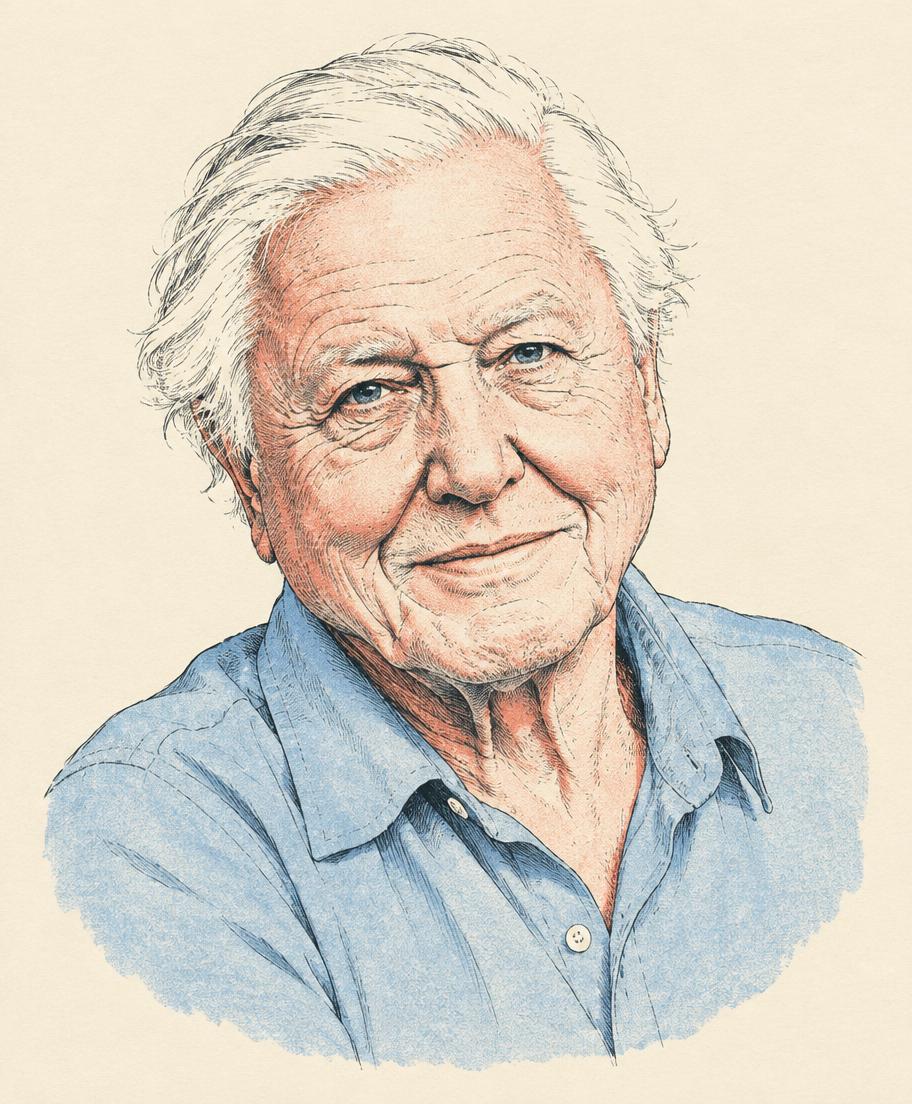
Broadcaster and natural historian
David Attenborough
The broadcaster whose natural history series have shaped how audiences understand life on Earth.
Read biography ↗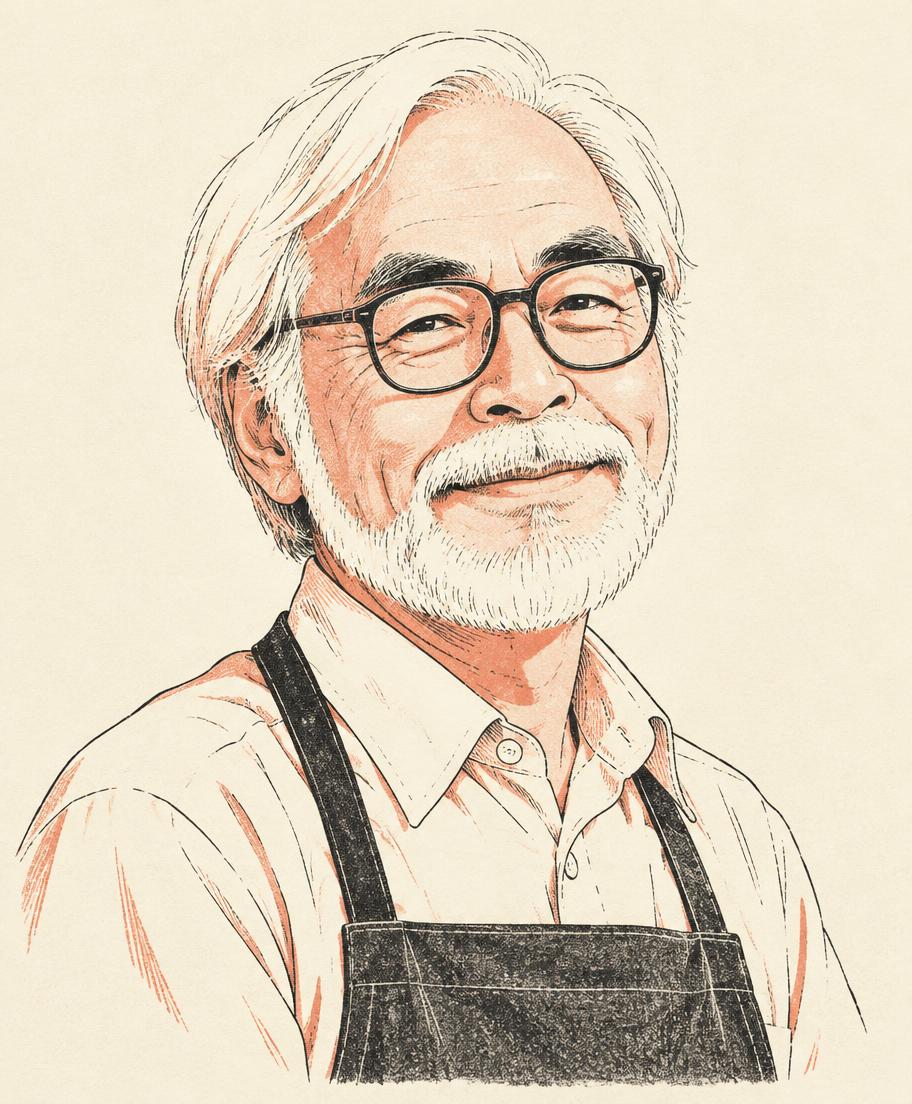
Animator and film director
Hayao Miyazaki
The animator and co-founder of Studio Ghibli whose hand-drawn films reached audiences worldwide.
Read biography ↗
Pope
Benedict I
Pope Benedict I was the bishop of Rome from 2 June 575 to his death on 30 July 579.
Read biography ↗