American writer and filmmaker, professor, and activist (1933–2004)
Susan Sontag
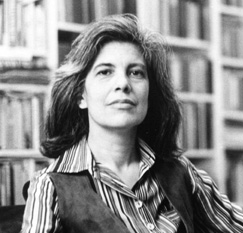
Susan Lee Sontag was an American writer and critic.
By globalcelebwiki Editorial Desk, adapted from Wikipedia · Published 29 September 2026
- Profession
- American writer and filmmaker, professor, and activist (1933–2004)
- Born
- 16 January 1933
- Birthplace
- New York City
- Nationality
- American
Overview
Susan Lee Sontag (; January 16, 1933 – December 28, 2004) was an American writer and critic. She primarily wrote essays, but also published novels; she published her first major work, the essay "Notes on 'Camp' ", in 1964. Her best-known works include the critical works Against Interpretation (1966), On Photography (1977), Illness as Metaphor (1978) and Regarding the Pain of Others (2003), the short story "The Way We Live Now" (1986) and the novels The Volcano Lover (1992) and In America (1999).
Sontag was active in writing and speaking about, or traveling to, areas of conflict, including during the Vietnam War and the Siege of Sarajevo. She wrote extensively about literature, cinema, photography and media, illness, war, human rights, and left-wing politics. Her essays and speeches drew backlash and controversy, and she has been called "one of the most influential critics of her generation".
Early life and education
Sontag was born Susan Rosenblatt in New York City, the daughter of Mildred (née Jacobson) and Jack Rosenblatt, both Jews of Lithuanian and Polish descent. Her father managed a fur trading business in Tianjin, China, where he died of tuberculosis in 1939, when Susan was five years old. Seven years later, Sontag's mother married U.S. Army Captain Nathan Sontag. Susan and her sister, Judith, took their stepfather's surname, although he did not adopt them formally. Sontag did not have a religious upbringing and said she had not entered a synagogue until her mid-20s.
Remembering an unhappy childhood, with a cold, alcoholic, distant mother who was "always away", Sontag lived on Long Island, New York, then in Tucson, Arizona, and later in the San Fernando Valley in southern California, where she took refuge in books and graduated from North Hollywood High School at the age of 15. She began her undergraduate studies at the University of California, Berkeley but transferred to the University of Chicago in admiration of its prominent core curriculum. At Chicago, she undertook studies in philosophy, ancient history, and literature alongside her other requirements. Leo Strauss, Joseph Schwab, Christian Mackauer, Richard McKeon, Peter von Blanckenhagen, and Kenneth Burke were among her lecturers. She graduated at age 18 with an A.B. and was elected to Phi Beta Kappa. While at Chicago, she became close friends with fellow student Mike Nichols. In 1951, her work appeared in print for the first time in the winter issue of the Chicago Review.
At 17, Sontag married writer Philip Rieff, a sociology instructor at the University of Chicago, after a 10-day courtship; their marriage lasted eight years. While studying at Chicago, Sontag attended a summer school taught by the sociologist Hans Gerth, who became a friend and influenced her study of German thinkers. Upon completing her Chicago degree, Sontag taught freshman English at the University of Connecticut for the 1952–53 academic year. She attended Harvard University for graduate school, initially studying literature with Perry Miller and Harry Levin before moving into philosophy and theology under Paul Tillich, Jacob Taubes, Raphael Demos, and Morton White.
After completing her Master of Arts in philosophy, Sontag began doctoral research in metaphysics, ethics, Greek philosophy, Continental philosophy, and theology at Harvard. The philosopher Herbert Marcuse lived with Sontag and Rieff for a year while working on his 1955 book Eros and Civilization. Sontag researched for Rieff's 1959 study Freud: The Mind of the Moralist before their divorce in 1958, and contributed to the book to such an extent that she has been considered an unofficial co-author. The couple had a son, David Rieff, who went on to be his mother's editor at Farrar, Straus and Giroux, as well as a writer in his own right. According to Sontag's biographer Benjamin Moser, Sontag was the true author of the text on Freud, which she wrote after David's birth, and in the separation the latter was the subject of an exchange: she handed over the authorship of the book to Rieff, he gave her their son.
Sontag was awarded an American Association of University Women's fellowship for the 1957–58 academic year to St Anne's College, Oxford, where she traveled without her husband and son. There, she had classes with Iris Murdoch, Stuart Hampshire, A. J. Ayer, and H. L. A. Hart while also attending the B. Phil seminars of J. L. Austin and the lectures of Isaiah Berlin. But Oxford did not appeal to her, and she transferred after Michaelmas term of 1957 to the University of Paris (the Sorbonne). In Paris, Sontag socialized with expatriate artists and academics including Allan Bloom, Jean Wahl, Alfred Chester, Harriet Sohmers, and María Irene Fornés. She remarked that her time in Paris was perhaps the most important period of her life. It certainly provided the basis of her long intellectual and artistic association with the culture of France. She moved to New York in 1959 to live with Fornés for the next seven years, regaining custody of her son and teaching at several universities, including the City College of New York, while her literary reputation grew.
While working on her stories, Sontag taught philosophy at Sarah Lawrence College and City University of New York and the philosophy of religion with Jacob Taubes, Susan Taubes, Theodor Gaster, and Hans Jonas, in the religion department at Columbia University from 1960 to 1964. She held a writing fellowship at Rutgers University in 1964–65 before ending her relationship with academia in favor of full-time freelance writing.
At age 30, Sontag published an experimental novel called The Benefactor (1963), following it four years later with Death Kit (1967). Despite a relatively small output, Sontag thought of herself principally as a novelist and writer of fiction. Her short story "The Way We Live Now" was published to great acclaim on November 24, 1986, in The New Yorker. Written in an experimental narrative style, it remains a significant text on the AIDS epidemic. She achieved late popular success as a best-selling novelist with The Volcano Lover (1992). At age 67, Sontag published her final novel, In America (2000). The last two novels were set in the past, which Sontag said gave her greater freedom to write in the polyphonic voice:
In a print shop near the British Museum, in London, I discovered the volcano prints from the book that Sir William Hamilton did. My very first thought—I don't think I have ever said this publicly—was that I would propose to FMR (a wonderful art magazine published in Italy which has beautiful art reproductions) that they reproduce the volcano prints and I write some text to accompany them. But then I started to adhere to the real story of Lord Hamilton and his wife, and I realized that if I would locate stories in the past, all sorts of inhibitions would drop away, and I could do epic, polyphonic things. I wouldn't just be inside somebody's head. So there was that novel, The Volcano Lover.
She wrote and directed four films and also wrote several plays, the most successful of which were Alice in Bed and Lady from the Sea.
It was through her essays that Sontag gained early fame and notoriety. She frequently wrote about the intersection of high and low art and expanded the dichotomy concept of form and art in every medium. She elevated camp to the status of recognition with her widely read 1964 essay "Notes on 'Camp' ", which accepted art as including common, absurd, and burlesque themes.
In 1977, Sontag published the series of essays On Photography. These essays are an exploration of photographs as a collection of the world, mainly by travelers or tourists, and the way we experience it. In the essays, she outlined her theory of taking pictures as you travel:
The method especially appeals to people handicapped by a ruthless work ethic—Germans, Japanese and Americans. Using a camera appeases the anxiety which the work driven feel about not working when they are on vacation and supposed to be having fun. They have something to do that is like a friendly imitation of work: they can take pictures. (p. 10)
Sontag writes that the convenience of modern photography has created an overabundance of visual material, and "just about everything has been photographed". This has altered our expectations of what we have the right to view, want to view, or should view.
Ethical intentions are key points for Sontag. In her book On Photography she writes of the connection of the photography with the idea of norm. Discussing photographs of Diane Arbus, Sontag writes on borders and landmarks of the photo program of beauty. Beauty is the ground of the photography program and at the same time one of the biggest conceptual questions of photography. The problem of identification of beauty and ugliness forms one more question—the idea of norm.
"In teaching us a new visual code, photographs alter and enlarge our notion of what is worth looking at and what we have the right to observe" and has changed our "viewing ethics".
According to Sontag, photographs have increased our access to knowledge and experiences of history and faraway places, but the images may replace direct experience and limit reality; photography desensitizes its audience to horrific human experiences, and children are exposed to experiences before they are ready for them.
Sontag continued to theorize about the role of photography in life in her essay "Looking at War: Photography's View of Devastation and Death", which appeared in the December 9, 2002, issue of The New Yorker. There she concludes that the problem of our reliance on images and especially photographic images is not that "people remember through photographs but that they remember only the photographs ... that the photographic image eclipses other forms of understanding—and remembering. ... To remember is, more and more, not to recall a story but to be able to call up a picture" (p. 94).
She became a role model for many feminists and aspiring female writers during the 1960s and 1970s.
Activism
Sontag became politically active in the 1960s, opposing the Vietnam War. In January 1968, she signed the "Writers and Editors War Tax Protest" pledge, vowing to refuse to pay a proposed 10% Vietnam War surtax. In May 1968, she visited Hanoi; afterward, she wrote favorably about North Vietnamese society in her essay Trip to Hanoi.
During 1989 Sontag was the President of PEN American Center, the main U.S. branch of the International PEN writers' organization. After Iranian leader Ayatollah Khomeini issued a fatwa death sentence against writer Salman Rushdie for blasphemy after the publication of his novel The Satanic Verses that year, Sontag's uncompromising support of Rushdie was crucial in rallying American writers to his cause.
A few years later, during the Siege of Sarajevo, Sontag gained attention for directing a production of Samuel Beckett's Waiting for Godot in a candlelit theater in the Bosnian capital, cut off from its electricity supply for three and a half years. The reaction of Sarajevo's besieged residents was noted:To the people of Sarajevo, Ms. Sontag has become a symbol, interviewed frequently by the local newspapers and television, invited to speak at gatherings everywhere, asked for autographs on the street. After the opening performance of the play, the city's Mayor, Muhamed Kreševljaković, came onstage to declare her an honorary citizen, the only foreigner other than the recently departed United Nations commander, Lieut. Gen. Phillippe Morillon, to be so named. "It is for your bravery, in coming here, living here, and working with us," he said.
Personal life
Sontag's mother died of lung cancer in Hawaii in 1986.
Sontag died in New York City on December 28, 2004, aged 71, from complications of myelodysplastic syndrome which had evolved into acute myelogenous leukemia. She is buried in Paris at Cimetière du Montparnasse. Her final illness has been chronicled by her son, David Rieff.
Legacy
Following Sontag's death, Steve Wasserman of the Los Angeles Times called her "one of America's most influential intellectuals, internationally renowned for the passionate engagement and breadth of her critical intelligence and her ardent activism in the cause of human rights." Eric Homberger of The Guardian called Sontag "the 'Dark Lady' of American cultural life for over four decades." He observed that "despite a brimming and tartly phrased political sensibility, she was fundamentally an aesthete [who] offered a reorientation of American cultural horizons."
Of Against Interpretation, Brandon Robshaw of The Independent later wrote that "Sontag was remarkably prescient; her project of analysing popular culture as well as high culture, the Doors as well as Dostoevsky, is now common practice throughout the educated world." In Critique and Postcritique (2017), Rita Felski and Elizabeth S. Anker argue that the title essay from the aforementioned collection played an important role in the field of postcritique, a movement within literary criticism and cultural studies that attempts to find new forms of reading and interpretation that go beyond the methods of critique, critical theory, and ideological criticism.
Reviewing Sontag's On Photography in 1998, Michael Starenko wrote that it "has become so deeply absorbed into this discourse that Sontag's claims about photography, as well as her mode of argument, have become part of the rhetorical 'tool kit' that photography theorists and critics carry around in their heads."
Sontag's introduction to Selected Stories, a collection of works by the Swiss author Robert Walser, who was not widely known in the English-speaking world at the time, was highly influential. Phrases from her foreword are often quoted and it has been acknowledged as partly responsible for a new phase of interest in Walser's work.
Awards and honors
1976: Arts and Letters Award in Literature
1977: National Book Critics Circle Award for On Photography
1999: Commandeur des Arts et des Lettres, France
2001: Jerusalem Prize, awarded every two years to a writer whose work explores the freedom of the individual in society.
2002: George Polk Award for Cultural Criticism for "Looking at War", in The New Yorker
—— (1967). Death Kit. Farrar, Straus and Giroux. ISBN 9780312420116.
—— (1977). I, etcetera. Collection of short stories. Farrar, Straus and Giroux. ISBN 9780374174026.
—— (1991). The Way We Live Now. Noonday Press. ISBN 9780374523053.
—— (1992). The Volcano Lover. Penguin Books. ISBN 9781558008182.
—— (1999). In America. Random House Trade Paperbacks. ISBN 9781568958989.
—— (1991). A Parsifal. A deconstruction inspired by Robert Wilson's 1991 staging of the Wagner opera.
—— (1993). Alice in Bed. About 19th-century intellectual Alice James, who was confined to bed by illness. New York: Farrar, Straus and Giroux. ISBN 9780374102739.
—— (1998). Lady from the Sea. Adaptation of the 1888 play of the same name by Henrik Ibsen; premiered in Italy.
Sontag published numerous essays and reviews in The New York Review of Books, Partisan Review, The New Yorker, Vanity Fair, Vogue, The New York Times, the Los Angeles Times, The Times Literary Supplement, The Nation, The New Republic, Art in America, Granta and the London Review of Books. Many of these were included in her collections.
—— (1966). Against Interpretation. Includes "Notes on "Camp"". Anchor Books. ISBN 9780385267083.
—— (1969). Styles of Radical Will. Macmillan. ISBN 9780312420215.
—— (1977). On Photography. Farrar, Straus and Giroux. ISBN 9780374226268.
—— (1980). Under the Sign of Saturn. Farrar, Straus & Giroux. ISBN 9780374280765.
—— (1959). Freud: The Mind of the Moralist. (Authorship disputed)
—— (1978). Illness as Metaphor. Farrar, Straus and Giroux. ISBN 9780394728445.
—— (1988). AIDS and Its Metaphors. A continuation of Illness as Metaphor. Farrar, Straus and Giroux. ISBN 9780374102579.
—— (2003). Regarding the Pain of Others. Farrar, Straus and Giroux. ISBN 9780374248581.
(1969) Duet for Cannibals (Duett för kannibaler)
(1983) Unguided Tour AKA Letter from Venice
—— (2002). Land (1975–2002). Liner notes by Susan Sontag. Columbia Records.
—— (2004). Odyssey. Contribution of phrases by Susan Sontag. EMI.
—— (2008). Reborn: Journals and Notebooks 1947–1963. Edited by David Rieff. New York: Farrar, Straus and Giroux. ISBN 9780312428501.
—— (2012). As Consciousness Is Harnessed to Flesh: Journals and Notebooks, 1964–1980. Edited by David Rieff. New York: Farrar, Straus and Giroux. ISBN 9780374100766.
Digital archive
A digital archive of 17,198 of Sontag's emails is kept by the UCLA Department of Special Collections at the Charles E. Young Research Library. Her archive—and the efforts to make it publicly available while protecting it from bit rot—are the subject of the article On Excess: Susan Sontag's Born-Digital Archive, by Jeremy Schmidt and Jacquelyn Ardam.
Biographical play, documentary, and biopic film
Sontag: Reborn is a play dramatizing Sontag's life as recorded in her early journals (which were later edited and published as the book Reborn). Described as "a spellbinding X-ray of a writer’s psyche", Sontag: Reborn traces Sontag's private life from age 14 to her emergence as a renowned author and activist. The young Sontag wrestles with her emerging sexuality and precocious intelligence. The refuge of her diary became integral to her development as a writer. The play was adapted from Sontag's journals by theatre artist Moe Angelos, who also plays Sontag in the production, directed by Marianne Weems, and produced by The Builders Association. Sontag: Reborn was first staged at the Under the Radar Festival in 2012, moved to off-Broadway at New York Theatre Workshop in 2013, and was staged into 2014.
A documentary about Sontag directed by Nancy Kates, Regarding Susan Sontag, was released in 2014. It received the Special Jury Mention for Best Documentary Feature at the 2014 Tribeca Festival.
In February 2023, Screen reported that Brouhaha Entertainment was producing a biographical film directed by Kirsten Johnson and featuring Kristen Stewart as Sontag. It is based on Benjamin Moser's biography Sontag: Her Life and Work.
Sources and references
Spotted something wrong? Report a correction.
Related profiles
Broadcaster and natural historian
David Attenborough
The broadcaster whose natural history series have shaped how audiences understand life on Earth.
Read biography ↗
Animator and film director
Hayao Miyazaki
The animator and co-founder of Studio Ghibli whose hand-drawn films reached audiences worldwide.
Read biography ↗
Pope
Benedict I
Pope Benedict I was the bishop of Rome from 2 June 575 to his death on 30 July 579.
Read biography ↗