Canadian-American writer (1915–2005)
Saul Bellow
Saul Bellow was an American writer.
By globalcelebwiki Editorial Desk, adapted from Wikipedia · Published 29 September 2026
- Profession
- Canadian-American writer (1915–2005)
- Born
- 10 June 1915
- Birthplace
- Lachine
- Nationality
- American
Overview
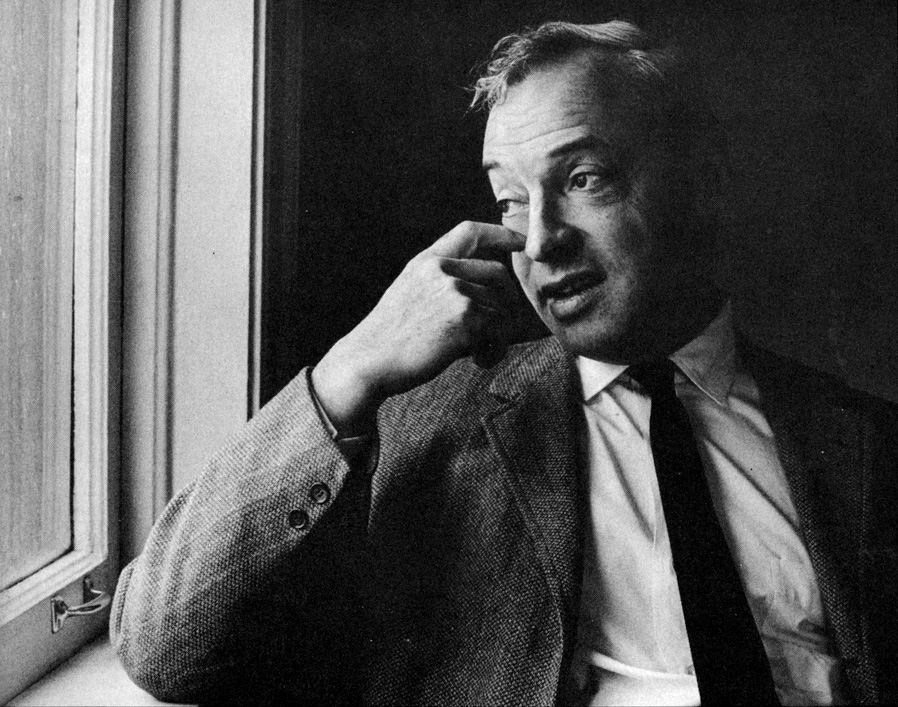
Saul Bellow (born Solomon Bellows; June 10, 1915 – April 5, 2005) was an American writer. For his literary work, Bellow was awarded the Pulitzer Prize, the 1976 Nobel Prize in Literature, and the National Medal of Arts. He is the only writer to win the National Book Award for Fiction three times, and he received the National Book Foundation's lifetime Medal for Distinguished Contribution to American Letters in 1990.
In the words of the Swedish Nobel Committee, his writing exhibited "the mixture of rich picaresque novel and subtle analysis of our culture, of entertaining adventure, drastic and tragic episodes in quick succession interspersed with philosophic conversation, all developed by a commentator with a witty tongue and penetrating insight into the outer and inner complications that drive us to act, or prevent us from acting, and that can be called the dilemma of our age." His best-known works include The Adventures of Augie March, Henderson the Rain King, Herzog, Mr. Sammler's Planet, Seize the Day, Humboldt's Gift, and Ravelstein.
Bellow said that of all his characters, Eugene Henderson, of Henderson the Rain King, was the one most like himself. Bellow grew up as an immigrant from Quebec. As Christopher Hitchens describes it, Bellow's fiction and principal characters reflect his own yearning for transcendence, a battle "to overcome not just ghetto conditions but also ghetto psychoses." Bellow's protagonists wrestle with what Albert Corde, the dean in The Dean's December, called "the big-scale insanities of the 20th century." This transcendence of the "unutterably dismal" (a phrase from Dangling Man) is achieved, if it can be achieved at all, through a "ferocious assimilation of learning" (Hitchens) and an emphasis on nobility.
Early life
Saul Bellow was born Solomon Bellows in Lachine, Quebec, two years after his parents, Lescha (née Gordin) and Abraham Bellows (né Belo), emigrated from Saint Petersburg, Russia. He had three elder siblings: sister Zelda (later Jane, born in 1907), brothers Moishe (later Maurice, born in 1908) and Schmuel (later Samuel, born in 1911). Bellow's family was Lithuanian-Jewish; his father was born in Druya, a shtetl in the Pale of Settlement. Bellow celebrated his birthday on June 10, although he appears to have been born on July 10, according to records from the Jewish Genealogical Society-Montreal. (In the Jewish community, it was customary to record the Hebrew date of birth, which does not always coincide with the Gregorian calendar.) Of his family's emigration, Bellow wrote: The retrospective was strong in me because of my parents. They were both full of the notion that they were falling, falling. They had been prosperous cosmopolitans in Saint Petersburg. My mother could never stop talking about the family dacha, her privileged life, and how all that was now gone. She was working in the kitchen. Cooking, washing, mending ... There had been servants in Russia ... But you could always transpose from your humiliating condition with the help of a sort of embittered irony.
A period of illness from a respiratory infection at age eight both taught him self-reliance (he was a very fit man despite his sedentary occupation) and provided an opportunity to satisfy his hunger for reading: reportedly, he decided to be a writer when he first read Harriet Beecher Stowe's Uncle Tom's Cabin.
When Bellow was nine, his family moved to the Humboldt Park neighborhood on the West Side of Chicago, the city that formed the backdrop of many of his novels. Bellow's father, Abraham, had become an onion importer. He also worked in a bakery, as a coal delivery man, and as a bootlegger. Bellow's mother, Liza, died when he was 17. She had been deeply religious and wanted her youngest son, Saul, to become a rabbi or a concert violinist. But he rebelled against what he later called the "suffocating orthodoxy" of his religious upbringing, and he began writing at a young age. Bellow's lifelong love for the Torah began at four when he learned Hebrew. Bellow also grew up reading Shakespeare and the great Russian novelists of the 19th century.
In Chicago, he took part in anthroposophical studies at the Anthroposophical Society of Chicago. Bellow attended Tuley High School on Chicago's west side where he befriended Yetta Barsh and Isaac Rosenfeld. In his 1959 novel Henderson the Rain King, Bellow modeled the character King Dahfu on Rosenfeld.
Bellow attended the University of Chicago but later transferred to Northwestern University. He originally wanted to study literature, but he felt the English department was anti-Jewish. Instead, he graduated with honors in anthropology and sociology. It has been suggested Bellow's study of anthropology had an influence on his literary style, and anthropological references pepper his works. He later did graduate work at the University of Wisconsin.
Paraphrasing Bellow's description of his close friend Allan Bloom (see Ravelstein), John Podhoretz has said that both Bellow and Bloom "inhaled books and ideas the way the rest of us breathe air."
In the 1930s, Bellow was part of the Chicago branch of the Federal Writers' Project, which included such future Chicago literary luminaries as Richard Wright and Nelson Algren. Many of the writers were radical: if they were not members of the Communist Party USA, they were sympathetic to the cause. Bellow was a Trotskyist, but because of the greater numbers of Stalinist-leaning writers, he had to suffer their taunts.
In 1941, Bellow became a naturalized United States citizen, after discovering, on attempting to enlist in the armed forces, that he had immigrated to the United States illegally as a child. In 1943, Maxim Lieber was his literary agent.
During World War II, Bellow joined the merchant marine and during his service he completed his first novel, Dangling Man (1944) about a young Chicago man waiting to be drafted for the war.
Bellow lived in New York City for years, but returned to Chicago in 1962 as a professor at the Committee on Social Thought at the University of Chicago. The committee's goal was to have professors work closely with talented graduate students on a multi-disciplinary approach to learning. His students included the poet Tom Mandel. Bellow taught on the committee for more than 30 years, alongside his close friend, the philosopher Allan Bloom.
There were also other reasons for Bellow's return to Chicago, where he moved into the Hyde Park neighborhood with his third wife, Susan Glassman. Bellow found Chicago vulgar but vital, and more representative of America than New York. He was able to stay in contact with old high school friends and a broad cross-section of society. In a 1982 profile, Bellow's neighborhood was described as a high-crime area in the city's center, and Bellow maintained he had to live in such a place as a writer and "stick to his guns."
Bellow hit the bestseller list in 1964 with his novel Herzog. Bellow was surprised at the commercial success of this cerebral novel about a middle-aged and troubled college professor who writes letters to friends, scholars and the dead, but never sends them. Bellow returned to his exploration of mental instability, and its relationship to genius, in his 1975 novel Humboldt's Gift. Bellow used his late friend and rival, the brilliant but self-destructive poet Delmore Schwartz, as his model for the novel's title character, Von Humboldt Fleisher. Bellow also used Rudolf Steiner's spiritual science, anthroposophy, as a theme in the book, having attended a study group in Chicago. He was elected a Fellow of the American Academy of Arts and Sciences in 1969.
Propelled by the success of Humboldt's Gift, Bellow was awarded the Nobel Prize in literature in 1976. In the 70-minute address he gave to an audience in Stockholm, Sweden, Bellow called on writers to be beacons for civilization and awaken it from intellectual torpor.
The following year, the National Endowment for the Humanities selected Bellow for the Jefferson Lecture, the US federal government's highest honor for achievement in the humanities. Bellow's lecture was entitled "The Writer and His Country Look Each Other Over."
From December 1981 to March 1982, Bellow was the Visiting Lansdowne Scholar at the University of Victoria (BC), and also held the title Writer-in-Residence. In 1998, he was elected to the American Philosophical Society.
Bellow traveled widely throughout his life, mainly to Europe, which he sometimes visited twice a year. As a young man, Bellow went to Mexico City to meet Leon Trotsky, but the expatriate Russian revolutionary was assassinated the day before they were to meet. Bellow's social contacts were wide and varied. He tagged along with Robert F. Kennedy for a magazine profile he never wrote, and was close friends with the author Ralph Ellison. His many friends included the journalist Sydney J. Harris and the poet John Berryman.
While sales of Bellow's first few novels were modest, that turned around with Herzog. Bellow continued teaching well into his old age, enjoying its human interaction and exchange of ideas. He taught at Yale University, University of Minnesota, New York University, Princeton University, University of Puerto Rico, University of Chicago, Bard College and Boston University, where he co-taught a class with James Wood ('modestly absenting himself' when it was time to discuss Seize the Day). In order to take up his appointment at Boston, Bellow moved from Chicago to Brookline, Massachusetts, in 1993; he died there on April 5, 2005, at age 89. He is buried at the Jewish cemetery Shir HeHarim of Brattleboro, Vermont.
Personal life
Bellow was married five times, with all but his last marriage ending in divorce. Bellow's wives were Anita Goshkin, Alexandra (Sondra) Tschacbasov (daughter of painter Nahum Tschacbasov), Susan Glassman, Alexandra Ionescu Tulcea, and Janis Freedman.
His son Greg by his first marriage became a psychotherapist; he published Saul Bellow's Heart: A Son's Memoir in 2013, nearly a decade after his father's death. Bellow's son by his second marriage, Adam, published a nonfiction book In Praise of Nepotism in 2003. Bellow's son by his third marriage, Daniel, is a potter, a writer and a former journalist. In 1999, when he was 84, Bellow had his fourth child and first daughter, with Freedman.
Themes and style
Bellow's themes include the disorientation of contemporary society, and the ability of people to overcome their frailty and achieve greatness or awareness. Bellow saw many flaws in modern civilization, and its ability to foster madness, materialism and misleading knowledge. Principal characters in Bellow's fiction have heroic potential, and many times they stand in contrast to the negative forces of society. Often these characters are Jewish and have a sense of alienation or otherness.
Jewish life and identity is a major theme in Bellow's work, although he bristled at being called a "Jewish writer". Bellow's work also shows a great appreciation of America, and a fascination with the uniqueness and vibrancy of the American experience.
Bellow's work abounds in references and quotes from Marcel Proust and Henry James, among others, but he offsets these high-culture references with jokes. Bellow interspersed autobiographical elements into his fiction, and many of his principal characters were said to bear a resemblance to him.
Assessment
Martin Amis described Bellow as "The greatest American author ever, in my view".
His sentences seem to weigh more than anyone else's. He is like a force of nature ... He breaks all the rules ... [T]he people in Bellow's fiction are real people, yet the intensity of the gaze that he bathes them in, somehow through the particular, opens up into the universal.
For Linda Grant, "What Bellow had to tell us in his fiction was that it was worth it, being alive."
His vigour, vitality, humour and passion were always matched by the insistence on thought, not the predigested cliches of the mass media or of those on the left, which had begun to disgust him by the Sixties ... It's easy to be a 'writer of conscience'—anyone can do it if they want to; just choose your cause. Bellow was a writer about conscience and consciousness, forever conflicted by the competing demands of the great cities, the individual's urge to survival against all odds and his equal need for love and some kind of penetrating understanding of what there was of significance beyond all the racket and racketeering.
On the other hand, Bellow's detractors considered his work conventional and old-fashioned, as if the author were trying to revive the 19th-century European novel. In a private letter, Vladimir Nabokov described Bellow as a "miserable mediocrity". Journalist and author Ron Rosenbaum described Bellow's Ravelstein (2000) as the only book that rose above Bellow's failings as an author. Rosenbaum wrote,
Political views
As he grew older, Bellow moved away from leftwing politics and became identified with cultural conservatism. Bellow was momentarily caught up in the contentious realm of African American–Jewish relations. According to Alfred Kazin Bellow once said: "Who is the Tolstoy of the Zulus? The Proust of the Papuans? I'd be glad to read him." Bellow distanced himself somewhat from these remarks, which he characterized as "off the cuff obviously and pedantic certainly" but nevertheless the "scandal is entirely journalistic in origin." He affirmed, however, his stance against political correctness, writing:
In any reasonably open society, the absurdity of a petty thought-police campaign provoked by the inane magnification of "discriminatory" remarks about the Papuans and the Zulus would be laughed at. To be serious in this fanatical style is a sort of Stalinism – the Stalinist seriousness and fidelity to the party line that senior citizens like me remember all too well. ...
Rage is now brilliantly prestigious. Rage, the reverse of bourgeois prudence, is a luxury. Rage is distinguished, it is a patrician passion. The rage of rappers and rioters takes as its premise the majority's admission of guilt for past and present injustices, and counts on the admiration of the repressed for the emotional power of the uninhibited and "justly" angry. Rage can also be manipulative; it can be an instrument of censorship and despotism.
Despite his identification with Chicago, he kept aloof from some of that city's more conventional writers. In a 2006 interview with Stop Smiling magazine, Studs Terkel said of Bellow: "I didn't know him too well. We disagreed on a number of things politically. In the protests in the beginning of Norman Mailer's Armies of the Night, when Mailer, Robert Lowell and Paul Goodman were marching to protest the Vietnam War, Bellow was invited to a sort of counter-gathering. He said, 'Of course I'll attend'. But he made a big thing of it. Instead of just saying OK, he was proud of it. So I wrote him a letter and he didn't like it. He wrote me a letter back. He called me a Stalinist. But otherwise, we were friendly. He was a brilliant writer, of course. I love Seize the Day."
Attempts to name a street after Bellow in his Hyde Park neighborhood were halted by a local alderman, Toni Preckwinkle, on the grounds that Bellow had made remarks about the neighborhood's inhabitants that they considered racist. A one-block stretch of West Augusta Boulevard in Humboldt Park was named Saul Bellow Way in his honor instead.
Awards and honors
1986 St. Louis Literary Award from the Saint Louis University Library Associates
1989 Peggy V. Helmerich Distinguished Author Award
1990 National Book Foundation's lifetime Medal for Distinguished Contribution to American Letters
1997 National Jewish Book Award for The Actual
2010 Inducted into the Chicago Literary Hall of Fame.
Sources and references
Spotted something wrong? Report a correction.
Related profiles
Broadcaster and natural historian
David Attenborough
The broadcaster whose natural history series have shaped how audiences understand life on Earth.
Read biography ↗
Animator and film director
Hayao Miyazaki
The animator and co-founder of Studio Ghibli whose hand-drawn films reached audiences worldwide.
Read biography ↗
Pope
Benedict I
Pope Benedict I was the bishop of Rome from 2 June 575 to his death on 30 July 579.
Read biography ↗