American philosopher (1803–1882)
Ralph Waldo Emerson
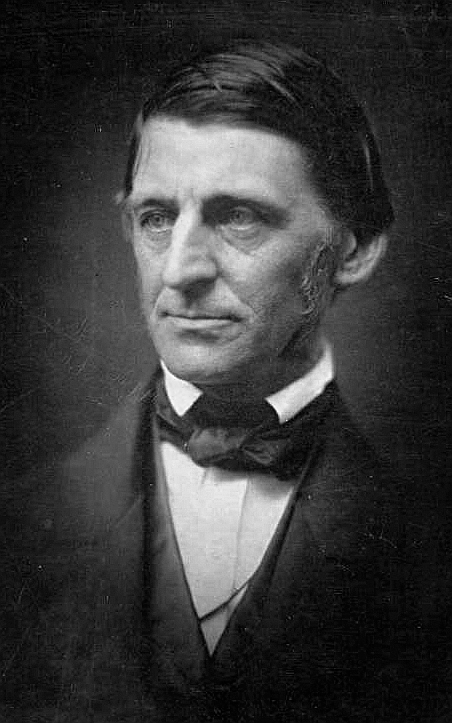
Ralph Waldo Emerson, who went by his middle name Waldo, was an American essayist, lecturer, philosopher, minister, abolitionist, and poet who led the transcendentalist movement of the mid-19th century.
By globalcelebwiki Editorial Desk, adapted from Wikipedia · Published 29 September 2026
- Profession
- American philosopher (1803–1882)
- Born
- 25 May 1803
- Birthplace
- Boston
- Nationality
- American
Overview
Ralph Waldo Emerson (May 25, 1803 – April 27, 1882), who went by his middle name Waldo, was an American essayist, lecturer, philosopher, minister, abolitionist, and poet who led the transcendentalist movement of the mid-19th century. He was seen as a champion of individualism and critical thinking, as well as a prescient critic of the countervailing pressures of society and conformity. The German philosopher Friedrich Nietzsche thought he was "the most gifted of the Americans", and Walt Whitman called Emerson his "master".
Emerson gradually moved away from the religious and social beliefs of his contemporaries, formulating and expressing the philosophy of Transcendentalism in his 1836 essay, Nature. His speech "The American Scholar", given in 1837, was called America's "intellectual Declaration of Independence" by Oliver Wendell Holmes Sr.
Emerson wrote most of his important essays as lectures, and then revised them for print. His first two collections of essays, Essays: First Series (1841) and Essays: Second Series (1844), represent the core of his thinking. They include the well-known essays "Self-Reliance", "The Over-Soul", "Circles", "The Poet", and "Experience". Together with "Nature", these essays made the mid-1830s to the mid-1840s Emerson's most fertile period.
Emerson wrote on a number of subjects, never espousing fixed philosophical tenets. He instead developed ideas such as individuality, freedom, the ability for mankind to achieve almost anything, and the relationship between the soul and the surrounding world. Emerson's conception of "nature" was more philosophical than naturalistic: "Philosophically considered, the universe is composed of Nature and the Soul." He was one of several major figures who "took a more pantheist or pandeist approach, by rejecting views of God as separate from the world".
Emerson remains among the linchpins of the American romantic movement, and his work has greatly influenced the thinkers, writers, and poets that followed him. "In all my lectures," he wrote, "I have taught one doctrine, namely, the infinitude of the private man." Emerson is also well-known as a mentor and close friend of his fellow transcendentalist Henry David Thoreau.
Early life, family, and education
Ralph Waldo Emerson was born in Boston, Massachusetts, on May 25, 1803, to Ruth Haskins and the Rev. William Emerson, a Unitarian minister. He was named after his mother's brother Ralph and his father's great-grandmother, Rebecca Waldo. He was the second of five sons who survived into adulthood; the others were William, Edward, Robert Bulkeley, and Charles. Three other children—Phoebe, John Clarke, and Mary Caroline—died in childhood. Emerson was of English ancestry, and his family had lived in New England since the early colonial period, with Ralph Waldo being a seventh-generation descendant of Mayflower voyagers John Howland and Elizabeth Tilley through their daughter Hope.
Emerson's father died from stomach cancer on May 12, 1811, less than two weeks before young Ralph's eighth birthday. He was raised by his mother, with the help of the other women in the family. His aunt, Mary Moody Emerson, in particular, had a profound effect on him. She lived with the family on and off, and maintained a constant correspondence with Emerson until her death in 1863.
Early career
After Harvard, Emerson assisted his brother William at a school for young women they established in their mother's house, after Waldo had established his own school in Chelmsford, Massachusetts. When William went to Göttingen in Germany to study law in mid-1824, Ralph Waldo closed the school, but continued to teach in Cambridge, Massachusetts, until early 1825. Emerson was accepted into the Harvard Divinity School in late 1824, and was inducted into Phi Beta Kappa in 1828.
Emerson's brother Edward, two years younger than Waldo, entered the law office of Daniel Webster, after graduating from Harvard first in his class. Edward's physical health began to deteriorate, and he soon suffered a mental collapse as well; he was taken to McLean Asylum in June 1828 at age 25. Although he recovered his mental equilibrium, he died in 1834, apparently from long-standing tuberculosis. Another of Emerson's bright and promising younger brothers, Charles, born in 1808, died in 1836, also of tuberculosis, making him the third young person in Emerson's innermost circle to die in a period of a few years.
Emerson met his first wife, Ellen Louisa Tucker, in Concord, New Hampshire, on Christmas Day, 1827, and married her two years later, when she was 18. The couple moved to Boston, and Emerson's mother, Ruth, moved with them to help take care of Ellen, who was already ill with tuberculosis.
Boston's Second Church invited Emerson to serve as its junior pastor, and he was ordained on January 11, 1829. His initial salary was $1,200 per year (equivalent to $36,281 in 2025), increasing to $1,400 in July. Along with his church role, Emerson took on other responsibilities: he served as the chaplain of the Massachusetts Legislature, and was a member of the Boston School Committee. His church activities kept him busy during this period, and facing the imminent death of his wife, he began to doubt his own beliefs.
Ellen Emerson died on February 8, 1831, at age 20, after uttering her last words, "I have not forgotten the peace and joy." Emerson was deeply affected by her death, and visited her grave in Roxbury daily. In a journal entry dated March 29, 1832, he wrote, "I visited Ellen's tomb & opened the coffin."
Literary career and transcendentalism
On September 8, 1836, the day before the publication of Nature, Emerson met with Frederic Henry Hedge, George Putnam, and George Ripley to plan periodic gatherings of other like-minded intellectuals. This was the beginning of the Transcendental Club, which served as a center for the transcendentalism movement. Its first official meeting was held on September 19, 1836. On September 1, 1837, women attended a meeting of the Transcendental Club for the first time. Emerson invited Margaret Fuller, Elizabeth Hoar, and Sarah Ripley for dinner at his home before the meeting to ensure that they would be present for the evening get-together. Fuller would prove to be an important figure in transcendentalism.
Emerson anonymously sent his first essay, "Nature", to James Munroe and Company to be published on September 9, 1836. A year later, on August 31, 1837, he delivered his now-famous Phi Beta Kappa address, "The American Scholar," then entitled "An Oration, Delivered before the Phi Beta Kappa Society at Cambridge"; it was renamed for a collection of essays (which included the first general publication of "Nature") in 1849. Friends urged him to publish the talk, and he did so at his own expense, in an edition of 500 copies, which sold out in a month. In the speech, Emerson declared literary independence in the United States and urged Americans to create a writing style all their own, free from Europe. James Russell Lowell, who was a student at Harvard at the time, called it "an event without former parallel on our literary annals". Another member of the audience, Reverend John Pierce, called it "an apparently incoherent and unintelligible address".
In 1837, Emerson befriended Henry David Thoreau. Though they had likely met as early as 1835, in the fall of 1837, Emerson asked Thoreau, "Do you keep a journal?" The question went on to be a lifelong inspiration for Thoreau. Emerson's own journal was published in 16 large volumes, in the definitive Harvard University Press edition issued between 1960 and 1982. Some scholars consider the journal to be Emerson's key literary work.
In March 1837, Emerson gave a series of lectures on the philosophy of history at the Masonic Temple in Boston. This was the first time he managed a lecture series on his own, and it was the beginning of his career as a lecturer. The profits from this series of lectures were much larger than when he was paid by an organization to talk, and he continued to manage his own lectures often throughout his lifetime. He eventually gave as many as 80 lectures a year, traveling across the northern United States as far as St. Louis, Des Moines, Minneapolis, and California.
On July 15, 1838, Emerson was invited to Divinity Hall, Harvard Divinity School, to deliver the school's graduation address, which came to be known as the "Divinity School Address". Emerson discounted biblical miracles and proclaimed that, while Jesus was a great man, he was not God: historical Christianity, he said, had turned Jesus into a "demigod, as the Orientals or the Greeks would describe Osiris or Apollo". His comments outraged the establishment and the general Protestant community. He was denounced as an atheist and a poisoner of young men's minds. Despite the roar of critics, he made no reply, leaving others to put forward a defense. He was not invited back to speak at Harvard for another thirty years.
Philosophers Camp
In summer 1858, Emerson camped at Follensbee Pond in the Adirondack Mountains in upstate New York with nine others: Louis Agassiz, James Russell Lowell, John Holmes, Horatio Woodman, Ebenezer Rockwood Hoar, Jeffries Wyman, Estes Howe, Amos Binney, and William James Stillman. Invited, but unable to make the trip, were Oliver Wendell Holmes, Henry Wadsworth Longfellow, and Charles Eliot Norton, all members of the Saturday Club (Boston, Massachusetts).
This social club was mostly a literary membership that met the last Saturday of the month at the Boston Parker House Hotel (Omni Parker House). William James Stillman was a painter and founding editor of an art journal called the Crayon. Stillman was born and grew up in Schenectady which was just south of the Adirondack mountains. He later traveled there to paint the wilderness landscape and to fish and hunt. He shared his experiences in this wilderness to the members of the Saturday Club, raising their interest in this unknown region.
James Russell Lowell and William Stillman led the effort to organize a trip to the Adirondacks. They began their journey on August 2, 1858, traveling by train, steamboat, stagecoach, and canoe guide boats. News that these cultured men were living like "Sacs and Sioux" in the wilderness appeared in newspapers across the nation. This became known as the "Philosophers Camp".
This event was a landmark in the nineteenth-century intellectual movement, linking nature with art and literature.
Although much has been written over many years by scholars and biographers of Emerson's life, little has been written of what has become known as the "Philosophers Camp" at Follensbee Pond. Yet, his epic poem "Adirondac" reads like a journal of his day-to-day detailed description of adventures in the wilderness with his fellow members of the Saturday Club. This two-week camping excursion (1858 in the Adirondacks) brought him face to face with a true wilderness, something he spoke of in his essay "Nature", published in 1836. He said, "in the wilderness I find something more dear and connate than in streets or villages".
Civil War years
Emerson was staunchly opposed to slavery, but he did not appreciate being in the public limelight and was hesitant about lecturing on the subject. In the years leading up to the Civil War, he did give a number of lectures, however, beginning as early as November 1837. A number of his friends and family members were more active abolitionists than he, at first, but from 1844 on he more actively opposed slavery. He gave a number of speeches and lectures, and welcomed John Brown to his home during Brown's visits to Concord. He voted for Abraham Lincoln in 1860, but was disappointed that Lincoln was more concerned about preserving the Union than eliminating slavery outright. Once the American Civil War broke out, Emerson made it clear that he believed in immediate emancipation of the slaves.
Around this time, in 1860, Emerson published The Conduct of Life, his seventh collection of essays. It "grappled with some of the thorniest issues of the moment," and "his experience in the abolition ranks is a telling influence in his conclusions." In these essays Emerson strongly embraced the idea of war as a means of national rebirth: "Civil war, national bankruptcy, or revolution, [are] more rich in the central tones than languid years of prosperity."
Emerson visited Washington, D.C., at the end of January 1862. He gave a public lecture at the Smithsonian on January 31, 1862, and declared, "The South calls slavery an institution ... I call it destitution ... Emancipation is the demand of civilization". The next day, February 1, his friend Charles Sumner took him to meet Lincoln at the White House. Lincoln was familiar with Emerson's work, having previously seen him lecture. Emerson's misgivings about Lincoln began to soften after this meeting. In 1865, he spoke at a memorial service held for Lincoln in Concord: "Old as history is, and manifold as are its tragedies, I doubt if any death has caused so much pain as this has caused, or will have caused, on its announcement." Emerson also met a number of high-ranking government officials, including Salmon P. Chase, the secretary of the treasury; Edward Bates, the attorney general; Edwin M. Stanton, the secretary of war; Gideon Welles, the secretary of the navy; and William Seward, the secretary of state.
On May 6, 1862, Emerson's protégé Henry David Thoreau died of tuberculosis at the age of 44. Emerson delivered his eulogy. He often referred to Thoreau as his best friend, despite a falling-out that began in 1849 after Thoreau published A Week on the Concord and Merrimack Rivers. Another friend, Nathaniel Hawthorne, died two years after Thoreau, in 1864. Emerson served as a pallbearer when Hawthorne was buried in Concord, as Emerson wrote, "in a pomp of sunshine and verdure".
He was elected a Fellow of the American Academy of Arts and Sciences in 1864. In 1867, he was elected as a member to the American Philosophical Society.
Final years and death
Starting in 1867, Emerson's health began declining; he wrote much less in his journals. Beginning as early as the summer of 1871 or in the spring of 1872, he started experiencing memory problems and suffered from aphasia. By the end of the decade, he forgot his own name at times and, if asked how he felt, would respond "Quite well; I have lost my mental faculties, but am perfectly well".
In the spring of 1871, Emerson took a trip on the transcontinental railroad, barely two years after its completion. Along the way and in California he met a number of dignitaries, including Brigham Young during a stopover in Salt Lake City. Part of his California visit included a trip to Yosemite, and while there he met a young and unknown John Muir, a signature event in Muir's career.
Emerson's Concord home caught fire on July 24, 1872. He called for help from neighbors and, giving up on putting out the flames, all tried to save as many objects as possible. The fire was put out by Ephraim Bull Jr., the one-armed son of Ephraim Wales Bull. Donations were collected by friends to help the Emersons rebuild, including $5,000 gathered by Francis Cabot Lowell, another $10,000 collected by LeBaron Russell Briggs, and a personal donation of $1,000 from George Bancroft. Support for shelter was offered as well; though the Emersons ended up staying with family at the Old Manse, invitations came from Anne Lynch Botta, James Elliot Cabot, James T. Fields and Annie Adams Fields. The fire marked an end to Emerson's serious lecturing career; from then on, he would lecture only on special occasions and only in front of familiar audiences.
While the house was being rebuilt, Emerson took a trip to England, continental Europe, and Egypt. He left on October 23, 1872, along with his daughter Ellen, while his wife Lidian spent time at the Old Manse and with friends. Emerson and his daughter Ellen returned to the United States on the ship Olympus along with friend Charles Eliot Norton on April 15, 1873. Emerson's return to Concord was celebrated by the town, and school was canceled that day.
In late 1874, Emerson published an anthology of poetry entitled Parnassus, which included poems by Anna Laetitia Barbauld, Julia Caroline Dorr, Jean Ingelow, Lucy Larcom, Jones Very, as well as Thoreau and several others. Originally, the anthology had been prepared as early as the fall of 1871, but it was delayed when the publishers asked for revisions.
Lifestyle and beliefs
Emerson's religious views were often considered radical at the time. He believed that all things are connected to God and, therefore, all things are divine. Critics believed that Emerson was removing the central God figure; as Henry Ware Jr. said, Emerson was in danger of taking away "the Father of the Universe" and leaving "but a company of children in an orphan asylum". Emerson was partly influenced by German philosophy and Biblical criticism. His views, the basis of Transcendentalism, suggested that God does not have to reveal the truth, but that the truth could be intuitively experienced directly from nature. When asked his religious belief, Emerson stated, "I am more of a Quaker than anything else. I believe in the 'still, small voice', and that voice is Christ within us."
Emerson was a supporter of the spread of community libraries in the 19th century, having this to say of them: "Consider what you have in the smallest chosen library. A company of the wisest and wittiest men that could be picked out of all civil countries, in a thousand years, have set in best order the results of their learning and wisdom."
Emerson had romantic interest in various women throughout his life, including Anna Barker and Caroline Sturgis.
Sources and references
Spotted something wrong? Report a correction.
Related profiles
Broadcaster and natural historian
David Attenborough
The broadcaster whose natural history series have shaped how audiences understand life on Earth.
Read biography ↗
Animator and film director
Hayao Miyazaki
The animator and co-founder of Studio Ghibli whose hand-drawn films reached audiences worldwide.
Read biography ↗
Pope
Benedict I
Pope Benedict I was the bishop of Rome from 2 June 575 to his death on 30 July 579.
Read biography ↗