British athlete, politician, Cabinet minister, life peer and Nobel Peace Prize winner (1889–1982)
Philip Noel-Baker, Baron Noel-Baker
Philip John Noel-Baker, Baron Noel-Baker was a British politician, diplomat, academic, athlete, and renowned campaigner for disarmament.
By globalcelebwiki Editorial Desk, adapted from Wikipedia · Published 29 September 2026
- Profession
- British athlete, politician, Cabinet minister, life peer and Nobel Peace Prize winner (1889–1982)
- Born
- 1 November 1889
- Birthplace
- Hendon
- Nationality
- British

Overview
Philip John Noel-Baker, Baron Noel-Baker (born Philip John Baker; 1 November 1889 – 8 October 1982) was a British politician, diplomat, academic, athlete, and renowned campaigner for disarmament. He carried the British team flag and won a silver medal for the 1500m run at the 1920 Summer Olympics in Antwerp, and received the Nobel Peace Prize in 1959.
Noel-Baker is the only person to have won an Olympic medal and received a Nobel Prize. He was a Labour Member of Parliament (UK) for 36 years, serving from 1929 to 1931 and again from 1936 to 1970, serving in several ministerial offices and the cabinet. He was created a life peer in 1977.
Early life and education
Baker was born 1 November 1889 in Brondesbury Park, London, England, the sixth of seven children of Canadian-born Quaker Allen Baker and the Scottish-born Elizabeth Balmer Moscrip. His father had moved to England in 1876 to establish a manufacturing business, and served as a Progressive member of the London County Council from 1895 to 1906, and as a Liberal member of the House of Commons for East Finsbury from 1905 to 1918.
Baker was educated at Quaker independent schools: Ackworth School in the West Riding of Yorkshire and Bootham School in York. He studied in the United States at the Quaker-associated Haverford College in Pennsylvania. Returning to England, he studied at King's College, Cambridge, from 1908 to 1912, obtaining a second in Part I of the history tripos and a first in Part II economics. In addition to his academic endeavours, he was President of the Cambridge Union Society in 1912 and President of the Cambridge University Athletic Club from 1910 to 1912.
Athletic career
He was a competitor in the Olympic Games as a middle-distance runner, both before and after the First World War, representing Great Britain in the 800 metres and 1500 metres at the 1912 Olympic Games in Stockholm. He reached the final of the 1500 metres, won by his fellow countryman Arnold Jackson. At the 1920 Summer Olympics in Antwerp, Baker was captain of the British track team and carried the team's flag. He won his first-round race in the 800 metres, but then concentrated on the 1500 metres, taking the silver medal behind his teammate Albert Hill. He was captain again at the 1924 Summer Olympics in Paris, but did not compete.
Academic career and military service
Baker's early career was as an academic. Following his graduation from the University of Cambridge in 1912, he was awarded the Whewell Scholarship in international law. In 1914, he was appointed as vice-principal of Ruskin College, Oxford, then an adult education establishment for working class men which is not part of the University of Oxford. In 1915, he was elected a fellow of King's College, Cambridge, his alma mater.
During the First World War, Baker organised and led the Friends' Ambulance Unit attached to the fighting front in France (1914–1915), and was then, as a conscientious objector from 1916, adjutant of the First British Ambulance Unit for Italy, in association with the British Red Cross (1915–1918), for which he received military medals from the UK, France and Italy.
Political career
After the First World War, Noel-Baker was closely involved in the formation of the League of Nations, serving as assistant to Lord Robert Cecil, then assistant to Sir Eric Drummond, the league's first secretary-general. According to historian Susan Pedersen "Baker was far to the left of Drummond politically, but he had the kind of formation, connections, and intimate understanding of British officialdom’s rules of the game that made for easy collaboration between the two." Noel-Baker did much of the League's early work on the mandates system.
He became the first Sir Ernest Cassel Professor of International Relations at the London School of Economics (which was then part of the University of London) from 1924 to 1929, and a lecturer at Yale University from 1933 to 1934. His political career with the Labour Party began in 1924 when he stood, unsuccessfully, for Parliament in the Conservative safe seat of Birmingham Handsworth. He was elected as the member for Coventry in 1929, and served as parliamentary private secretary to the Foreign Secretary Arthur Henderson.
Noel-Baker lost his seat in 1931, but remained Henderson's assistant while Henderson was president of the World Disarmament Conference in Geneva in 1932 to 1933. He stood for Parliament again in Coventry in 1935, unsuccessfully, but won the Derby by-election in July 1936 after the sitting Derby Member of Parliament J. H. Thomas resigned. When that constituency was split in 1950, he transferred to Derby South.
Noel-Baker became a member of the Labour Party's National Executive Committee in 1937. On 21 June 1938, Noel-Baker, as MP for Derby, in the run up to the Second World War, spoke at the House of Commons against aerial bombing of German cities based on moral grounds. "The only way to prevent atrocities from the air is to abolish air warfare and national air forces altogether."
In the coalition government during the Second World War he was a parliamentary secretary at the Ministry of War Transport from February 1942, and served as Minister of State for Foreign Affairs after Labour gained power following the 1945 general election, but had a poor relationship with the Foreign Secretary, Ernest Bevin. Noel-Baker moved to become Secretary of State for Air in October 1946, and then became Secretary of State for Commonwealth Relations in 1947 and joined the cabinet.
Personal life
In June 1915, Philip John Baker married Irene Noel, a field hospital nurse in East Grinstead, subsequently adopting the hyphenated name Noel-Baker in 1921 by deed poll. His wife was a friend of Virginia Woolf. Their only son, Francis, also became a Labour MP and served together with his father in the Commons. Their marriage, however was not a success and Noel-Baker's mistress from 1936 was Megan Lloyd George, daughter of the former Liberal Party leader and Prime Minister David Lloyd George, herself a Liberal and later Labour MP. The relationship ended when Irene died in 1956.
He died at home in Westminster on 8 October 1982.
Noel-Baker, Philip (1926). Disarmament. London: The Hogarth Press. (Reprint 1970, New York: Kennicat Press)
Noel-Baker, Philip (1926). The League of Nations at Work. London: Nisbet.
Noel-Baker, Philip (1927). Disarmament and the Coolidge Conference. London: Leonard & Virginia Woolf.
Noel-Baker, Philip (1929). The Present Juridical Status of the British Dominions in International Law. London: Longmans.
Noel-Baker, Philip (1934). Disarmament. London: League of Nations Union.
Sources and references
Spotted something wrong? Report a correction.
Related profiles
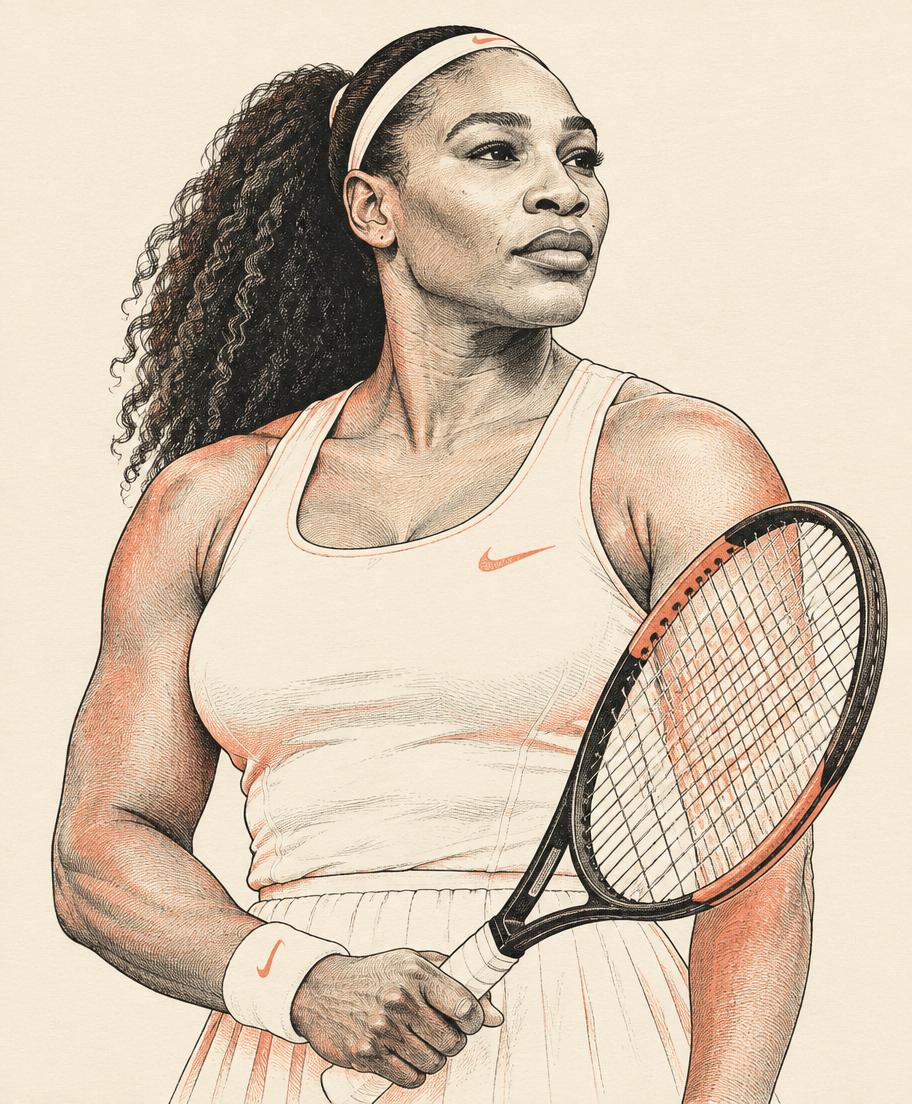
Tennis player
Serena Williams
One of the most successful tennis players in the history of the sport, with 23 Grand Slam singles titles.
Read biography ↗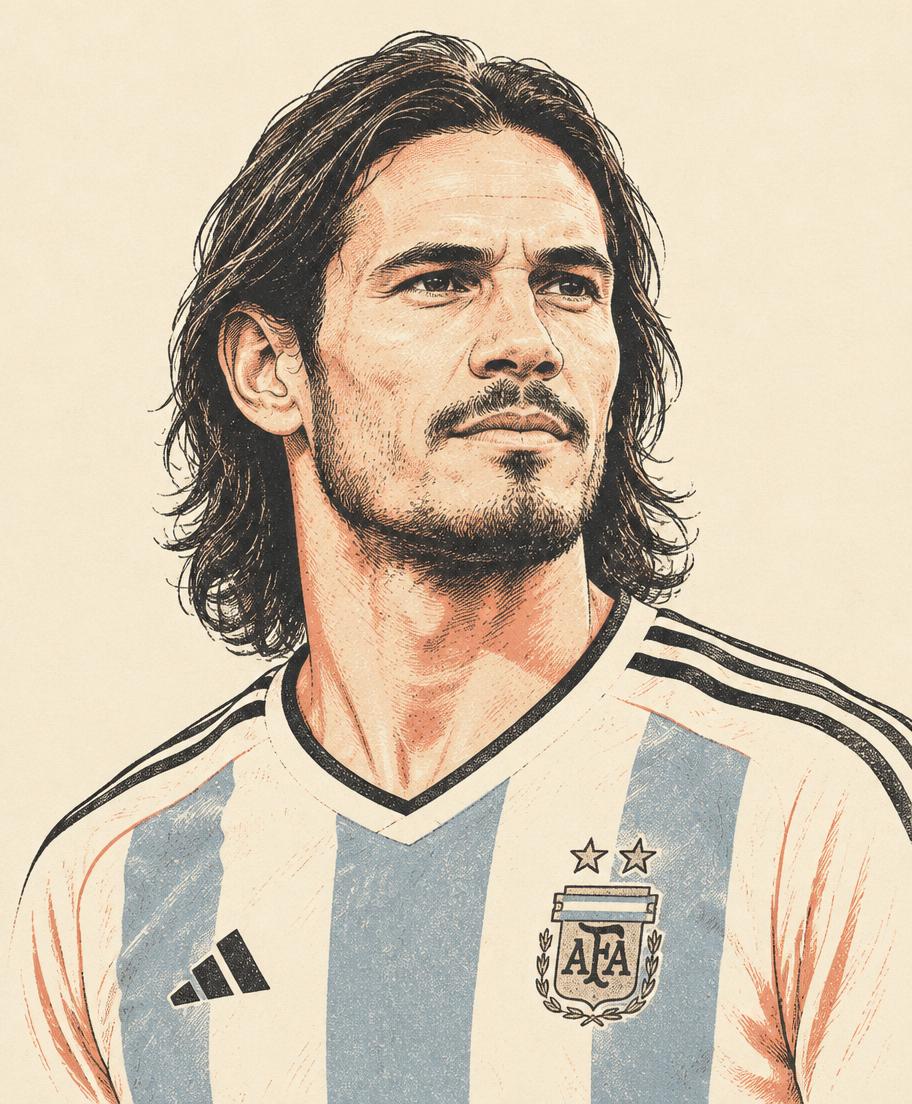
Footballer
Lionel Messi
An Argentine footballer whose record haul of individual honours is matched by a World Cup title in 2022.
Read biography ↗
Argentine association football player (born 1987)
Lionel Messi
Lionel Andrés "Leo" Messi is an Argentine professional footballer who plays as a forward for the Major League Soccer club Inter Miami, which he captains, and the Argentina national team.
Read biography ↗