Swedish writer (1891–1974)
Pär Lagerkvist
Pär Fabian Lagerkvist was a Swedish author who received the 1951 Nobel Prize in Literature.
By globalcelebwiki Editorial Desk, adapted from Wikipedia · Published 29 September 2026
- Profession
- Swedish writer (1891–1974)
- Born
- 23 May 1891
- Birthplace
- Växjö
- Nationality
- Swedish

Overview
Pär Fabian Lagerkvist (23 May 1891 – 11 July 1974) was a Swedish author who received the 1951 Nobel Prize in Literature.
Lagerkvist wrote poetry, plays, novels, short stories, and essays of considerable expressive power and influence from his early 20s to his late 70s. One of his central themes was the fundamental question of good and evil, which he examined through such figures as Barabbas, the man who was freed instead of Jesus, and Ahasuerus, the Wandering Jew. As a moralist, he used religious motifs and figures from the Christian tradition without following the doctrines of a church.
Biography and works
Lagerkvist was born in Växjö (Småland). He received a traditional religious education – he would later say, with little exaggeration, that he "had had the good fortune to grow up in a home where the only books known were the Bible and the Book of Hymns". In his teens he broke away from Christian beliefs, but, unlike many other writers and thinkers in his generation, he did not become vehemently critical of religious beliefs as such. Though he was politically a socialist for most of his life, he never indulged in the idea that "religion is the opium of the people". Much of his writing is informed by a lifelong interest in man and his symbols and gods, and in the position of Man (both as individual and mankind) in a world where the Divine is no longer present, no longer speaking.
In his early years Lagerkvist supported modernist and aesthetically radical views, as shown by his manifesto Ordkonst och bildkonst (Word Art and Picture Art, 1913) and the play Den Svåra Stunden ("The Difficult Hour").
One of the author's earliest works is Ångest (Anguish, 1916), a violent and disillusioned collection of poems. His anguish was derived from his fear of death, the World War, and personal crisis. He tried to explore how a person can find a meaningful life in a world where a war can kill millions for very little reason. "Anguish, anguish is my heritage / the wound of my throat / the cry of my heart in the world." ("Anguish", 1916.) "Love is nothing. Anguish is everything / the anguish of living." ("Love is nothing", 1916.) This pessimism, however, slowly faded, as testified by his subsequent works, Det eviga leendet (The Eternal Smile, 1920), the autobiographical novel Gäst hos verkligheten (Guest of Reality, 1925) and the prose monologue Det besegrade livet (The defeated Life, 1927), in which the faith in man is predominant. From The Eternal Smile on, his style largely abandoned the expressionist pathos and brusque effects of his early works and there was a strong striving for simplicity, classical precision and clean telling, sometimes appearing close to naivism. The content, however, was never truly naive. A Swedish critic remarked that "Lagerkvist and John the Evangelist are two masters at expressing profound things with a highly restricted choice of words".
Ten years after Ångest, Lagerkvist married for the second time, a union which was to provide a pillar of safety in his life until the death of his wife forty years later. Hjärtats sånger (Songs of the Heart) (1926) appeared at this time, bearing witness to his pride and love for his consort. This collection is much less desperate in its tone than Ångest, and established him as one of the foremost Swedish poets of his generation.
His prose novella Bödeln ("The Hangman", 1933), later adapted for the stage (The Hangman, 1933; play, 1934), shows his growing concern with the totalitarianism and brutality that began to sweep across Europe in the years prior to World War II. Nazism was one of the main targets of the work and Der Stürmer responded with a very dismissive review. Criticism against Fascism is also present in the play Mannen utan själ (The Man Without a Soul, 1936). During the Second World War, he was a member of the anti-Nazi organization Tisdagsklubbe and was on the Gestapo's death lists in the face of a possible German invasion of Sweden.
Två sagor om livet (2 Tales of Life) (1913)
Järn och människor (Iron and People) (1915)
Det eviga leendet (The Eternal Smile) (1920) - 3 stories
Bröllopsfesten och andra berättelser (The Marriage Feast and Other Stories) (1955 - Chatto & Windus) - 19 stories : 18 stories translated by Alan Blair, and 1 story translated by Carl Eric Lindin. [It is not clear that there was a Swedish version of this particular book.]
Gäst hos verkligheten (Guest of Reality) (1925)
Den svåra resan (The Difficult Journey) (written c. 1926, published 1985)
Själarnas maskerad (The Masquerade of Souls) (1930)
Barabbas (1950, filmed in 1953, 1961, and 2012)
Ahasverus död (The Death of Ahasuerus) (1960)
English translations
"Literary Art and Pictorial Art" [Ordkonst och bildkonst], Rainbow Press, 1991, ISBN 0-9518535-0-3.
"The Dwarf" [Dvärgen], Chatto & Windus, 1953; Hill and Wang, 1958, ISBN 0-374-52135-2.
"Barabbas", Vintage, 1989, ISBN 0-679-72544-X.
"The Sibyl" [Sibyllan], Vintage, 1963, ISBN 0-394-70240-9.
"The Death of Ahasuerus" [Ahasverus död], Vintage, 1982, ISBN 0-394-70820-2.
Sources and references
Spotted something wrong? Report a correction.
Related profiles
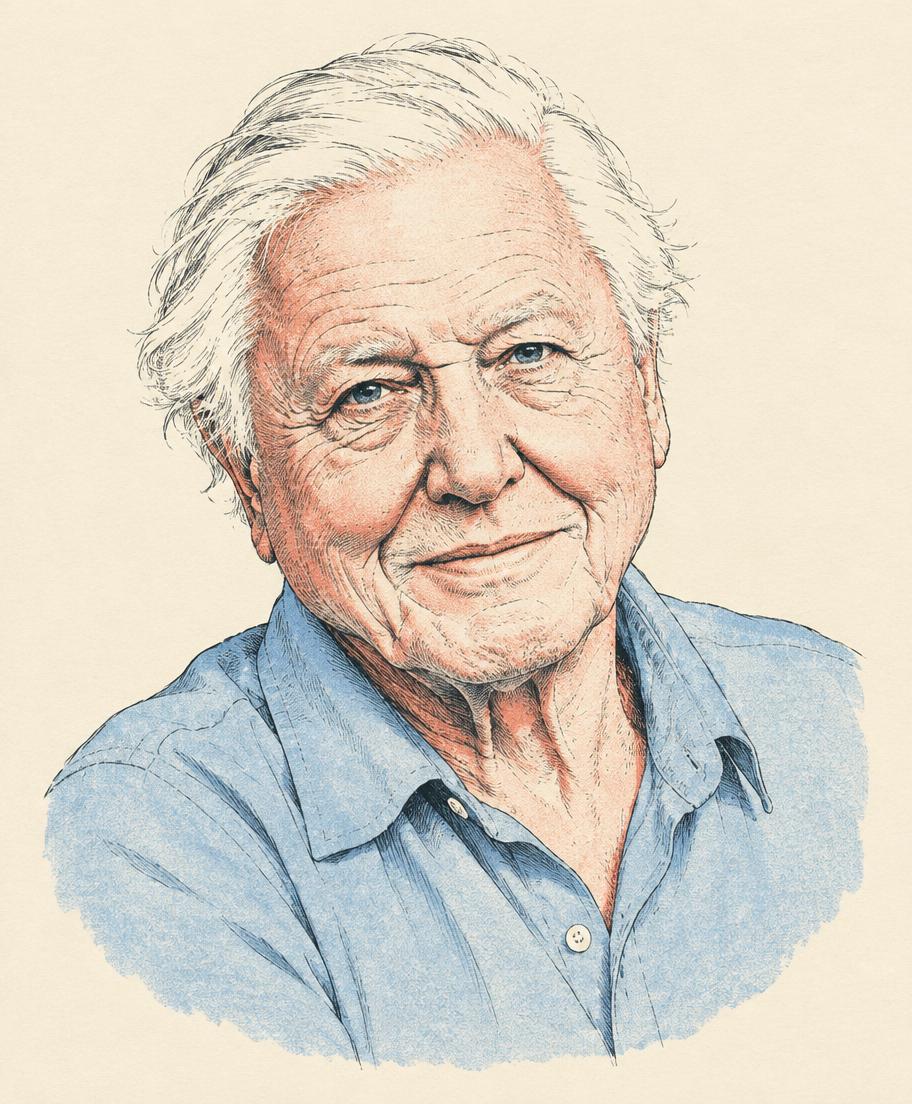
Broadcaster and natural historian
David Attenborough
The broadcaster whose natural history series have shaped how audiences understand life on Earth.
Read biography ↗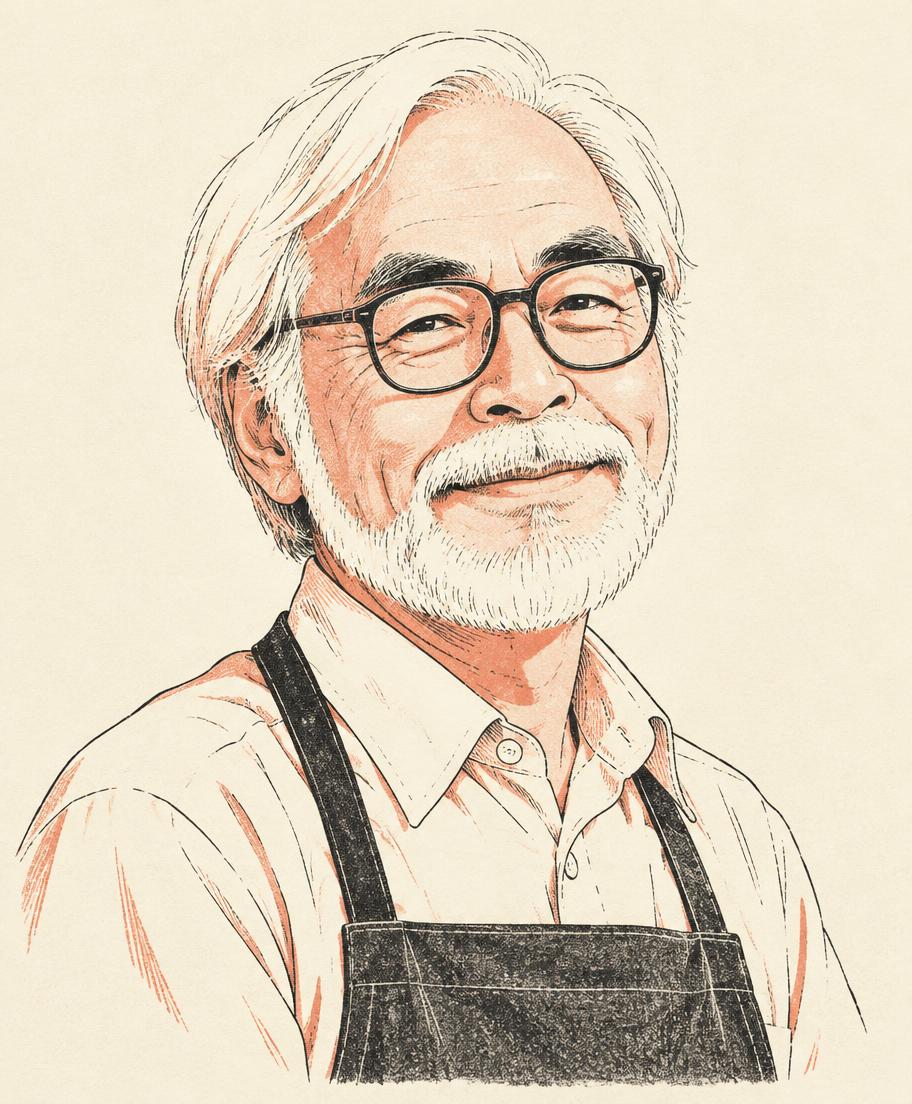
Animator and film director
Hayao Miyazaki
The animator and co-founder of Studio Ghibli whose hand-drawn films reached audiences worldwide.
Read biography ↗
Pope
Benedict I
Pope Benedict I was the bishop of Rome from 2 June 575 to his death on 30 July 579.
Read biography ↗