Russian poet and essayist (1891-1938)
Osip Mandelstam
Osip Emilyevich Mandelstam was a Russian and Soviet poet.
By globalcelebwiki Editorial Desk, adapted from Wikipedia · Published 29 September 2026
- Profession
- Russian poet and essayist (1891-1938)
- Born
- 15 January 1891
- Birthplace
- Warsaw
- Nationality
- Soviet

Overview
Osip Emilyevich Mandelstam (Russian: Осип Эмильевич Мандельштам, IPA: [ˈosʲɪp ɨˈmʲilʲjɪvʲɪtɕ mənʲdʲɪlʲˈʂtam]; 14 January [O.S. 2 January] 1891 – 27 December 1938) was a Russian and Soviet poet. He was one of the foremost members of the Acmeist school.
Osip Mandelstam was arrested during the repressions of the 1930s and sent into internal exile with his wife, Nadezhda Mandelstam. Given a reprieve of sorts, they moved to Voronezh in southwestern Russia. In 1938, Mandelstam was arrested again and sentenced to five years in a corrective-labour camp in the Soviet Far East. He died that year at a transit camp near Vladivostok.
Life and work
Mandelstam was born on 14 January 1891 in Warsaw, Congress Poland, Russian Empire, to a wealthy Polish-Jewish family. His father, a leather merchant by trade, was able to receive a dispensation freeing the family from the Pale of Settlement. Soon after Osip's birth, they moved to Saint Petersburg. In 1900, Mandelstam entered the prestigious Tenishev School. His first poems were printed in 1907 in the school's almanac. As a schoolboy, he was introduced by a friend to members of the illegal Socialist Revolutionary Party, including Mark Natanson, and the revolutionary Grigory Gershuni.
In April 1908, Mandelstam decided to enter the Sorbonne in Paris to study literature and philosophy, but he left the following year to attend the University of Heidelberg in Germany. In 1911, he decided to continue his education at the University of Saint Petersburg, from which Jews were excluded. He converted to Methodism and entered the university the same year. He did not complete a formal degree.
Mandelstam's poetry, acutely populist in spirit after the first Russian revolution in 1905, became closely associated with symbolist imagery. In 1911, he and several other young Russian poets formed the "Poets' Guild", under the formal leadership of Nikolai Gumilyov and Sergei Gorodetsky. The nucleus of this group became known as Acmeists. Mandelstam wrote the manifesto for the new movement: The Morning Of Acmeism (1913, published in 1919). In 1913 he published his first collection of poems, The Stone; it was reissued in 1916 under the same title, but with additional poems included.
Political persecution and death
In 1922, Mandelstam and Nadezhda moved to Moscow. At this time, his second book of poems, Tristia, was published in Berlin. For several years after that, he almost completely abandoned poetry, concentrating on essays, literary criticism, memoirs The Noise Of Time, Feodosiya – both 1925; (Noise of Time 1993 in English) and small-format prose The Egyptian Stamp (1928). As a day job, he translated literature into Russian (19 books in 6 years), then worked as a correspondent for a newspaper.
On 26 May, Mandelstam was sentenced neither to death, nor even the Gulag, but to three years' exile in Cherdyn in the Northern Ural, where he was accompanied by his wife. This escape was looked upon as a "miracle" – but the strain of his interrogation had driven Mandelstam to the verge of insanity. He later wrote that "at my side, my wife did not sleep for five nights" – but when they arrived at Cherdyn, she fell asleep, in the upper floor of a hospital, and he attempted suicide by throwing himself out of the window. His brother, Alexander, appealed to the police for his brother to be given proper psychiatric care, and on 10 June, there was a second "miracle", which banished Mandelstam from the twelve largest Soviet cities, but otherwise allowed him to choose his place of exile.
Mandelstam and his wife chose Voronezh, possibly, partly, because the name appealed to him. In April 1935, he wrote a four line poem that included the pun – Voronezh – blazh', Voronezh – voron, nozh meaning 'Voronezh is a whim, Voronezh – a raven, a knife.'. Just after their arrival, Boris Pasternak received a phone call from Stalin – his only conversation with the dictator, in which Stalin wanted to know whether Mandelstam really was a talented poet. "He's a genius, isn't he?" he is reputed to have asked Pasternak.
During these three years, Mandelstam wrote a collection of poems known as the Voronezh Notebooks, which included the cycle Verses on the Unknown Soldier.
Actually, the fact that Stalin had given an order to "isolate and preserve" Mandelstam meant that he was safe from further persecution, temporarily. In Voronezh, he was even granted a face-to-face meeting with the local head of the NKVD, Semyon Dukelsky, who told him "write what you like", and turned down an offer by Mandelstam to send in every poem he wrote to police headquarters. After that meeting, NKVD agents ceased shadowing the couple. There is a story, possibly apocryphal, that Mandelstam even rang Dukelsky to recite poetry over the phone.
Marriage and family
In 1916, Mandelstam was passionately involved with the poet Marina Tsvetayeva. According to her biographer, "Of the many love affairs with men that Marina embarked upon with such intensity during this period, it was probably the only one that was physically consummated." Mandelstam was said to have had an affair with the poet Anna Akhmatova. She insisted throughout her life that their relationship had always been a very deep friendship, rather than a sexual affair. In the 1910s, he was in love, secretly and unrequitedly, with a Georgian princess and St. Petersburg socialite Salomea Andronikova, to whom Mandelstam dedicated his poem "Solominka" (1916).
In 1922, Mandelstam married Nadezhda Mandelstam in Kiev, Ukraine, where she lived with her family, but the couple settled in Moscow. He continued to be attracted to other women, sometimes seriously. Their marriage was threatened by his falling in love with other women, notably Olga Vaksel in 1924–25 and Mariya Petrovykh in 1933–34. Nadezha Mandelstam formed a lifelong friendship with Anna Akhmatova, who was a guest in the Mandelstam's apartment when he was arrested for the first time, but complained that she could never be friendly with Tsvetayeva, partly because "I had decided on Akhmatova as 'top' woman poet". She also complained that Tsvetayeva could not take her eyes off her husband, and that "she accused me of being jealous of her."
Posthumous reputation and influence
Dutch composer Marjo Tal (1915–2006) set several of Mandelstam's poems to music.
In 1956, during the Khrushchev thaw, Mandelstam was rehabilitated and exonerated from the charges brought against him in 1938.
The Canadian Broadcasting Corporation aired Hope Against Hope, a radio dramatization about Mandelstam's poetry based on the book of the same title by Nadezhda Mandelstam, on 1 February 1972. The script was written by George Whalley, a Canadian scholar and critic, and the broadcast was produced by John Reeves.
In 1977, a minor planet, 3461 Mandelshtam, discovered by Soviet astronomer Nikolai Stepanovich Chernykh, was named after him.
That same year, American author Saul Bellow mentioned Mandelstam in the annual Jefferson Lecture for the National Endowment for the Arts. Bellow claimed that Mandelstam "carried a pocket edition of Dante's Widow just in case he was arrested, not at home but in the street."
Reviews
McCarey, Peter (1982), review of Osip Mandelstam's "Stone" translated by Robert Tracy and Poems chosen and translated by James Greene, in Murray, Glen (ed.), Cencrastus No. 8, Spring 1982, p. 49, ISSN 0264-0856
Sources and references
Spotted something wrong? Report a correction.
Related profiles
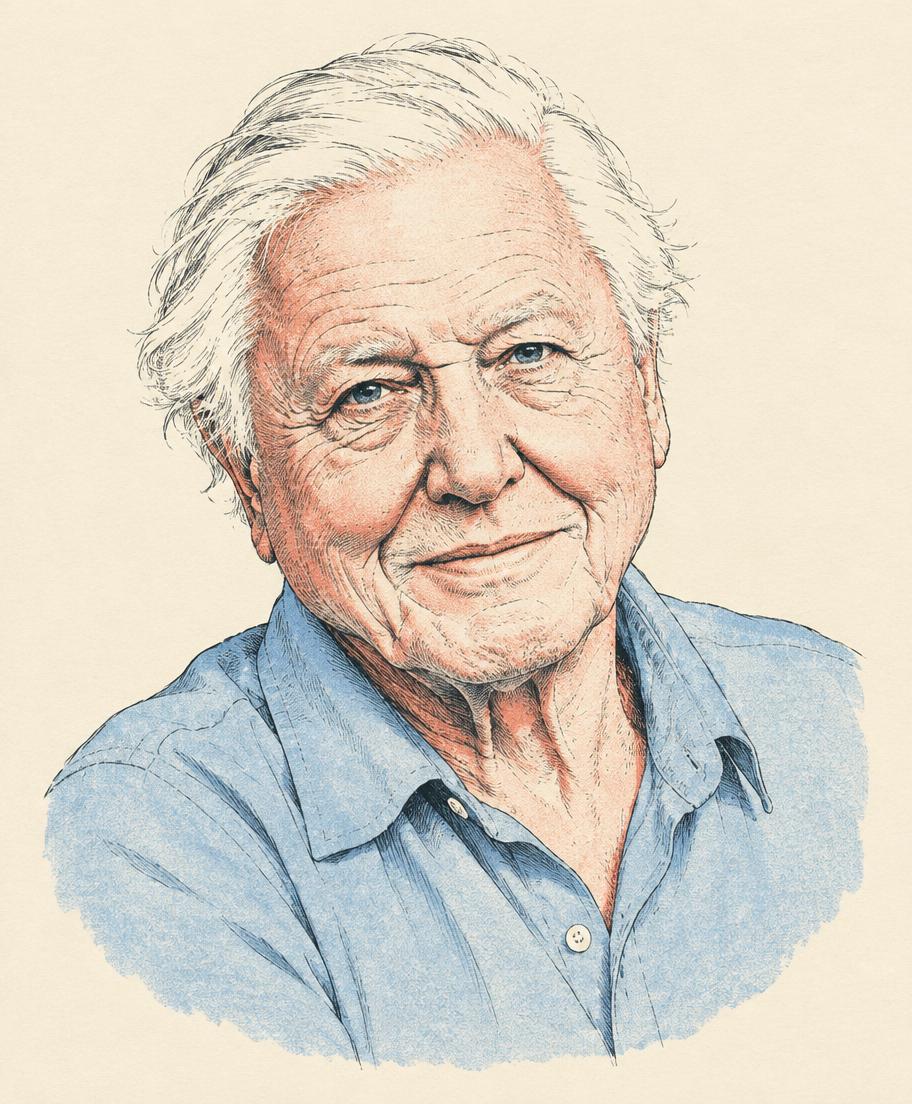
Broadcaster and natural historian
David Attenborough
The broadcaster whose natural history series have shaped how audiences understand life on Earth.
Read biography ↗
Animator and film director
Hayao Miyazaki
The animator and co-founder of Studio Ghibli whose hand-drawn films reached audiences worldwide.
Read biography ↗
Pope
Benedict I
Pope Benedict I was the bishop of Rome from 2 June 575 to his death on 30 July 579.
Read biography ↗