British poet and cultural critic (1822–1888)
Matthew Arnold
Matthew Arnold was an English poet and cultural critic.
By globalcelebwiki Editorial Desk, adapted from Wikipedia · Published 29 September 2026
- Profession
- British poet and cultural critic (1822–1888)
- Birthplace
- Laleham
- Nationality
- British
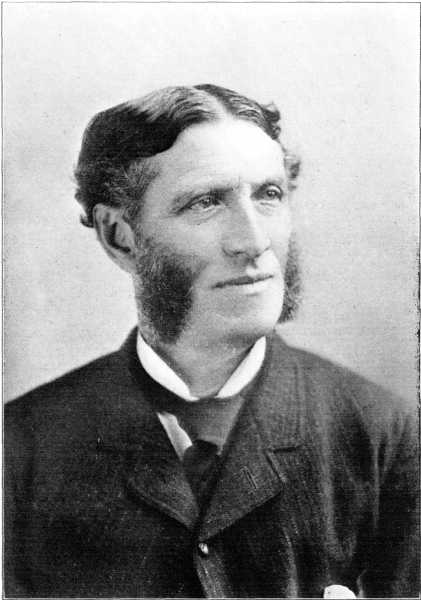
Overview
Matthew Arnold (24 December 1822 – 15 April 1888) was an English poet and cultural critic. He was the son of Thomas Arnold, the headmaster of Rugby School, and brother of both Tom Arnold, literary professor, and William Delafield Arnold, novelist and colonial administrator. He has been characterised as a sage writer, a type of writer who chastises and instructs the reader on contemporary social issues. He was also an inspector of schools for thirty-five years, and supported the concept of state-regulated secondary education.
Early years
Matthew Arnold was born on 24 December 1822 at Laleham-on-Thames, Middlesex, the eldest son of Thomas Arnold and Mary Penrose Arnold. John Keble stood as godfather to Matthew.
In 1828, Thomas Arnold was appointed Headmaster of Rugby School, where the family took up residence, that year. From 1831, Matthew Arnold was tutored by his clerical uncle, John Buckland, in Laleham. In 1834, the Arnolds occupied a holiday home, Fox How, in the Lake District. There William Wordsworth was a neighbour and close friend.
In 1836, Arnold was sent to Winchester College, but in 1837 he returned to Rugby School. He moved to the sixth form in 1838 and so came under the direct tutelage of his father. He wrote verse for a family magazine, and won school prizes. His prize poem, "Alaric at Rome", was printed at Rugby.
In November 1840, aged 17, Arnold matriculated at Balliol College, Oxford, where in 1841 he won an open scholarship, graduating B.A. in 1844. During his student years at Oxford, his friendship became stronger with Arthur Hugh Clough, a Rugby pupil who had been one of his father's favourites. He attended John Henry Newman's sermons at the University Church of St Mary the Virgin but did not join the Oxford Movement. After his father's death in 1842, Fox How became the family's permanent residence. His poem Cromwell won the 1843 Newdigate prize. He graduated in the following year with second class honours in Literae Humaniores.
In 1845, after a short interlude of teaching at Rugby, Arnold was elected Fellow of Oriel College, Oxford. In 1847, he became Private Secretary to Lord Lansdowne, Lord President of the Council. In 1849, he published his first book of poetry, The Strayed Reveller. In 1850 Wordsworth died; Arnold published his "Memorial Verses" on the older poet in Fraser's Magazine.
Marriage and career
Wishing to marry but unable to support a family on the wages of a private secretary, Arnold sought a more secure position and, in April 1851, was appointed one of Her Majesty's Inspectors of Schools. Two months later, he married Frances Lucy Wightman (1825-1901), daughter of Sir William Wightman, Justice of the Queen's Bench.
Arnold often described his duties as a school inspector as "drudgery" although "at other times he acknowledged the benefit of regular work." The inspectorship required him, at least at first, to travel constantly and across much of England. As narrated by Stefan Collini in his 1988 book on Arnold: "Initially, Arnold was responsible for inspecting Nonconformist schools across a broad swath of central England. He spent many dreary hours during the 1850s in railway waiting rooms and small-town hotels, and longer hours still listening to children reciting their lessons and parents reciting their grievances. But that also meant that he, among the first generation of the railway age, travelled across more of England than any man of letters had ever done. Although his duties were later confined to a smaller area, Arnold knew the society of provincial England better than most of the metropolitan authors and politicians of the day."
Literary career
In 1852, Arnold published his second volume of poems, Empedocles on Etna, and Other Poems. In 1853, he published Poems: A New Edition, a selection from the two earlier volumes famously excluding Empedocles on Etna, but adding new poems, Sohrab and Rustum and The Scholar Gipsy. In 1854, Poems: Second Series appeared; also a selection, it included the new poem Balder Dead.
Arnold was elected Professor of Poetry at Oxford in 1857, and he was the first in this position to deliver his lectures in English rather than in Latin. He was re-elected in 1862. On Translating Homer (1861) and the initial thoughts that Arnold would transform into Culture and Anarchy were among the fruits of the Oxford lectures. In 1859, he conducted the first of three trips to the continent at the behest of parliament to study European educational practices. He self-published The Popular Education of France (1861), the introduction to which was later published under the title Democracy (1879).
In 1865, Arnold published Essays in Criticism: First Series. Essays in Criticism: Second Series would not appear until November 1888, shortly after his death. In 1866, he published Thyrsis, his elegy to Clough who had died in 1861. Culture and Anarchy, Arnold's major work in social criticism (and one of the few pieces of his prose work currently in print) was published in 1869. Literature and Dogma, Arnold's major work in religious criticism appeared in 1873. In 1883 and 1884, Arnold toured the United States and Canada delivering lectures on education, democracy and Ralph Waldo Emerson. He was elected a Foreign Honorary Member of the American Academy of Arts and Sciences in 1883. In 1886, he retired from school inspection and made another trip to America. An edition of Poems by Matthew Arnold, with an introduction by A. C. Benson and illustrations by Henry Ospovat, was published in 1900 by John Lane.
Death
Arnold died suddenly in 1888 of heart failure whilst running to meet a tram that would have taken him to the Liverpool Landing Stage to see his daughter, who was visiting from the United States where she had moved after marrying an American. His wife died in June 1901.
Character
"Matthew Arnold", wrote G. W. E. Russell in Portraits of the Seventies, is "a man of the world entirely free from worldliness and a man of letters without the faintest trace of pedantry". Arnold was a familiar figure at the Athenaeum Club, a frequent diner-out and guest at great country houses, charming, fond of fishing (but not of shooting), and a lively conversationalist, with a self-consciously cultivated air combining foppishness and Olympian grandeur. He read constantly, widely, and deeply, and in the intervals of supporting himself and his family by the quiet drudgery of school inspecting, filled notebook after notebook with meditations of an almost monastic tone. In his writings, he often baffled and sometimes annoyed his contemporaries by the apparent contradiction between his urbane, even frivolous manner in controversy, and the "high seriousness" of his critical views and the melancholy, almost plaintive note of much of his poetry. "A voice poking fun in the wilderness" was T. H. Warren's description of him.
Poetry
Arnold's literary career—aside from two youthful prize poems—had begun in 1849 with the publication of The Strayed Reveller and Other Poems by A., which attracted little notice and was soon withdrawn. It contained what is perhaps Arnold's most purely poetical poem, "The Forsaken Merman." Empedocles on Etna and Other Poems (among them "Tristram and Iseult"), published in 1852, had a similar fate. In 1858 he published his tragedy of Merope, calculated, he wrote to a friend, "rather to inaugurate my Professorship with dignity than to move deeply the present race of humans," and chiefly remarkable for some experiments in unusual—and unsuccessful—metres. Arnold is sometimes called the third great Victorian poet, along with Alfred, Lord Tennyson, and Robert Browning.
Harold Bloom echoes Arnold's self-characterization in his introduction (as series editor) to the Modern Critical Views volume on Arnold: "Arnold got into his poetry what Tennyson and Browning scarcely needed (but absorbed anyway), the main march of mind in his time." Of his poetry, Bloom says,
Whatever his achievement as a critic of literature, society, or religion, his work as a poet may not merit the reputation it has continued to hold in the twentieth century. Arnold is, at his best, a very good but highly derivative poet. ... As with Tennyson, Hopkins, and Rossetti, Arnold's dominant precursor was Keats, but this is an unhappy puzzle, since Arnold (unlike the others) professed not to admire Keats greatly, while writing his own elegiac poems in a diction, meter, imagistic procedure, that are embarrassingly close to Keats.
The writer John Cowper Powys, an admirer, wrote that, "with the possible exception of Merope, Matthew Arnold's poetry is arresting from cover to cover—[he] is the great amateur of English poetry... [he] always has the air of an ironic and urbane scholar chatting freely, perhaps a little indiscreetly, with his not very respectful pupils."
Sir Edmund Chambers noted that "in a comparison between the best works of Matthew Arnold and that of his six greatest contemporaries ... the proportion of work which endures is greater in the case of Matthew Arnold than in any one of them." Chambers judged Arnold's poetic vision by
Prose
Assessing the importance of Arnold's prose work in 1988, Stefan Collini stated, "for reasons to do with our own cultural preoccupations as much as with the merits of his writing, the best of his prose has a claim on us today that cannot be matched by his poetry." "Certainly there may still be some readers who, vaguely recalling 'Dover Beach' or 'The Scholar Gipsy' from school anthologies, are surprised to find he 'also' wrote prose."
The scholar George Watson follows George Saintsbury in dividing Arnold's career as a prose writer into three phases: first his early literary criticism, beginning with his preface to the 1853 edition of his poems and ending in 1865 with the first series of Essays in Criticism; second, a prolonged middle period characterised by social, political and religious writing, roughly 1860–1875; and third, a return to literary criticism with the selecting and editing of collections of Wordsworth's and Byron's poetry and the second series of Essays in Criticism in 1888. Both Watson and Saintsbury declare their preference for Arnold's literary criticism over his social or religious criticism. More recent writers, such as Collini, have shown a greater interest in his social writing, while over the years a significant second tier of criticism has focused on Arnold's religious writing. His writing on education has not drawn a significant critical endeavour separable from the criticism of his social writings.
Sources and references
Spotted something wrong? Report a correction.
Related profiles
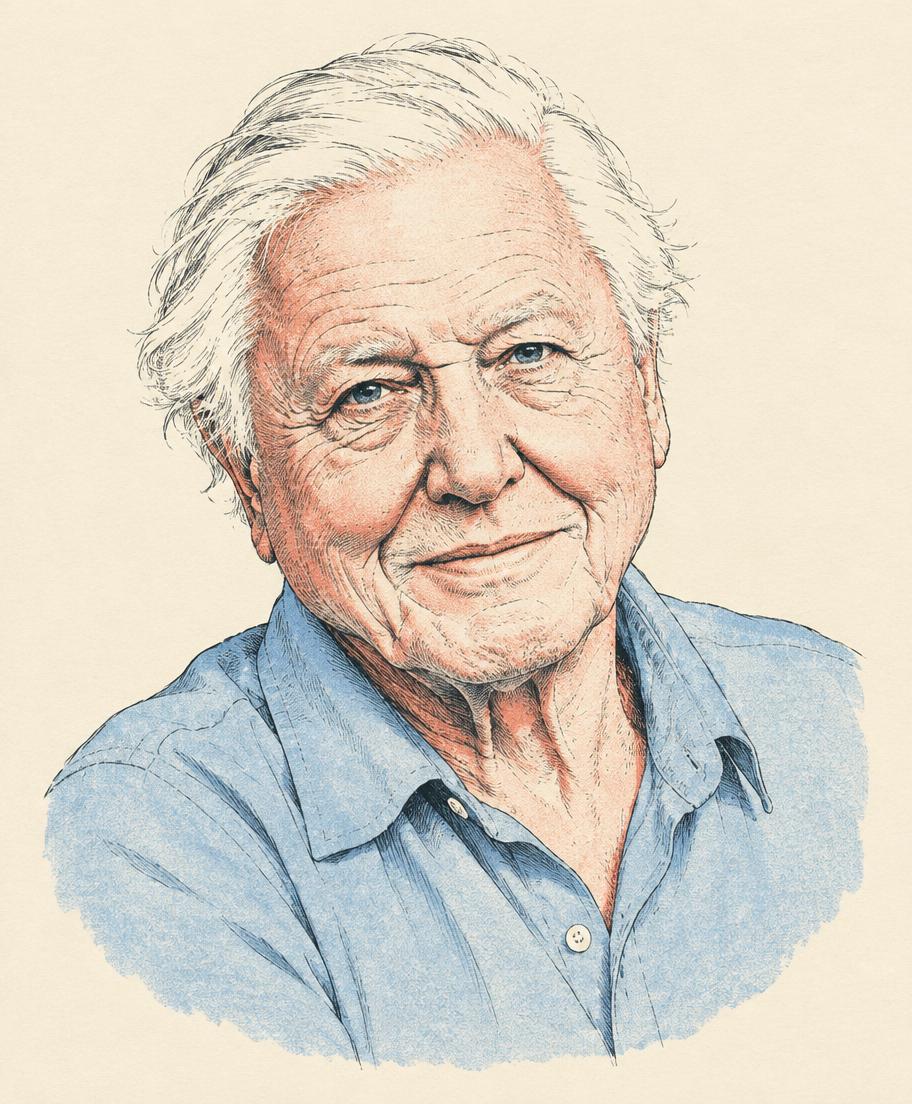
Broadcaster and natural historian
David Attenborough
The broadcaster whose natural history series have shaped how audiences understand life on Earth.
Read biography ↗
Animator and film director
Hayao Miyazaki
The animator and co-founder of Studio Ghibli whose hand-drawn films reached audiences worldwide.
Read biography ↗
Pope
Benedict I
Pope Benedict I was the bishop of Rome from 2 June 575 to his death on 30 July 579.
Read biography ↗