French novelist and essayist (1903-1987)
Marguerite Yourcenar
Marguerite Yourcenar was a Belgian-born French novelist and essayist who became a US citizen in 1947.
By globalcelebwiki Editorial Desk, adapted from Wikipedia · Published 29 September 2026
- Profession
- French novelist and essayist (1903-1987)
- Born
- 7 June 1903
- Birthplace
- Brussels
- Nationality
- Belgian

Overview
Marguerite Yourcenar (UK: , US: ; French: [maʁɡ(ə)ʁit juʁsənaʁ] ; born Marguerite Antoinette Jeanne Marie Ghislaine Cleenewerck de Crayencour; 8 June 1903 – 17 December 1987) was a Belgian-born French novelist and essayist who became a US citizen in 1947. Winner of the Prix Femina and the Erasmus Prize, she was the first woman elected to the Académie Française, in 1980. In 1965, she was nominated for the Nobel Prize in Literature.
Biography
Yourcenar was born in Brussels, Belgium, as Marguerite Antoinette Jeanne Marie Ghislaine Cleenewerck de Crayencour, to Michel Cleenewerck de Crayencour and Fernande de Cartier de Marchienne. Her father was of French bourgeois descent, originating from French Flanders, and a wealthy landowner. Her mother, of Belgian nobility, died ten days after Marguerite's birth. She grew up in the home of her paternal grandmother, and adopted the surname Yourcenar as a pen name; in 1947, she also took it as her legal surname.
Yourcenar's first novel, Alexis, was published in 1929. She translated Virginia Woolf's The Waves over a ten-month period in 1937.
In 1939, her partner at the time, the literary scholar and Kansas City native Grace Frick, invited Yourcenar to the United States to escape the outbreak of World War II in Europe. She lectured in comparative literature in New York City and Sarah Lawrence College.
Yourcenar and Frick became lovers in 1937 and remained together until Frick's death in 1979. After ten years spent in Hartford, Connecticut, they bought a house in Northeast Harbor, Maine, on Mount Desert Island, where they lived for decades. They are buried next to each other at Brookside Cemetery, Somesville, Mount Desert, Maine. Yourcenar's last companion was Jerry Wilson, with whom she had a tormented relationship; he died of AIDS in 1986.
In 1951, Yourcenar published, in France, the novel Memoirs of Hadrian, which she had been writing on and off for a decade. The novel was an immediate success and met with critical acclaim. In this novel, Yourcenar recreated the life and death of one of the great rulers of the ancient world, the Roman emperor Hadrian, who writes a long letter to Marcus Aurelius, the son and heir of Antoninus Pius, his successor and adoptive son. Hadrian meditates on his past, describing both his triumphs and his failures, his love for Antinous, and his philosophy. The novel has become a modern classic. The English version was translated by Frick.
Legacy and honours
1952: Prix Femina Vacaresco for Mémoires d'Hadrien (Memoirs of Hadrian)
1958: Prix Renée Vivien for Les charités d'Alcippe (The Alms of Alcippe)
1963: Prix Combat for Sous bénéfice d'inventaire (The Dark Brain of Piranesi)
1968: Prix Femina for L'Œuvre au noir (The Abyss)
1972: Prix Prince Pierre de Monaco for her entire oeuvre
Sources and references
Spotted something wrong? Report a correction.
Related profiles
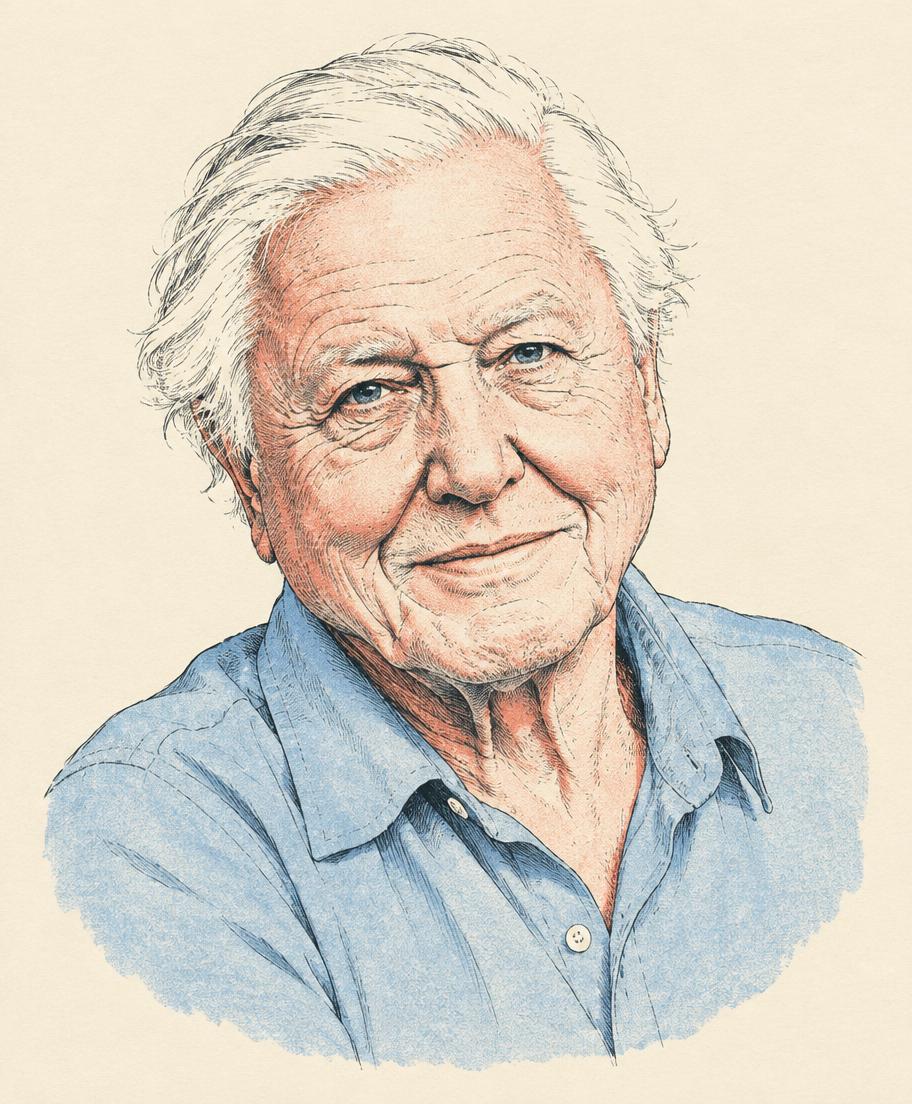
Broadcaster and natural historian
David Attenborough
The broadcaster whose natural history series have shaped how audiences understand life on Earth.
Read biography ↗
Animator and film director
Hayao Miyazaki
The animator and co-founder of Studio Ghibli whose hand-drawn films reached audiences worldwide.
Read biography ↗
Pope
Benedict I
Pope Benedict I was the bishop of Rome from 2 June 575 to his death on 30 July 579.
Read biography ↗