Chinese novelist and essayist (1881–1936)
Lu Xun
Lu Xun, pen name of Zhou Shuren, born Zhou Zhangshou, was a Chinese writer.
By globalcelebwiki Editorial Desk, adapted from Wikipedia · Published 29 September 2026
- Profession
- Chinese novelist and essayist (1881–1936)
- Born
- 25 September 1881
- Birthplace
- Shaoxing
- Nationality
- Chinese

Overview
Lu Xun (Chinese: 魯迅; pinyin: Lǔ Xùn, [lù ɕŷn]; 25 September 1881 – 19 October 1936), pen name of Zhou Shuren, born Zhou Zhangshou, was a Chinese writer. A leading figure of modern Chinese literature, he wrote in both vernacular and literary Chinese as a novelist, literary critic, essayist, poet, translator and political commentator, known for his sharp, satirical style and critical reflections on Chinese history and culture.
Lu Xun was born into a declining family of landlords and scholar-officials in Shaoxing, Zhejiang, and was the elder brother of Zhou Zuoren. Although he initially aspired to sit for the imperial examination, his family's declining fortunes led him to attend government-funded schools established under the Self-Strengthening Movement, where he was introduced to Western science and thought. In 1904, he enrolled at the Sendai Medical College in Japan, but left medicine to pursue literature. Financial difficulties forced his return to China, where he taught at various schools and colleges before taking a position at the Ministry of Education of the Beiyang government.
Lu Xun pioneered the New Culture Movement by publishing the first novel in vernacular Chinese, Diary of a Madman, in 1918. He gained prominence through his political writings in La Jeunesse following the May Fourth Movement in 1919. From the late 1920s onward, Lu Xun became increasingly engaged with Marxist thought and leftist politics. In the 1930s, he maintained a close but fraught relationship with the League of Left-Wing Writers. His works have been canonized in the People's Republic of China owing to Mao Zedong's high regard for him.
Family background
Lu Xun was born in Shaoxing, Zhejiang. His birth name was "Zhou Zhangshou" (Chinese: 周樟壽). His courtesy name was "Yushan" (豫山), which he later changed to "Yucai" (豫才). In 1898, before he went to the Jiangnan Naval Academy, he took the given name "Shuren" (樹人), which figuratively means "to be an educated man". The name "Lu Xun ", by which he is best known, was a pen name chosen upon the initial publishing of his story Diary of a Madman in 1918, with the surname Lu from his mother.
The Zhou family had been prosperous for centuries, and had become wealthy through landowning, pawnbroking, and by having several family members promoted to government positions. Lu Xun's paternal grandfather, Zhou Fuqing, was appointed to the Imperial Hanlin Academy in Beijing, the highest position possible for aspiring civil servants at that time. By the time Lu Xun was born, however, his family's prosperity had already been declining.
Lu Xun's early education was based on the Confucian classics, in which he studied poetry, history, and philosophy—subjects which, he later reflected, were neither useful nor interesting to him. Instead, he enjoyed folk stories and opera, including the mythological narratives of the Classic of Mountains and Seas and the ghost stories told to him by a servant.
Lu Xun half-heartedly participated in the first, district-level civil service examination in 1898, but then abandoned pursuing a traditional Confucian education or career. He intended to study at a prestigious school, the Qiushi Academy (or Seeking Affirmation Academy) in Hangzhou, but was forced by his family's poverty to instead study at the Jiangnan Naval Academy, a tuition-free military school in Nanjing.
As a consequence of Lu Xun's decision to attend a military school specializing in Western education, his mother wept, he was instructed to change his name to avoid disgracing his family, and some of his relatives began to look down on him. Lu Xun attended the Jiangnan Naval Academy for half a year, and left after it became clear that he would be assigned to work in an engine room, below deck, which he considered degrading. He later wrote that he was dissatisfied with the quality of teaching at the academy.
After leaving the school, Lu Xun sat for the lowest level of the civil service exams, and finished 137th of 500. He intended to sit for the next-highest level, but became upset when one of his younger brothers died, and abandoned his plans.
Lu Xun transferred to the School of Mines and Railways affiliated to the Jiangnan Naval Academy in 1899, and graduated in 1902. The school exposed Lu Xun to foreign literature, philosophy, history, and science, and he studied English and German intensively. Some of the influential authors that he read during that period include T. H. Huxley, John Stuart Mill, Yan Fu, and Liang Qichao. His later social philosophy may have been influenced by several novels about social conflict that he read during the period, including Ivanhoe and Uncle Tom's Cabin.
Lu Xun intended to study in Germany in 1909, but did not have sufficient funds, and was forced to return home. Between 1909 and 1911 he held a number of brief teaching positions at local colleges and secondary schools, partly to support his brother Zuoren's studies in Japan.
Lu Xun spent these years in traditional Chinese literary pursuits: collecting old books, researching classical Chinese novels, reconstructing ancient tombstone inscriptions, and compiling the history of his native Shaoxing. He explained to a friend that his activities were not "scholarship", but "a substitute for 'wine and women'". In his personal letters he expressed disappointment about his own failure, China's political situation, and his family's continuing impoverishment.
In 1911 he returned to Japan to retrieve his brother, Zuoren, so that Zuoren could help with the family finances. Zuoren wanted to remain in Japan to study French, but Lu Xun wrote that "French... does not fill stomachs". He encouraged another one of his brothers, Jianren, to become a botanist. He began to drink heavily, a habit he continued for the rest of his life. In 1911 he wrote his first short story, Nostalgia, but he was so disappointed with it that he threw it away. Zuoren saved it, and had it published two years later under his own name.
In February 1912, shortly after the Xinhai Revolution overthrew the Qing dynasty, Lu Xun gained a position at the Ministry of Education of the newly founded Republic of China. He worked in Nanjing before moving with the ministry to Beijing, where he lived from 1912 to 1926. Together with Qian Daosun and Xu Shoushang, he designed the Twelve Symbols national emblem in 1912.
Between 1912 and 1917 he was a member of an ineffectual censorship committee of the Beiyang government, informally studied Buddhist sutras, lectured on fine arts, wrote and self-published a book on the history of Shaoxing, and edited and self-published a collection of folk stories from the Tang and Song dynasties. He collected and self-published an authoritative book on the work of an ancient poet, Ji Kang, and wrote A Brief History of Chinese Fiction, a work which, because traditional scholars had not valued fiction, had little precedent in China. After Yuan Shikai declared himself the Emperor of China in 1915, Lu Xun was briefly forced to participate in rituals honoring Confucius, which he ridiculed in his diaries. During his tenure at the Beiyang government's Ministry of Education, he contributed to the renovation and expansion of the National Library of China in Beijing and helped establish the Natural History Museum and the Library of Popular Literature.
In 1929, Lu Xun visited his mother, and reported that she was pleased at the news of Xu's pregnancy. Xu gave birth to a son named Haiying on 27 September. She was in labor with the baby for 27 hours. The child's name meant simply "Shanghai infant". His parents chose the name thinking that he could change it himself later, but he never did so. Haiying was Lu Xun's only child.
After moving to Shanghai, Lu Xun rejected all regular teaching positions (though he sometimes gave guest lectures at different campuses), and for the first time was able to make a living solely as a professional writer, with a monthly income of roughly 500 yuan. He was also appointed by the government as a "specially appointed writer" by the national Ministry of Higher Education, which secured him an additional 300 yuan per month.
Lu Xun began to study and identify with Marxist politics, made contact with local CCP members, and became involved in literary disputes with other leftist writers in the city. In 1930 Lu Xun became one of the co-founders of the League of Left-Wing Writers, but shortly after he moved to Shanghai other leftist writers accused him of being "an evil feudal remnant", the "best spokesman of the bourgeoisie", and "a counterrevolutionary split personality". The League continued in various forms until 1936, when the constant disputes among its members led the CCP to dissolve it.
In January 1931, the Kuomintang (KMT) passed new, stricter censorship laws, allowing for writers producing literature deemed "endangering the public" or "disturbing public order" to be imprisoned for life or executed. Later that month he went into hiding. In early February, less than a month later, the KMT executed twenty-four local writers (including five who belonged to the League) whom they had arrested under this law.
After the execution of the "24 Longhua Martyrs" (in addition to other students, friends, and associates), Lu Xun's political views became distinctly anti-KMT. In 1933 Lu Xun met Edgar Snow. Snow asked Lu Xun whether there were any Ah Q's left in China. Lu Xun responded, "It's worse now. Now it's Ah Q's who are running the country." Lu Xun complained of censorship of his works by KMT censors throughout the 1930s.
At 3:30 am on the morning of 18 October 1936, the author woke having great difficulty breathing. Dr. Sudo, his physician, was summoned, and Lu Xun was given injections to relieve the pain. His wife was with him throughout that night. Lu Xun died at 5:11 am the next morning, 19 October. Lu Xun's remains were interred in a mausoleum within Lu Xun Park in Shanghai. Mao Zedong later made the calligraphic inscription above his tomb.
He was survived by his son, Zhou Haiying.
Legacy
Lu Xun has been described by Nobel laureate Kenzaburō Ōe as "the greatest writer Asia produced in the 20th century." In 1986, Fredric Jameson cited Diary of a Madman as the "supreme example" of the "national allegory" form that all Third World literature takes. Gloria Davies compares Lu Xun to Nietzsche, saying that both were "trapped in the construction of a modernity which is fundamentally problematic". According to Leonardo Vittorio Arena, Lu Xun cultivated an ambiguous standpoint towards Nietzsche, a mixture of attraction and repulsion, the latter because of Nietzsche's excesses in style and content.
In China, Lu Xun’s legacy has been extensively interpreted and appropriated by the Chinese Communist Party. In his lifetime, even though left-leaning, Lu Xun kept a distance with any political organization as well as the CCP. In a letter to Cao Juren dated 30 April 1934, Lu Xun wrote that “if the old society collapses one day, I will probably end up wearing a red vest and sweeping the streets of Shanghai.” In a letter dated 15 July 1936, three months before his death, Lu Xun wrote that many readers assumed that The True Story of Ah Q was about the Xinhai Revolution, but that he had written not about events twenty years earlier, but about China “twenty or thirty years in the future.” After Lu Xun’s death in 1936, Li Ji, a close friend, recalled that Lu Xun had told Feng Xuefeng, his student and liaison with the CCP: “When the revolution succeeds, I will be the first to flee. Because you people will be the first to kill me.”
Shortly after Lu Xun's death, Mao Zedong called him "the saint of modern China". In 1940, Mao wrote in On New Democracy that “Lu Xun was not only a great writer, but also a great thinker and a great revolutionary,” a formulation that subsequently became the orthodox CCP assessment of Lu Xun. In 1942, at the Yan'an Forum on Literature and Art, Mao quoted Lu Xun to urge his audience to be "a willing ox", but told writers and artists who believed in freedom of expression that, because CCP areas were already liberated, they did not need to be as sharp as Lu Xun. After the establishment of the People’s Republic of China in 1949, Lu Xun was firmly settled as a center in the communist literary canon and became widely taught in schools, even as many of his associates were persecuted, including his brother Zhou Zuoren. According to Lu Xun's son Zhou Haiying, Mao Zedong told Luo Jinan in 1957 that, had Lu Xun lived, he would have “either remained silent or been imprisoned.” During the Cultural Revolution, Lu Xun’s works were among the very few books still permitted to be published in China.
Since the 2000s, periodic revisions to Chinese school textbooks involving the addition or removal of Lu Xun’s works have attracted public attention and been speculated as reflecting shifts in the CCP’s ideological direction. Julia Lovell, who has translated Lu Xun's writing, commented on one of the removals that it might be "an attempt to discourage the youth of today from Lu Xun's inconveniently fault-finding habits."
In the Xi Jinping era, Lu Xun has increasingly been presented as a patriotic cultural symbol rather than as an anti-establishment critic. Mao admired Lu’s attacks on what both saw as the cruelty, backwardness, and hypocrisy of old China. Xi’s emphasis on cultural confidence and the rehabilitation of traditional Chinese culture, however, sits uneasily with Lu Xun’s relentless critiques.
Style and thought
Lu Xun was a versatile writer. He wrote using both traditional Chinese conventions and 19th century European literary forms. His style has been described in equally broad terms, conveying both "sympathetic engagement" and "ironic detachment" at different moments. Particularly in his early novellas, Lu Xun wrote about characters who were weak, indecisive, frustrated, and largely the victims of oppressive Chinese culture.
His essays are often incisive in his societal commentary, and in his stories his mastery of the vernacular language and tone make some of his literary works (like "The True Story of Ah Q") hard to convey through translation. In them, he frequently treads a fine line between criticizing the follies of his characters and sympathizing with those very follies. Lu Xun was a master of irony and satire (as can be seen in "The True Story of Ah Q") and yet could also write impressively direct prose ("My Old Home", "A Little Incident").
Lu Xun is typically regarded by Mao Zedong as the most influential Chinese writer who was associated with the May Fourth Movement. He produced harsh criticism of social problems in China, particularly in his analysis of the "Chinese national character". He was sometimes called a "champion of common humanity".
Lu Xun felt that the Xinhai Revolution of 1911 had been a failure. In 1925 he opined, "I feel the so-called Republic of China has ceased to exist. I feel that, before the revolution, I was a slave, but shortly after the revolution, I have been cheated by slaves and have become their slave." He even recommended that his readers heed the critique of Chinese culture in Chinese Characteristics by the missionary writer Arthur Smith. His disillusionment with politics led him to conclude in 1927 that "revolutionary literature" alone could not bring about radical change. Rather, "revolutionary men" needed to lead a revolution using force. In the end, he experienced profound disappointment with the new Nationalist government, which he viewed as ineffective and even harmful to China.
Lu Xun contended that "[i]f Chinese characters are not exterminated, there can be no doubt that China will perish."
Sources and references
Spotted something wrong? Report a correction.
Related profiles
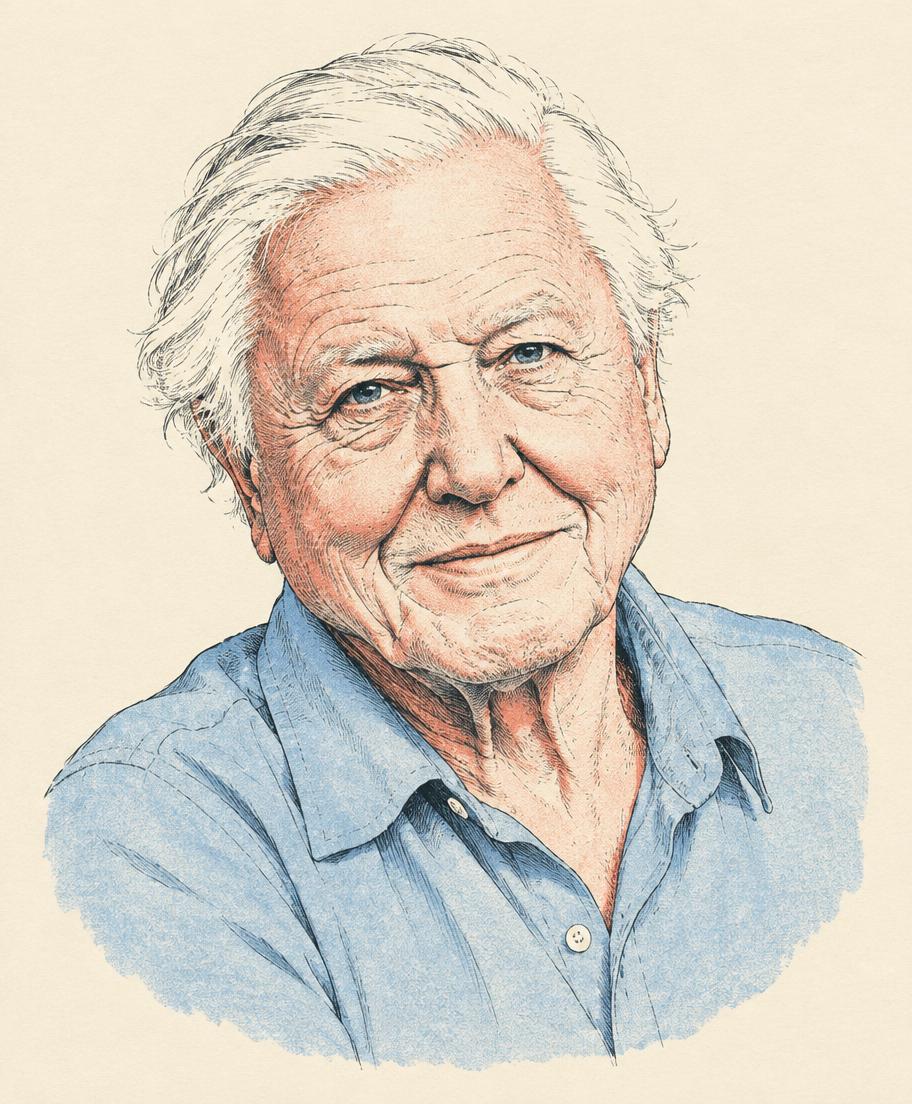
Broadcaster and natural historian
David Attenborough
The broadcaster whose natural history series have shaped how audiences understand life on Earth.
Read biography ↗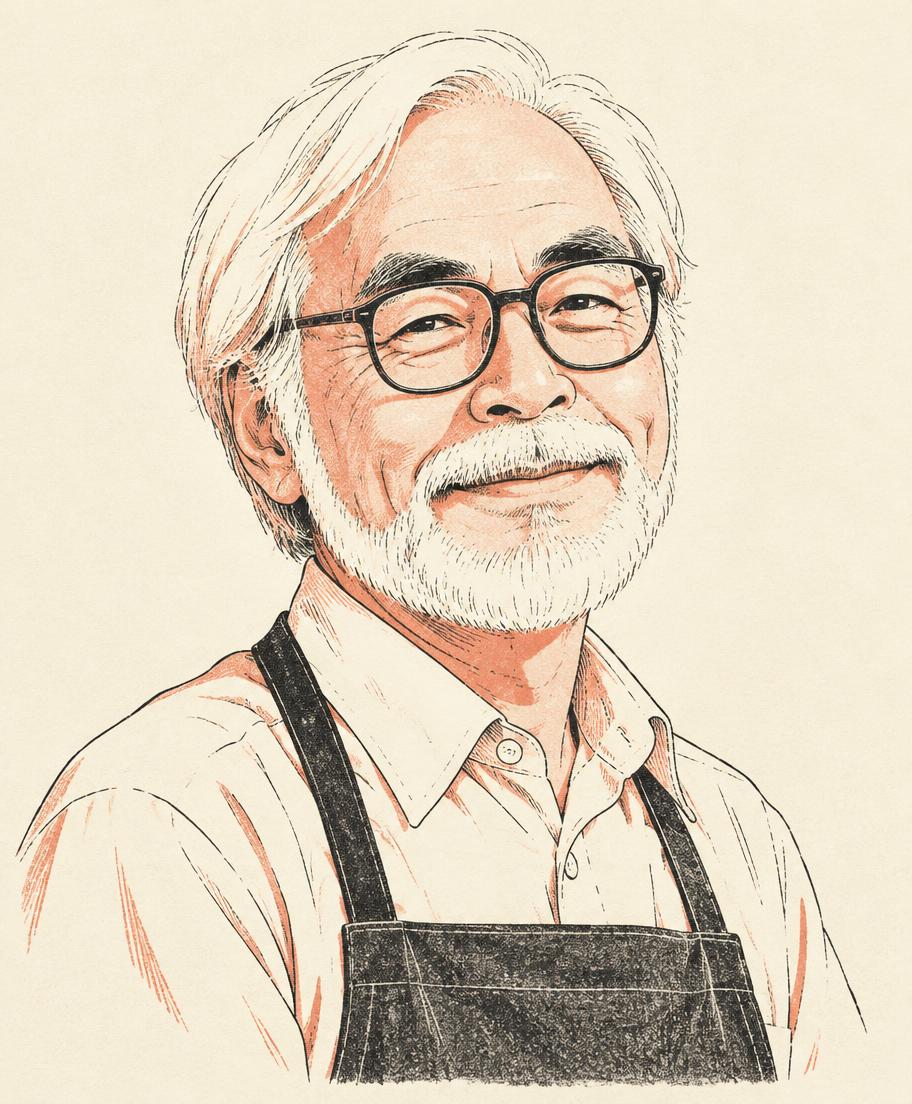
Animator and film director
Hayao Miyazaki
The animator and co-founder of Studio Ghibli whose hand-drawn films reached audiences worldwide.
Read biography ↗
Pope
Benedict I
Pope Benedict I was the bishop of Rome from 2 June 575 to his death on 30 July 579.
Read biography ↗