American track and field athlete (1913–1980)
Jesse Owens
James Cleveland "Jesse" Owens was an American track and field athlete.
By globalcelebwiki Editorial Desk, adapted from Wikipedia · Published 29 September 2026
- Profession
- American track and field athlete (1913–1980)
- Born
- 12 September 1913
- Birthplace
- Oakville
- Nationality
- American

Overview
James Cleveland "Jesse" Owens (September 12, 1913 – March 31, 1980) was an American track and field athlete. He made history at the 1936 Olympic Games by winning four gold medals, setting individual Olympic records in each event, plus another as a member of the 400-meter relay. He is widely regarded as one of the greatest athletes in track and field history.
Owens excelled in short sprints and the long jump and was lauded in his lifetime as "perhaps the greatest and most famous athlete in track and field history". Earlier he won four events, set five world records, and tied another—all in less than an hour, at the 1935 Big Ten Championships in Ann Arbor, Michigan, a feat that has never been equaled and was called "the greatest 45 minutes ever in sport". He won four NCAA titles in both 1935 and 1936, bringing his total to eight—an unparalleled achievement still unmatched.
He achieved international fame at the 1936 Summer Olympics in Berlin, Germany, by winning four gold medals: 100 meters, long jump, 200 meters, and 4 × 100-meter relay. He was the most successful athlete at the Games and, as a black American man, was credited by ESPN with "single-handedly crushing Hitler's myth of Aryan supremacy".
The Jesse Owens Award is USA Track & Field's accolade for the year's best track and field athlete. In a 1950 Associated Press poll, Owens was voted the greatest track and field athlete for the first half of the century. In 1999, he made the six-man short-list for the BBC's Sports Personality of the Century. That same year, ESPN ranked him sixth-greatest North American athlete of the twentieth century and the highest-ranked in his sport.
Early life
Jesse Owens, originally known as J. C., on September 12, 1913. He was the youngest of ten children (three girls and seven boys) born to Henry Cleveland Owens (1881–1942), a sharecropper, and Mary Emma Fitzgerald (1876–1940) in Oakville, Alabama. He was the grandson of a slave. At age nine, he and his family moved to Cleveland, Ohio for better opportunities as part of the Great Migration (1910–70) when millions of African Americans left the segregated and rural South for the urban and industrial North. When his new teacher asked his name to enter in her roll book, he said "J. C.", but because of his strong Southern accent, she thought he said "Jesse". The name stuck, and he was known as Jesse Owens thereafter.
In his younger years, Owens took menial jobs in his spare time: he delivered groceries, loaded freight cars, and worked in a shoe repair shop while his father and older brother worked at a steel mill. During this period, Owens developed a passion for running. Throughout his life, Owens attributed the success of his athletic career to the encouragement of Charles Riley, his track coach at Fairmount Junior High School. Since Owens worked after class, Riley allowed him to practice before school instead.
Owens and Minnie Ruth Solomon (1915–2001) met at Fairmont Junior High School in Cleveland when he was 15 and she was 13. They dated steadily through high school. Ruth gave birth to their first daughter, Gloria, in 1932. They married on July 5, 1935, and had two more daughters together: Marlene (1937), and Beverly (1940). They remained married until his death in 1980.
Owens gained national attention as a student of East Technical High School in Cleveland; he equaled the world record of 9.4 seconds in the 100-yard (91 m) dash, broke the national high school record with 20.7 seconds in the 220-yard (200 m) dash, and long-jumped 24 feet 9+1⁄2 inches (7.56 m) at the 1933 National High School Championship in Chicago. His 100-yard dash remained the national high school record until 1967, while his 200-yard dash remained the national record for 20 years.
Owens entered Ohio State University in 1933 after his father found employment, which supported the family. Affectionately known as the "Buckeye Bullet" and under the coaching of Larry Snyder, Owens won a record eight individual NCAA championships, four each in 1935 and 1936. His career total of eight individual NCAA titles remains the most, despite only two years of varsity competition—which included an undefeated junior year in 1936 where he won all 42 events he entered. Though Owens enjoyed athletic success, he was forced to live off campus with other African-American athletes. When he traveled with the team, Owens was restricted to ordering carry-out or eating at "blacks-only" restaurants and had to stay at "blacks-only" hotels. Owens did not receive a scholarship, so he continued to work part-time jobs to pay for school. Owens struggled as a student at Ohio State, and was placed on academic probation in 1936 and 1940. He dropped out in 1941 without earning a degree.
On May 25, 1935, Owens won four events and established six world records in athletics at the Big Ten Championships. On that day, Owens battled through a lower back injury, set five world records, and tied a sixth in 45 minutes from 3:15–4 p.m. during the Big Ten meet at Ferry Field in Ann Arbor, Michigan. He equaled the world record for the 100-yard dash (9.4 seconds), and set world records in the long jump (26 feet 8+1⁄4 inches or 8.13 metres, a world record that lasted for 25 years); 220-yard (201.2 m) sprint (20.3 seconds); and 220-yard low hurdles (22.6 seconds, the first to break 23 seconds). Both 220-yard records had smashed the metric records for 200 meters (flat and hurdles), which counted as two additional world records from the same performances.
At the 1936 Big Ten Championships, Owens dominated, winning the long jump, 100-yard dash, 220-yard dash, and 100-yard low hurdles. With these victories, he concluded his Big Ten Championship career undefeated—winning nine titles in nine events.
At the 1934 USA Indoor Track and Field Championships, Owens captured the long jump gold with a world-record leap of 25 ft 3+1⁄8 in (7.699 m). Two years later, at his final appearance at the Outdoor Championships in 1936, he again shattered the long jump world record with a leap of 26 feet, 8¼ inches. He also set a championship record in the 100 meters, clocking 10.4 seconds. Over the course of his career at these championships, Owens amassed six gold medals—five in the long jump and one in the 100 meters.
In the months prior to the Games, a movement gained momentum in favor of boycotting them given their racist attitudes towards Africans. The NAACP Owens convinced to declare "If there are minorities in Germany who are being discriminated against, the United States should withdraw from the 1936 Olympics." Yet he and others eventually took part after Avery Brundage, president of the American Olympic Committee branded them "un-American agitators".
In 1936, Owens and his US teammates sailed on the SS Manhattan to the Games. Just before the competitions, Adidas athletic shoe company founder Adi Dassler visited Owens in the Olympic village and persuaded him to wear Gebrüder Dassler Schuhfabrik shoes; this was the first sponsorship for a male African American athlete.
On August 3, Owens won the 100 m dash with a time of 10.3 seconds, defeating teammate and college friend Ralph Metcalfe by one tenth of a second and Tinus Osendarp of the Netherlands by two-tenths.
On August 4, he won the long jump with a leap of 8.06 metres (26 ft 5 in) (3¼ inches short of his own world record). He initially credited this achievement to the technical advice that he received from Luz Long, the German competitor whom he defeated, but later admitted that this was not true, as he and Long did not meet until after the competition.
On August 5, he won the 200-meter sprint with a time of 20.7 seconds, defeating fellow American teammate Mack Robinson (Jackie Robinson's older brother).
Later life
Owens was quoted saying the secret behind his success was, "I let my feet spend as little time on the ground as possible. From the air, fast down, and from the ground, fast up."
After the 1936 Olympics, Avery Brundage organized a European exhibition tour to profit the AAU and USOC, both of which he led. Owens, exhausted but pressured to compete, ran multiple races across Europe with little rest, food, or support. Despite such treatment, Brundage continued booking events across Scandinavia. Owens, drained and frustrated, eventually refused to continue. Brundage retaliated by having Owens permanently suspended from amateur competition, which immediately ended his career. Owens was angry and stated that "A fellow desires something for himself." As Ruth Owens later recalled, "That Avery Brundage feller tore a big hole inside Jesse." Owens argued that the racial discrimination he had faced throughout his athletic career, such as his ineligibility for scholarships in college and his inability to take classes between training and working to pay his way, meant he had to give up on amateur athletics in pursuit of earning a living.
After returning to the US, racism back home led to financial difficulty despite his successes. Owens struggled to find work and took on menial jobs as a gas station attendant, playground janitor, and manager of a dry cleaning firm and at times resorted to racing against motorbikes, cars, trucks, and horses for a cash prize. People say it was degrading for an Olympic champion to run against a horse, but what was I supposed to do? I had four gold medals, but you can't eat four gold medals. Owens was not greeted with the glory and praise that White Olympians had received. He stated, "No one had offered me a job" and "I had jumped farther and run faster than any man ever had before, and it left me with next to nothing." He also said, "So I sold myself into a new kind of slavery. I was no longer a proud man who had won four Olympic gold medals. I was a spectacle, a freak who made his living by competing—dishonestly—against dumb animals." Despite his athletic triumphs, he had to take on manual labor work to afford basic necessities.
Tyson Evans writes, of Owens, that “his dominance shattered the myth of Aryan supremacy and made him an international star... Owens’ achievements played a pivotal role in breaking racial barriers in sports, inspiring future Black athletes, and advancing the civil rights movement.
Owens was banned from attending amateur events to enhance his visibility, and soon discovered that commercial opportunities had almost completely disappeared. In 1937, he briefly toured with a twelve-piece jazz band under contract with Consolidated Artists but found it unfulfilling. He also made appearances at baseball games and other events.
Owens was a pack-a-day cigarette smoker for 35 years, starting at age 32. Beginning in December 1979, he was hospitalized on and off with an extremely aggressive and drug-resistant type of lung cancer. He died of the disease at age 66 in Tucson, Arizona, on March 31, 1980, with his wife and other family members at his bedside. He was buried next to the Lake of Memories at Oak Woods Cemetery in Chicago, near where his children and extended family still lived. The grave is inscribed:
Jesse Owens. Olympic Champion. 1936. Athlete and humanitarian. A master of the spirit as well as the mechanics of sports. A winner who knew that winning was not everything. He showed extraordinary love for his family and friends. His achievements have shown us all the promise of America. His faith in America inspired countless others to do their best for themselves and their country. September 12, 1913 – March 31, 1980.
President Jimmy Carter issued a tribute to Owens, stating: "Perhaps no athlete better symbolized the human struggle against tyranny, poverty, and racial bigotry."
Legacy
Owens is widely considered one of the greatest athletes in history. Over the course of his career, he earned nine Big Ten titles, eight NCAA titles, and six USA Track & Field titles. His international legacy was cemented at the Olympics, where he won gold in all four events he entered—each in Olympic record time–delivering a powerful rebuttal to Hitler's ideology of Aryan supremacy and dealt a symbolic blow to the Nazi's racist propaganda. Several of his world records endured for decades, including his long jump record, which lasted 25 years, and his 100-meter dash record, which stood for 20.
Following his athletic career, Owens experienced difficulties securing financial stability, a circumstance attributed in part to limited opportunities available to African Americans. Later in life, his contributions to sport and society were acknowledged through honors such as the Presidential Medal of Freedom in 1976 and the Congressional Gold Medal posthumously in 1990.
"Giants like Jesse Owens show us why politics will never defeat the Olympic spirit. His character, his achievements have continued to inspire Americans as they did the whole world in 1936."—Gerald Ford
Owens was honored by naming schools, streets, and athletic facilities after him—including Jesse Owens Memorial Stadium—and his life inspired documentaries, books, and the biopic Race. Notably, the documentary Olympic Pride, American Prejudice highlights his story as part of a broader examination of the 18 Black American athletes who competed in the 1936 Berlin Olympics. He is a member of several halls of fame, including the U.S. Olympic and National Track and Field Hall of Fame.
The dormitory that Owens occupied during the Berlin Olympics was fully restored into a living museum, with pictures of his accomplishments, and a letter (intercepted by the Gestapo) from a fan urging him not to shake hands with Hitler.
Annual Cleveland Athletic Club Indoor Meet at Cleveland Public Hall
100-yard dash champion (1933 tied H.S. record)
Intraschool Meet in Cleveland (June 3, 1933)
2× State Champions – East Technical HS (1932, 1933)
3× Long jump champion (1931–1933 H.S. record)
2× 220-yard dash champion (1932, 1933 H.S. record)
West Virginia Indoor Relays (February 10, 1934)
Freshman Dual Meet vs. Indiana (February 20, 1934)
Freshman Dual Meet vs. Michigan (February 26, 1934)
Freshman Dual Meet vs. Chicago (March 3, 1934)
City of Cincinnati AAU Indoor Meet (March 31, 1934)
USA Outdoor Track and Field Championships
2× 100 metres bronze medalist (1933, 1935)
3× Long jump gold medalist (1933, 1934, 1936)
60 metres silver medalist (1935 WR, semi-final heat)
2× Long jump gold medalist (1934 WR, 1935 WR)
February 19, 1939: Broken by Henry Norwood Ewell in 5.1 seconds
February 28, 1959: Broken by Herb Carper in 6 seconds flat
March 12, 1955: Broken by Heinz Fütterer in 6.5 seconds
May 15, 1948: Broken by Melvin E. Patton in 9.3 seconds
August 3, 1956: Broken by Willie Williams in 10.1 seconds
Set by Charles Paddock in 1921 with a time of 8.8 seconds
Broken by Jesse Owens on May 4, 1934, with a time of 8.6 seconds
Set by Frank Wykoff in 1930 with a time of 8.7 seconds
Broken by Jesse Owens on April 23, 1935, in 8.6 seconds
Set by Howard Drew in 1914 with a time of 11.6 seconds
Helms Athletic Foundation Hall of Fame – Inaugural Class of 1949
Drake Relays Hall of Fame – Inaugural Class of 1959
Alabama Sports Hall of Fame – Class of 1970
National Track and Field Hall of Fame – Inaugural Class of 1974
Greater Cleveland Sports Hall of Fame – Inaugural Class of 1976
1930: The city's athletic council voted him the most outstanding junior high athlete.
1936: The Associated Press named Owens the most outstanding athlete of the Olympic Trials.
1936: Four Olympic oak saplings, one for each Olympic gold medal, from the German Olympic Committee, planted.
1950: Voted the greatest black athlete of all time and the greatest track and field athlete for the first half of the century in a poll conducted by the Associated Press.
1950: At the 50th anniversary of the Big Ten Championships, Owens was unanimously named the top track athlete of the half-century and the only athlete selected for the all-star team in more than one individual event—earning spots in the 100-yard dash, 220-yard dash, 220-yard low hurdles, and long jump.
2006: The Book Thief by Markus Zusak is released, in which a character named Rudy Steiner idolizes Owens.
2025: The book Jesse Owens by Alain Foix was awarded the Sportilivre Prize by the Voies Civiles think tank.
The Jesse Owens Rising Star Award
Beginning in 2024, a collaboration among the Owens family, the Jesse Owens Foundation, and the Wanda Diamond League recognized two exceptional emerging top-performing male and female athletes, aged 23 or under.
Each winner receives a bronze statuette of Owens designed by Belgian sculptor Jan Desmarets. Two oak trees are planted in the host city in honor of the two winners.
The inaugural awards ceremony was held in Brussels in September 2024, honoring 2023 World Championship silver medalist Diribe Welteji as the top female performer and 2024 Olympic gold medalist Letsile Tebogo as the top male performer.
Sources and references
Spotted something wrong? Report a correction.
Related profiles
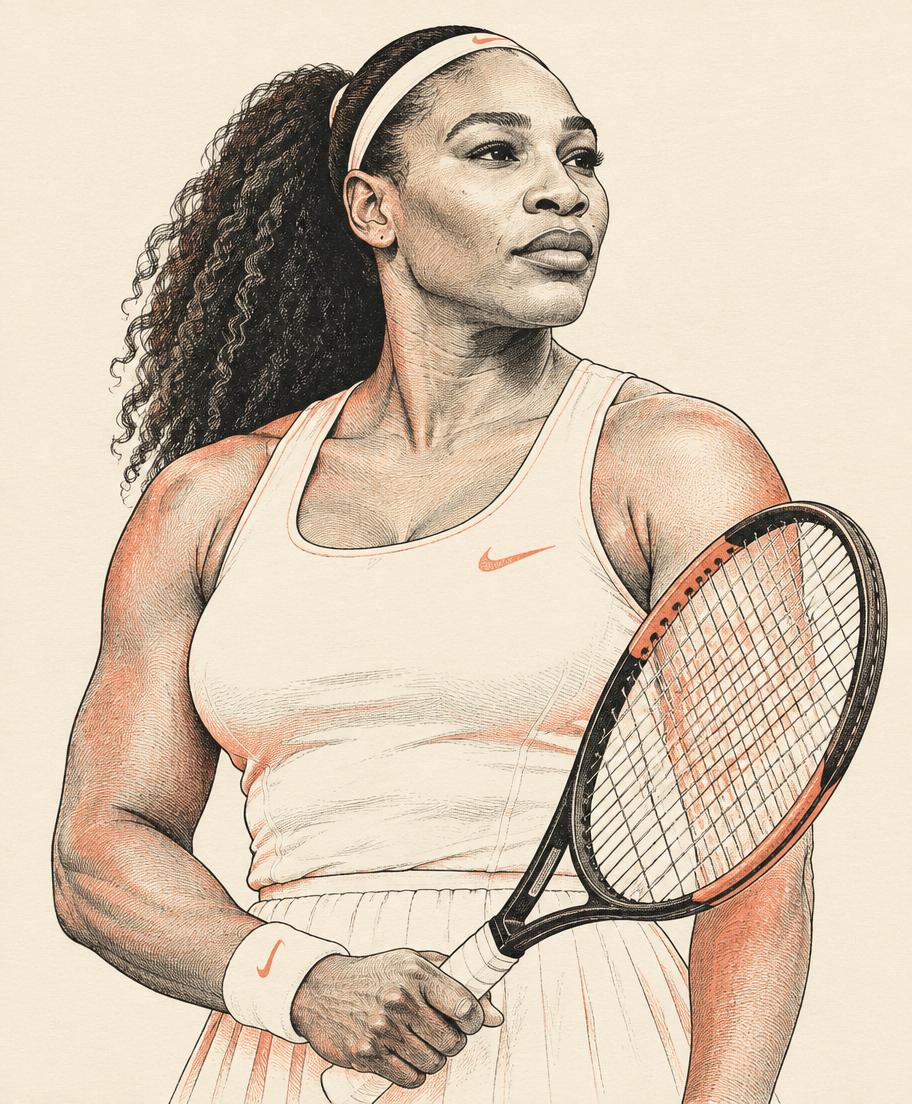
Tennis player
Serena Williams
One of the most successful tennis players in the history of the sport, with 23 Grand Slam singles titles.
Read biography ↗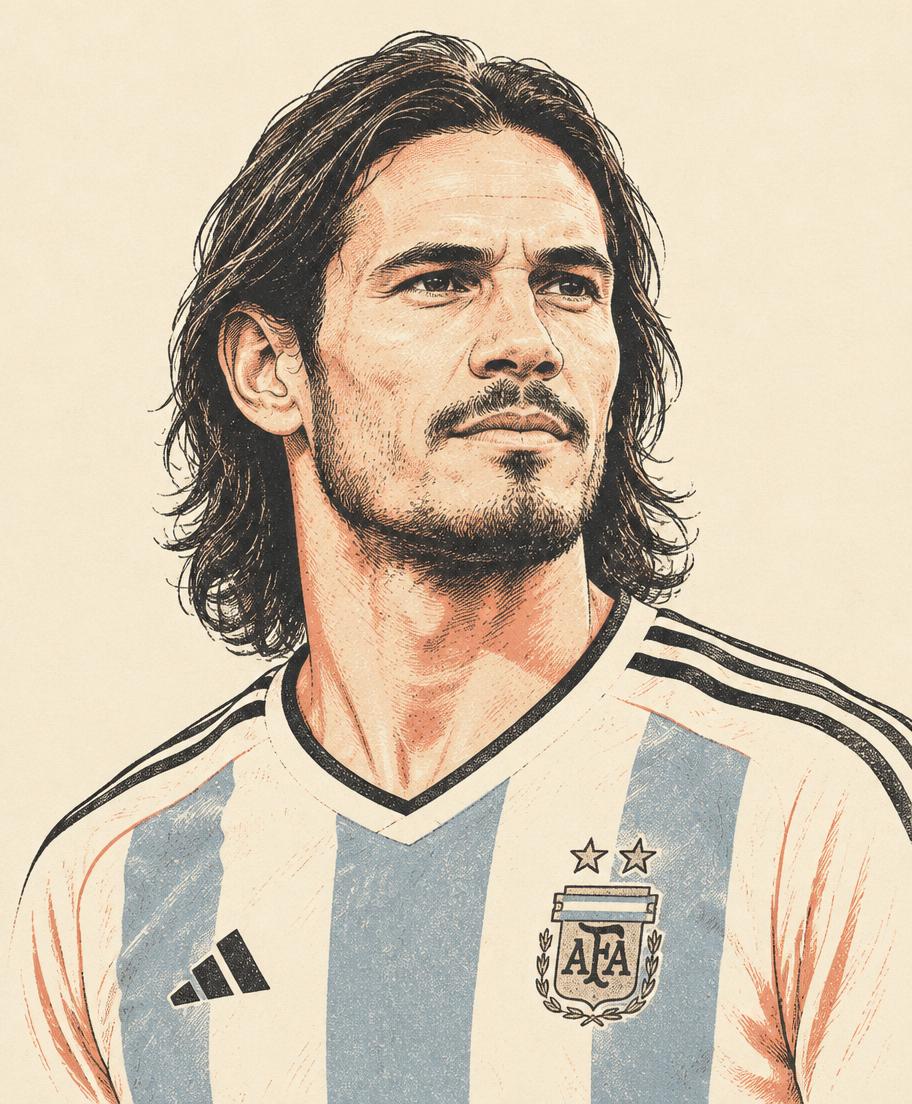
Footballer
Lionel Messi
An Argentine footballer whose record haul of individual honours is matched by a World Cup title in 2022.
Read biography ↗
Argentine association football player (born 1987)
Lionel Messi
Lionel Andrés "Leo" Messi is an Argentine professional footballer who plays as a forward for the Major League Soccer club Inter Miami, which he captains, and the Argentina national team.
Read biography ↗