Spanish writer (1866-1954)
Jacinto Benavente
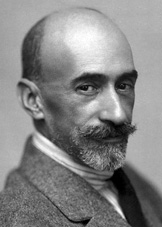
Jacinto Benavente y Martínez was one of the foremost Spanish dramatists of the 20th century.
By globalcelebwiki Editorial Desk, adapted from Wikipedia · Published 29 September 2026
- Profession
- Spanish writer (1866-1954)
- Born
- 12 August 1866
- Birthplace
- Madrid
- Nationality
- Spanish
Overview
Jacinto Benavente y Martínez (Spanish pronunciation: [xaˈθinto βenaˈβente]; 12 August 1866 – 14 July 1954) was one of the foremost Spanish dramatists of the 20th century. He was awarded the 1922 Nobel Prize in Literature "for the happy manner in which he has continued the illustrious traditions of the Spanish drama".
Biography
Born in Madrid, the son of a celebrated pediatrician, he returned drama to reality by way of social criticism: declamatory verse giving way to prose, melodrama to comedy, formula to experience, impulsive action to dialogue and the play of minds. Benavente showed a preoccupation with aesthetics and later with ethics.
A liberal monarchist and a critic of socialism, he was a reluctant supporter of Francoist Spain as the only viable alternative to what he considered the disastrous republican experiment of 1931–1936. In 1936 Benavente's name became associated with the assassination of the Spanish poet and dramatist Federico García Lorca. This happened when the Nationalist newspapers Estampa, El Correo de Andalucia, and Ideal circulated a fake news story that Lorca had been killed as a reprisal for the Republican murder of Benavente. Benavente died in Aldeaencabo de Escalona (Toledo) at the age of 87. He never married. According to many sources, he was a gay man.
Principal works
Jacinto Benavente wrote 172 works. Among his most important works are:
El nido ajeno (Another's Nest, 1894), comedy, three acts.
Gente conocida (High Society, 1896), satirical scenes of modern life, four acts.
La Gobernadora (The Governor's Wife, 1901), comedy, three acts.
La noche del sábado (Saturday Night, 1903), stage romance, five divisions; Imperia is a ballerina and later prostitute who falls in love with Prince Miguel, who will take the throne of Swabia.
Sources and references
Spotted something wrong? Report a correction.
Related profiles
Broadcaster and natural historian
David Attenborough
The broadcaster whose natural history series have shaped how audiences understand life on Earth.
Read biography ↗
Animator and film director
Hayao Miyazaki
The animator and co-founder of Studio Ghibli whose hand-drawn films reached audiences worldwide.
Read biography ↗
Pope
Benedict I
Pope Benedict I was the bishop of Rome from 2 June 575 to his death on 30 July 579.
Read biography ↗