British journalist and explorer (1841–1904)
Henry Morton Stanley
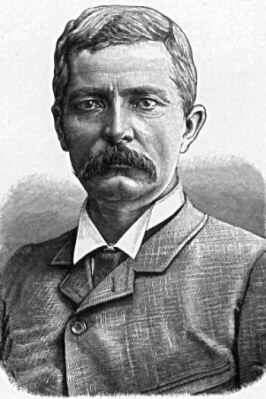
Sir Henry Morton Stanley was a Welsh-American explorer, journalist, soldier, colonial administrator, author, and politician famous for his exploration of Central Africa and search for missionary and explorer David Livingstone.
By globalcelebwiki Editorial Desk, adapted from Wikipedia · Published 29 September 2026
- Profession
- British journalist and explorer (1841–1904)
- Born
- 28 January 1841
- Birthplace
- Denbigh
- Nationality
- British
Overview
Sir Henry Morton Stanley (born John Rowlands; 28 January 1841 – 10 May 1904) was a Welsh-American explorer, journalist, soldier, colonial administrator, author, and politician famous for his exploration of Central Africa and search for missionary and explorer David Livingstone. Besides his discovery of Livingstone, he is mainly known for his search for the sources of the Nile and Congo rivers, the work he undertook as an agent of King Leopold II of the Belgians that enabled the occupation of the Congo Basin region, and his command of the Emin Pasha Relief Expedition. He was knighted in 1897, and served in Parliament as a Liberal Unionist member for Lambeth North from 1895 to 1900.
More than a century after his death, Stanley's legacy remains the subject of enduring controversy. Although he personally had high regard for many of the native African people who accompanied him on his expeditions, the exaggerated accounts of corporal punishment and brutality in his books fostered a public reputation as a hard-driving, cruel leader, in contrast to the supposedly more humanitarian Livingstone. His contemporary image in Britain suffered from the perception that he was American. In the 20th century, his reputation was also seriously damaged by his role in establishing the Congo Free State for King Leopold II. Nevertheless, he is recognised for his important contributions to Western knowledge of the geography of Central Africa and for his resolute opposition to the slave trade in East Africa.
Early life
Henry Stanley was born as John Rowlands in Denbigh, Denbighshire, Wales. His mother Elizabeth Parry was 18 years old at the time of his birth. She abandoned him as a very young baby and cut off all communication. Stanley never knew his father, who died within a few weeks of his birth. There is some doubt as to his true parentage. As his parents were unmarried, his birth certificate describes him as a bastard; he was baptised in the parish of Denbigh on 19 February 1841, the register recording that he had been born on 28 January of that year. The entry states that he was the bastard son of John Rowland of Llys Llanrhaidr and Elizabeth Parry of Castle. The stigma associated with illegitimacy weighed heavily upon him all his life.
The boy was given his father's surname of Rowlands and brought up by his grandfather Moses Parry, a once-prosperous butcher who was living in reduced circumstances. He died when John was five. Rowlands then stayed with families of cousins and nieces for a short time, but he was eventually sent to the St Asaph Union Workhouse for the Poor. The overcrowding and lack of supervision resulted in his being frequently abused by older boys. Historian Robert Aldrich has alleged that the headmaster of the workhouse raped or sexually assaulted Rowlands, and that the older Rowlands was "incontrovertibly bisexual". When Rowlands was 10 years old, his mother and two half-siblings stayed for a short while in this workhouse, but he did not recognise them until the headmaster told him who they were.
Life in the United States
Rowlands emigrated to the United States in 1859 at age 18. He disembarked at New Orleans and, according to his own declarations, became friends by accident with Henry Hope Stanley, a wealthy trader. He saw Stanley sitting on a chair outside his store and asked him if he had any job openings. He did so in the British style: "Do you need a boy, sir?" The childless man had indeed been wishing he had a son, and the inquiry led to a job and a close relationship between them. Out of admiration, John took Stanley's name. Later, he wrote that his adoptive parent died two years after their meeting, but in fact the elder Stanley did not die until 1878. This and other discrepancies led John Bierman to argue that no adoption took place. Tim Jeal goes further, and, in his biography, subjects Stanley's account in his posthumously published Autobiography to detailed analysis. Because Stanley got so many basic facts wrong about his purported adoptive family, Jeal concludes that it is very unlikely that he ever met rich Henry Hope Stanley, and that an ordinary grocer, James Speake, was Rowlands' true benefactor until his (Speake's) sudden death in October 1859.
Stanley reluctantly joined in the American Civil War, first enrolling in the Confederate States Army's 6th Arkansas Infantry Regiment and fighting in the Battle of Shiloh in 1862. After being taken prisoner there, he was recruited at Camp Douglas, Illinois, by its commander Colonel James A. Mulligan as a "Galvanized Yankee." He joined the Union Army on 4 June 1862 but was discharged 18 days later because of severe illness. After recovering, he served on several merchant ships before joining the US Navy in July 1864. He became a record keeper on board the USS Minnesota, and participated in the First Battle of Fort Fisher and the Second Battle of Fort Fisher, which led him into freelance journalism. Stanley and a junior colleague jumped ship on 10 February 1865 in Portsmouth, New Hampshire, in search of greater adventures. Stanley was possibly the only man to serve in the Confederate Army, the Union Army, and the Union Navy.
British expedition to Abyssinia (1867–1868)
Following the American Civil War, Stanley became a journalist in the days of frontier expansion in the American West. He then organised an expedition to the Ottoman Empire that ended catastrophically when he was imprisoned. He eventually talked his way out of jail and received restitution for damaged expedition equipment.
In 1867, the emperor of Ethiopia, Tewodros II, held a British envoy and others hostage, and a force was sent to effect the release of the hostages. Stanley accompanied that force as a special correspondent of the New York Herald. His report on the Battle of Magdala in 1868 was the first to be published, as he had bribed a telegraph operator to send his story first, even before the official army report. After his message was sent, the cable broke; British government officials were greatly irritated to learn of the battle from an American newspaper. Subsequently, he was assigned to report on Spain's Glorious Revolution in 1868. In 1870, Stanley undertook several assignments for the Herald in the Middle East and the Black Sea region, visiting Egypt, Jerusalem, Constantinople, the Crimea, the Caucasus, Persia and India, during which time he apparently carved his name into a stone of the ancient palace at Persepolis in Persia.
Finding David Livingstone expedition (1871–1872)
Stanley travelled to Zanzibar in March 1871, later claiming that he outfitted an expedition with 192 porters. In his first dispatch to the New York Herald, however, he stated that his expedition numbered only 111. This was in line with figures in his diaries. James Gordon Bennett Jr., publisher of the New York Herald and funder of the expedition, had delayed sending to Stanley the money he had promised, so Stanley borrowed money from the United States Consul.
During the 700-mile (1,100 km) expedition through the tropical forest, his thoroughbred stallion died within a few days after a bite from a tsetse fly, many of his porters deserted, and the rest were decimated by tropical diseases. Stanley found David Livingstone on 10 November 1871 in Ujiji, near Lake Tanganyika in present-day Tanzania. He later claimed to have greeted him with the now-famous line, "Dr. Livingstone, I presume?" This line does not appear in his journal from the time—the two pages directly following the recording of his initial spotting of Livingstone were torn out of the journal at some point—and it is likely that Stanley simply invented the pithy line sometime afterwards. Neither man mentioned it in any of the letters they wrote at this time, and Livingstone tended to instead recount the reaction of his servant, Susi, who cried out: "An Englishman coming! I see him!" The phrase is first quoted in a summary of Stanley's letters published by The New York Times on 2 July 1872. Stanley biographer Tim Jeal argued that the explorer invented it afterwards to help raise his standing because of "insecurity about his background", though ironically the phrase was mocked in the press for being absurdly formal for the situation.
The Herald's own first account of the meeting, published 1 July 1872, reports:
Preserving a calmness of exterior before the Arabs which was hard to simulate as he reached the group, Mr. Stanley said: – "Doctor Livingstone, I presume?" A smile lit up the features of the pale white man as he answered: "Yes, and I feel thankful that I am here to welcome you."
Stanley joined Livingstone in exploring the region, finding that there was no waterway from Lake Tanganyika to the Nile. On his return, he wrote a book about his experiences: How I Found Livingstone; travels, adventures, and discoveries in Central Africa (1872).
First trans-Africa expedition (1874–1877)
In 1874, the New York Herald and the Daily Telegraph financed Stanley on another expedition to Africa. His ambitious objective was to complete the exploration and mapping of the Central African Great Lakes and rivers, in the process circumnavigating Lakes Victoria and Tanganyika and locating the source of the Nile. Between 1875 and 1876 Stanley succeeded in the first part of his objective, establishing that Lake Victoria had only a single outlet, the one discovered by John Hanning Speke on 21 July 1862 and named Ripon Falls. If this was not the Nile's source, then the separate massive northward flowing river called by Livingstone, the Lualaba, and mapped by him in its upper reaches, might flow on north to connect with the Nile via Lake Albert and thus be the river's primary source.
It was therefore essential that Stanley should trace the course of the Lualaba downstream (northward) from Nyangwe, the point where Livingstone had left it in July 1871. Between November 1876 and August 1877, Stanley and his men navigated the Lualaba up to and beyond the point where it turned sharply westward, away from the Nile, identifying itself as the Congo River. Having succeeded with this second objective, they then traced the river to the sea. During this expedition, Stanley used sectional boats and dug-out canoes to pass the large cataracts that separated the Congo into distinct tracts. These boats were transported around the rapids before being reassembled to travel on the next section of river. In passing the rapids many of his men were drowned, including his last white colleague, Frank Pocock. The expedition was repeatedly attacked by natives in canoes, likely by Ngobila, a lord in the Tio Kingdom. Stanley and his men reached the Portuguese outpost of Boma, around 100 kilometres (62 mi) from the mouth of the Congo River on the Atlantic Ocean, after 999 days on 9 August 1877. Muster lists and Stanley's diary (12 November 1874) show that he started with 228 people and reached Boma with 114 survivors, with him the only European left alive out of four. In Stanley's Through the Dark Continent (1878) (in which he coined the term "Dark Continent" for Africa), Stanley said that his expedition had numbered 356, the exaggeration detracting from his achievement.
Stanley attributed his success to his leading African porters, saying that his success was "all due to the pluck and intrinsic goodness of 20 men ... take the 20 out and I could not have proceeded beyond a few days' journey". Professor James Newman has written that "establishing the connection between the Lualaba and Congo Rivers and locating the source of the Victoria Nile" justified him (Newman) in stating that: "In terms of exploration and discovery as defined in nineteenth-century Europe, he (Stanley) clearly stands at the top."
During his expedition, Stanley encountered a people known as the Gambaragara, residing in the mountainous region to the west of Lake Victoria. He had first learned of them during his mission to find Livingstone, but was unable to make encounters at the time due to security concerns. Stanley described them as possessing notably light complexions and features he associated with European peoples, leading him to characterize them as an African "white tribe" and "Greeks in white shirts." The documentation of his experience had significant consequences, and it became a key source cited by explorers and scientists in support of the Hamitic Hypothesis.
International Upper Congo Expedition (1879–1884)
On 15 April 1877, King Leopold II of the Belgians sent his first expedition to Central Africa, then still under the flag of the International African Association. The members of the expedition, four Belgians, departing from Zanzibar, had the goal of establishing a scientific post in Karema, in today's Tanzania, but even before the group entered Central Africa, two of them had already died, one from a sun stroke, the other from a severe fever, upon which the other members of the expedition resigned. Because of these difficulties, Leopold realised how important it was to find experienced men to lead his expeditions. He first tried to persuade Pierre Savorgnan de Brazza, but he had already entered French service; his eye now fell on Stanley. Stanley had first hoped to continue his pioneering work in Africa under the British flag. But neither the Foreign Office nor Edward, the Prince of Wales, felt called to receive Stanley after the many rumours of his looting and killing in the interior of the African continent. Leopold eagerly received a disenchanted Stanley at his palace in June 1878, and signed a five-year contract with him in November.
Stanley persuaded Leopold that the first step should be the construction of a wagon trail around the Congo rapids and a chain of trading stations on the river. To avoid discovery, materials and workers were shipped in by various roundabout routes, and communications between Stanley and Leopold were entrusted to Colonel Maximilien Strauch.
In 1879, Stanley left for Africa for his first mission, ostensibly working for the Comité d'études du Haut-Congo, under Leopold's orders. King Leopold gave Stanley clear instructions: "It is not about Belgian colonies. It is about establishing a new state that is as large as possible and about its governance. It should be clear that in this project there can be no question of granting the Negroes the slightest form of political power. That would be ridiculous. The whites, who lead the posts, have all the power."
Stanley described in writings his dismay with the terrible scenes taking place in Congo. At the same time, his "findings" conveyed an idea that the Dark Continent must submit, willingly or otherwise. Stanley's writings show that he, too, held this view. "Only by proving that we are superior to the savages, not only through our power to kill them but through our entire way of life, can we control them as they are now, in their present stage; it is necessary for their own well-being, even more than ours."
Unexpectedly, France had sent its own expedition to the Congo Basin. Pierre Savorgnan de Brazza had undermined Stanley's mission by concluding contracts himself with native heads of state. The creation of a station that would later be called Brazzaville could not be prevented. Leopold was furious, writing angrily to Strauch: "The terms of the treaties Stanley has made with native chiefs do not satisfy me. There must at least be an added article to the effect that they delegate to us their sovereign rights ... the treaties must be as brief as possible and in a couple of articles must grant us everything."
Since everything in Central Africa was about the balance of power between the Great Powers, Leopold considered his next moves and sent an envoy to Berlin to press for a conference. Leopold wanted the International Association of the Congo boundaries drawn by Stanley to be officially confirmed, thus giving the Association an official status.
On 26 February 1885, the Berlin Act was signed. The Act regulated an immense free trade zone in the Congo Basin and made it a neutral territory. Furthermore, the Act declared war on slavery. The act contained only one article that Leopold disliked: Article 17 gave the superpowers the right to establish an international commission to supervise the freedom of trade and navigation in Congo. As a result, Leopold would not be able to collect customs duties on the Congo River
Stanley, who had left from a post at Vivi near Matadi on 21 February 1880, arrived at Stanley pool on 3 December 1882. Building a road from Vivi to Isangila, Stanley took almost two years to traverse the rapids towing with him 50 tonnes of equipment, including two dismantled steamboats and a barge. After he arrived at Stanley pool, a local king, Makoko of the Anziku Kingdom, gave him a site near Kintambo to build a city. Despite hostilities from another nearby king, Ngaliema, he decided to start the construction of Léopoldville on the hillside of Khonzo Izulu. Today Kinshasa's population is 17,000,000, and it is one of the world's fastest growing megacities.
Tippu Tip, the most powerful of Zanzibar's slave traders of the 19th century, was well known to Stanley, as was the social chaos and devastation brought by slave-hunting. It had only been through Tippu Tip's help that Stanley had found Livingstone, who had survived years on the Lualaba under Tippu Tip's friendship. Now, Stanley discovered that Tippu Tip's men had reached still further west in search of fresh populations to enslave.
Four years earlier, the Zanzibaris had thought the Congo deadly and impassable and warned Stanley not to attempt to go there, but when Tippu Tip learned that Stanley had survived, he was quick to act. Villages throughout the region were burned and depopulated. Tippu Tip had raided 118 villages, killed 4,000 Africans, and, when Stanley reached his camp, had 2,300 slaves, mostly young women and children, in chains ready to transport halfway across the continent to the markets of Zanzibar.
Having found the new ruler of the Upper Congo, Stanley had no choice but to negotiate an agreement with him, to stop Tip coming further downstream and attacking Leopoldville and other stations. To achieve this, he had to allow Tip to build his final river station just below Stanley Falls, which prevented vessels from sailing further upstream. At the end of his physical resources, Stanley returned home, to be replaced by Lieutenant Colonel Francis de Winton, a former British Army officer.
Emin Pasha Relief Expedition (1887–1890)
In 1886, Stanley led the Emin Pasha Relief Expedition to "rescue" Emin Pasha, the governor of Equatoria in the southern Sudan, who was threatened by Mahdist forces. King Leopold II demanded that Stanley take the longer route via the Congo River, hoping to acquire more territory and perhaps even Equatoria. After immense hardships and great loss of life, Stanley met Emin in 1888, mapped the Ruwenzori Range and Lake Edward, and emerged from the interior with Emin and his surviving followers at the end of 1890. Despite its success, this expedition tarnished Stanley's name because of the conduct of the other Europeans on the expedition. Army Major Edmund Musgrave Barttelot was killed by an African porter after behaving with extreme cruelty. James Sligo Jameson, heir to Irish whiskey manufacturer Jameson's, allegedly bought a 10-year-old girl and offered her to cannibals to document and sketch how she was cooked and eaten. Stanley found out only when Jameson had died of fever.
The spread of sleeping sickness across areas of central and eastern Africa that were previously free of the disease has been attributed to this expedition, but this hypothesis has been disputed. Sleeping sickness had been endemic in these regions for generations and then flared into epidemics as colonial trade increased trade throughout Africa during the ensuing decades.
In a number of publications made after the expedition, Stanley asserts that the purpose of the effort was singular; to offer relief to Emin Pasha. For example, he writes the following while explaining the final route decision.
The advantages of the Congo route were about five hundred miles shorter land journey, and less opportunities for deserting. It also quieted the fears of the French and Germans that, behind this professedly humanitarian quest, we might have annexation projects.
However, Stanley's other writings point to a secondary goal which was precisely territorial annexation. He writes in his book on the expedition about his meeting with the Sultan of Zanzibar, when he arrived there at the start of the expedition, and a certain matter that was discussed at that meeting. At first, he is not explicit on the agenda but it is clear enough:
Sources and references
Spotted something wrong? Report a correction.
Related profiles
Broadcaster and natural historian
David Attenborough
The broadcaster whose natural history series have shaped how audiences understand life on Earth.
Read biography ↗
Animator and film director
Hayao Miyazaki
The animator and co-founder of Studio Ghibli whose hand-drawn films reached audiences worldwide.
Read biography ↗
Pope
Benedict I
Pope Benedict I was the bishop of Rome from 2 June 575 to his death on 30 July 579.
Read biography ↗