German Field Marshal (1800–1891)
Helmuth von Moltke the Elder
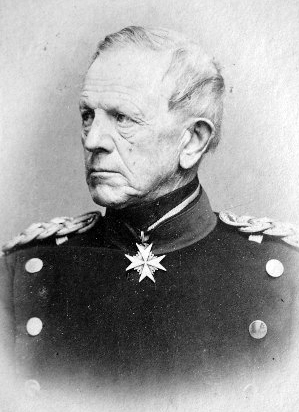
Graf Helmuth Karl Bernhard von Moltke was a Prussian Generalfeldmarschall.
By globalcelebwiki Editorial Desk, adapted from Wikipedia · Published 29 September 2026
- Profession
- German Field Marshal (1800–1891)
- Born
- 26 October 1800
- Birthplace
- Parchim
- Nationality
- Prussian
Overview
Graf Helmuth Karl Bernhard von Moltke (German: [ˈhɛlmuːt fɔn ˈmɔltkə]; 26 October 1800 – 24 April 1891) was a Prussian Generalfeldmarschall. The chief of staff of the Prussian Army for thirty years, he is regarded as the creator of a new, more modern method of directing armies in the field and one of the finest military minds of his generation. He commanded troops in the Middle-East and then in Europe during the Second Schleswig War, Austro-Prussian War, and Franco-Prussian War. He is described as embodying "Prussian military organization and tactical genius". He was fascinated with railways and pioneered their military use.
He is often referred to as Moltke the Elder to distinguish him from his nephew Helmuth von Moltke the Younger (Helmuth Johann Ludwig von Moltke), who commanded the German army at the outbreak of the First World War. He is notably the earliest-born human whose recorded voice is preserved, being born in the year 1800. He made four recordings; two that were recorded in October 1889 are preserved to this day.
Early life
Moltke was born in Parchim, Mecklenburg-Schwerin, son of Generalleutnant Friedrich Philipp Victor von Moltke (1768–1845), a German in Danish service. In 1805, his father settled in Holstein (then a possession of the King of Denmark). But the next year he was left impoverished when during the War of the Fourth Coalition of 1806–1807 French troops burned his country house and plundered his townhouse in Lübeck, where his wife and children were. At nine the younger Moltke was sent as a boarder to Hohenfelde in Holstein, and at age twelve went to the Royal Danish Military Academy at Copenhagen, being destined for the Danish army and court. In 1818 he became a page to King Frederick VI of Denmark and a second lieutenant in the Oldenburg Infantry Regiment. At twenty-one, Moltke decided to leave Denmark and enter the Prussian army, despite the loss of seniority. In 1822 he became a second lieutenant in the 8th Infantry Regiment stationed at Frankfurt an der Oder. At twenty-three he was allowed to enter the general war school (later called the Prussian Military Academy), where he studied the full three years, graduating in 1826.
For a year Moltke had charge of a cadet school at Frankfurt an der Oder, then he was for three years employed on the military survey in Silesia and Posen. In 1832 he was seconded for service on the general staff at Berlin, to which he was transferred in 1833 on promotion to first lieutenant. He was at this time regarded as a brilliant officer by his superiors, including Prince William, then a lieutenant-general.
Moltke was well received at court and in the best society of Berlin. His tastes inclined him to literature, to historical study, and to travel. In 1827 he published a short romance, The Two Friends. In 1831 he wrote an essay entitled Holland and Belgium in their Mutual Relations, from their Separation under Philip II to their Reunion under William I. A year later he wrote An Account of the Internal Circumstances and Social Conditions of Poland, a study based both on reading and on personal observation of Polish life and character.
He was fluent in English and a talented writer in German; in 1832 he was contracted to translate Gibbon's The History of the Decline and Fall of the Roman Empire into German, for which he was to receive 75 marks, his object being to earn the money to buy a horse. In eighteen months he had finished nine volumes out of twelve but the publisher failed to produce the book and Moltke never received more than 25 marks.
In 1835, on his promotion to captain, Moltke obtained six months' leave to travel in southeast Europe. After a short stay in Constantinople, he was asked by the Sultan Mahmud II to help modernize the Ottoman Empire's army and with permission from Berlin he accepted the offer. He remained for two years at Constantinople, learned Turkish, and surveyed the city of Constantinople, the Bosporus and the Dardanelles. He travelled through Wallachia, Bulgaria and Rumelia, making many other journeys on both sides of the Straits.
In 1838, Moltke was sent as an adviser to the Ottoman general commanding the troops in Anatolia, who was to carry on the Egyptian–Ottoman War (1839–1841) against Muhammad Ali of Egypt. During the summer Moltke made extensive reconnaissances and surveys, riding several thousand miles in the course of his journey. He navigated the rapids of the Euphrates and visited and mapped many parts of the Ottoman Empire. In 1839 the army moved south to fight the Egyptians but upon their approach, the general refused to listen to Moltke's advice. Moltke resigned his post of staff officer and took charge of the artillery. In the Battle of Nezib on 24 June 1839, the Ottoman Army was beaten, but Moltke's actions were well-regarded.
Thus on 7 November 1839, he received the Pour le Mérite from Prussia. With great difficulty, Moltke made his way back to the Black Sea, and thence to Constantinople. His patron, Sultan Mahmud II, was dead, so he returned to Berlin, broken in health, in December 1839.
Once home Moltke published some of the letters he had written as Letters on Conditions and Events in Turkey in the Years 1835 to 1839. This book was well received at the time. Early the next year he married a young English woman, Maria Bertha Helena Burt, whose father John Heyliger Burt had married Moltke's sister Augusta. It was a happy union, though there were no children.
In 1840, Moltke had been appointed to the staff of the IV Corps, which was under the command of Prince Charles of Prussia, stationed at Berlin. He published his maps of Constantinople, and, jointly with other German travellers, a new map of Asia Minor and a memoir on the geography of that region.
On the suggestion of Edwin von Manteuffel, the new king appointed Moltke as Chief of the Prussian General Staff on 29 October 1857. He would hold the position for the next 30 years (though after the establishment of the German Empire, the Prussian General Staff's title was changed to "Great General Staff", as it would have direction of the various German armies during war.) As soon as he gained the position he went to work making changes to the strategic and tactical methods of the Prussian army: changes in armament and means of communication; changes in the training of staff officers (such as instituting staff rides); and changes in the method for the mobilization of the army. He also instituted a formal study of European politics in connection with the plans for campaigns which might become necessary. In short, he rapidly put into place the features of a modern general staff. By 1860, his reforms were completed.
In 1859, the Austro-Sardinian War in Italy caused the mobilization of the Prussian army, though it did not fight. After the mobilization, the army was reorganized and its strength was nearly doubled. The reorganization was the work not of Moltke but of the Prince Regent, William, and the Minister of War, Albrecht von Roon. Moltke watched the Italian campaign closely and wrote a history of it in 1862. In an act that was yet another first in military affairs, this history was attributed on the title page to the historical division of the Prussian staff.
In 1860, "[Moltke] added a Railway Section to the military council. A contemporary would write that von Moltke never made an important decision without consulting the German railway timetables." Moltke had been following developments relating to the railroad ever since his return from Egypt, at which time he wrote that: “Every new railway development is a military benefit, and for national defence, it is far more profitable to spend a few million on completing our railways than on new fortresses.”
In December 1862, Moltke was asked for an opinion on the military aspect of the quarrel with Denmark. He thought the difficulty would be to bring the war to an end, as the Danish army would, if possible, retire to the islands, where, as the Danes had the command of the sea, it could not be attacked. He sketched a plan for turning the flank of the Danish army before the attack upon its position in front of Schleswig. He suggested that by this means its retreat might be cut off.
When the Second Schleswig War began in February 1864, Moltke was not sent with the Prussian forces but kept at Berlin. His war plan was mismanaged, and the Danish army escaped to the fortresses of Dybbøl and Fredericia, each of which commanded a retreat across a strait to an island. Dybbøl and Fredericia were besieged, Dybbøl taken by storm, and Fredericia abandoned by the Danes without assault – but the war showed no signs of ending. The Danish army was safe on the islands of Als and Funen.
On 30 April 1864, Moltke was sent to be chief of the staff for the allied (German) forces. He and Friedrich Graf von Wrangel planned landing on Als or Funen. On June 29, battalions (part of Herwarth von Bittenfeld's army corps) crossed to Als in boats, landed while under fire from the Danish batteries, and quickly seized the whole island as far as the Kekenis peninsula. Days later, Eduard Vogel von Falckenstein's corps crossed the Limfjord and occupied the remaining parts of Jutland while the Austrians seized the various islands. The Danish government, dejected by the course of the war, ended the war in defeat by signing the Treaty of Vienna.
In contrast to Antoine-Henri Jomini, who expounded a system of rules, Moltke was a disciple of Carl von Clausewitz and regarded strategy as a practical art of adapting means to ends. He had developed the methods of Napoleon in accordance with altered conditions of his age, was the first to realize the great defensive power of modern firearms, and realized that an enveloping attack had become more formidable than an attempt to pierce an enemy's front.
He developed the idea of Clausewitz and said "The purpose of war is to carry out the policy of the government with arms". He emphasized the autonomy of war. This brought conflicts with Otto von Bismarck. One of Moltke's characteristic strategies, seen in all his plans for war with Russia and France, was what has been called the offensive–defensive strategy, manoeuvring his army to cut the lines of communication of the enemy force and then dig in and defeat the enemy force trying to re-establish its lines of communication in a defensive action. Moltke had pondered the tactics of Napoleon at the Battle of Bautzen, when the emperor brought up Ney's corps, coming from a great distance, against the flank of the allies, rather than to unite it with his own force before the battle; he had also drawn this conclusion from the combined action of the allies at the Battle of Waterloo. Moltke realized that the increase in firepower reduced the risk a defender ran in splitting his forces, while the increase in the size of armies made outflanking manoeuvres more practical.
Moltke had worked out the conditions of the march and supply of an army. Only one army corps could be moved along one road in one day; to put two or three corps on the same road meant that the rear corps could not be made use of in a battle at the front. Several corps stationed close together in a small area could not be fed for more than a day or two. He believed that the essence of strategy lay in arrangements for the separation of the corps for marching and their concentration in time for battle. To make a large army manageable, it must be broken up into separate armies or groups of corps, each group under a commander authorized to regulate its movements and actions subject to the instructions of the commander-in-chief regarding the direction and purpose of its operations.
Moltke also realized that the expansion in the size of armies since the 1820s made it impossible to exercise detailed control over the entire force (as Napoleon or Wellington had done in battle). Subordinates would have to use initiative and independent judgment for the forces to be effective in battle. Campaign and battle plans should encourage and take advantage of the decentralization that would be necessary in any case. In this new concept, commanders of distant detachments were required to exercise initiative in their decision-making and Moltke emphasized the benefits of developing officers who could do this within the limits of the senior commander's intent. He accomplished this by means of Mission-type tactics (directives stating his intentions) rather than detailed orders and he was willing to accept deviations from a directive provided that it was within the general framework of the mission. Moltke held this view firmly and it later became a fundamental of all German military theory, especially for the field manual Truppenführung.
Moltke's thesis was that military strategy had to be understood as a system of options since it was possible to plan only the beginning of a military operation. As a result, he considered the main task of military leaders to consist in the extensive preparation of all possible outcomes. His thesis can be summed up by two statements, one famous and one less so, translated into English as "No plan of operations extends with certainty beyond the first encounter with the enemy's main strength" (or "no plan survives first contact with the enemy") and "Strategy is a system of expedients". Right before the Austro-Prussian War, Moltke was promoted to General of the Infantry.
Moltke planned and led the military operations during the Austro-Prussian War of 1866. In the strategy for the war, the main points are as follows. First Moltke demonstrated a concentration of effort. There were two enemy groups opposing the Prussians, the Austro-Saxon armies, 270,000 and their allied North and South German armies, some 120,000 strong. The Prussian forces were smaller by some 60,000 but Moltke was determined to be superior at the decisive point. Moltke divided the Prussian Army into three field armies: the First Army, the Second Army, and the Army of the Elbe. The First Army consisted of three army corps, a cavalry corps of six brigades, and 300 guns, gathering near Görlitz (Prince Friedrich Karl). The Second Army consisted of four army corps, a cavalry division, and 336 guns, near Neisse (Crown Prince Frederick William). The Army of the Elbe consisted of three divisions, two cavalry brigades, and 144 guns in the cantonments around Torgau (General Karl von Bittenfeld). Besides the three field armies, three more divisions were stationed at Altona (General Edwin von Manteuffel), one at Minden (General Eduard von Falckenstein), and one at Wetzlar (General Gustav von Beyer). The three field armies, placed to attack Austria, consisted of some 278,000 men, leaving just 48,000 men remaining to defend against Austria's German allies. Those 48,000, led by Falckenstein, captured the Hanoverian Army in less than two weeks and then attacked and drove away the south German forces.
In dealing with the Austrian and Saxon armies, the difficulty was to have the Prussian army ready first. This was not easy, as the king would not mobilize until after the Austrians. Moltke's railway knowledge helped him to save time. Five railway lines led from the various Prussian provinces to a series of points on the southern frontier. By employing all these railways at once, Moltke had all his army corps moved simultaneously from their peacetime garrisons to the frontier.
After the Prussian armies marched into Saxony, the Saxon army retreated into Bohemia. Moltke had two Prussian armies about 100 mi (160 km) apart. The problem was how to bring them together to catch the Austrian army between them like the French at Waterloo between Wellington and Blücher. He determined to bring his two armies together by directing each of them to advance towards Gitschin. On June 22, 1866, Moltke told the two princes that Gitschin was the desirable point for the juncture of the two armies. He foresaw that the march of the Crown Prince would probably bring him into collision with a portion of the Austrian army. Prince Friedrich Karl sent the 3rd Division to Gitschin; but the Crown Prince had 100,000 men, and it was not likely that the Austrians could have a stronger force. When Friedrich Karl ordered further attacks, straining his own supply lines, Moltke inferred that the prince was trying to take Prague by himself.
The Austrians, under Ludwig von Benedek, marched faster than Moltke expected, and might have opposed Prince Frederick Charles (the Red Prince) with four or five corps; but Benedek's attention was centred on Crown Prince Frederick William, and his four corps, not under a common command, were beaten in detail. On 1 July Benedek collected his shaken forces into a defensive position in front of Königgrätz. Moltke's two armies were now within a short march of one another and of the enemy. On 3 July they were brought into action, the first army against the Austrian forces and the second against the Austrian right flank. The Austrian army was completely defeated and the campaign and war were won.
Moltke was not quite satisfied with the Battle of Königgrätz. He tried to have the Prussian Army of the Elbe brought up above Königgrätz, so as to prevent the Austrian retreat, but its commanding officer failed to get there in time. He also tried to prevent the Prussian First Army from pushing its attack too hard, hoping in that way to keep the Austrians in their position until their retreat should be cut off by the Crown Prince's army, but this also did not happen. During the negotiations, Otto von Bismarck opposed the king's wish to annex the Kingdom of Saxony and other territory beyond what was actually taken; he feared the active intervention of France. Moltke, however, was confident of beating both the French and Austrians if the French should intervene, and he submitted to Bismarck his plans in case a war against both France and Austria proved necessary. After the peace, the Prussian government voted Moltke the sum of 30,000 marks (equivalent to approximately 225,000 US$ in 2016), with which he bought a 500-hectare estate in Creisau (present-day Krzyżowa), near Schweidnitz (present-day Świdnica) in the Province of Silesia.
Moltke again planned and led the Prussian armies in the Franco-Prussian War (1870–71), which paved the way for the creation of the Prussian-led German Empire in 1871. The aspects of such a war had occupied Moltke's attention almost continuously since 1857; documents published after his death show the many times he considered such a war and the best arrangement of the Prussian or German forces for such a campaign. The arrangements for the transport of the army by railway were revised annually to suit the changes in his plans brought about by political conditions and by the growth of the army, as well as by the improvement of the Prussian system of railways.
The successes of 1866 had strengthened Moltke's position, so that when, on 5 July 1870, the order for the mobilization of the Prussian and South German forces was issued, his plans were adopted without dispute. Five days later he was appointed Chief of Staff of the Army for the duration of the war. This gave Moltke the right to issue orders which were equivalent to royal commands.
Moltke's plan was to assemble the whole army south of Mainz, this being one district in which a single army could secure the defence of the whole frontier. If the French disregarded the neutrality of Belgium and Luxembourg, and advanced towards Cologne (or any other point on the Lower Rhine), the German army would be able to strike at their flank. At the same time the Rhine itself, with the fortresses of Koblenz, Cologne and Wesel, would be a serious obstacle in their path. If the French should attempt to invade south Germany, an advance by the Germans up the Rhine river would threaten their communications. Moltke expected that the French would be compelled by the direction of their railways to collect the greater part of their army near Metz, and a smaller portion near Strasbourg.
The German forces were grouped into three armies: the First of 60,000 men under Von Steinmetz, on the Moselle below Trier; the Second of 130,000 men, under Prince Friedrich Karl of Prussia, around Homburg (with a reserve of 60,000 men behind them); and the Third of 130,000 men under the Crown Prince Frederick William, at Landau. Three army corps were held back in north-Eastern Germany, in case Austria-Hungary should make common cause with France. He reported this to the King on 17 April 1870.
Moltke's plan was that the three armies, while advancing, should make a right wheel, so that the First Army on the right would reach the bank of the Moselle opposite Metz, while the Second and Third Armies should push forward, the Third Army to defeat the French force near Strasbourg, and the Second to strike the Moselle near Pont-à-Mousson. If the French army should be found in front of the Second Army, it would be attacked in front by the Second Army and in flank by the First or the Third (or both). If it should be found on or north of the line from Saarburg to Lunéville, it could still be attacked from two sides by the Second and Third Armies in co-operation. The intention of the great right wheel was to attack the principal French army in such a direction as to drive it north and cut its communications with Paris. The fortress of Metz was to be only monitored, and the main German forces, after defeating the chief French army, would then march against Paris.
In October 1870, Moltke was made a Graf (count) as a reward for his services during the Franco-Prussian War and victory at the Battle of Sedan. In June 1871, he was further rewarded by a promotion to the rank of field marshal and a large monetary grant. He served in the Diet of the North German Confederation from 1867 to 1871, and from 1871 to 1891 he was a member of the Reichstag (federal parliament).
Under his supervision, the German General Staff wrote studies about the Second Italian War of Independence, the Second Schleswig War, the Austro-Prussian War, and the Franco-Prussian War. William I recognized the cultural achievements of Moltke by awarding him the civil class of the Pour le Mérite on 24 May 1874.
Moltke superintended the preparation of the official history of the Franco-Prussian War, which was published between 1874 and 1881 by the German General Staff. After the war, he became a national hero and celebrity. More than 50 monuments to Moltke were erected throughout Germany in the late 19th and early 20th centuries; some were destroyed during or after World War II, but many remain.
When Moltke retired in 1888 as Chief of the General Staff, he was succeeded by Alfred von Waldersee. (His nephew, Helmuth Johann Ludwig von Moltke, was chief from 1906 to 1914.) Moltke officially retired from active military service on 9 August 1888. His 90th birthday on 26 October 1890 was declared a national holiday with public celebrations held nationwide. Field Marshal Helmuth von Moltke remained in good health until he died at his home in Berlin on 24 April 1891 after a short illness. He received a state funeral where his body lay in state surrounded by military honours and thousands paid their respects, including Kaiser Wilhelm II. However, Bismarck (who resigned as chancellor the previous year after a falling out with Kaiser Wilhelm) did not attend the funeral. Thousands of troops, led by the Kaiser, escorted his casket to Berlin's Lehrter Railroad Station, from which it was transported to Silesia.
Moltke's remains were interred in the family mausoleum on the Creisau estate, which however was plundered in the last months of World War II, most probably by Red Army. No trace of his remains is known to exist.
Personal life
In April 1842, aged 41, Moltke married his 16-year-old step-niece Bertha Maria Wilhelmine Burt, known as Marie. She was the daughter of John Heyliger Burt, of St. Croix in the Danish West Indies, a member of a wealthy slave-owning planter family. Burt had married Moltke's sister Auguste after the death of his first wife, who was also a German. It was a loving union and they remained married until Marie's death on 24 December 1868, although they had no children. Moltke never re-married. He was devoted to his wife, and long after her death still daily visited the chapel where she and her sister were buried to meditate.
History of sound recording
On 21 October 1889, Moltke, then aged 88, made two audio recordings with Adelbert Theodor Wangemann, a German native who worked with Thomas Edison and had been sent to Europe with Edison's newly invented cylinder phonograph. Moltke recorded a line from William Shakespeare's Hamlet (Act 1, Scene 3, "Dein Ohr leih jedem, wen'gen deine Stimme" – "Give every man thine ear, but few thy voice"), as well as a passage from Goethe's Faust, both of which were engraved onto two wax cylinders. These recordings were then lost until their rediscovery in 1957, though they remained unidentified for decades after. On 30 January 2012, they were among a number of recordings revealed by the Thomas Edison National Historical Park. The two record cylinders made by Moltke are the only known surviving voice recordings of a person born in the 18th century.
Dates of rank
From the corresponding article in the Japanese Wikipedia
1 January 1819: Second Lieutenant (Sekondløjtnant)
19 March 1822: Second Lieutenant (Sekonde-Leutnant)
30 March 1833: First Lieutenant (Premierleutnant)
26 September 1850: Lieutenant Colonel (Oberstleutnant)
9 August 1856: Major General (Generalmajor)
31 May 1859: Lieutenant General (Generalleutnant)
Honours, awards and arms
Granted the noble title of Count (Graf), October 1870
Honorary Citizen of the City of Hamburg, for "meritorious achievements for the unified, reborn German fatherland" (Verdienste um das zur Einheit wiedergeborene Deutsche Vaterland), 1871
Sources and references
Spotted something wrong? Report a correction.
Related profiles
Broadcaster and natural historian
David Attenborough
The broadcaster whose natural history series have shaped how audiences understand life on Earth.
Read biography ↗
Animator and film director
Hayao Miyazaki
The animator and co-founder of Studio Ghibli whose hand-drawn films reached audiences worldwide.
Read biography ↗
Pope
Benedict I
Pope Benedict I was the bishop of Rome from 2 June 575 to his death on 30 July 579.
Read biography ↗