Italian novelist (1871-1936)
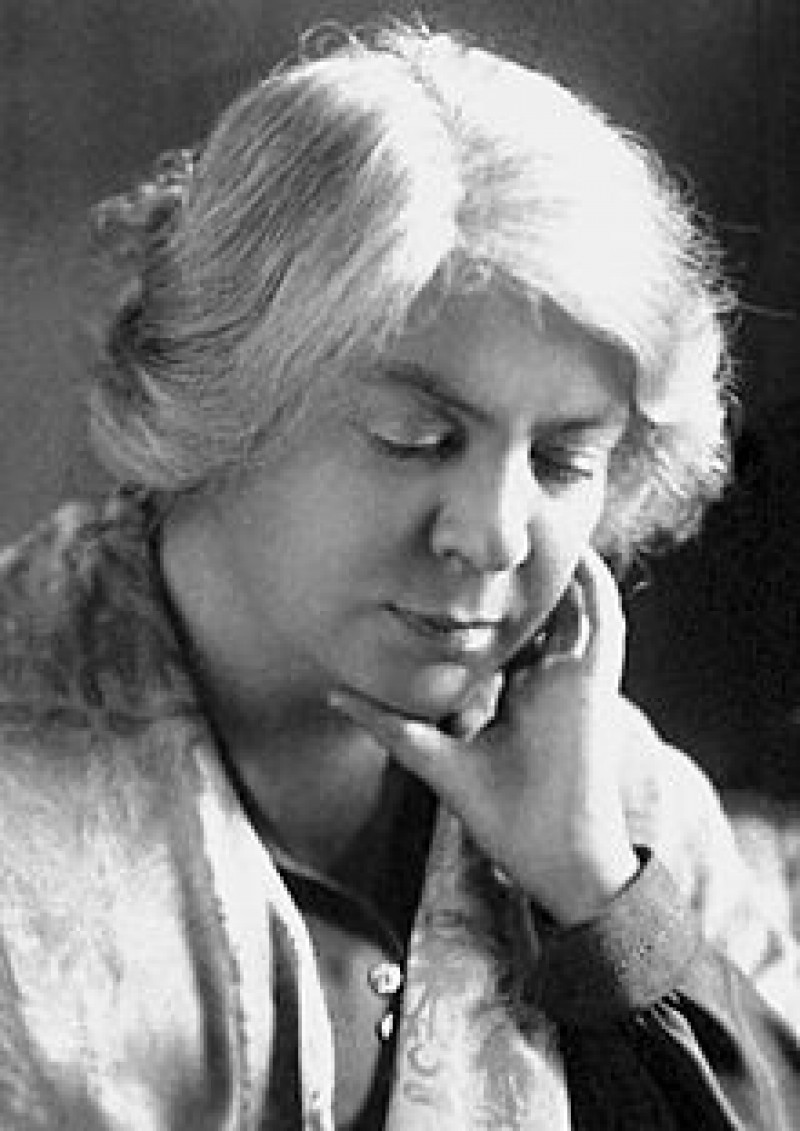
Grazia Deledda
Grazia Maria Cosima Damiana Deledda was an Italian writer who received the Nobel Prize for Literature in 1926 "for her idealistically inspired writings which with plastic clarity picture the life on her native island [i.e.
By globalcelebwiki Editorial Desk, adapted from Wikipedia · Published 29 September 2026
- Profession
- Italian novelist (1871-1936)
- Born
- 27 September 1871
- Birthplace
- Nuoro
- Nationality
- Italian
Overview
Grazia Maria Cosima Damiana Deledda (Italian: [ˈɡrattsja deˈlɛdda]; Sardinian: Gràssia or Gràtzia Deledda [ˈɡɾa(t)si.a ðɛˈlɛɖːa]; 27 September 1871 – 15 August 1936) was an Italian writer who received the Nobel Prize for Literature in 1926 "for her idealistically inspired writings which with plastic clarity picture the life on her native island [i.e. Sardinia] and with depth and sympathy deal with human problems in general". She was the first Italian woman to receive the prize, and only the second woman in general after Selma Lagerlöf was awarded hers in 1909.
Biography
Deledda was born in Nuoro, Sardinia, into a middle-class family, to Giovanni Antonio Deledda and Francesca Cambosu, as the fourth of seven siblings. She attended elementary school (the minimum required at the time) and was then educated by a private tutor (a guest of one of her relatives) and moved on to study literature on her own. It was during this time that she started displaying an interest in writing short novels, mostly inspired by the life of Sardinian peasants and their struggles. Her teacher encouraged her to submit her writing to a newspaper and, at age 13, her first story was published in a local journal. Some of Deledda's early works were published in the fashion magazine L'ultima moda between 1888 and 1889. In 1890 Trevisani published Nell'azzurro (Into the Blue), her first collection of short stories. Deledda's main focus was the representation of poverty and the struggles associated with it through a combination of imaginary and autobiographical elements. Her family wasn't particularly supportive of her desire to write.
Deledda's first novel, Fior di Sardegna (Flower of Sardinia) was published in 1892. Her 1896 book Paesaggi sardi, published by Speirani, is characterized by a prose both informed by fiction and poetry. Around this time Deledda initiated a regular collaboration with newspapers and magazines, most notably La Sardegna, Piccola Rivista and Nuova Antologia. Her work earned significant visibility as well as critical interest. In October 1899, Deledda met Palmiro Madesani, a functionary of the Ministry of Finance, in Cagliari. Madesani and Deledda were married in 1900 and the couple moved to Rome right after the publication of Deledda's Il vecchio della montagna (The Old Man from the Mountain, 1900). Despite the birth of her two sons, Sardus (1901) and Francesco "Franz" (1904), Deledda managed to continue to write prolifically, publishing about a novel a year.
In 1903 she published Elias Portolu, which was met with commercial and critical success, boosting her reputation as a writer. This was followed by Cenere (Ashes, 1904); L'edera (The Ivy, 1908); Sino al confine (To the Border, 1910); Colombi e sparvieri (Doves and Sparrows, 1912); and her most popular book, Canne al vento (Reeds in the Wind, 1913).
In 1916 Cenere was the inspiration for a silent movie with famed Italian actress Eleonora Duse. It was the first and only time that Duse, a theatre performer, appeared in a film. Deledda was one of the contributors of the nationalist women's magazine, Lidel, which was established in 1919.
In 1926 Henrik Schück, a member of the Swedish Academy, nominated Deledda for the Nobel Prize in Literature. Deledda won "for her idealistically inspired writings which with plastic clarity picture the life on her native island and with depth and sympathy deal with human problems in general." She was awarded the Prize in a ceremony in Stockholm in 1926. Her initial response to the news was "Già?" ("Already?")
Accolades
Deledda's work has been highly regarded by writers of Italian literature, including Luigi Capuana, Giovanni Verga, Enrico Thovez, Pietro Pancrazi, Renato Serra. Sardinian writers including Sergio Atzeni, Giulio Angioni and Salvatore Mannuzzu, were greatly influenced by her work, prompting them to found what has later become known as the Sardinian Literary Spring. In 1947 artist Amelia Camboni was commissioned a portrait of Deledda, currently standing close to her home in Rome in the Pincio neighbourhood.
Deledda's birthplace and childhood home in Nuoro was declared a national heritage building and purchased in 1968 by the Municipality of Nuoro, which in 1979 handed it over to the Regional Ethnographic Institute (ISRE) for the symbolic price of 1,000 Italian Lire. The Institute transformed the house into a museum commemorating the writer, and it's now called the Museo Deleddiano. The museum consists of ten rooms showcasing the most important episodes in Deledda's life.
A coal power plant opened in Portoscuso in 1965. As of 2013, this powerplant called Grazia Deledda has a capacity of 590 MW.
On 10 December 2017 Google celebrated her with a Google Doodle.
Work
The life, customs, and traditions of the Sardinian people are prominent in Deledda's writing. She often relies on detailed geographical descriptions and her characters often present a strong connection with their place of origins. Many of her characters are outcasts who silently struggle with isolation. Overall Deledda's work focuses on love, pain and death, upon which rest feelings of sin and fatality. Her novels tend to criticize social values and moral norms rather than the people who are victims of such circumstances.
In her work the influence of the verism of Giovanni Verga and, sometimes, also that of the decadentism of Gabriele D'Annunzio is evident, although her writing style is not so ornate. Despite her groundbreaking role in Italian and world literature, Deledda has not been considered a feminist writer, possibly due to her tendency to depict women's pain and suffering as opposed to women's autonomy.
Complete list of works
Below is a complete list of Deledda's works:
Sources and references
Spotted something wrong? Report a correction.
Related profiles
Broadcaster and natural historian
David Attenborough
The broadcaster whose natural history series have shaped how audiences understand life on Earth.
Read biography ↗
Animator and film director
Hayao Miyazaki
The animator and co-founder of Studio Ghibli whose hand-drawn films reached audiences worldwide.
Read biography ↗
Pope
Benedict I
Pope Benedict I was the bishop of Rome from 2 June 575 to his death on 30 July 579.
Read biography ↗