Hungarian marxist philosopher and literary critic (1885–1971)
Georg Lukács
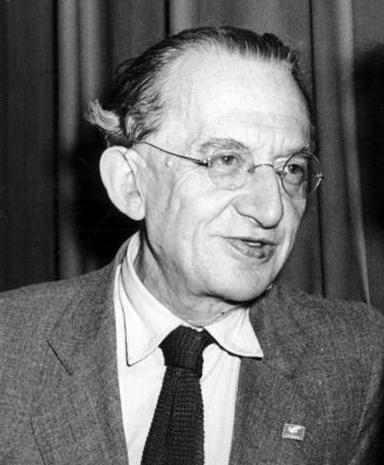
György Lukács was a Hungarian Marxist philosopher, literary historian, literary critic, and aesthetician.
By globalcelebwiki Editorial Desk, adapted from Wikipedia · Published 29 September 2026
- Profession
- Hungarian marxist philosopher and literary critic (1885–1971)
- Born
- 13 April 1885
- Birthplace
- Budapest
- Nationality
- Hungarian
Overview
György Lukács (born Bernát György Löwinger; Hungarian: Lukács György; German: Georg Bernard Lukács; 13 April 1885 – 4 June 1971) was a Hungarian Marxist philosopher, literary historian, literary critic, and aesthetician. He was one of the founders of Western Marxism, an interpretive tradition that departed from the Soviet Marxist ideological orthodoxy. He developed the theory of reification, and contributed to Marxist theory with developments of Karl Marx's theory of class consciousness. He was also a philosopher of Leninism. He ideologically developed and organised Vladimir Lenin's pragmatic revolutionary practices into the formal philosophy of vanguard-party revolution.
Lukács was especially influential as a critic due to his theoretical developments of literary realism and of the novel as a literary genre. In 1919, he was appointed the Hungarian Minister of Culture of the government of the short-lived Hungarian Soviet Republic (March–August 1919). Lukács has been described as the preeminent Marxist intellectual of the Stalinist era, though assessing his legacy can be difficult as Lukács seemed both to support Stalinism as the embodiment of Marxist thought, and yet also to champion a return to pre-Stalinist Marxism.
Life and politics
Lukács was born Bernát György Löwinger in Budapest, Austria-Hungary, to the investment banker József Löwinger (later: szegedi Lukács József; 1855–1928) and his wife Adele Wertheimer (Wertheimer Adél; 1860–1917), who were a wealthy Jewish family. He had a brother and sister. He and his family converted to Lutheranism in 1907.
His father was knighted by the empire and received a baronial title, making Lukács a baron as well through inheritance. As a writer, he published under the names Georg Lukács and György Lukács. Lukács participated in intellectual circles in Budapest, Berlin, Florence and Heidelberg. He received his doctorate in economic and political sciences (Dr. rer. oec.) in 1906 from the Royal Hungarian University of Kolozsvár. In 1909, he completed his doctorate in philosophy at the University of Budapest under the direction of Zsolt Beöthy.
Whilst at university in Budapest, Lukács was part of socialist intellectual circles through which he met Ervin Szabó, an anarcho-syndicalist who introduced him to the works of Georges Sorel (1847–1922), the French proponent of revolutionary syndicalism. In that period, Lukács's intellectual perspectives were modernist and anti-positivist. From 1904 to 1908, he was part of a theatre troupe that produced modernist, psychologically realistic plays by Henrik Ibsen, August Strindberg, and Gerhart Hauptmann.
Between 1906 and 1909 while in his early twenties, he worked on his 1,000 page A modern dráma fejlődésének története (English: History of the Development of the Modern Drama). It was published in Hungary in 1911. He was dismayed when it won a prize in 1908 because he did not think the jury was fit to judge it.
Lukács spent much time in Germany, and studied at the University of Berlin from 1906 to 1907, during which time he made the acquaintance of the philosopher Georg Simmel. Later in 1913 whilst in Heidelberg, he befriended Max Weber, Emil Lask, Ernst Bloch, and Stefan George. The idealist system to which Lukács subscribed at this time was intellectually indebted to neo-Kantianism (then the dominant philosophy in German universities) and to Plato, Georg Wilhelm Friedrich Hegel, Søren Kierkegaard, Wilhelm Dilthey, and Fyodor Dostoyevsky. In that period, he published Soul and Form (Die Seele und die Formen, Berlin, 1911; tr. 1974) and The Theory of the Novel (1916/1920; tr. 1971).
After the beginning of the First World War, Lukács was exempted from military service. In 1914, he married the Russian political activist Jelena Grabenko.
In 1915, Lukács returned to Budapest, where he was the leader of the "Sunday Circle", an intellectual salon. Its concerns were the cultural themes that arose from the existential works of Dostoyevsky, which thematically aligned with Lukács's interests in his last years at Heidelberg. As a salon, the Sunday Circle sponsored cultural events whose participants included literary and musical avant-garde figures, such as Karl Mannheim, the composer Béla Bartók, Béla Balázs, Arnold Hauser, Zoltán Kodály and Karl Polanyi; some of them also attended the weekly salons. In 1918, the last year of the First World War (1914–1918), the Sunday Circle became divided. They dissolved the salon because of their divergent politics; several of the leading members accompanied Lukács into the Communist Party of Hungary.
In the aftermath of the First World War and the Russian Revolution of 1917, Lukács rethought his ideas. He became a committed Marxist in this period and joined the fledgling Communist Party of Hungary in 1918. Up until at least September 1918, he had intended to emigrate to Germany, but after being rejected from a habilitation in Heidelberg, he wrote on 16 December that he had already decided to pursue a political career in Hungary instead. Lukács later wrote that he was persuaded to this course by Béla Kun. The last publication of Lukács' pre-Marxist period was "Bolshevism as a Moral Problem", a rejection of Bolshevism on ethical grounds that he apparently reversed within days.
As part of the government of the short-lived Hungarian Soviet Republic, Lukács was made People's Commissar for Education and Culture (he was deputy to the Commissar for Education Zsigmond Kunfi).
It is said by József Nádass that Lukács was giving a lecture entitled "Old Culture and New Culture" to a packed hall when the republic was proclaimed, which was interrupted due to the revolution.
During the Hungarian Soviet Republic, Lukács was a theoretician of the Hungarian version of the red terror. In an article in the Népszava, 15 April 1919, he wrote that "The possession of the power of the state is also a moment for the destruction of the oppressing classes. A moment, we have to use". Lukács later became a commissar of the Fifth Division of the Hungarian Red Army, in which capacity he ordered the execution of eight of his own soldiers in Poroszló, in May 1919, which he later admitted in an interview.
After the Hungarian Soviet Republic was defeated, Lukács was ordered by Kun to remain behind with Ottó Korvin, when the rest of the leadership evacuated. Lukács and Korvin's mission was to clandestinely reorganize the communist movement, but this proved to be impossible. Lukács went into hiding, with the help of photographer Olga Máté. After Korvin's capture in 1919, Lukács fled from Hungary to Vienna. He was arrested but was saved from extradition due to a group of writers including Thomas and Heinrich Mann. Thomas Mann later based the character Naphta on Lukács in his novel The Magic Mountain.
He married his second wife, Gertrúd Bortstieber in 1919 in Vienna, a fellow member of the Hungarian Communist Party.
In 1930, while residing in Budapest, Lukács was summoned to Moscow. This coincided with the signing of a Viennese police order for his expulsion. Leaving their children to attend their studies, Lukács and his wife went to Moscow in March 1930. Soon after his arrival, Lukács was "prevented" from leaving and assigned to work alongside David Riazanov ("in the basement") at the Marx–Engels Institute.
Lukács returned to Berlin in 1931 and in 1933 he once again left Berlin for Moscow to attend the Institute of Philosophy of the Russian Academy of Sciences. During this time, Lukács first came into contact with the unpublished works of the young Marx.
Lukács survived the purges of the Great Terror, but he and his wife were not permitted to leave the Soviet Union until after the Second World War. Shortly after the German invasion of the Soviet Union, on June 29, 1941 Lukács was arrested by the NKVD, but released on August 26. He was then evacuated to Tashkent with a group of German-speaking writers, where he and Johannes Becher became friends. There is much debate among historians concerning the extent to which Lukács accepted Stalinism at this period.
In 1945, Lukács and his wife returned to Hungary. As a member of the Hungarian Communist Party, he took part in establishing the new Hungarian government. From 1945 Lukács was a member of the Hungarian Academy of Sciences. Between 1945 and 1946, he strongly criticised non-communist philosophers and writers. Lukács has been accused of playing an "administrative" (legal-bureaucratic) role in the removal of independent and non-communist intellectuals such as Béla Hamvas, István Bibó, Lajos Prohászka, and Károly Kerényi from Hungarian academic life. Between 1946 and 1953, many non-communist intellectuals, including Bibó, were imprisoned or forced into menial work or manual labour.
Lukács's personal aesthetic and political positions on culture were always that socialist culture would eventually triumph in terms of quality. He thought it should play out in terms of competing cultures, not by "administrative" measures. In 1948–49, Lukács's position for cultural tolerance was smashed in a "Lukács purge," when Mátyás Rákosi turned his famous salami tactics on the Hungarian Working People's Party.
In 1956, Lukács became a minister of the brief communist revolutionary government led by Imre Nagy, which opposed the Soviet Union. At this time, Lukács's daughter led a short-lived party of communist revolutionary youth. Lukács's position on the 1956 revolution was that the Hungarian Communist Party would need to retreat into a coalition government of socialists and slowly rebuild its credibility with the Hungarian people. While a minister in Nagy's revolutionary government, Lukács also participated in trying to reform the Hungarian Communist Party on a new basis. This party, the Hungarian Socialist Workers' Party, was rapidly co-opted by János Kádár after 4 November 1956.
During the 1956 Hungarian Revolution, Lukács was present at debates of the anti-party and revolutionary communist Petőfi Society while remaining part of the party apparatus. During the revolution, as mentioned in Budapest Diary, Lukács argued for a new Soviet-aligned communist party. In Lukács's view, the new party could win social leadership only by persuasion instead of force. Lukács envisioned an alliance between the dissident communist Hungarian Revolutionary Youth Party, the revolutionary Hungarian Social Democratic Party and his own Soviet-aligned party as a very junior partner.
Following the defeat of the Revolution, Lukács was deported to the Socialist Republic of Romania with the rest of Nagy's government. Unlike Nagy, he avoided execution, albeit narrowly. Due to his role in Nagy's government, he was no longer trusted by the party apparatus. Lukács's followers were indicted for political crimes throughout the 1960s and '70s, and a number fled to the West. Lukács's books The Young Hegel (Der junge Hegel, Zurich, 1948) and The Destruction of Reason (Die Zerstörung der Vernunft, Berlin, 1954) have been used to argue that Lukács was covertly critical of Stalinism as a distortion of Marxism. In this reading, these two works are attempts to reconcile the idealism of Hegelian-dialectics with the dialectical materialism of Marx and Engels, and position Stalinism as a philosophy of irrationalism.
He returned to Budapest in 1957. Lukács publicly abandoned his positions of 1956 and engaged in self-criticism. Having abandoned his earlier positions, Lukács remained loyal to the Communist Party until his death in 1971. In his last years, following the uprisings in France and Czechoslovakia in 1968, Lukács became more publicly critical of the Soviet Union and the Hungarian Communist Party.
In an interview just before his death, Lukács remarked:
Written between 1919 and 1922 and published in 1923, Lukács's collection of essays History and Class Consciousness contributed to debates concerning Marxism and its relation to sociology, politics and philosophy. With this work, Lukács initiated the current of thought that came to be known as "Western Marxism". At Lukács' direction, there was no reprinting in his lifetime, making it rare and hard to acquire before 1968. Its return to prominence was aided by the social movements of the 1960s.
The most important essay in Lukács's book introduces the concept of "reification". In capitalist societies, human properties, relations and actions are transformed into properties, relations and actions of human-produced things, which become independent of them and govern their life. These human-created things are then imagined to be originally independent of the human. Moreover, human beings are transformed into thing-like beings that do not behave in a human way but according to the laws of the thing-world. This essay is notable for reconstructing aspects of Marx's theory of alienation before the publication of the Economic and Philosophical Manuscripts of 1844 — the work in which Marx most clearly expounds the theory.
Lukács also develops the Marxist theory of class consciousness - the distinction between the objective situation of a class and that class's subjective awareness of this situation. Lukács proffers a view of a class as an "historical imputed subject". An empirically existing class can successfully act only when it becomes conscious of its historical situation, i.e. when it transforms from a "class in itself" to a "class for itself". Lukács's theory of class consciousness has been influential within the sociology of knowledge.
In his later career, Lukács repudiated the ideas of History and Class Consciousness, in particular the belief in the proletariat as a "subject-object of history" (1960 Postface to French translation). As late as 1925–1926, he still defended these ideas, in an unfinished manuscript, which he called Tailism and the Dialectic. It was not published until 1996 in Hungarian and English in 2000 under the title A Defence of History and Class Consciousness.
Lukács argues that methodology is the only thing that distinguishes Marxism: even if all its substantive propositions were rejected, it would remain valid because of its distinctive method:
Orthodox Marxism, therefore, does not imply the uncritical acceptance of the results of Marx's investigations. It is not the 'belief' in this or that thesis, nor the exegesis of a 'sacred' book. On the contrary, orthodoxy refers exclusively to method. It is the scientific conviction that dialectical materialism is the road to truth and that its methods can be developed, expanded and deepened only along the lines laid down by its founders.
He criticises Marxist revisionism by calling for the return to this Marxist method, which is fundamentally dialectical materialism. Lukács conceives "revisionism" as inherent to the Marxist theory, insofar as dialectical materialism is, according to him, the product of class struggle:
For this reason the task of orthodox Marxism, its victory over Revisionism and utopianism can never mean the defeat, once and for all, of false tendencies. It is an ever-renewed struggle against the insidious effects of bourgeois ideology on the thought of the proletariat. Marxist orthodoxy is no guardian of traditions, it is the eternally vigilant prophet proclaiming the relation between the tasks of the immediate present and the totality of the historical process.
According to him, "The premise of dialectical materialism is, we recall: 'It is not men's consciousness that determines their existence, but on the contrary, their social existence that determines their consciousness.' ...Only when the core of existence stands revealed as a social process can existence be seen as the product, albeit the hitherto unconscious product, of human activity." (§5). In line with Marx's thought, he criticises the individualist bourgeois philosophy of the subject, which founds itself on the voluntary and conscious subject. Against this ideology, he asserts the primacy of social relations. Existence – and thus the world – is the product of human activity; but this can be seen only if the primacy of social process on individual consciousness is accepted. Lukács does not restrain human liberty for sociological determinism: to the contrary, this production of existence is the possibility of praxis.
Drawing from the insights of Max Weber and Georg Simmel, Lukács introduces the concept of reification to describe the mystified consciousness of capitalist society, where human relations and activities are objectified as commodities. This idea builds on Marx's analysis of "commodity fetishism" in Capital. Under capitalism, human qualities are subordinated to the demands of production and exchange, reducing individuals to mere units of labor power. Rationalization — manifesting in legal systems, technology, and labor organization — fragments human activity and diminishes individuality. This specialization creates a society where holistic understanding becomes impossible, and bourgeois philosophy reinforces this fragmentation by prioritizing calculable, empirical facts over any unifying vision of reality.
For Lukács, bourgeois rationalism, with its reliance on abstract mathematics and calculability, excludes any meaningful engagement with the whole. It either confines itself to empirical reality or ventures into utopian speculation, neither of which can address the systemic contradictions of capitalism. The idealist dialectic, in its attempt to restore unity by emphasizing the subject's creativity, fails to grasp the revolutionary potential of human praxis.
Reification cannot be overcome within the limits of bourgeois consciousness. Only the proletariat, through its unique position as both a commodity and the creator of social reality, can grasp the totality of the social mechanism. When the proletariat achieves class consciousness, it recognizes and rebels against the pervasive reification of social life. This awakening is not mere awareness but a revolutionary act that liberates humanity from objectification. For the proletariat, truth is not a passive reflection of an external reality but part of a historical process of emancipation.
Lukács saw the destruction of society as a proper solution to the "cultural contradiction of the epoch". In 1969, he cited:"Even though my ideas were confused from a theoretical point of view, I saw the revolutionary destruction of society as the one and only solution to the cultural contradictions of the epoch. Such a worldwide overturning of values cannot take place without the annihilation of the old values.
In addition to his standing as a Marxist political thinker, Lukács was an influential literary critic of the twentieth century. His important work in literary criticism began early in his career, with The Theory of the Novel, a seminal work in literary theory and the theory of genre. The book is a history of the novel as a form, and an investigation into its distinct characteristics. In The Theory of the Novel, he coins the term "transcendental homelessness", which he defines as the "longing of all souls for the place in which they once belonged, and the 'nostalgia… for utopian perfection, a nostalgia that feels itself and its desires to be the only true reality'". Lukács maintains that "the novel is the necessary epic form of our time."
Lukács later repudiated The Theory of the Novel, writing a lengthy introduction that described it as erroneous, but nonetheless containing a "romantic anti-capitalism" which would later develop into Marxism. (This introduction also contains his famous dismissal of Theodor Adorno and others in Western Marxism as having taken up residence in the "Grand Hotel Abyss".)
Lukács's later literary criticism includes the well-known essay "Kafka or Thomas Mann?", in which Lukács argues for the work of Thomas Mann as a superior attempt to deal with the condition of modernity, and criticises Franz Kafka's brand of modernism. Lukács steadfastly opposed the formal innovations of modernist writers like Kafka, James Joyce, and Samuel Beckett, preferring the traditional aesthetic of realism.
During his time in Moscow in the 1930s, Lukács worked on Marxist views of aesthetics while belonging to the group around an influential Moscow magazine "The Literary Critic" (Literaturny Kritik). The editor of this magazine, Mikhail Lifshitz, was an important Soviet author on aesthetics. Lifshitz's views were very similar to Lukács's insofar as both argued for the value of traditional art; despite the drastic difference in age (Lifschitz was much younger), both Lifschitz and Lukács indicated that their working relationship at that time was a collaboration of equals. Lukács contributed frequently to this magazine, which was also followed by Marxist art theoreticians around the world through various translations published by the Soviet government.
The collaboration between Lifschitz and Lukács resulted in the formation of an informal circle of the like-minded Marxist intellectuals connected to the journal Literaturnyi Kritik [The Literary Critic], published monthly starting in the summer of 1933 by the Organisational Committee of the Writers' Union. ... A group of thinkers formed around Lifschitz, Lukács and Andrei Platonov; they were concerned with articulating the aesthetical views of Marx and creating a kind of Marxist aesthetics that had not yet been properly formulated.
Later in life, Lukács undertook a major exposition on the ontology of social being, which has been partly published in English in three volumes. The work is a systematic treatment of dialectical philosophy in its materialist form.
Sources and references
Spotted something wrong? Report a correction.
Related profiles
Broadcaster and natural historian
David Attenborough
The broadcaster whose natural history series have shaped how audiences understand life on Earth.
Read biography ↗
Animator and film director
Hayao Miyazaki
The animator and co-founder of Studio Ghibli whose hand-drawn films reached audiences worldwide.
Read biography ↗
Pope
Benedict I
Pope Benedict I was the bishop of Rome from 2 June 575 to his death on 30 July 579.
Read biography ↗