Russian poet (1803–1873)
Fyodor Tyutchev
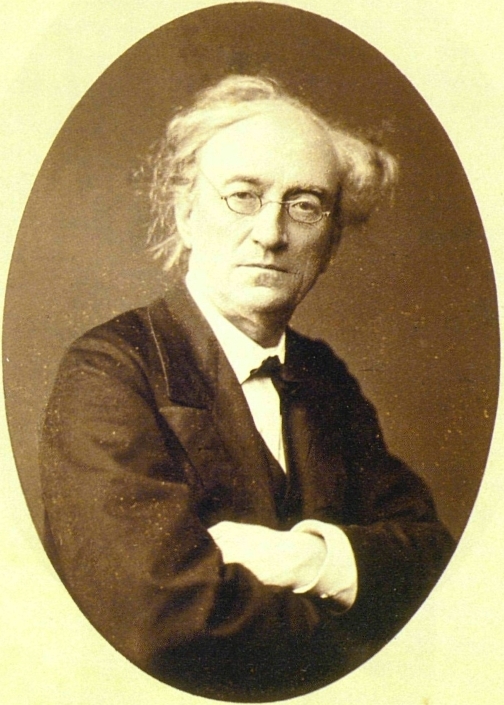
Fyodor Ivanovich Tyutchev was a Russian poet and diplomat.
By globalcelebwiki Editorial Desk, adapted from Wikipedia · Published 29 September 2026
- Profession
- Russian poet (1803–1873)
- Born
- 5 December 1803
- Birthplace
- Ovstug
- Nationality
- Russian
Overview
Fyodor Ivanovich Tyutchev (Russian: Фёдор Ива́нович Тю́тчев, IPA: [ˈfʲɵdər ɨˈvanəvʲɪtɕ ˈtʲʉtːɕɪf]; 5 December [O.S. 23 November] 1803 – 27 July [O.S. 15 July] 1873) was a Russian poet and diplomat.
Ancestry
Tyutchev was born into an old Russian noble family in the Ovstug family estate near Bryansk (modern-day Zhukovsky District, Bryansk Oblast of Russia). His father Ivan Nikolaevich Tyutchev (1768—1846) was a court councillor who served in the Kremlin Expedition that managed all building and restoration works of Moscow palaces. One of Ivan's sisters, Princess Yevdokia Nikolaevna Meshcherskaya (1774—1837), was a hegumenia famous for founding the Borisoglebsky Anosin Women's Monastery. The Tyutchevs traced their roots to Zakhariy Tutchev mentioned in The Tale of the Rout of Mamai, a 15th-century epic tale about the Battle of Kulikovo that described him as the most trusted man of Dmitry Donskoy; sent as a messenger to Mamai, he managed to reveal traitors and return alive thanks to his diplomatic skills. Fyodor's mother Countess Ekaterina Lvovna Tolstaya (1776—1866) belonged to the Tolstoy family on her father's side and the Rimsky-Korsakov noble house on her mother's side. Russian war general Alexander Rimsky-Korsakov was her uncle.
Biography
Most of his childhood years were spent in Moscow, where he joined the literary circle of Professor Merzlyakov at the age of 13. His first printed work was a translation of Horace's epistle to Maecenas, published when he was still 15. From that time on, his poetic language was distinguished from that of Pushkin and other contemporaries by its liberal use of majestic, solemn Slavonic archaisms.
His family tutor was Semyon Raich, a minor poet and translator under whose guidance Tyutchev undertook his first poetic steps. From 1819 to 1821 Tyutchev studied at the Philological Faculty of Moscow University. After graduating he joined the Foreign Office and in 1822 accompanied his relative, Count Ostermann-Tolstoy, to Munich to take up a post as trainee diplomat at the Russian legation. He was to remain abroad for 22 years.
In Munich he fell in love with Amalie von Lerchenfeld, the illegitimate half-sister of a young Bavarian diplomat, Count Maximilian Joseph von Lerchenfeld. Tyutchev's poem Tears or Slyozy (Liubliu, druz'ya, laskat' ochami...) coincides with one of their meetings, and is most likely dedicated to Amalie (or Amélie, as she was usually known). Among other poems inspired by her are K. N., and Ia pomniu vremia zolotoe… Published extracts from the letters and diaries of Maximilian von Lerchenfeld illuminate the first years of Tyutchev as a diplomat in Munich (1822–1826), giving details of his frustrated love affair for Amélie, nearly involving a duel (probably with his colleague, Baron Alexander von Krüdener), in January 1825. Amélie was coerced by her relatives into marrying the much older Krüdener, but she and Tyutchev continued to be friends and frequented the same diplomatic society in Munich. A late poem of 1870 with the title K.B. (Ia vstretil vas — i vsio biloe), long accepted on dubious evidence as addressed to Amélie, is now thought much more likely to refer to Tyutchev's sister-in-law Clotilde (or Klothilde) von Bothmer. Tyutchev's last meeting with Amélie took place on March 31, 1873 (OS) when she visited him on his deathbed. The next day, Tyutchev wrote to his daughter Daria:
Yesterday I felt a moment of burning emotion due to my meeting with... my dear Amalie Krüdener who wished to see me for the last time in this world and came to take her leave of me. In her person my past and the best years of my life came to give me a farewell kiss.
In Munich, he came under the influence of the German Romantic movement, and this is reflected in his poetry. Among the figures, he knew personally were the poet Heinrich Heine and the philosopher Friedrich Schelling. In 1826, he married Eleonore Peterson, née Countess von Bothmer, the Bavarian widow of a Russian diplomat, secretary of the Russian mission in Munich, Alexander Khristoforovich Peterson (1759-1825). She became the mother of his daughter Anna Tyutcheva. Following her death in 1838, Tyutchev married another aristocratic young German widow, Baroness Ernestine von Dörnberg, née von Pfeffel, who had become his mistress and had a child by him while Eleonore was still alive. Neither of his wives understood Russian to begin with (Ernestine made efforts to learn the language only much later). That is hardly surprising since Tyutchev spoke French better than Russian and nearly all his private correspondence was in the former language.
Issue
Children by his first wife, Countess Eleonora von Bothmer are (1800-1838):
Anna Fedorovna Tyutcheva (1829-1889) maid of honour and memoirist, married Ivan Aksakov.
Daria Fedorovna Tyutcheva (1834-1903) maid of honor, never married.
Ekaterina Fedorovna Tyutcheva (1835-1882), maid of honour, never married.
Children by his second wife Baroness Ernestine von Pfeffel are:
Political views
Tyutchev was a militant Pan-Slavist, who never needed a particular reason to berate the Western powers, Vatican, Ottoman Empire or Poland, the latter perceived by him as a Judas in the Slavic fold. The failure of the Crimean War made him look critically at the Russian government as well.
On domestic matters, he held broadly liberal views. He warmly welcomed most of the reforms of Tsar Alexander II, particularly the Emancipation Reform of 1861. Both in his work as a censor and in his writings, he promoted the ideal of freedom of expression, frequently incurring the wrath of his superiors as a result, even under the more relaxed regime of Alexander II.
His fairly sizeable output of verse on political subjects is largely forgotten. One exception is a short poem which has become something of a popular maxim in Russia:
Poetry
Tyutchev is one of the most memorized and quoted Russian poets. Occasional pieces, translations and political poems constitute about a half of his overall poetical output.
The 200 or so lyric pieces which represent the core of his poetic genius, whether describing a scene of nature or passions of love, put a premium on metaphysics. Tyutchev's world is bipolar—he commonly operates with such categories as night and day, north and south, dream and reality, cosmos and chaos, still world of winter and spring teeming with life. Each of these images is imbued with specific meaning. Tyutchev's idea of night, for example, was defined by critics as "the poetic image often covering economically and simply the vast notions of time and space as they affect man in his struggle through life". In the chaotic and fathomless world of "night", "winter", or "north" man feels himself tragically abandoned and lonely. Hence, a modernist sense of frightening anxiety permeates his poetry. Unsurprisingly, it was not until the late 19th and early 20th century that Tyutchev was rediscovered and hailed as a great poet by the Russian Symbolists such as Vladimir Solovyov, Andrey Bely and Alexander Blok.
Sample of verse
Silentium! is an archetypal poem by Tyutchev. Written in 1830, it is remarkable for its rhythm crafted so as to make reading in silence easier than aloud toward others. Like so many of his poems, its images are anthropomorphic and pulsing with pantheism. As one Russian critic put it, "the temporal epochs of human life, its past and its present fluctuate and vacillate in equal measure: the unstoppable current of time erodes the outline of the present." ^
In classical music
Incidentally, this poem inspired an early-20th-century composer, Georgi Catoire (the setting of the poem in the song Silentium), while another one of Tyutchev's poems, "O chem ty voesh' vetr nochnoy...", was the inspiration for Nikolai Medtner's Night Wind piano sonata (#7) of 1911. There is a well-known setting by Rakhmaninov of Tyutchev's poem Spring Waters. While the title of Nikolai Myaskovsky's 1910 tone poem, "Silence", may have been borrowed from Tyutchev, the inspiration is credited to one of Edgar Allan Poe's tales. The same poem was also set to music by the 20th-century Russian composer, Boris Tchaikovsky (1925-1996), in his 1974 cantata "Signs of the Zodiac". Composer Lyubov Streicher (1888-1958) set Tyutchev’s text to music in her Romances, as did Ukrainian composer Valentina Ramm. Ukrainian composer Valentyn Sylvestrov (born 1937), has made a memorable setting of 'Last Love', recorded by Alexi Lubimov and Jana Ivanilova on the album 'Stufen'. Tyutchev had an affinity with themes of the night and Julian Cochran set two of Tyutchev's poems related to the night, The Night Wind, and The Night Sea, for soprano and piano. At the end of Andrey Tarkovsky's film Stalker, a character recites a Tyutchev poem.
Sources and references
Spotted something wrong? Report a correction.
Related profiles
Broadcaster and natural historian
David Attenborough
The broadcaster whose natural history series have shaped how audiences understand life on Earth.
Read biography ↗
Animator and film director
Hayao Miyazaki
The animator and co-founder of Studio Ghibli whose hand-drawn films reached audiences worldwide.
Read biography ↗
Pope
Benedict I
Pope Benedict I was the bishop of Rome from 2 June 575 to his death on 30 July 579.
Read biography ↗