Portuguese poet, writer, and philosopher (1888–1935); creator of the heteronymic system including Alberto Caeiro, Ricard
Fernando Pessoa
Fernando António Nogueira de Seabra Pessoa was a Portuguese poet, writer, literary critic, translator, and publisher.
By globalcelebwiki Editorial Desk, adapted from Wikipedia · Published 29 September 2026
- Profession
- Portuguese poet, writer, and philosopher (1888–1935); creator of the heteronymic system including Alberto Caeiro, Ricard
- Born
- 13 June 1888
- Birthplace
- Lisbon
- Nationality
- Portuguese
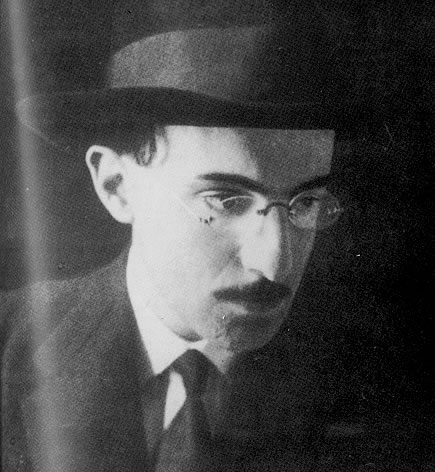
Overview
Fernando António Nogueira de Seabra Pessoa (; Portuguese: [fɨɾˈnɐ̃du pɨˈsoɐ]; 13 June 1888 – 30 November 1935) was a Portuguese poet, writer, literary critic, translator, and publisher. He has been described as one of the most significant literary figures of the 20th century and one of the greatest poets in the Portuguese literature. He also wrote in and translated from English and French.
Pessoa was a prolific writer both in his own name and approximately seventy-five other names, of which three stand out: Alberto Caeiro, Álvaro de Campos, and Ricardo Reis. He did not define these as pseudonyms because he felt that this did not capture their true independent intellectual life and instead called them heteronyms, a term he invented. These imaginary figures sometimes held unpopular or extreme views.
Early life
Pessoa was born in Lisbon on 13 June 1888. When Pessoa was five, his father, Joaquim de Seabra Pessôa, died of tuberculosis, and less than seven months later his younger brother Jorge, aged one, also died (2 January 1894). After the second marriage of his mother, Maria Magdalena Pinheiro Nogueira, by a proxy wedding to João Miguel dos Santos Rosa, Fernando sailed with his mother for South Africa in early 1896 to join his stepfather, a military officer appointed Portuguese consul in Durban, capital of the former British Colony of Natal.
In a letter dated 8 February 1918, Pessoa wrote:
There is only one event in the past which has both the definiteness and the importance required for rectification by direction; this is my father's death, which took place on 13 July 1893. My mother's second marriage (which took place on 30 December 1895) is another date which I can give with preciseness and it is important for me, not in itself, but in one of its results – the circumstance that, my stepfather becoming Portuguese Consul in Durban (Natal), I was educated there, this English education being a factor of supreme importance in my life, and, whatever my fate be, indubitably shaping it.
The dates of the voyages related to the above event are (as nearly as possible):
1st. voyage to Africa – left Lisbon beginning January 1896.
Lisbon revisited
While his family remained in South Africa, Pessoa returned to Lisbon in 1905 to study diplomacy. After a period of illness, and two years of poor results, a student strike against the dictatorship of Prime Minister João Franco put an end to his formal studies. Pessoa became an autodidact and a devoted reader who spent much of his time in libraries. In August 1907, he started working as a practitioner at R.G. Dun & Company, an American mercantile information agency (currently D&B, Dun & Bradstreet). His grandmother died in September and left him a small inheritance, which he spent on setting up his own publishing house, the "Empreza Ibis". The venture was not successful and closed down in 1910, but the name ibis, the sacred bird of Ancient Egypt and inventor of the alphabet in Greek mythology, would remain an important symbolic reference for him.
Pessoa returned to his incomplete formal studies, supplementing his British education with self-directed study of Portuguese culture. The pre-revolutionary atmosphere surrounding the assassination of King Charles I and Crown Prince Luís Filipe in 1908, and the patriotic outburst resulting from the successful republican revolution in 1910, influenced the development of the budding writer; as did his step-uncle, Henrique dos Santos Rosa, a poet and retired soldier, who introduced the young Pessoa to Portuguese poetry, notably the romantics and symbolists of the 19th century.
In 1912, Fernando Pessoa entered the literary world with a critical essay, published in the cultural journal A Águia, which triggered one of the most important literary debates in the Portuguese intellectual world of the 20th century: the polemic regarding a super-Camões. “Super‑Camões” (also written “Supra‑Camões”) is Pessoa’s term for a future poet who would surpass Luís de Camões as Portugal’s greatest national poet.
In 1915 a group of artists and poets, including Fernando Pessoa, Mário de Sá-Carneiro and Almada Negreiros, created the literary magazine Orpheu, which introduced modernist literature to Portugal. Only two issues were published (Jan–Feb–Mar and Apr–May–Jun 1915), the third failed to appear due to funding difficulties. Lost for many years, this issue was finally recovered and published in 1984. Among other writers and poets, Orpheu published Pessoa, orthonym, and the modernist heteronym, Álvaro de Campos.
Along with the artist Ruy Vaz, Pessoa also founded the art journal Athena (1924–25), in which he published verses under the heteronyms Alberto Caeiro and Ricardo Reis. In addition to his profession as free-lance commercial translator, Fernando Pessoa undertook intense activity as a writer, literary critic and political analyst, contributing to the journals and newspapers A Águia (1912–13), A República (1913), Theatro (1913), A Renascença (1914), O Raio (1914), A Galera (1915), Orpheu (1915), O Jornal (1915), Eh Real! (1915), Exílio (1916), Centauro (1916), A Ideia Nacional (1916), Terra Nossa (1916), O Heraldo (1917), Portugal Futurista (1917), Acção (1919–20), .Ressurreição (1920), Contemporânea (1922–26), Athena (1924–25), Diário de Lisboa (1924–35), Revista de Comércio e Contabilidade (1926), Sol (1926), O Imparcial (1927), Presença (1927–34), Revista Solução Editora (1929–1931), Notícias Ilustrado (1928–30), Girassol (1930), Revolução (1932), Descobrimento (1932), Fama (1932–33), Fradique (1934) and Sudoeste (1935).
Pessoa the flâneur
After his return to Portugal, when he was seventeen, Pessoa barely left his beloved city of Lisbon, which inspired the poems "Lisbon Revisited" (1923 and 1926), written under the heteronym Álvaro de Campos. From 1905 to 1920, when his family returned from Pretoria after the death of his stepfather, he lived in fifteen different locations in the city, moving from one rented room to another depending on his fluctuating finances and personal troubles.
Pessoa adopted the detached perspective of the flâneur Bernardo Soares, one of his heteronyms. This character was supposedly an accountant, working for Vasques, the boss of an office located in Douradores Street. Soares also supposedly lived in the same downtown street, a world that Pessoa knew quite well due to his long career as freelance correspondence translator. Indeed, from 1907 until his death in 1935, Pessoa worked in twenty-one firms located in Lisbon's downtown, sometimes in two or three of them simultaneously. In The Book of Disquiet, Bernardo Soares describes some of these typical places and describes one's "atmosphere". In his daydream soliloquy he also wrote about Lisbon in the first half of the 20th century. Soares describes crowds in the streets, buildings, shops, traffic, the river Tagus, the weather, and even its author, Fernando Pessoa:
Fairly tall and thin, he must have been about thirty years old. He hunched over terribly when sitting down but less so standing up, and he dressed with a carelessness that wasn't entirely careless. In his pale, uninteresting face there was a look of suffering that didn't add any interest, and it was difficult to say just what kind of suffering this look suggested. It seemed to suggest various kinds: hardships, anxieties, and the suffering born of the indifference that comes from having already suffered a lot.
A statue of Pessoa sitting at a table (below) can be seen outside A Brasileira, one of the preferred places of young writers and artists of Orpheu's group during the 1910s. This coffeehouse, in the aristocratic district of Chiado, is quite close to Pessoa's birthplace: 4, São Carlos Square (just in front of Lisbon's Opera House, where stands another statue of the writer), one of the most elegant neighborhoods of Lisbon. Later on, Pessoa was a frequent customer at Martinho da Arcada, a centennial coffeehouse in Comercio Square, surrounded by ministries, almost an "office" for his private business and literary concerns, where he used to meet friends in the 1920s and 1930s.
In 1925, Pessoa wrote in English a guidebook to Lisbon but it remained unpublished until 1992.
Literature and mysticism
Pessoa translated a number of Portuguese books into English such as The Songs of Antonio Botto. He also translated various works into Portuguese such as The Scarlet Letter by Nathaniel Hawthorne, and the short stories "The Theory and the Hound", "The Roads We Take" and "Georgia's Ruling" by O. Henry. He has also translated into Portuguese the poems "Godiva" by Alfred Tennyson, "Lucy" by William Wordsworth, "Catarina to Camoens" by Elizabeth Barrett Browning, "Barbara Frietchie" by John Greenleaf Whittier, and "The Raven", "Annabel Lee" and "Ulalume" by Edgar Allan Poe who, along with Walt Whitman, strongly influenced him.
As a translator, Pessoa had his own method:
A poem is an intellectualized impression, an idea made emotion, communicated by others by means of a rhythm. This rhythm is double in one, like the concave and convex aspects of the same arc: it is made up of a verbal or musical rhythm and of a visual or image rhythm which concurs inwardly with it. The translation of a poem should therefore conform absolutely (1) to the idea or emotion which constitutes the poem, (2) to the verbal rhythm in which that idea or emotion is expressed; it should conform relatively to the inner or visual rhythm, keeping to the images themselves when it can, but keeping always to the type of image.
It was on this criterion that I based my translation into Portuguese of Poe's "Annabel Lee" and "Ulalume", which I translated, not because of their great intrinsic worth, but because they were a standing challenge to translators.
In addition, Pessoa translated into Portuguese some books by the leading theosophists Helena Blavatsky, Charles Webster Leadbeater, Annie Besant, and Mabel Collins.
Writing a lifetime
In his early years, Pessoa was influenced by major English classic poets such as Shakespeare, Milton and Pope, and romantics like Shelley, Byron, Keats, Wordsworth, Coleridge and Tennyson. After his return to Lisbon in 1905, Pessoa was influenced by French symbolists and decadents such as Charles Baudelaire, Maurice Rollinat, and Stéphane Mallarmé. He was also importantly influenced by Portuguese poets such as Antero de Quental, Gomes Leal, Cesário Verde, António Nobre, Camilo Pessanha and Teixeira de Pascoaes. Later on, he was also influenced by the modernists W. B. Yeats, James Joyce, Ezra Pound and T. S. Eliot, among many other writers.
During World War I, Pessoa wrote to a number of British publishers, namely Constable & Co. Ltd. (currently Constable & Robinson), trying to arrange publication of his collection of English verse The Mad Fiddler (unpublished during his lifetime), but it was refused. However, in 1920, the prestigious literary journal Athenaeum included one of those poems. Since the attempt at British publication failed, in 1918 Pessoa published in Lisbon two slim volumes of English verse: Antinous and 35 Sonnets, received by the British literary press without enthusiasm. Along with some friends, he founded another publishing house, Olisipo, which published in 1921 a further two English poetry volumes: English Poems I–II and English Poems III by Fernando Pessoa. In his publishing house, Pessoa also issued some books by his friends: A Invenção do Dia Claro (The Invention of the Clear Day) by José de Almada Negreiros, Canções (Songs) by António Botto, and Sodoma Divinizada (Deified Sodom) by Raul Leal (Henoch). Olisipo closed down in 1923, following the scandal known as "Literatura de Sodoma" (Literature of Sodom), which Pessoa started with his paper "António Botto e o Ideal Estético em Portugal" (António Botto and the Aesthetic Ideal in Portugal), published in the journal Contemporanea.
Politically, Pessoa described himself as "a British-style conservative, that is to say, liberal within conservatism and absolutely anti-reactionary," and adhered closely to the Spencerian individualism of his upbringing. He described his brand of nationalism as "mystic, cosmopolitan, liberal, and anti-Catholic." He was an outspoken elitist and aligned himself against communism, socialism, fascism and Catholicism. He initially rallied to the First Portuguese Republic but the ensuing instability caused him to reluctantly support the military coups of 1917 and 1926 as a means of restoring order and preparing the transition to a new constitutional normality. He wrote a pamphlet in 1928 supportive of the military dictatorship but after the establishment of the New State, in 1933, Pessoa became disenchanted with the regime and wrote critically of Salazar and fascism in general, maintaining a hostile stance towards its corporatist program, illiberalism, and censorship. In the beginning of 1935, Pessoa was banned by the Salazar regime, after he wrote in defense of Freemasonry. The regime also suppressed two articles Pessoa wrote in which he condemned Mussolini's invasion of Abyssinia and fascism as a threat to human liberty everywhere.
On 29 November 1935, Pessoa was taken to the Hospital de São Luís, suffering from abdominal pain and a high fever; there he wrote, in English, his last words: "I know not what tomorrow will bring." He died the next day, 30 November 1935, around 8 pm, aged 47. His cause of death is commonly given as cirrhosis of the liver, due to alcoholism, though this is disputed: others attribute his death to pancreatitis (again from alcoholism), or other ailments.
In his lifetime, he published four books in English and one alone in Portuguese: Mensagem (Message). However, he left a lifetime of unpublished, unfinished or just sketchy work in a domed, wooden trunk (25,574 manuscript and typed pages which have been housed in the Portuguese National Library since 1988). The heavy burden of editing this huge work is still in progress. In 1985 (fifty years after his death), Pessoa's remains were moved to the Hieronymites Monastery, in Lisbon, where Vasco da Gama, Luís de Camões, and Alexandre Herculano are also buried. Pessoa's portrait was on the 100-escudo banknote.
The triumphant day
[…] on 8 March 1914 – I found myself standing before a tall chest of drawers, took up a piece of paper, began to write, remaining upright all the while since I always stand when I can. I wrote thirty some poems in a row, all in a kind of ecstasy, the nature of which I shall never fathom. It was the triumphant day of my life, and I shall never have another like it. I began with a title, The Keeper of Sheep. And what followed was the appearance of someone within me to whom I promptly assigned the name of Alberto Caeiro. Please excuse the absurdity of what I am about to say, but there had appeared within me, then and there, my own master. It was my immediate sensation. So much so that, with those thirty odd poems written, I immediately took up another sheet of paper and wrote as well, in a row, the six poems that make up "Oblique Rain" by Fernando Pessoa. Immediately and totally... It was the return from Fernando Pessoa/Alberto Caeiro to Fernando Pessoa alone. Or better still, it was Fernando Pessoa's reaction to his own inexistence as Alberto Caeiro.
As the heteronym Coelho Pacheco, over a long period Pessoa's "triumphant day" was taken as real, however, it has been proved that this event was one more fiction created by Pessoa.
Heteronyms
Pessoa's earliest heteronym, created at the age of six, was Chevalier de Pas, a fictitious knight who served as the imaginary addressee of his childhood letters. Other childhood heteronyms included the poet Dr. Pancrácio and short story writer David Merrick, followed by Charles Robert Anon, a young Englishman who became Pessoa's alter ego. When Pessoa was a student at the University of Lisbon, Anon was replaced by Alexander Search. Search represented a transition heteronym that Pessoa used while searching to adapt to the Portuguese cultural reality. As a result, Pessoa would write many English poems, specifically sonnets, and short stories under the Search heteronym, including "A Very Original Dinner", which was posthumously published after its recovery and subsequent reproduction by Portuguese literary historian Maria Leonor Machado de Sousa. After the 5 October 1910 revolution and its subsequently patriotic atmosphere, Pessoa created another alter ego, Álvaro de Campos, supposedly a Portuguese naval and mechanical engineer, who was born in Tavira, hometown of Pessoa's ancestors, and graduated in Glasgow. Translator and literary critic Richard Zenith notes that Pessoa eventually established at least seventy-two heteronyms. According to Pessoa himself, Zenith says, there were three main heteronyms: Alberto Caeiro, Álvaro de Campos, and Ricardo Reis. Pessoa's heteronyms differ from pen names, as they possess distinct biographies, temperaments, philosophies, appearances, writing styles, and even signatures. Thus, heteronyms often disagree on various topics as well as argue and discuss with each other about literature, aesthetics, philosophy, and so on.
How do I write in the name of these three? Caeiro, through sheer and unexpected inspiration, without knowing or even suspecting that I'm going to write in his name. Ricardo Reis, after an abstract meditation, which suddenly takes concrete shape in an ode. Campos, when I feel a sudden impulse to write and don't know what. (My semi-heteronym Bernardo Soares, who in many ways resembles Álvaro de Campos, always appears when I'm sleepy or drowsy, so that my qualities of inhibition and rational thought are suspended; his prose is an endless reverie. He's a semi-heteronym because his personality, although not my own, doesn't differ from my own but is a mere mutilation of it. He's me without my rationalism and emotions. His prose is the same as mine, except for certain formal restraint that reason imposes on my own writing, and his Portuguese is exactly the same – whereas Caeiro writes bad Portuguese, Campos writes it reasonably well but with mistakes such as "me myself" instead of "I myself", etc.., and Reis writes better than I, but with a purism I find excessive...).
Sources and references
Spotted something wrong? Report a correction.
Related profiles
Broadcaster and natural historian
David Attenborough
The broadcaster whose natural history series have shaped how audiences understand life on Earth.
Read biography ↗
Animator and film director
Hayao Miyazaki
The animator and co-founder of Studio Ghibli whose hand-drawn films reached audiences worldwide.
Read biography ↗
Pope
Benedict I
Pope Benedict I was the bishop of Rome from 2 June 575 to his death on 30 July 579.
Read biography ↗