Uruguayan writer and journalist (1940–2015)
Eduardo Galeano
Eduardo Germán María Hughes Galeano was a Uruguayan journalist, writer and novelist considered, among other things, "a literary giant of the Latin American left" and "global soccer's pre-eminent man of letters".
By globalcelebwiki Editorial Desk, adapted from Wikipedia · Published 29 September 2026
- Profession
- Uruguayan writer and journalist (1940–2015)
- Born
- 3 September 1940
- Birthplace
- Montevideo
- Nationality
- Uruguayan

Overview
Eduardo Germán María Hughes Galeano (Spanish: [eˈðwaɾðo ɣaleˈano]; 3 September 1940 – 13 April 2015) was a Uruguayan journalist, writer and novelist considered, among other things, "a literary giant of the Latin American left" and "global soccer's pre-eminent man of letters".
Galeano's best-known works are Las venas abiertas de América Latina (Open Veins of Latin America, 1971) and Memoria del fuego (Memory of Fire, 1982–6). "I'm a writer," the author once said of himself, "obsessed with remembering, with remembering the past of America and above all that of Latin America, intimate land condemned to amnesia."
Author Isabel Allende, who said her copy of Galeano's book was one of the few items with which she fled Chile in 1973 after the military coup of Augusto Pinochet, called Open Veins of Latin America "a mixture of meticulous detail, political conviction, poetic flair, and good storytelling."
Life
Galeano was born in Montevideo, Uruguay, on 3 September 1940. He was the son of Eduardo Hughes Roosen, an official at the Ministry of Livestock, Agriculture, and Fisheries and owner of a ranch in the Paysandú Department, and Licia Esther Galeano Muñoz. He was of Welsh, Italian, German and Spanish descent.
Coming from a prominent Uruguayan family, he was a descendant, through his maternal line, of Fructuoso Rivera, the first president of Uruguay, and, through his paternal line, of Leandro Gómez, a military leader recognized for his defense of the city of Paysandú during its siege in 1864.
After completing two years of secondary school at Erwy School, Galeano went to work at age fourteen in various jobs, including messenger and fare collector. He eventually landed at El Sol. The Uruguayan socialist weekly first published the teenager's comics prior to his writing. Galeano's passion for drawing continued throughout his life; his vignettes can be seen in many of his later books while his signature was often accompanied by a small hand-drawn pig. As a journalist throughout the 1960s Galeano rose in prominence among leftist publications, and became editor of Marcha, an influential weekly with contributors such as Mario Vargas Llosa, Mario Benedetti, Manuel Maldonado Denis and Roberto Fernández Retamar. For two years he edited the daily Época and worked as editor-in-chief of the University Press. In 1959 he married his first wife, Silvia Brando, and in 1962, having divorced, he remarried to Graciela Berro. He wrote under his maternal family name; as a young man, he briefly wrote for a Uruguayan socialist publication, El Sol, signing articles as "Gius," "a pseudonym approximating the pronunciation in Spanish of his paternal surname Hughes."
In 1973, a military coup took power in Uruguay; Galeano was imprisoned and later was forced to flee, going into exile in Argentina where he founded the magazine Crisis. His 1971 book Open Veins of Latin America was banned by the right-wing military government, not only in Uruguay, but also in Chile and Argentina. In 1976 he married for the third time to Helena Villagra; however, in the same year, the Videla regime took power in Argentina in a bloody military coup and his name was added to the list of those condemned by the death squads. He fled again, this time to Spain, where he wrote his famous trilogy, Memoria del fuego (Memory of Fire), described as "the most powerful literary indictment of colonialism in the Americas."
At the beginning of 1985 Galeano returned to Montevideo when democratization occurred. Following the victory of Tabaré Vázquez and the Broad Front alliance in the 2004 Uruguayan elections marking the first left-wing government in Uruguayan history Galeano wrote a piece for The Progressive titled "Where the People Voted Against Fear" in which Galeano showed support for the new government and concluded that the Uruguayan populace used "common sense" and were "tired of being cheated" by the traditional Colorado and Blanco parties. Following the creation of TeleSUR, a Latin American television station based in Caracas, Venezuela, in 2005 Galeano along with other left-wing intellectuals such as Tariq Ali and Adolfo Pérez Esquivel joined the network's 36 member advisory committee.
Work
Las venas abiertas de América Latina (Open Veins of Latin America), a history of the region from the time of Columbus from the perspective of the subjugated people, is considered one of Galeano's best-known works. An English-language translation by Cedric Belfrage gained some popularity in the English-speaking world after Venezuelan President Hugo Chávez gave it as a gift to U.S. President Barack Obama in 2009. Decades after its first publication, Galeano disavowed certain aspects of the book while still upholding many ideas embodied in it.
Galeano was also a fan of football, writing most notably about it in Football in Sun and Shadow (El fútbol a sol y sombra). In a retrospective for SB Nation after Galeano's death, football writer Andi Thomas described the work—a history of the sport, as well as an outlet for the author's own experiences with the sport and his political polemics—as "one of the greatest books about football ever written".
Death
Galeano died on 13 April 2015 in Montevideo from lung cancer at the age of 74, survived by third wife Helena Villagra and three children.
Awards and honors
2006: International Human Rights Award by Global Exchange
2021: Posthumous "honoris causa" prize from the National University of Misiones.
"The noose". New Left Review. II (17). September–October 2002.
"Nothingland—or Venezuela?". New Left Review. II (29). September–October 2004.
Sources and references
Spotted something wrong? Report a correction.
Related profiles
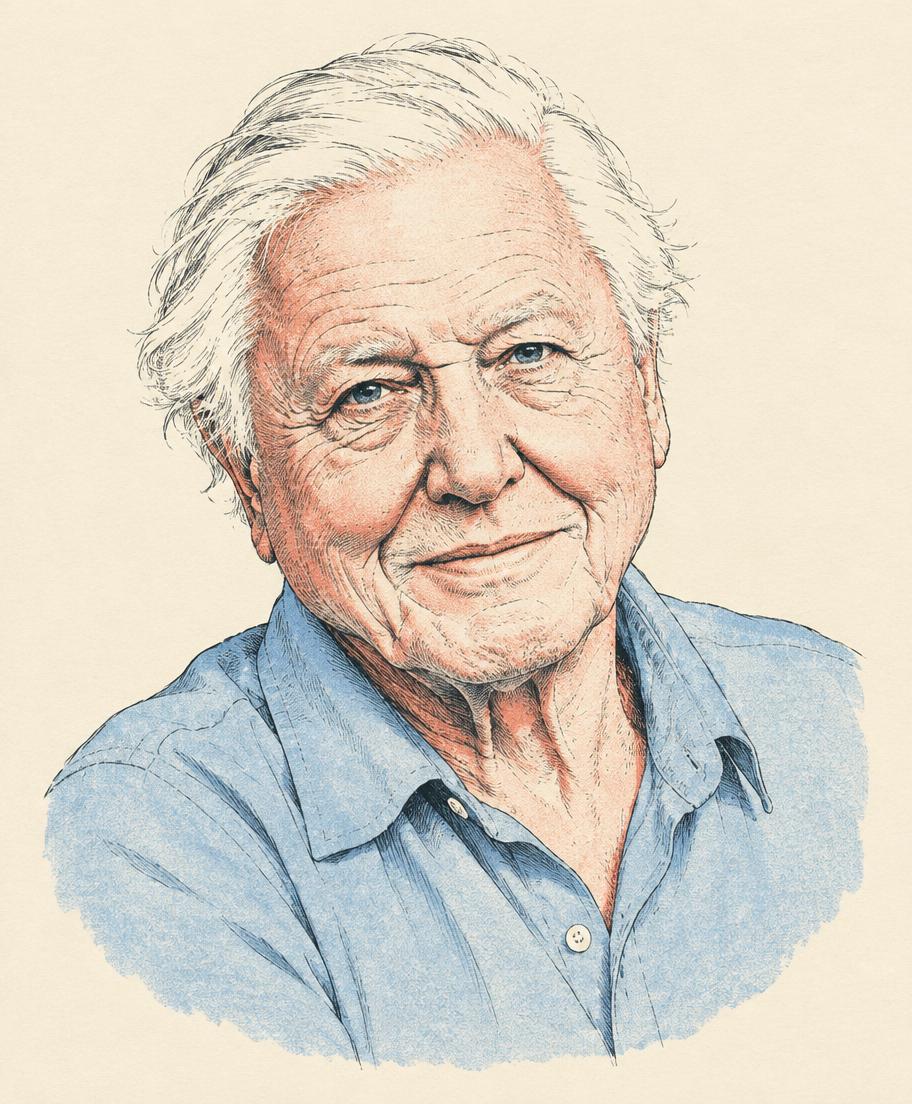
Broadcaster and natural historian
David Attenborough
The broadcaster whose natural history series have shaped how audiences understand life on Earth.
Read biography ↗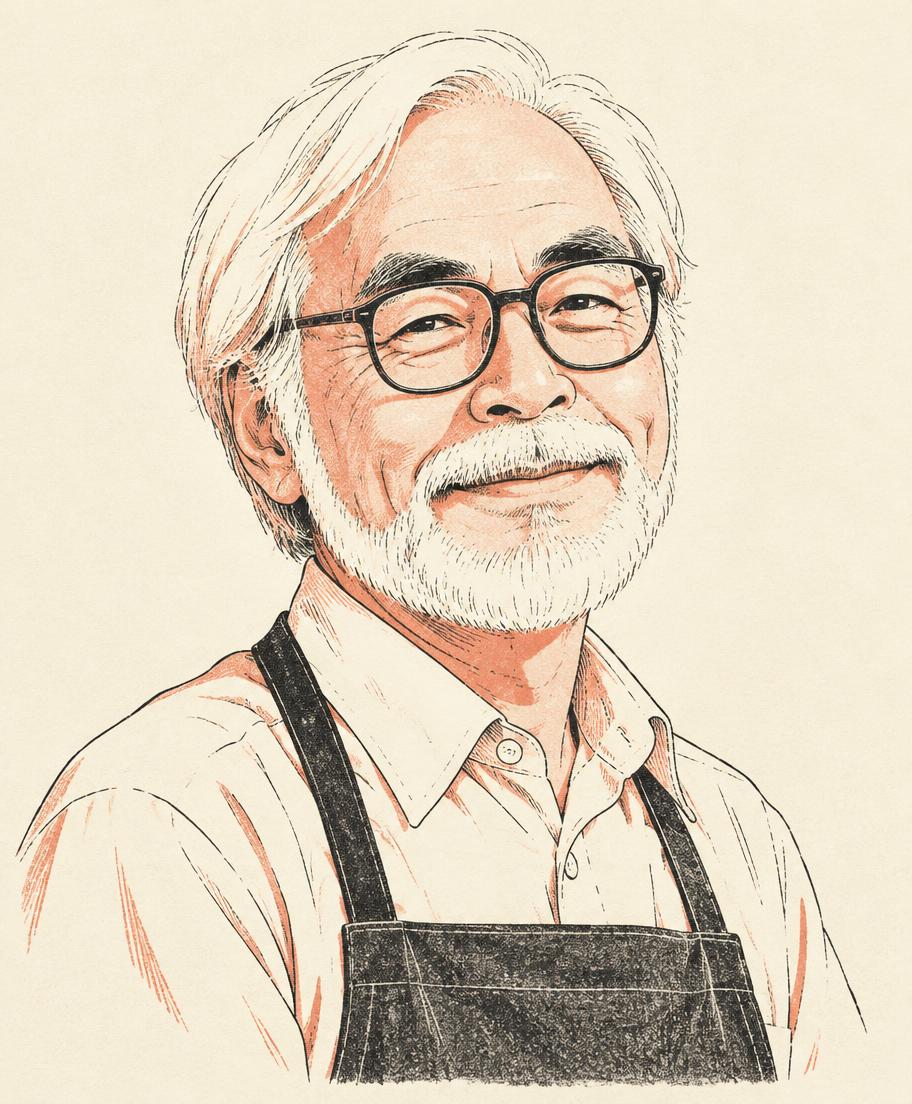
Animator and film director
Hayao Miyazaki
The animator and co-founder of Studio Ghibli whose hand-drawn films reached audiences worldwide.
Read biography ↗
Pope
Benedict I
Pope Benedict I was the bishop of Rome from 2 June 575 to his death on 30 July 579.
Read biography ↗