Early Renaissance Italian sculptor (1386–1466)
Donatello
Donato di Niccolò di Betto Bardi, known mononymously as Donatello, was an Italian sculptor of the Renaissance period.
By globalcelebwiki Editorial Desk, adapted from Wikipedia · Published 29 September 2026
- Profession
- Early Renaissance Italian sculptor (1386–1466)
- Birthplace
- Florence
- Nationality
- Republic of Florence
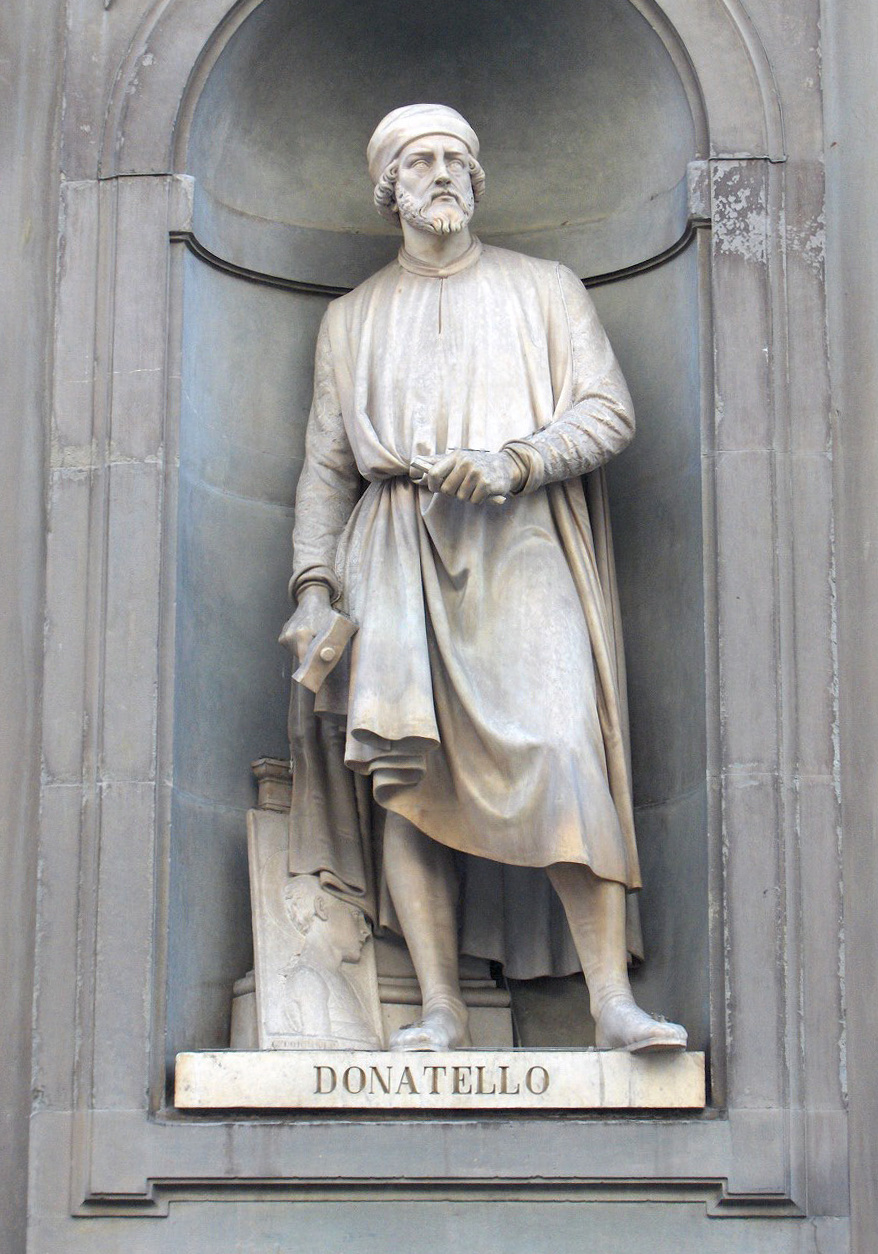
Overview
Donato di Niccolò di Betto Bardi (c. 1386 – 13 December 1466), known mononymously as Donatello (English: ; Italian: [donaˈtɛllo]), was an Italian sculptor of the Renaissance period. Born in Florence, he studied classical sculpture and used his knowledge to develop an Early Renaissance style of sculpture. He spent time in other cities, where he worked on commissions and taught others; his periods in Rome, Padua, and Siena introduced to other parts of Italy the techniques he had developed in the course of a long and productive career. His David was the first freestanding nude male sculpture since antiquity; like much of his work, it was commissioned by the Medici family.
He worked with stone, bronze, wood, clay, stucco, and wax, and used glass in inventive ways. He had several assistants, with four perhaps being a typical number. Although his best-known works are mostly statues executed in the round, he developed a new, very shallow, type of bas-relief for small works, and a good deal of his output was architectural reliefs for pulpits, altars and tombs, as well as Madonna and Childs for homes.
Broad, overlapping phases can be seen in his style, beginning with the development of expressiveness and classical monumentality in statues, then developing energy and charm, mostly in smaller works. Early on, he veered away from the International Gothic style he learned from Lorenzo Ghiberti, with classically informed pieces, and further on a number of stark, even brutal pieces. The sensuous eroticism of his most famous work, the bronze David, is very rarely seen in other pieces.
Working and personal life
All accounts describe Donatello as amiable and well-liked, but rather poor at the business side of his career. Like Michelangelo in the next century, he tended to accept more commissions than he could handle, and many works were either completed some years late, handed to other sculptors to finish, or never produced. Again, like Michelangelo, he enjoyed steady support and patronage from the Medici family.
All sources agree that he carved stone and modelled clay or wax for bronzes very quickly and confidently, and art historians feel able to distinguish his hand from that of others, even within the same work. Italian Renaissance sculptors nearly always used assistants, with the master often giving parts of a piece over to them, but Donatello, who would perhaps not have been good at managing a large workshop like that of Ghiberti, seems to have had at most times a relatively small number of experienced assistants, some of whom became significant masters in their own right. The technical quality of his work can vary, especially in bronze pieces, where casting faults may occur; even the bronze David has a hole under his chin, and a patch on his thigh.
Early life
Donatello was born in Florence, probably in 1386, based on his own later statement in his catasto tax declaration; he claimed to be 41 years old in July 1427. He was the son of Niccolò di Betto Bardi, who was a "wool-stretcher" (tiratore di lana) and member of the Florentine Arte della Lana, the wool workers guild, which probably provided a good income.
Donatello's actual surname was therefore Bardi, but if he was related to the well-known Bardi family of bankers, it seems to have been rather distantly. The banker Bardis were still wealthy and powerful, despite the default of Edward III of England in 1345 having caused the failure of their bank. After Contessina de' Bardi married Cosimo de' Medici around 1415, any connection he had might still have been useful to Donatello. However, Donatello's father did have a connection with the powerful Buonaccorso Pitti, whose diary records a fight in Pisa in 1380 in which Niccolò intervened, giving Pitti's opponent a fatal blow.
Vasari's claim that Donatello was raised and educated in the house of the prominent Martelli family is probably baseless, and given for literary, even political reasons. They were certainly later keen patrons of Donatello, and also commissioned work from Vasari himself.
Early career
Donatello's first appearance in any documentary records is unpromising; in January 1401, at the age of about 15, he was accused in Pistoia, 25 miles from Florence and then controlled by it, of hitting a German with a stick, drawing blood. He was probably there with his father, who had an official job in Pistoia at the time, while Buonaccorso Pitti was the Captain, or governor. While there Donatello appears to have befriended, and perhaps worked with, Filippo Brunelleschi, who was some ten years older (born in 1377), and although not yet a master goldsmith, working on silver figures for an altar in Pistoia Cathedral. What experience Donatello had to assist him, if that was what he was doing, is unclear.
Both Donatello and Brunelleschi returned to Florence in early 1401, in time for Brunelleschi to take part in the famous competition for the Baptistery doors, often seen as the start of Florentine Renaissance sculpture. Seven sculptors were invited to submit trial panels, for which they were paid; Vasari's Life of Brunelleschi wrongly claims that Donatello was one of them, but they were all more experienced figures. Following Vasari and Brunelleschi's biographer Antonio Manetti, the unexpected result declared by the 34 judges was that the entries by two young Florentines, Lorenzo Ghiberti and Brunelleschi, were the best. An attempt was made to get the two to share the commission, but amid bitter recriminations that lasted for years, this failed, and Ghiberti was given the whole commission. Ghiberti himself, on the other hand (and the only contemporary voice) claimed in his Commentarii that the vote went unanimously for him, including the competing artists.
Any part played by the adolescent Donatello, presumably assisting Brunelleschi with his trial piece, is unknown. After the final result in late 1402, or early 1403, they seem to have left for Rome together, staying until at least the next year, to study the artistic and architectural remains left by Ancient Rome, then very abundant, though for the most part still buried. They were very early in this effectively archaeological pursuit, which included measuring remains, and hiring labourers to excavate. The main source for this period is the biography of Brunelleschi by Antonio Manetti (1423–1497), who knew both men, but it was written after their deaths in the 1470s.
Vasari just repeats a shorter version of Manetti's account, according to which both men were able to support themselves by jobs for Roman goldsmiths, which probably represented important training for Donatello. Perhaps they were also able to sell excavated sculptures. Brunelleschi subsequently became a highly important architect, while Donatello began his career in sculpture.
Donatello is recorded as working as an apprentice, and for the last few months on a salary, in the studio of Lorenzo Ghiberti in 1404–1407, apparently working on the workshop's main project, the bronze doors of the Florence Baptistery, and from 1406 on he began stone carving at the cathedral for the Porta della Mandorla on its north side, a large project that was still some years from completion. He was paid in November 1406 for a figure of a prophet on the door, most probably the one for the left pinnacle (now in the Museo dell' Opera del Duomo, the cathedral museum). Giovanni d'Ambrogio, whose work, according to Kreytenberg, "provided a decisive impetus for the emergence of Renaissance sculpture", has been described by Manfred Wundram as the "true mentor of Donatello".
By early 1408, Donatello had acquired sufficient reputation to be given the commission for a life-size prophet for the cathedral, to be paired with another by Nanni di Banco, a brilliant sculptor of Donatello's age, who seems to have been both a rival and friend. In the end, they were not placed as intended, probably because they appeared too small from far below, and the Donatello appears to be lost.
From now on, he received a series of commissions for full-size statues for prominent public locations. These are now among his most famous works, but after about 1425, he produced few sculptures of this type. His marble David may date from around this time, or slightly later, perhaps 1412. He was commissioned to rework it in 1416, the cathedral surrendering it to the republic, who placed it in the seat of government, the Palazzo Vecchio. It was "one of the early cases in monumental sculpture where he is portrayed as a youth", rather than the King of Israel, and "teeters between the Gothic and Renaissance worlds".
In 1409–1411, he executed the colossal seated figure of Saint John the Evangelist, which occupied a niche of the old cathedral façade until 1588, and is now in the cathedral museum. This was placed with the base about 3 metres from the ground, and Donatello adjusted his composition with this in mind; since 2015, it and other cathedral sculptures have been displayed at their original heights.
In 1415, the cathedral authorities decided to revive and complete medieval projects, and add eight lifesize marble figures for the niches of the higher levels of Giotto's Campanile adjoining the cathedral, as well as complete a row on the cathedral facade (in which Donatello was not involved). All the figures for the campanile series were removed in 1940, to be replaced by replicas, with the originals moved to the Museo dell'Opera del Duomo. They were placed very high, and so were seen from a distance, at a sharp angle, factors which needed allowing for in the compositions, and made "fine detail virtually useless for visual effect"; Since 2015, the museum's new displays show this and other statues for the cathedral at the intended original heights.
Donatello was responsible for six of the eight campanile figures, in two cases working with the younger Nanni di Bartolo (il Rosso). The commissions and starts stretched between 1414 and 1423, and while most were completed by 1421, the last of his statues was not finished until 1435. This was the striking Zuccone ("Baldy", or "Pumpkin Head" probably intended as Habakkuk or Jeremiah), the best known of the series, and reportedly Donatello's favourite.
Another large-scale sculptural project in the city was the completion of the statues for the niches around the outside of the rectangular Orsanmichele, a building owned by the guilds of Florence, which was in the process of turning itself from a grain market to a church on the ground floor, still with offices above. There were 14 niches around the outside, and each of the main guilds was responsible for one, normally choosing their patron saint. The location had the advantage that the niches were much lower than on the cathedral, with the feet of the statues some three metres above ground level.
Nevertheless, according to a story in Vasari, Donatello had trouble with his first statue for Orsanmichele, a marble St. Mark (1411–1413) for the linen-weavers guild. Viewing the finished statue at ground level, the weavers did not like it. Donatello got them to put it in its niche and cover it up while he worked to improve it. After two weeks under cover, he showed it in position, without having done any work on it, and they happily accepted it. It has a contrapposto pose, with the robe on the leg bearing the weight in straight "vertical drapery folds resembling the flutes of a Doric column". Like most of the Orsanmichele statues, this has been moved to the museum inside and replaced by a replica.
About 1415 to 1417, he completed the marble Saint George for the Confraternity of the Cuirass-makers or armourers; the important relief on the base is discussed below, and was slightly later. Because of a staircase on the other side of the wall, the niche is shallower than the others, but Donatello turns this to his advantage, pushing the figure forward into space, and with the "anxious look" on the face suggesting alertness or prontezza, "the quality above all others singled out for praise in the successive Renaissance eulogies of the work". Holes and the shape of a hand suggest that the figure was originally fitted with a wreath or helmet on his head, and carried a sword or lance; the client would have been able to supply these pieces in bronze.
The gilt-bronze Saint Louis of Toulouse dates to some years later, 1423–25. It is now in the museum of the Basilica di Santa Croce, having been replaced in 1460 by the bronze Incredulity of Saint Thomas by Verrocchio. It is technically very unusual, as it was built up from a number of sections cast and gilded separately, necessitated by the difficulty of fire-gilding a whole over-life-size figure. The collaboration with Michelozzo may have begun with this piece, and 1423 marks the beginning of Donatello's documented work in bronze, with three recorded commissions that year: the Saint Louis, a reliquary bust of Saint Rossore, and the relief for the Siena Baptistery discussed below. Michelozzo had great experience with bronze, and no doubt helped with the technical aspects, and Donatello took to the medium very quickly.
In 1418, the Signoria commissioned a large and imposing figure of Florence's heraldic lion, the Marzocco for the entrance to a new apartment at Santa Maria Novella built for a rare visit by the pope; in the event, he did not finish it in time. It was later placed in the Piazza della Signoria, where there is now a replica, with the original in the Bargello Museum.
Before about 1410 he made the painted wooden crucifix now in Santa Croce, which features in a famous story in Vasari. It portrays a very realistic Christ in a moment of agony, eyes, and mouth partially opened, the body contracted in an ungraceful posture. According to the story, Donatello proudly showed it to Brunelleschi, who complained it made Christ look like a peasant, at which Donatello challenged him to do something better; he then produced the Brunelleschi Crucifix. At the time Brunelleschi's more classical figure was probably considered to have won the contest, but modern tastes may dispute this.
Stiacciato relief style
Donatello became famous for his reliefs, especially his development of a very "low" or shallow relief style, called stiacciato (literally "flattened-out"), where all parts of the relief are low. This contrasted with the developing technique of other sculptors who included very high and low relief in the same composition, with Ghiberti's "Gates of Paradise" doors (1424-1451) for the Florence Baptistery a leading example.
Donatello's "first milestone" in the technique is his marble Saint George Freeing the Princess on the base of his Saint George for Orsanmichele. The figures project slightly forward, but "by skilful overlaps are brought back into a tightly-stretched unified skin-plane which is scarcely broken in surface relief to suggest a deep, though not limitless, space". The relief does not provide a "completely coherent system of perspective" (nor did any Italian work for some five or six years after), but the arcaded hall on the right represents a partial scheme of perspective.
His next major development in this direction was in bronze, still a relatively new medium for him. Ghiberti had been involved from 1417 in a project for the font at the Siena Baptistery; it seems to have been his idea to have six bronze, rather than marble, reliefs, and these were allocated to him, Jacopo della Quercia, and a local father and son team. By 1423 Ghiberti had not even started work, and one relief, The Feast of Herod was given to Donatello instead (the overall subject was the life of John the Baptist).
This is placed low, the bottom at about the level of the viewer's knee, and the relief allows for that. The composition has figures in three receding planes defined by the architecture. At left, Herod recoils in horror as he is presented with John the Baptist's head on a platter; to the right of centre, Salome is still dancing. In a space behind musicians are playing, and beyond them, John's head is presented to two figures, one presumably Herodias. It does not represent a full one-point perspective scheme, as there are two vanishing points, perhaps intended to create subliminal impressions of tension and disharmony in the viewer, reflecting the grisly subject.
Other stiacciato reliefs include The Assumption of the Virgin in the wall-tomb in Sant'Angelo a Nilo, Naples, (1426-1428, see below), the Madonna of the Clouds and Pazzi Madonna, both c. 1425−1430 and domestic pieces respectively with and without a carved background, The Ascension with Christ Giving the Keys to Saint Peter (1428–30), for an unknown location but in the Medici collection by the end of the century, and a small Virgin and Child (perhaps 1426, probably by his workshop).
Partnership with Michelozzo
Around 1425, Donatello entered into a formal partnership with Michelozzo, who is mainly remembered as an architect, but was also a sculptor, especially of smaller-scale works in metal. He had trained with the mint making dies for coins, where he still had a salaried position. Michelozzo was the younger by about ten years, and they had probably known each other for years. Michelozzo wanted to extract himself from an arrangement with Ghiberti, and Donatello had too much work, and was poor at organising a workshop, at which Michelozzo seems to have excelled. Both had very good relations with the Medici family and so their powerful supporters. The partnership was very successful, and was renewed until it had lasted for nine years, when a dispute that was mostly the fault of Donatello ended it.
The partnership's combination of skills in monumental sculpture and architecture made it well qualified to take on elaborate wall tombs. From 1425 to 1428, they collaborated on the Tomb of Antipope John XXIII in the Florence Baptistery; the executors were Giovanni de' Medici and Medici supporters. Donatello made the recumbent bronze figure of the deceased, and Michelozzo, with assistants, the several figures in stone. The tomb, elegantly integrating a variety of elements into a narrow vertical space, in a classicising style, made a great impact and "became the model for the Quattrocento wall-tomb whenever an elaborate or particular impressive expression was wanted" with variations found well into the next century.
After his death in 1427, the partnership took on the funerary monument of Cardinal Rainaldo Brancacci, a Medici ally, at the church of Sant'Angelo a Nilo in Naples. The work was done at Pisa on the coast, and the pieces were shipped south. A donkey was purchased to help with transport, and in 1426, Donatello had bought a boat to ship marble from Carrara to Pisa. Donatello's personal contribution was probably limited to the Assumption relief discussed above. Finishing in 1429, for the font at the Baptistery of San Giovanni, Siena, apart from the relief of The Feast of Herod (discussed above), he made small bronze statues of Faith and Hope, and three small bronze spiritelli, naked winged putti-like figures, classical in inspiration, and highly influential on later art.
Images of the Virgin and Child, mostly for homes, had long been a staple for Italian painters, and became increasingly affordable, ever lower down the income scale. Now, sculptors were producing them as reliefs, in a variety of materials, and with the cheaper terracotta or plaster ones often painted The attribution of the large numbers of such images is often difficult, especially as the style of Donatello and contemporaries such as Ghiberti continued to be used for them for a long time.
Another type of work for sculptors was coats of arms and other heraldic pieces for the outsides of the palazzi of the great families of the city, of which Donatello made a number. Donatello also restored antique sculptures for the Palazzo Medici.
The breakup of the partnership with Michelozzo seems to have been partly precipitated by Donatello's delays in doing his part in the commission for an exterior pulpit for Prato Cathedral; highlights in the year at Prato, close to and controlled by Florence, were when the city's famous relic, the Girdle of Thomas (Sacra Cintola), thought to be the belt the Virgin Mary dropped to Thomas the Apostle as she rose in the air during her Assumption, was displayed to the population from a high pulpit. This took place five times every year, one coinciding with a trade fair that was important for the city's economy. The commission began in 1428, but Donatello did not begin work on his allotted areas for years, despite relentless chasing by the Prato authorities, and finally Cosimo de' Medici.
Donatello's reliefs of dancing children for the pulpit, "a veritable bacchanalian dance of half-nude putti, pagan in spirit, passionate in its wonderful rhythmic movement", were finally delivered in 1438, and it seems that though designed by Donatello, perhaps using his first idea for the Florence cantoria frieze (see below), they are not believed to have actually been carved by him. The Prato authorities were unhappy, and the ten years it had taken to get them finished seem to have strained relations with Michelozzo, and the partnership was not renewed in 1434. The two remained on amicable terms and were to collaborate later. The pulpit reliefs are now replaced by replicas, with the rather weathered originals displayed inside the cathedral.
A factor in the delay was probably Donatello's travelling, which increased from about 1430, after a long period of steady work and residence in Florence after his return from Rome in about 1404. In 1430, he worked with Brunelleschi at Lucca on the construction of a defensive dyke and wall, and later in the year visited Pisa, Lucca again and finished the year in Rome, where he spent much of his time until 1433. Some of this travel was to see antiquities, and political difficulties had greatly reduced the flow of commissions in Florence.
Michelozzo was also with Donatello in Rome for some of the time, but the few products of the visits there led art historians to describe the visits as mainly resulting in studying classical works. It is not clear whether anything was actually made there, or executed in Florence and shipped down. There was probably a large papal commission in view, but if so, nothing resulted. The main surviving piece is a tabernacle surround for Saint Peter's in marble relief, 228 cm (89.7 in) high, and now in the museum there. The main figurative sections are a stiacciato panel with the Entombment of Christ, and a total of sixteen child-angels at various points in the classicising architectural framework. This "first clearly defines the Early Renaissance wall-tabernacle type" and was very influential.
There was also the old-fashioned tomb slab for the cleric Giovanni Crivelli in Santa Maria in Aracoeli, which might well not be attributed to Donatello if he had not signed it. It is not clear whether a workshop was opened in Rome, or if these were carved in Florence and shipped down.
Children, putti and spiritelli
In the 1430s and 1440s, Donatello made many sculptures of young children dancing, as well as putti (cherubs) and a variant of these traditionally called spiritelli ("imps" or "sprites"). Putti were not new in Italian sculpture, but were given a rather unusual prominence by Donatello.
Some early examples are three out of a group of six freestanding bronze spiritelli on the cover for the font of the Siena Baptistery (1429), standing over his earlier relief of the Feast of Herod discussed above. One dances and two play musical instruments. They have been said to be "the first true free-standing figurines of the Renaissance" and were enormously influential, expressing "what was at the heart of the Renaissance—the classical reborn into the Christian".
His most famous work in this genre is his relief frieze for the cantoria or singing gallery of Florence Cathedral. There are two of these galleries, rather high on the walls of the nave. Luca della Robbia had been given the commission for the first in 1431, and Donatello for the second in 1433, with his contract promising 20% higher payment if his were more beautiful than della Robbia's.
They develop the style of the Prato pulpit reliefs, the figures "primarily symbols of Dionysiac abandon, and the childish character of their bodies is forgotten in our sense of their liberated animal life. If in a photograph we cover their heads, our first glance reveals a Bacchic sarcophagus more intricate and vigorous than anything in antique art; and only on looking more carefully are we aware of their fat tummies and chubby legs".
Six spiritelli in animated conversation crowd at the top of the large classical frame of his Cavalcanti Annunciation in Santa Croce, Florence, made for a brother-in-law of the Medici, c. 1436-1438.
Bronze David
Donatello's bronze David, now in the Bargello museum, is his most famous work, and the first known free-standing nude statue produced since antiquity. It is conceived fully in the round, independent of any architectural surroundings, and nearly at life-size.
Although the commission is not documented, the statue is first recorded placed on a column in the courtyard of the newly-built Palazzo Medici at a wedding in 1469, but it probably pre-dates the start of that building in 1444. It was most likely commissioned by Cosimo de' Medici for the older Medici palace on the same street, probably between 1434 and 1440, after Donatello returned from Rome and Cosimo from exile.
David was well-established as a symbol of the Republic of Florence, victorious in defence against larger surrounding powers, with at this period the Duchy of Milan the most threatening. Though the statue certainly was intended to convey this meaning, it also has a sensuous and erotic power that was original. The many previous Florentine images of David, like Donatello's stone David of about 1408–09, showed him clothed; here he wears only a hat and boots which, as with the Amore-Attys, serve only to accentuate his nudity.
Donatello's "innovation ... is the transformation of the King of Israel into a young Greek god", in "a work of almost incredible innovation, which nothing else in the art of the time leads us to anticipate ...during the rest of the century in continues to be far beyond the current of contemporary taste." The figure shows "a real boy whose chest was narrower and flank less rounded than the Greek ideal", and the "waist is the centre of plastic interest, from which radiate all the other planes of the body", which became the norm in Renaissance nude sculpture.
One foot rests casually on the severed head of Goliath, giving the figure a contrapposto pose. The feathers of Goliath's helmet crest brush against the inside of David's thigh, in a further sensuous touch. The David and the Amore-Attis supplement various pieces of contemporary gossip to suggest Donatello's sexual interests.
Sources and references
Spotted something wrong? Report a correction.
Related profiles
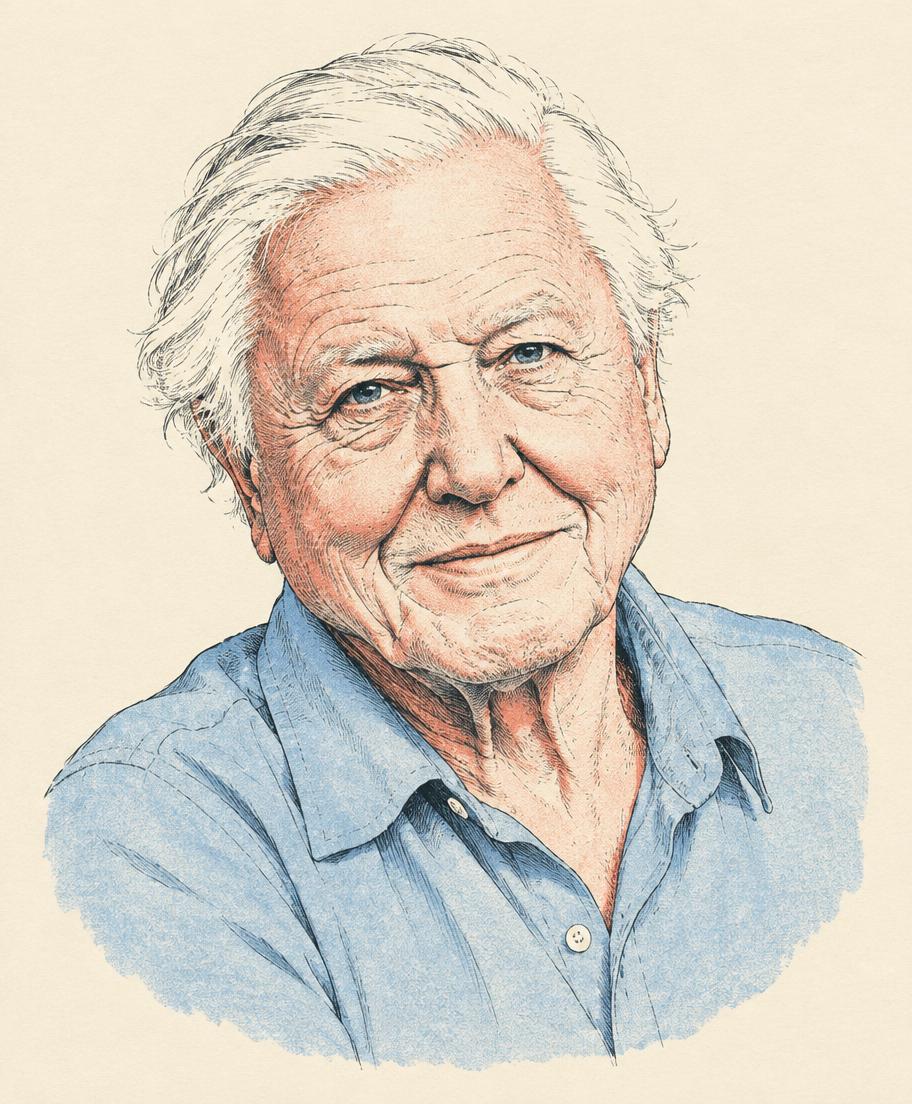
Broadcaster and natural historian
David Attenborough
The broadcaster whose natural history series have shaped how audiences understand life on Earth.
Read biography ↗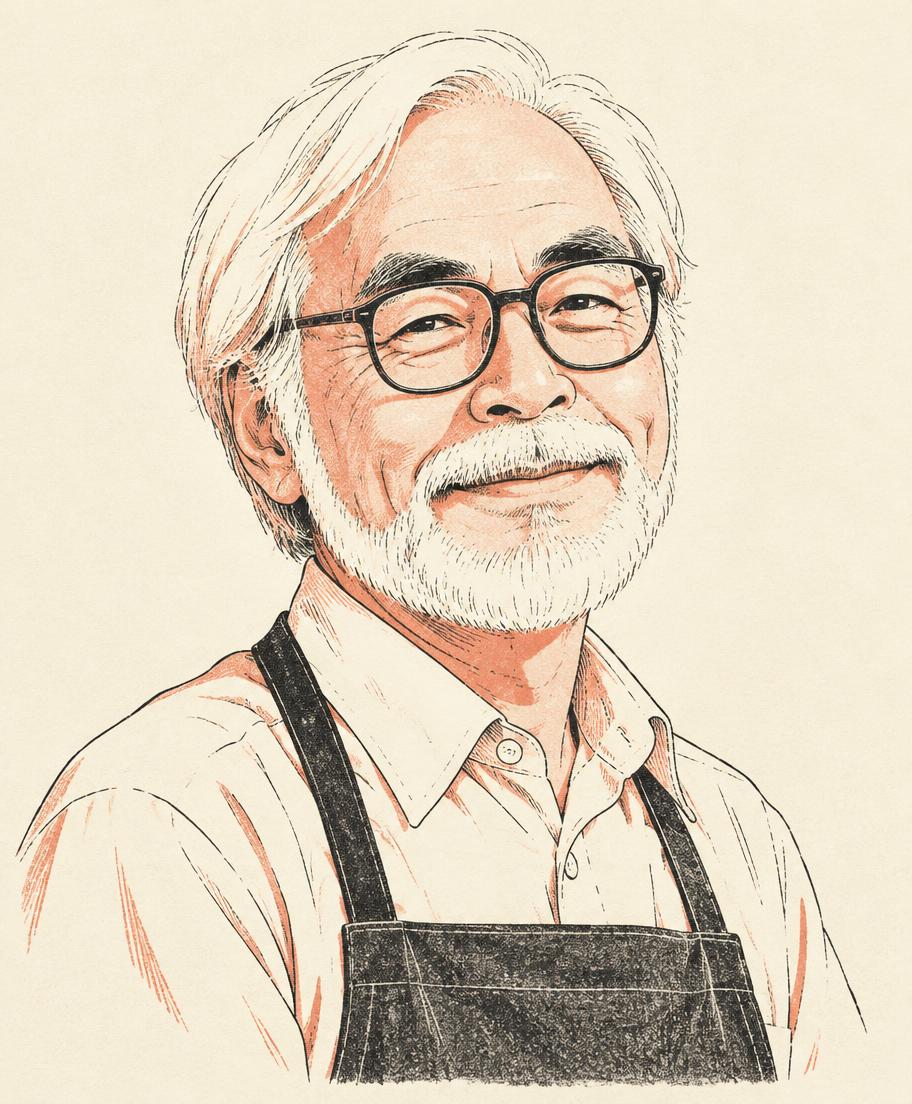
Animator and film director
Hayao Miyazaki
The animator and co-founder of Studio Ghibli whose hand-drawn films reached audiences worldwide.
Read biography ↗
Pope
Benedict I
Pope Benedict I was the bishop of Rome from 2 June 575 to his death on 30 July 579.
Read biography ↗