American diplomat and political scientist (born 1954)
Condoleezza Rice
Condoleezza "Condi" Rice is an American diplomat and political scientist who served as the 66th United States secretary of state from 2005 to 2009 and as the 19th U.S.
By globalcelebwiki Editorial Desk, adapted from Wikipedia · Published 29 September 2026
- Profession
- American diplomat and political scientist (born 1954)
- Born
- 14 November 1954
- Birthplace
- Birmingham
- Nationality
- American

Overview
Condoleezza "Condi" Rice ( KON-də-LEE-zə; born November 14, 1954) is an American diplomat and political scientist who served as the 66th United States secretary of state from 2005 to 2009 and as the 19th U.S. national security advisor from 2001 to 2005. Since 2020, she has served as the 8th director of Stanford University's Hoover Institution.
A member of the Republican Party, Rice was the first female African-American secretary of state and the first woman to serve as national security advisor. Until the election of Barack Obama as president in 2008, Rice and her predecessor, Colin Powell, were the highest-ranking African Americans in the history of the federal executive branch (by virtue of the secretary of state standing fourth in the presidential line of succession). At the time of her appointment as Secretary of State, Rice was the highest-ranking woman in the history of the United States to be in the presidential line of succession.
Rice was born in Birmingham, Alabama, and grew up while the South was racially segregated. She obtained her bachelor's degree from the University of Denver and her master's degree from the University of Notre Dame, both in political science. In 1981, she received a PhD from the School of International Studies at the University of Denver. She worked at the State Department under the Carter administration and served on the National Security Council as the Soviet and Eastern Europe affairs advisor to President George H. W. Bush during the dissolution of the Soviet Union and German reunification from 1989 to 1991. Rice later pursued an academic fellowship at Stanford University, where she served as provost from 1993 to 1999. On December 17, 2000, she joined the George W. Bush administration as national security advisor. In Bush's second term, she succeeded Colin Powell as Secretary of State, thereby becoming the first African-American woman, second African-American after Powell, and second woman after Madeleine Albright to hold this office.
Following her confirmation as secretary of state, Rice pioneered the policy of Transformational Diplomacy directed toward expanding the number of responsible democratic governments in the world and especially in the Greater Middle East. That policy faced challenges as Hamas captured a popular majority in Palestinian elections, and influential countries including Saudi Arabia and Egypt maintained authoritarian systems (with U.S. backing). While in the position, she chaired the Millennium Challenge Corporation's board of directors. In March 2009, Rice returned to Stanford University as a political science professor and the Thomas and Barbara Stephenson Senior Fellow on Public Policy at the Hoover Institution. In September 2010, she became a faculty member of the Stanford Graduate School of Business and a director of its Global Center for Business and the Economy. In January 2020, it was announced that Rice would succeed Thomas W. Gilligan as the next director of the Hoover Institution on September 1, 2020. She is currently serving as a director for C3 AI and Makena Capital Management; she had also served on the board of Dropbox from 2014 to 2021.
Early life
Rice was born in Birmingham, Alabama, the only child of Angelena (née Ray) Rice, a high school science, music, and oratory teacher, and John Wesley Rice Jr., a high school guidance counselor, Presbyterian minister, and dean of students at Stillman College, a historically black college in Tuscaloosa, Alabama. Her name, Condoleezza, derives from the music term con dolcezza (Italian for 'sweetly, softly', lit. 'with sweetness'). Rice has roots in the American South going back to the pre–Civil War era, and some of her ancestors worked as sharecroppers for a time after emancipation. Rice discovered on the PBS series Finding Your Roots that she is of 51% African, 40% European, and 9% Asian or Native American genetic descent, while her mtDNA is traced back to the Tikar people of Cameroon.
In her 2017 book, Democracy: Stories from the Long Road to Freedom, she writes, "My great-great-grandmother Zina on my mother's side bore five children by different slave owners" and "My great-grandmother on my father's side, Julia Head, carried the name of the slave owner and was so favored by him that he taught her to read." Rice grew up in the Titusville neighborhood of Birmingham, and then Tuscaloosa, Alabama, at a time when the South was racially segregated. The Rices lived on the campus of Stillman College.
Rice began to learn French, music, figure skating and ballet at the age of three. At the age of 15, she began piano classes with the goal of becoming a concert pianist.
In 1967, the family moved to Denver, Colorado. She attended St. Mary's Academy, an all-girls Catholic high school in Cherry Hills Village, Colorado, and graduated at age 16 in 1971. Rice enrolled at the University of Denver, where her father worked at the time.
Rice initially majored in music, and after her sophomore year, she went to the Aspen Music Festival and School. There, she later said, she met students of greater talent than herself, and she doubted her career prospects as a pianist. She began to consider an alternative major. She attended an International Politics course taught by Josef Korbel, which sparked her interest in the Soviet Union and international relations. Rice later described Korbel (who is the father of Madeleine Albright, then a future U.S. secretary of state), as a central figure in her life.
In 1974, at age 19, Rice was inducted into Phi Beta Kappa society, and was awarded a B.A. degree cum laude in political science by the University of Denver. While at the University of Denver she was a member of Alpha Chi Omega, Gamma Delta chapter. She obtained an MA degree in political science from the University of Notre Dame in 1975. She first worked in the State Department in 1977, during the Carter administration, as an intern in the Bureau of Educational and Cultural Affairs. She also studied Russian at Moscow State University in the summer of 1979, and interned with the RAND Corporation in Santa Monica, California. In 1981, at age 26, she received her PhD in political science from the Josef Korbel School of International Studies at the University of Denver. Her dissertation centered on military policy and politics in what was then the communist state of Czechoslovakia.
From 1980 to 1981, she was a fellow at Stanford University's Arms Control and Disarmament Program, having won a Ford Foundation Dual Expertise Fellowship in Soviet Studies and International Security. Rice was one of only four women—along with Janne E. Nolan, Cindy Roberts, and Gloria Duffy—studying international security at Stanford on fellowships at the time. Her fellowship at Stanford began her academic affiliation with the university and time in Northern California.
Rice was a Democrat until 1982, when she changed her political affiliation to Republican, in part because she disagreed with the foreign policy of Democratic President Jimmy Carter, and because of the influence of her father, who was Republican. At the 2000 Republican National Convention, she said "My father joined our party because the Democrats in Jim Crow Alabama of 1952 would not register him to vote. The Republicans did."
Academic career
Rice was hired by Stanford University as an assistant professor of political science (1981–1987). She was promoted to associate professor in 1987, a post she held until 1993. She was a specialist on the Soviet Union and gave lectures on the subject for the Berkeley-Stanford joint program led by UC Berkeley professor George W. Breslauer in the mid-1980s.
At a 1985 meeting of arms control experts at Stanford, Rice's performance drew the attention of Brent Scowcroft, who had served as National Security Advisor under Gerald Ford. With the election of George H. W. Bush, Scowcroft returned to the White House as National Security Adviser in 1989, and he asked Rice to become his Soviet expert on the United States National Security Council. According to R. Nicholas Burns, President Bush was "captivated" by Rice, and relied heavily on her advice in his dealings with Mikhail Gorbachev and Boris Yeltsin.
Because she would have been ineligible for tenure at Stanford if she had been absent for more than two years, she returned there in 1991. She was taken under the wing of George Shultz (Ronald Reagan's secretary of state from 1982 to 1989), who was a fellow at the Hoover Institution. Shultz included Rice in a "luncheon club" of intellectuals who met every few weeks to discuss foreign affairs. In 1992, Shultz, who was a board member of Chevron Corporation, recommended Rice for a spot on the Chevron board. Chevron was pursuing a $10 billion development project in Kazakhstan and, as a Soviet specialist, Rice knew the president of Kazakhstan, Nursultan Nazarbayev. She traveled to Kazakhstan on Chevron's behalf and, in honor of her work, in 1993, Chevron named a 129,000-ton supertanker SS Condoleezza Rice. During this period, Rice was also appointed to the boards of Transamerica Corporation (1991) and Hewlett-Packard (1992).
At Stanford, in 1992, Rice volunteered to serve on the search committee to replace outgoing president Donald Kennedy. The committee ultimately recommended Gerhard Casper, the provost of the University of Chicago. Casper met Rice during this search, and was so impressed that in 1993, he appointed her as Stanford's provost, the chief budget and academic officer of the university in 1993 and she also was granted tenure and became full professor. Rice was the first female, first African-American, and youngest provost in Stanford's history. She was also named a senior fellow of the Institute for International Studies, and a senior fellow (by courtesy) of the Hoover Institution.
Former Stanford president Gerhard Casper said the university was "most fortunate in persuading someone of Professor Rice's exceptional talents and proven ability in critical situations to take on this task. Everything she has done, she has done well; I have every confidence that she will continue that record as provost." Acknowledging Rice's unique character, Casper told The New Yorker in 2002 that it "would be disingenuous for me to say that the fact that she was a woman, the fact that she was black and the fact that she was young weren't in my mind."
As Stanford's provost, Rice was responsible for managing the university's multibillion-dollar budget. The school at that time was running a deficit of $20 million. When Rice took office, she promised that the budget would be balanced within "two years." Coit Blacker, Stanford's deputy director of the Institute for International Studies, said there "was a sort of conventional wisdom that said it couldn't be done ... that [the deficit] was structural, that we just had to live with it." Two years later, Rice announced that the deficit had been eliminated and the university was holding a record surplus of over $14.5 million.
Rice drew protests when, as the provost, she departed from the practice of applying affirmative action to tenure decisions and unsuccessfully sought to consolidate the university's ethnic community centers.
During a farewell interview in early December 2008, Rice indicated she would return to Stanford and the Hoover Institution, "back west of the Mississippi where I belong," but beyond writing and teaching did not specify what her role would be. Rice's plans for a return to campus were elaborated in an interview with the Stanford Report in January 2009. She returned to Stanford as a political science professor and senior fellow at the Hoover Institution on March 1, 2009. Condoleezza Rice is currently the Denning Professor in Global Business and the Economy at the Stanford Graduate School of Business; the Thomas and Barbara Stephenson Senior Fellow on Public Policy at the Hoover Institution; and a professor of political science at Stanford University.
Role in nuclear strategy
In 1986, Rice was appointed special assistant to the director of the Joint Chiefs of Staff to work on nuclear strategic planning as part of a Council on Foreign Relations fellowship. In 2005, Rice assumed office as Secretary of State. Rice played an important role in trying to stop the nuclear threat from North Korea and Iran.
North Korea signed the Nuclear Non-Proliferation Treaty in 1985, but in 2002, it was revealed that they were operating a secret nuclear weapons program that violated the 1994 agreement. The 1994 agreement between the United States and North Korea included North Korea agreeing to freeze and eventually dismantle its graphite moderated nuclear reactors, in exchange for international aid which would help them to build two new light-water nuclear reactors. In 2003, North Korea officially withdrew from the Non-Proliferation Treaty. Rice played a key role in the idea of "six-party talks" that brought China, Japan, Russia, and South Korea into discussion with North Korea and the United States.
During these discussions, Rice gave strong talks to urge North Korea to dismantle their nuclear power program. In 2005, North Korea agreed to give up its entire nuclear program in exchange for security guarantees and economic benefits to ensure its survival. Despite the agreement in 2005, in 2006, North Korea test fired long range missiles. The UN Security Council demanded North Korea suspend the program. In 2007, Rice was involved in another nuclear agreement with North Korea (Pyongyang). Rice, other negotiators for the United States and four other nations (six-party talks) reached a deal with North Korea. In this deal North Korea agreed to close its main nuclear reactor in exchange for $400 million in fuel and aid.
In 2006, Indian prime minister Manmohan Singh announced the Agreement for Cooperation between the United States and India involving peaceful uses of nuclear energy. As Secretary of State, Rice was involved in the negotiation of this agreement and declared "India's society is open and free, transparent and stable. Its multiethnic and multi-religious democracy is characterized by individual freedom and the rule of law. We share common values...India is a rising global power that can be a pillar of stability in a rapidly changing Asia. India is, in short, a natural partner for the United States."
Private sector
Rice headed Chevron's committee on public policy until she resigned on January 15, 2001, to become National Security Advisor to President George W. Bush. Chevron honored Rice by naming an oil tanker Condoleezza Rice after her, but controversy led to its being renamed Altair Voyager.
Rice has served as an instructor at MIT Seminar XXI. She also served on the board of directors for the Carnegie Corporation, Charles Schwab Corporation, Chevron Corporation, Hewlett-Packard, Rand Corporation, Transamerica Corporation, and other organizations.
In 1992, Rice founded the Center for New Generation, an after-school program created to raise the high school graduation numbers of East Palo Alto and eastern Menlo Park, California. After her tenure as secretary of state, Rice was approached in February 2009 to fill an open position as a Pac-10 Commissioner, but chose instead to return to Stanford University as a political science professor and the Thomas and Barbara Stephenson Senior Fellow on Public Policy at the Hoover Institution.
In 2014, Rice joined the Ban Bossy campaign as a spokesperson advocating leadership roles for girls.
On July 11, 2022, the Denver Broncos announced that Rice had joined the Walton-Penner ownership group (consisting of S. Robson Walton, Greg Penner, Carrie Walton Penner, Mellody Hobson, and Sir Lewis Hamilton), which recently agreed to buy the NFL team for $4.65 billion. On August 9, 2022, the NFL owners approved the purchase of the Denver Broncos by the Walton-Penner group.
Early political career
In 1986, while an international affairs fellow of the Council on Foreign Relations, Rice served as special assistant to the director of the Joint Chiefs of Staff.
From 1989 through March 1991 (the period of the fall of Berlin Wall and the final days of the Soviet Union), she served in President George H. W. Bush's administration as director, and then senior director, of Soviet and East European affairs in the National Security Council, and a special assistant to the president for national security affairs. In this position, Rice wrote what would become known as the "Chicken Kiev speech" in which Bush advised the Verkhovna Rada, Ukraine's parliament, against independence. She also helped develop Bush's and Secretary of State James Baker's policies in favor of German reunification. She impressed Bush, who later introduced her to Soviet leader Mikhail Gorbachev, as the one who "tells me everything I know about the Soviet Union."
In 1991, Rice returned to her teaching position at Stanford, although she continued to serve as a consultant on the former Soviet Bloc for numerous clients in both the public and private sectors. Late that year, California governor Pete Wilson appointed her to a bipartisan committee that had been formed to draw new state legislative and congressional districts in the state.
In 1997, she served on the Federal Advisory Committee on Gender-Integrated Training in the Military.
During George W. Bush's 2000 presidential election campaign, Rice took a one-year leave of absence from Stanford University to serve as his foreign policy advisor. The group of advisors she led called itself the Vulcans in honor of the monumental Vulcan statue, which sits on a hill overlooking her hometown of Birmingham, Alabama. Rice would later go on to give a noteworthy speech at the 2000 Republican National Convention. The speech asserted that "... America's armed forces are not a global police force. They are not the world's 911."
National Security Advisor (2001–2005)
On December 16, 2000, Rice was named as National Security Advisor, upon which she stepped down from her position at Stanford. She was the first woman to occupy the post. Rice earned the nickname of "Warrior Princess", reflecting strong nerve and delicate manners.
On January 18, 2003, The Washington Post reported that Rice was involved in crafting Bush's position on race-based preferences. Rice has stated that "while race-neutral means are preferable", race can be taken into account as "one factor among others" in university admissions policies.
During the summer of 2001, Rice met with CIA director George Tenet to discuss the possibilities and prevention of terrorist attacks on American targets. On July 10, 2001, Rice met with Tenet in what he referred to as an "emergency meeting" held at the White House at Tenet's request to brief Rice and the NSC staff about the potential threat of an impending al Qaeda attack. Rice responded by asking Tenet to give a presentation on the matter to Secretary Donald Rumsfeld and Attorney General John Ashcroft.
Rice characterized the August 6, 2001, President's Daily Brief Bin Ladin Determined To Strike in US as historical information. Rice indicated "It was information based on old reporting." Sean Wilentz of Salon magazine suggested that the PDB contained current information based on continuing investigations, including that Bin Laden wanted to "bring the fighting to America." On September 11, 2001, Rice was scheduled to outline a new national security policy that included missile defense as a cornerstone and played down the threat of stateless terrorism.
When asked in 2006 about the July 2001 meeting, Rice asserted she did not recall the specific meeting, commenting that she had met repeatedly with Tenet that summer about terrorist threats. Moreover, she stated that it was "incomprehensible" to her that she had ignored terrorist threats two months before the September 11 attacks.
In 2003, Rice received the U.S. Senator John Heinz Award for Greatest Public Service by an Elected or Appointed Official, an award given out annually by Jefferson Awards.
In August 2010, Rice received the U.S. Air Force Academy's 2009 Thomas D. White National Defense Award for contributions to the defense and security of the United States.
In March 2004, Rice declined to testify before the National Commission on Terrorist Attacks Upon the United States (the 9/11 Commission). The White House claimed executive privilege under constitutional separation of powers and cited past tradition. Under pressure, Bush agreed to allow her to testify so long as it did not create a precedent of presidential staff being required to appear before Congress when so requested.
In April 2007, Rice rejected, on grounds of executive privilege, a House subpoena regarding the prewar claim that Iraq sought yellowcake uranium from Niger.
Rice was a proponent of the 2003 invasion of Iraq. After Iraq delivered its declaration of weapons of mass destruction to the United Nations on December 8, 2002, Rice wrote an editorial for The New York Times entitled "Why We Know Iraq Is Lying". In a January 10, 2003, interview with CNN's Wolf Blitzer, Rice made headlines by stating regarding Iraqi president Saddam Hussein's nuclear capabilities: "The problem here is that there will always be some uncertainty about how quickly he can acquire nuclear weapons. But we don't want the smoking gun to be a mushroom cloud."
In October 2003, Rice was named to run the Iraq Stabilization Group, to "quell violence in Iraq and Afghanistan and to speed the reconstruction of both countries." By May 2004, The Washington Post reported that the council had become virtually nonexistent.
Leading up to the 2004 presidential election, Rice became the first National Security Advisor to campaign for an incumbent president. She stated that while: "Saddam Hussein had nothing to do with the actual attacks on America, Saddam Hussein's Iraq was a part of the Middle East that was festering and unstable, [and] was part of the circumstances that created the problem on September 11."
After the invasion, when it became clear that Iraq did not have nuclear WMD capability, critics called Rice's claims a "hoax", "deception" and "demagogic scare tactic". Dana Milbank and Mike Allen wrote in The Washington Post: "Either she missed or overlooked numerous warnings from intelligence agencies seeking to put caveats on claims about Iraq's nuclear weapons program, or she made public claims that she knew to be false".
A Senate Intelligence Committee reported that on July 17, 2002, Rice met with CIA director George Tenet to personally convey the Bush administration's approval of the proposed waterboarding of alleged Al Qaeda leader Abu Zubaydah. "Days after Dr Rice gave Mr Tenet her approval, the Justice Department approved the use of waterboarding in a top secret August 1 memo." Waterboarding is considered to be torture by a wide range of authorities, including legal experts, war veterans, intelligence officials, military judges, human rights organizations, former U.S. attorney general Eric Holder, and many senior politicians, including former U.S. president Barack Obama.
In 2003 Rice, Vice President Dick Cheney and Attorney General John Ashcroft met with the CIA again and were briefed on the use of waterboarding and other methods including week-long sleep deprivation, forced nudity and the use of stress positions. The Senate report says that the Bush administration officials "reaffirmed that the CIA program was lawful and reflected administration policy".
The Senate report also "suggests Miss Rice played a more significant role than she acknowledged in written testimony to the Senate Armed Services Committee submitted in the autumn." At that time, she had acknowledged attending meetings to discuss the CIA's use of torture, but she claimed that she could not recall the details, and she "omitted her direct role in approving the program in her written statement to the committee."
In a conversation with a student at Stanford University in April 2009, Rice stated that she did not authorize the CIA to use the torture. Rice said, "I didn't authorize anything. I conveyed the authorization of the administration to the agency that they had policy authorization, subject to the Justice Department's clearance. That's what I did." She added, "We were told, nothing that violates our obligations under the Convention Against Torture. And so, by definition, if it was authorized by the president, it did not violate our obligations under the Conventions Against Torture."
In 2015, citing her role in authorizing the use of so-called "enhanced interrogation techniques", Human Rights Watch called for the investigation of Rice "for conspiracy to torture as well as other crimes."
Secretary of State (2005–2009)
On November 16, 2004, Bush nominated Rice to be Secretary of State. On January 26, 2005, the Senate confirmed her nomination by a vote of 85–13. The negative votes, the most cast against any nomination for Secretary of State since 1825, came from Senators who, according to Senator Barbara Boxer, wanted "to hold Dr. Rice and the Bush administration accountable for their failures in Iraq and in the war on terrorism." Their reasoning was that Rice had acted irresponsibly in equating Saddam's regime with Islamist terrorism and some could not accept her previous record. Senator Robert Byrd, a prominent Senate institutionalist who was concerned with executive over-reach, voted against Rice's appointment, indicating that she "has asserted that the President holds far more of the war power than the Constitution grants him."
As Secretary of State, Rice championed the expansion of democratic governments and other American values: "American values are universal." "An international order that reflects our values is the best guarantee of our enduring national interest ..." Rice stated that the September 11 attacks in 2001 were rooted in "oppression and despair" and so, the U.S. must advance democratic reform and support basic rights throughout the greater Middle East.
Rice also reformed and restructured the department, as well as U.S. diplomacy as a whole. "Transformational Diplomacy" is the goal that Rice describes as "work[ing] with our many partners around the world ... [and] build[ing] and sustain[ing] democratic, well-governed states that will respond to the needs of their people and conduct themselves responsibly in the international system."
As Secretary of State, Rice traveled heavily and initiated many diplomatic efforts on behalf of the Bush administration; she holds the record for most miles logged in the position. Her diplomacy relied on strong presidential support and is considered to be the continuation of style defined by former Republican secretaries of state Henry Kissinger and James Baker.
Sources and references
Spotted something wrong? Report a correction.
Related profiles
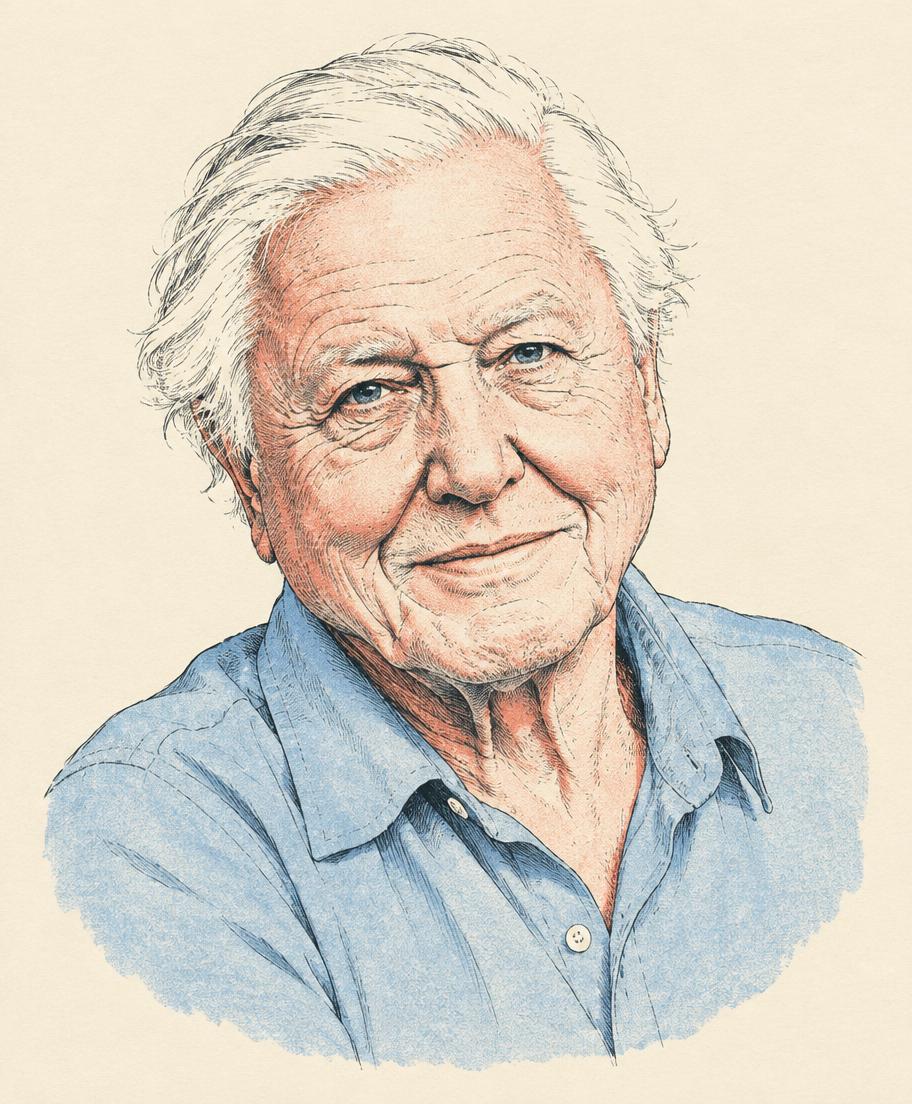
Broadcaster and natural historian
David Attenborough
The broadcaster whose natural history series have shaped how audiences understand life on Earth.
Read biography ↗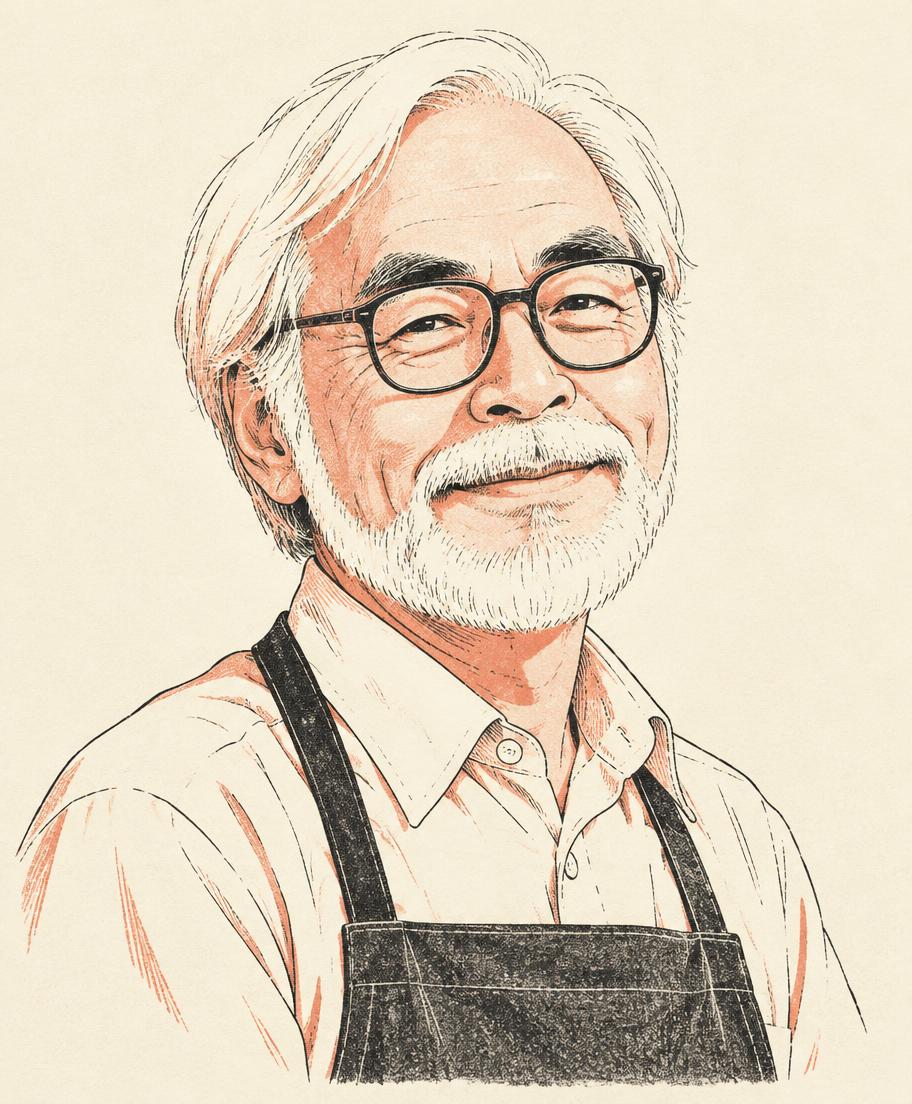
Animator and film director
Hayao Miyazaki
The animator and co-founder of Studio Ghibli whose hand-drawn films reached audiences worldwide.
Read biography ↗
Pope
Benedict I
Pope Benedict I was the bishop of Rome from 2 June 575 to his death on 30 July 579.
Read biography ↗