English American author and journalist (1949–2011)
Christopher Hitchens
Christopher Eric Hitchens was a British and American author and journalist.
By globalcelebwiki Editorial Desk, adapted from Wikipedia · Published 29 September 2026
- Profession
- English American author and journalist (1949–2011)
- Born
- 13 April 1949
- Birthplace
- Portsmouth
- Nationality
- American
Overview
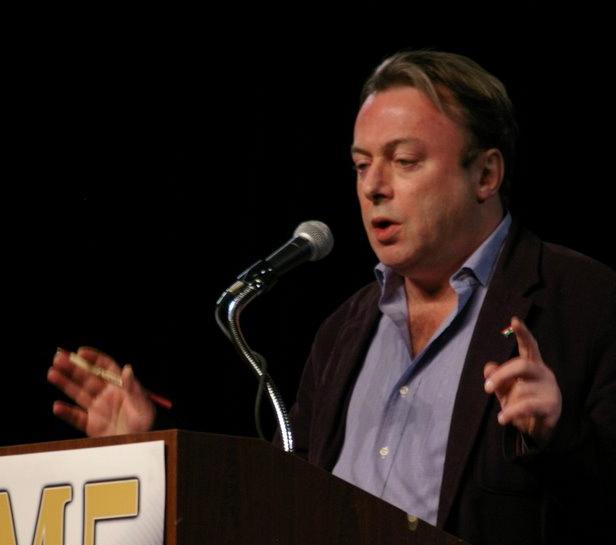
Christopher Eric Hitchens (13 April 1949 – 15 December 2011) was a British and American author and journalist. Known as one of the "Four Horsemen" of New Atheism (along with Richard Dawkins, Sam Harris, and Daniel Dennett), he gained prominence as a columnist and speaker. Hitchens's epistemological razor, which states that "what can be asserted without evidence can also be dismissed without evidence", is used in philosophy and law.
Hitchens was born and educated in Britain, graduating in 1970 from the University of Oxford with a degree in philosophy, politics, and economics. In the early 1980s, he emigrated to the United States and wrote for The Nation and Vanity Fair. Hitchens's political views evolved greatly throughout his life. Originally describing himself as a democratic socialist, he was a member of various socialist organisations in his early life, including the Trotskyist International Socialists.
Hitchens was critical of aspects of American foreign policy, including its involvement in Vietnam, Chile, and East Timor. However, he supported the United States in the Kosovo War, Bosnian War, and other interventions. Hitchens emphasised the centrality of the American Revolution and Constitution to his political philosophy. He held complex views on abortion: being ethically opposed to it in most instances, and believing that a foetus was entitled to personhood, while holding ambiguous, changing views on its legality. He supported gun rights and supported same-sex marriage, while opposing the war on drugs. Beginning in the 1990s, and particularly after 9/11, his politics were widely viewed as drifting to the right, but Hitchens objected to being called 'conservative' and maintained he was a 'leftist'. During the 2000s, he argued for the invasions of Iraq and Afghanistan, endorsed George W. Bush for President in 2004 and Barack Obama in 2008, and viewed Islamism as the principal threat to the Western world.
Hitchens described himself as an antitheist and saw all religions as false, harmful, and authoritarian. He endorsed free expression, scientific scepticism, and separation of church and state, arguing science and philosophy are superior to religion as an ethical code of conduct for human civilisation. Hitchens authored 18 books on faith, religion, culture, politics, and literature. He notably wrote critical biographies of Catholic nun Mother Teresa in The Missionary Position, Bill Clinton in No One Left to Lie To, and American diplomat Henry Kissinger in The Trial of Henry Kissinger. Hitchens died from complications related to esophageal cancer in December 2011, at the age of 62.
Early life and education
Hitchens was born in Portsmouth, Hampshire, the elder of two boys; his brother, Peter, became a socially conservative journalist. Their parents, Commander Eric Ernest Hitchens (1909–1987) and Yvonne Jean Hitchens (née Hickman; 1921–1973), met in Scotland when serving in the Royal Navy during World War II. His mother had been a Wren, a member of the Women's Royal Naval Service. She was of Jewish origin, something that Hitchens discovered when he was 38; he thus came to identify as a Jew.
Hitchens often referred to his father simply as 'the Commander'. Eric Hitchens was deployed on HMS Jamaica, which took part in the sinking of the Scharnhorst in the Battle of the North Cape on 26 December 1943. He paid tribute to his father's contribution to the war: "Sending a Nazi convoy-raider to the bottom is a better day's work than any I have ever done." Eric's naval career required the family to move from base to base throughout Britain and its colonies; including to Malta, where Peter Hitchens was born in Sliema in 1951. Eric later worked as a bookkeeper for boatbuilders, speed boat manufacturers, and a prep school.
Hitchens attended two private schools—Mount House School, Tavistock, Devon, from the age of eight, and the Leys School in Cambridge. Hitchens went up to Balliol College, Oxford, in 1967 where he read philosophy, politics and economics and was tutored by Steven Lukes and Anthony Kenny. He graduated in 1970 with a third-class degree. In his adolescence, he was "bowled over" by Richard Llewellyn's How Green Was My Valley, Arthur Koestler's Darkness at Noon, Fyodor Dostoyevsky's Crime and Punishment, R. H. Tawney's critique on Religion and the Rise of Capitalism, and the works of George Orwell. In 1968, he took part in the TV quiz-show University Challenge.
In the 1960s, Hitchens joined the political left; drawn by disagreement over the Vietnam War, nuclear weapons, racism, and oligarchy, including that of "the unaccountable corporation". He expressed affinity with the politically charged counter-cultural and protest movements of the 1960s and 1970s. He avoided the recreational drug-use of the time, saying "in my cohort we were slightly anti-hedonistic ... it made it very much easier for police provocation to occur, because the planting of drugs was something that happened to almost everyone one knew." Hitchens was inspired to become a journalist after reading a piece by James Cameron.
Hitchens was bisexual during his younger days, and joked that, as he aged, his appearance "declined to the point where only women would go to bed with [him]". He said he had sexual relations with two male students at Oxford who would later become government ministers during the premiership of Margaret Thatcher, although he would not reveal their names publicly.
Early in his career Hitchens began working as a correspondent for the magazine International Socialism, published by the International Socialists, the forerunners of today's British Socialist Workers Party. This group was broadly Trotskyist, but differed from more orthodox Trotskyist groups in its refusal to defend communist states as "workers' states". Their slogan was "Neither Washington nor Moscow but International Socialism".
In 1971 after spending a year travelling the United States on a scholarship, Hitchens went to work at the Times Higher Education Supplement where he served as a social science correspondent. Hitchens was fired after six months in the job. Next he was a researcher for ITV's Weekend World.
In 1973 Hitchens went to work for the New Statesman, where his colleagues included the authors Martin Amis, whom he had briefly met at Oxford, as well as Julian Barnes and James Fenton, with whom he had shared a house in Oxford. Amis described him at the time as, "handsome, festive [and] gauntly left-wing". Around that time, the Friday lunches began, which were attended by writers including Clive James, Ian McEwan, Kingsley Amis, Terence Kilmartin, Robert Conquest, Al Alvarez, Peter Porter, Russell Davies, and Mark Boxer. At the New Statesman Hitchens acquired a reputation as a left-winger while working as a war correspondent from areas of conflict such as Northern Ireland, Libya, and Iraq.
In November 1973, while in Greece, Hitchens reported on the constitutional crisis of the military junta. It became his first leading article for the New Statesman. In December 1977 Hitchens interviewed Argentine dictator Jorge Rafael Videla, a conversation he later described as "horrifying". In 1977, unhappy at the New Statesman, Hitchens moved to the Daily Express, where he became a foreign correspondent. He returned to the New Statesman in 1978 where he became assistant editor and then foreign editor.
Hitchens went to the United States in 1981 as part of an editor exchange programme between the New Statesman and The Nation. After joining The Nation, he penned vociferous critiques of Ronald Reagan, George H. W. Bush and American foreign policy in South and Central America.
Hitchens became a contributing editor of Vanity Fair in 1992, writing ten columns a year. He left The Nation in 2002 after profoundly disagreeing with other contributors over the Iraq War.
There is speculation that Hitchens was the inspiration for Tom Wolfe's character Peter Fallow in the 1987 novel The Bonfire of the Vanities, but others—including Hitchens—believe it to be Spy Magazine's "Ironman Nightlife Decathlete", Anthony Haden-Guest. In 1987, Hitchens's father died of cancer of the oesophagus, the same disease that would later claim his own life. In April 2007, Hitchens became a US citizen; he later stated that he saw himself as Anglo-American.
He became a media fellow at the Hoover Institution in September 2008. At Slate, he usually wrote under the news-and-politics column Fighting Words.
Before Hitchens's political shift, the American author and polemicist Gore Vidal spoke of Hitchens as his "dauphin" or "heir". In 2010 Hitchens attacked Vidal in a Vanity Fair piece headlined "Vidal Loco", calling him a "crackpot" for his adoption of 9/11 conspiracy theories. On the back of Hitchens's memoir Hitch-22, among the praise from notable figures, Vidal's endorsement of Hitchens as his successor is crossed out in red and annotated "NO, C.H." Hitchens's strong advocacy of the war in Iraq gained him a wider readership, and in September 2005 he was named as fifth on the list of the "Top 100 Public Intellectuals" by Foreign Policy and Prospect magazines. An online poll ranked the 100 intellectuals, but the magazines noted that the rankings of Hitchens (5), Noam Chomsky (1), and Abdolkarim Soroush (15) were partly due to their respective supporters' publicising of the vote. Hitchens later responded to his ranking with a few articles about his status as such.
Hitchens wrote a monthly essay in The Atlantic magazine and occasionally contributed to other literary journals. One of his books, Unacknowledged Legislation: Writers in the Public Sphere, collected these works. In Why Orwell Matters, he defends Orwell's writings against modern critics as relevant today and progressive for his time. In the 2008 book Christopher Hitchens and His Critics: Terror, Iraq, and the Left, many literary critiques are included of essays and other books of writers, such as David Horowitz and Edward Said.
During a three-hour In Depth interview on Book TV, he named authors who influenced his views, including Aldous Huxley, George Orwell, Evelyn Waugh, Kingsley Amis, P. G. Wodehouse and Conor Cruise O'Brien.
He once remarked on the adage "everyone has a book inside of them" that this is "exactly where I think it should, in most cases, remain".
Hitchens was a visiting professor in the following institutions:
Political views
Hitchens was long described by himself and others as a socialist and a Marxist, although he held many views on foreign policy which were considered heterodox compared to his contemporaries on the left. Hitchens described his break from modern U.S. liberals after what he called the "tepid reaction" of the Western left to the controversy over The Satanic Verses, followed by what he saw as the American Left’s embrace of Bill Clinton and the anti-war movement's opposition to NATO intervention in Bosnia and Herzegovina in the 1990s. He later became a so-called “liberal hawk” and supported the war on terror, but he had some reservations, such as his characterisation of waterboarding as torture after voluntarily undergoing the procedure. In January 2006, he joined four other individuals and four organisations, including the ACLU and Greenpeace, as plaintiffs in a lawsuit, ACLU v. NSA, challenging Bush's NSA warrantless surveillance; the lawsuit was filed by the ACLU. In 2009 Hitchens was listed by Forbes magazine as one of the 25 "most influential liberals" in the US media. The article also noted that he would "likely be aghast to find himself on this list", as it reduces his self-styled radicalism to mere liberalism. Hitchens's political perspectives also appear in his wide-ranging writings, which include many dialogues. Hitchens is often attributed the quote regarding classical liberals and Libertarians: "I have always found it quaint, and rather touching, that there is a movement in the US that thinks Americans are not yet selfish enough."
Hitchens held complex views on abortion; being ethically opposed to it in most instances, and believing that a foetus was entitled to personhood, while holding ambiguous and changing views on its legality. In a 1988 interview with Crisis Magazine, Hitchens wrote: "It might interest your readers to know that Margaret Thatcher voted to keep capital punishment, to keep homosexuality criminal, to make divorce harder to get, and for the abortion bill. I gather that she's since changed her position on the latter. My own vote would have been, as so often, exactly the reverse of hers." However, Hitchens argued that the issue was cynically used by self-described pro-life politicians, and doubted that they sincerely desired to legally prohibit abortion. In the same 1988 interview with Crisis Magazine he stated: "Once you allow that the occupant of the womb is even potentially a life, it cuts athwart any glib invocation of "the woman's right to choose" and that:I would like to see something much broader, much more visionary. We need a new compact between society and the woman. It's a progressive compact because it is aimed at the future generation. It would restrict abortion in most circumstances. Now I know most women don't like having to justify their circumstances to someone. 'How dare you presume to subject me to this?' some will say.But sorry, lady, this is an extremely grave social issue. It's everybody's business.
Hitchens supported gun rights and supported same-sex marriage. Hitchens was known for his dislike of Nanny state policies put in place by New York city mayor Michael Bloomberg. On 9 July 2009, Hitchens wrote an article criticizing and mocking New York city regulations including smoking laws, bicycle laws, milk crate laws and other regulations. In the same article Hitchens claimed he had broken the laws he had criticized in the article. He opposed sodomy laws and supported same-sex marriage. He argued that the legalization of same-sex marriage was the "socialization of homosexuality" and "demonstrates the spread of conservatism" among the gay community. Hitchens was a genital integrity activist, strongly criticizing the tradition of both male circumcision and female genital mutilation. In accordance with his antitheism, Hitchens described the tolerance of metzitzah b'peh (a Jewish tradition of sucking blood from the penis after the removal of the male foreskin) as "another disgusting religious practice".
In a 2011 essay for The Atlantic titled "The Real Mahatma Gandhi," written as a review of Joseph Lelyveld's biography Great Soul, Hitchens critically re-examined Gandhi's legacy. He questioned the universality of Gandhi's doctrine of nonviolence, citing Gandhi's letters to Adolf Hitler during World War II in which Gandhi urged the application of satyagraha against the Nazi regime. Hitchens argued that Gandhi's religious and ascetic worldview was fundamentally incompatible with secular and democratic politics.
Hitchens was a lifelong opponent of capital punishment. In a 2001 interview with Reason, Hitchens recalled that this was the very first issue on which he ever decided to take a stand in his youth. The reason for his opposition to capital punishment was that it gave too much power to the government. He later publicly opposed use of the death penalty for Saddam Hussein, an issue he discussed at length in his November 2006 essay "Don't Hang Saddam" for Slate.
Hitchens's numerous editorials in support of the Iraq War caused some to label him a neoconservative; Hitchens insisted he was not "a conservative of any kind". He maintained he was a "leftist" and his friend Ian McEwan described him as representing the anti-totalitarian left, but Hitchens professed to first finding himself "on the same side as the neocons" in supporting intervention in the Bosnian War, as he felt the left's opposition to intervention was mutating into support of Milošević's reactionism.
Hitchens disagreed with the premise of a Jewish homeland and had said of himself, "I am an Anti-Zionist. I'm one of those people of Jewish descent who believes that Zionism would be a mistake even if there were no Palestinians." and "If Jews born in Brooklyn have a right to a state in Palestine, then Palestinians born in Jerusalem have a right to a state in Palestine. Anyone who doesn't agree with that principle I think is suspect." Hitchens had previously collaborated on this issue with Edward Said, publishing the 1988 book Blaming the Victims: Spurious Scholarship and the Palestinian Question.
Hitchens was an avid critic of President Slobodan Milošević of Serbia and other Serbian politicians of the 1990s. He called Milošević a "fascist" and a "Nazi" after the Bosnian genocide and ethnic cleansing of Albanians in Kosovo and expressed a positive reaction to his death. Hitchens often accused the Serbian government of committing numerous war crimes during the Yugoslav Wars. He denounced Noam Chomsky and Edward S. Herman, who criticised the NATO intervention there. Hitchens also criticised Croatian president Franjo Tuđman and the policies of the Croatian government, which he saw as reviving "Ustashe formations".
Hitchens was a supporter of the European Union. In an appearance on C-SPAN in 1993, Hitchens said, "As of 1992, there is now a Euro passport that makes you free to travel within the boundaries of ... member countries, and I've always liked the idea of European unity, and so I held out for a Euro passport. So I travel as a European." Speaking at the launch of his brother Peter's book, The Abolition of Britain, at Conway Hall in London, Hitchens denounced the so-called Eurosceptic movement, describing it as "the British version of fascism". He went on to say, "Scepticism is a title of honour. These people are not sceptical. They're fanatical. They're dogmatic".
Following the November 2008 terrorist attacks in Mumbai, Hitchens argued in a radio interview with Hugh Hewitt that Pakistan's Inter-Services Intelligence (ISI) bore substantial responsibility for the attacks and pressed for the United States to realign its South Asia policy away from Pakistan and more firmly toward India. He stated that Pakistan had used militant groups as proxies "to colonize Afghanistan" and to apply "strategic depth against India in Kashmir," and described Pakistan as a "rogue, failed state."
Critiques of individuals
Hitchens wrote book-length biographical essays on Thomas Jefferson (Thomas Jefferson: Author of America), Thomas Paine (Thomas Paine's "Rights of Man": A Biography), and George Orwell (Why Orwell Matters).
He also became known for excoriating criticisms of public contemporary figures, including Mother Teresa, Bill Clinton, and Henry Kissinger, the subjects of three full-length texts: The Missionary Position: Mother Teresa in Theory and Practice, No One Left to Lie To: The Triangulations of William Jefferson Clinton, and The Trial of Henry Kissinger.
Writers Nancy Gibbs and Michael Duffy published an article in Time in 2007, claiming that Hitchens, while promoting his book God Is Not Great: How Religion Poisons Everything, described the Christian evangelist Billy Graham as "a self-conscious fraud" and "a disgustingly evil man" and that the evangelist had made a living by "going around spouting lies to young people. What a horrible career. I gather it's soon to be over. I certainly hope so".
They challenged Hitchens's suggestion that Graham went into ministry to make money. They argued that during his career Graham "turn[ed] down million-dollar television and Hollywood offers". While broadly condemning Hitchens's comments at a time when Graham's health was failing, they mention he was "on more solid ground" when criticising Graham's "vile", if later retracted, remarks about Jews in his 1972 Oval Office meeting with Richard Nixon.
In 1999, Hitchens wrote a profile of Donald Trump for The Sunday Herald. Trump had expressed interest in running in the 2000 United States presidential election as a candidate for the Reform Party. Of Trump, Hitchens said:
Personal life
Hitchens was raised nominally Christian and attended Christian boarding schools, but from an early age he declined to participate in communal prayers. Later in life, Hitchens discovered that he was of Jewish descent on his mother's side and that his Jewish ancestors were immigrants from Eastern Europe (including Poland).
Hitchens considered reading, writing, and public speaking not as a job or career but as "what I am, who I am, [and] what I love."
Hitchens was married twice, first to Eleni Meleagrou, a Greek Cypriot, in 1981.
In 1991 Hitchens married his second wife, Carol Blue, an American screenwriter, in a ceremony held at the apartment of Victor Navasky, editor of The Nation. They had a daughter together, Antonia, a writer and journalist currently on The New Yorker staff.
The journalist and author Peter Hitchens is Christopher's younger brother by two years. Christopher said in 2005 the main difference between the two is belief in the existence of God. Peter became a member of the International Socialists (forerunners of the modern Socialist Workers' Party) from 1968 to 1975 (beginning at age 17) after Christopher introduced him to them.
The brothers reportedly fell out after Peter wrote a 2001 article in The Spectator which allegedly characterised Christopher as a Stalinist. After the birth of Peter's third child, the brothers were reconciled. Peter's review of God Is Not Great led to a public disagreement between the brothers but no renewed estrangement.
Illness and death
On 8 June 2010, Hitchens was on tour in New York promoting his memoirs Hitch-22 when he was taken into emergency care suffering from a severe pericardial effusion. Soon after, he announced he was postponing his tour to undergo treatment for oesophageal cancer.
In a Vanity Fair piece published in 2010, titled "Topic of Cancer", he stated that he was undergoing treatment for cancer. He said that he recognised the long-term prognosis was far from positive and he would be a "very lucky person to live another five years". A heavy smoker and drinker since his teenage years, Hitchens acknowledged that these habits were likely to have contributed to his illness. During his illness, Hitchens was under the care of Dr Francis Collins and was the subject of Collins's new cancer treatment, which maps out the human genome and selectively targets damaged DNA.
According to Christopher Buckley, before Hitchens died, his estranged friend Sidney Blumenthal wrote to Hitchens. Buckley said the letter contained words of "tenderness and comfort and implicit forgiveness".
Hitchens died of pneumonia on 15 December 2011 in the University of Texas MD Anderson Cancer Center, Houston, aged 62. According to Andrew Sullivan, his last words were "Capitalism. Downfall." In accordance with Hitchens's wishes, his body was donated to medical research. Mortality, a collection of seven of Hitchens's Vanity Fair essays about his illness, was published posthumously in September 2012.
Former British prime minister Tony Blair said, "Christopher Hitchens was a complete one-off, an amazing mixture of writer, journalist, polemicist and unique character. He was fearless in the pursuit of truth and any cause in which he believed. And there was no belief he held that he did not advocate with passion, commitment and brilliance. He was an extraordinary, compelling and colourful human being whom it was a privilege to know."
Richard Dawkins said of Hitchens, "He was a polymath, a wit, immensely knowledgeable, and a valiant fighter against all tyrants, including imaginary supernatural ones." Dawkins later described Hitchens as "probably the best orator I've ever heard", and called his death "an enormous loss".
The American theoretical physicist and cosmologist Lawrence Krauss said:
Christopher was a beacon of knowledge and light in a world that constantly threatens to extinguish both. He had the courage to accept the world for just what it is and not what he wanted it to be. That's the highest praise, I believe, one can give to any intellect. He understood that the universe doesn't care about our existence or welfare, and he epitomized the realization that our lives have meaning only to the extent that we give them meaning.
Bill Maher paid tribute to Hitchens on his show Real Time with Bill Maher, saying, "We lost a hero of mine, a friend, and one of the great talk show guests of all time."
In 2015, an annual prize of $50,000 was established in his honour by The Dennis and Victoria Ross Foundation for "an author or journalist whose work reflects a commitment to free expression and inquiry, a range and depth of intellect, and a willingness to pursue the truth without regard to personal or professional consequence". The foundation's website states the Hitchens Prize "seeks to advance what he was dedicated to throughout his life: vigorous, honest, and open public debate and discussion, with no tolerance of orthodoxy, no reverence for authority, and a belief in reasoned dialogue as the best path to the truth". The 2024 winner was Errol Morris.
Sources and references
Spotted something wrong? Report a correction.
Related profiles
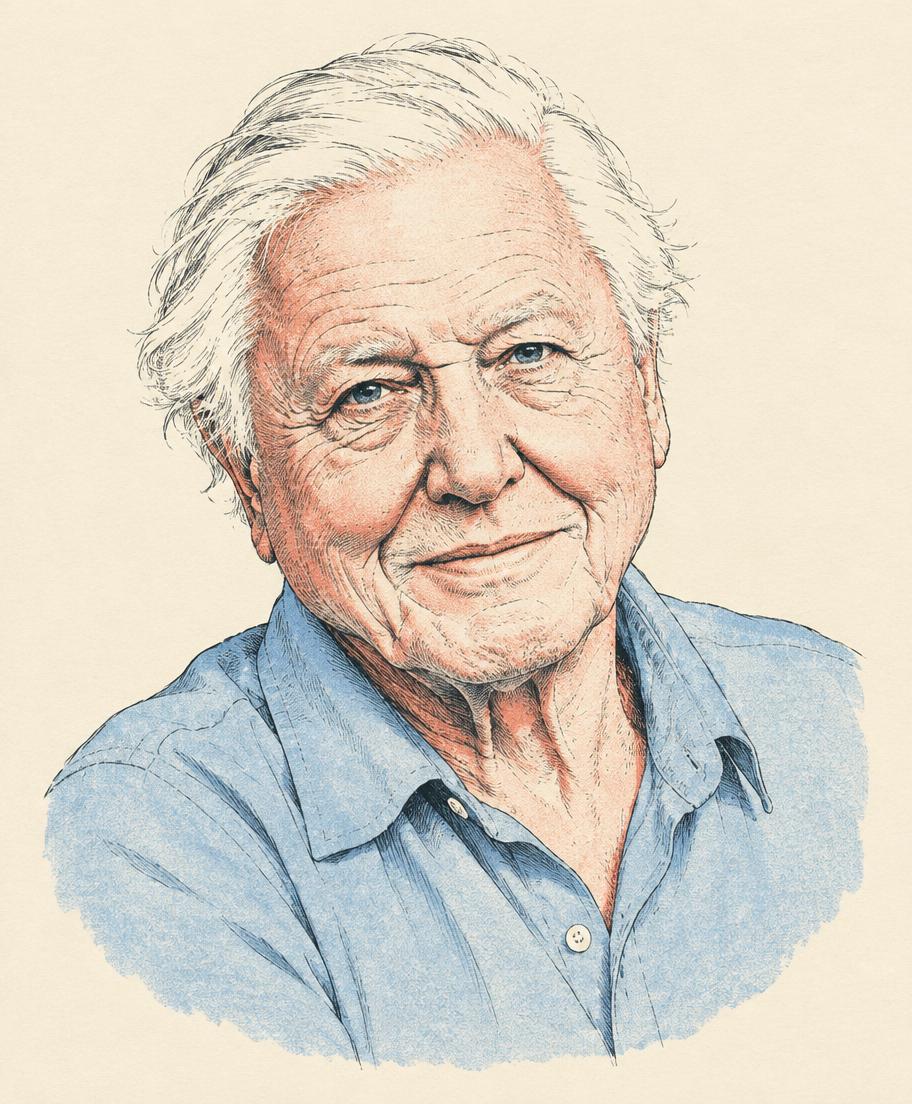
Broadcaster and natural historian
David Attenborough
The broadcaster whose natural history series have shaped how audiences understand life on Earth.
Read biography ↗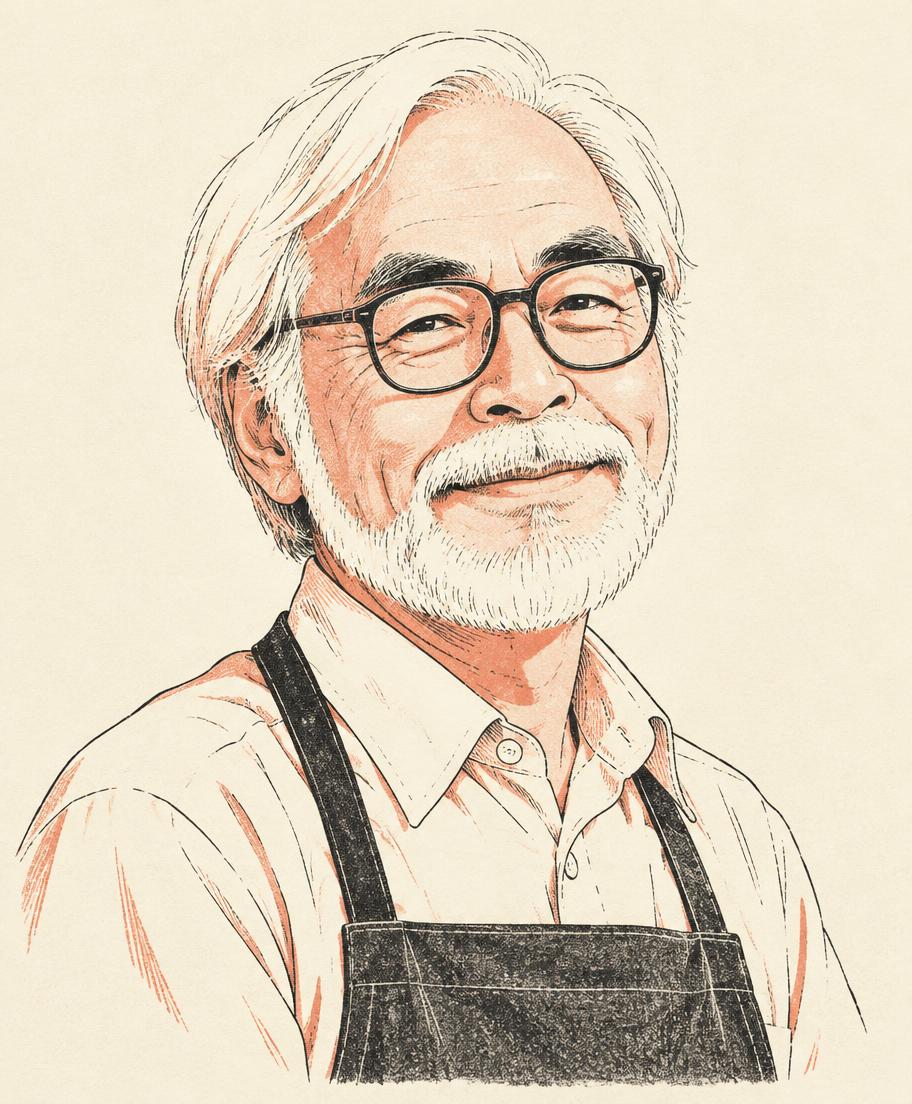
Animator and film director
Hayao Miyazaki
The animator and co-founder of Studio Ghibli whose hand-drawn films reached audiences worldwide.
Read biography ↗
Pope
Benedict I
Pope Benedict I was the bishop of Rome from 2 June 575 to his death on 30 July 579.
Read biography ↗