King of the United Kingdom since 2022 (born 1948)
Charles III
Charles III is King of the United Kingdom and 14 other Commonwealth realms.
By globalcelebwiki Editorial Desk, adapted from Wikipedia · Published 29 September 2026
- Profession
- King of the United Kingdom since 2022 (born 1948)
- Born
- 14 November 1948
- Birthplace
- Buckingham Palace
- Nationality
- British

Overview
Charles III (Charles Philip Arthur George; born 14 November 1948) is King of the United Kingdom and 14 other Commonwealth realms.
Charles is the eldest son of Queen Elizabeth II and Prince Philip, Duke of Edinburgh. He was born during the reign of his maternal grandfather, King George VI, and became heir apparent following his mother's accession in 1952. Charles was created Prince of Wales in 1958 and his investiture was held in 1969. He was educated at Cheam School and Gordonstoun, and later spent six months at the Timbertop campus of Geelong Grammar School in Victoria, Australia. After completing a history degree at the University of Cambridge, he served in the Royal Air Force and the Royal Navy from 1971 to 1976. He married Lady Diana Spencer in 1981 and they had two sons, William in 1982 and Harry in 1984. Charles and Diana divorced in August 1996 after years of estrangement and well-publicised extramarital affairs. Diana died the following year from injuries sustained in a car crash. In 2005, Charles married his long-time partner, Camilla Parker Bowles.
As heir apparent, Charles undertook official duties and engagements on behalf of his mother and represented the United Kingdom on visits abroad. He founded the Prince's Trust in 1976, sponsored the Prince's Charities and became patron or president of more than 800 other charities and organisations. He advocated for the conservation of historic buildings and the importance of traditional architecture in society, and in that vein generated the experimental new town of Poundbury. An environmentalist, Charles supported organic farming and action to address climate change during his time as manager of the Duchy of Cornwall estates, earning him awards and recognition. He has also been a prominent critic of genetically modified food, and has drawn scrutiny for his support of alternative medicine. He has authored or co-authored 17 books.
Charles became king upon his mother's death in 2022. At the age of 73, he was the oldest person to accede to the British throne, after having been the longest-serving heir apparent and Prince of Wales in British history. Significant events of his reign have included his coronation in 2023; his cancer diagnosis in 2024, which temporarily suspended planned public engagements; and the removal of his brother Andrew's remaining titles, styles, and honours in 2025.
Early life, family, and education
Charles was born at 9:14 pm on 14 November 1948 by caesarean section at Buckingham Palace, during the reign of his maternal grandfather, King George VI. He was the first child of Princess Elizabeth, Duchess of Edinburgh (later Queen Elizabeth II), and Philip, Duke of Edinburgh. He was christened Charles Philip Arthur George on 15 December in the Music Room at Buckingham Palace by the archbishop of Canterbury, Geoffrey Fisher. He has three younger siblings: Anne (born 1950), Andrew (born 1960), and Edward (born 1964).
George VI died on 6 February 1952, after which Charles's mother acceded to the throne as Elizabeth II and he became heir apparent. Under a charter issued by Edward III in 1337, and as the monarch's eldest son, he automatically assumed the titles of Duke of Cornwall and, in the Scottish peerage, Duke of Rothesay, Earl of Carrick, Baron of Renfrew, Lord of the Isles, and Prince and Great Steward of Scotland. He attended his mother's coronation at Westminster Abbey on 2 June 1953. He was later created Prince of Wales in 1958.
Prince of Wales
Charles was created Prince of Wales and Earl of Chester on 26 July 1958, although his investiture did not take place until 1 July 1969, when he was crowned by his mother in a televised ceremony at Caernarfon Castle. The event was controversial in Wales amid rising Welsh nationalist sentiment. He took his seat in the House of Lords the following year, delivering his maiden speech on 13 June 1974, the first royal to speak from the floor since the future Edward VII in 1884. He addressed the House again in 1975.
Charles increasingly undertook public duties, founding the Prince's Trust in 1976 and travelling to the United States in 1981. In the mid-1970s he expressed interest in serving as Governor-General of Australia, following a suggestion by the Australian prime minister, Malcolm Fraser. The proposal was ultimately abandoned owing to a lack of public enthusiasm. Charles later remarked, "so, what are you supposed to think when you are prepared to do something to help and you are just told you're not wanted?"
Charles served in the Royal Air Force (RAF) and the Royal Navy during the 1970s. His military training began in 1969, in his second year at Cambridge, when he joined the Cambridge University Air Squadron and learned to fly the Chipmunk. He was presented with his RAF wings in August 1971.
After the passing-out parade that September, Charles embarked on a naval career and undertook a six-week course at the Royal Naval College, Dartmouth. He subsequently served from 1971 to 1972 on the guided-missile destroyer HMS Norfolk, and on the frigates HMS Minerva from 1972 to 1973 and HMS Jupiter in 1974. That same year he qualified as a helicopter pilot at RNAS Yeovilton, and during his helicopter training completed commando instruction at the Commando Training Centre Royal Marines at Lympstone. Charles then joined 845 Naval Air Squadron, a Royal Marines air support unit of the Fleet Air Arm, serving as a pilot aboard HMS Hermes and flying the Royal Marines commando variant of the Westland Wessex helicopter.
Charles spent his final ten months of active naval service commanding the coastal minehunter HMS Bronington, beginning on 9 February 1976. He retired from active service later that year with the rank of Commander. Two years later he undertook the parachute training course at RAF Brize Norton, having been appointed colonel-in-chief of the Parachute Regiment in 1977, and was a member of Parachute Course 841a. Charles gave up flying after crash-landing a BAe 146 in Islay in 1994, when, as a passenger invited to fly the aircraft, he was at the controls; a board of inquiry found the crew negligent.
In his youth, Charles was romantically linked to several women. His girlfriends included Georgiana Russell, the daughter of Sir John Russell, who was the British ambassador to Spain; Lady Jane Wellesley; Davina Sheffield; Lady Sarah Spencer; and Camilla Shand, who later became his second wife.
Charles's great-uncle Lord Mountbatten advised him to "sow his wild oats and have as many affairs as he can before settling down", but, for a wife, he "should choose a suitable, attractive, and sweet-charactered girl before she has met anyone else she might fall for ... It is disturbing for women to have experiences if they have to remain on a pedestal after marriage". Early in 1974, Mountbatten began corresponding with 25-year-old Charles about a potential marriage to his granddaughter, Amanda Knatchbull. Charles wrote to Amanda's mother, Lady Brabourne, who was also his godmother, expressing interest in her daughter. Lady Brabourne replied approvingly, but suggested that a courtship with a 16-year-old was premature.
Four years later, Mountbatten arranged for Amanda and himself to accompany Charles on his 1980 visit to India. Both fathers, however, objected: Prince Philip feared that his famous uncle would eclipse Charles, while Lord Brabourne warned that a joint visit would concentrate media attention on the cousins before they could decide whether to become a couple.
In August 1979, before Charles was due to depart alone for India, Mountbatten was assassinated by the Provisional Irish Republican Army. When Charles returned, he proposed to Amanda. But in addition to her grandfather, she had lost her paternal grandmother and younger brother in the bomb attack, and was now reluctant to join the royal family.
Charles first met Lady Diana Spencer in 1977, while he was visiting her home, Althorp. He was then the companion of her elder sister Sarah and did not consider Diana romantically until mid-1980. While Charles and Diana were sitting together on a bale of hay at a friend's barbecue in July, she mentioned that he had looked forlorn and in need of care at the funeral of Lord Mountbatten. Soon, according to Dimbleby, "without any apparent surge in feeling, he began to think seriously of her as a potential bride" and she accompanied him on visits to Balmoral Castle and Sandringham House.
Charles's cousin Norton Knatchbull and his wife told Charles that Diana appeared awestruck by his position and that he did not seem to be in love with her. Meanwhile, the couple's continuing courtship attracted intense attention from the press and paparazzi. When Charles's father told him that the media speculation would injure Diana's reputation if Charles did not come to a decision about marrying her soon, and realising that she was a suitable royal bride (according to Mountbatten's criteria), Charles construed his father's advice as a warning to proceed without further delay. He proposed to Diana in February 1981, with their engagement becoming official on 24 February; the wedding took place at St Paul's Cathedral on 29 July. Upon his marriage, Charles reduced his voluntary tax contribution from the profits of the Duchy of Cornwall from 50 per cent to 25 per cent. The couple lived at Kensington Palace and Highgrove House, near Tetbury, and had two children: William, in 1982, and Harry, in 1984. As of 2025, Charles has an estranged relationship with his son Harry, who relinquished his royal family obligations and moved to the United States in 2020.
Within five years, the marriage was in trouble due to the couple's incompatibility and near 13-year age difference. In 1986 Charles had fully resumed his affair with former girlfriend, Camilla Parker Bowles. In a video tape recorded by Peter Settelen in 1992, Diana admitted that, from 1985 to 1986, she had been "deeply in love with someone who worked in this environment." It was assumed that she was referring to Barry Mannakee, who had been transferred to the Diplomatic Protection Squad in 1986, after his managers determined his relationship with Diana had been inappropriate. Diana later commenced a relationship with Major James Hewitt, the family's former riding instructor.
Charles and Diana's evident discomfort in each other's company led to them being dubbed "The Glums" by the press. Diana exposed Charles's affair with Parker Bowles in a book by Andrew Morton, Diana: Her True Story. Audio tapes of her own extramarital flirtations also surfaced, as did persistent suggestions that Hewitt is Prince Harry's father, based on a physical similarity between Hewitt and Harry. However, Harry had already been born by the time Diana's affair with Hewitt began.
In December 1992, the British prime minister, John Major, announced the couple's legal separation in the House of Commons. Early the following year, the British press published transcripts of a passionate, bugged telephone conversation between Charles and Parker Bowles that had taken place in 1989, which was dubbed "Tampongate" and "Camillagate". Charles subsequently sought public understanding in a television film with Dimbleby, Charles: The Private Man, the Public Role, broadcast in June 1994. In an interview in the film, Charles confirmed his own extramarital affair with Parker Bowles, saying that he had rekindled their association in 1986, only after his marriage to Diana had "irretrievably broken down". This was followed by Diana's own admission of marital troubles in an interview with journalist Martin Bashir on the BBC current affairs programme Panorama, broadcast in November 1995. Referring to Charles's relationship with Parker Bowles, she said, "well, there were three of us in this marriage. So, it was a bit crowded." She also expressed doubt about her husband's suitability for kingship. Charles and Diana divorced on 28 August 1996, after being advised by the Queen in December 1995 to end the marriage. The couple shared custody of their children.
Because Charles and Parker Bowles were romantically involved periodically, both before and during their respective first marriages, their relationship received criticism from the public and the media. Following both of their divorces, Charles declared his relationship with Parker Bowles was "non-negotiable" and appointed Mark Bolland to enhance Parker Bowles's public profile.
In 1999 Charles and Parker Bowles made their first public appearance as a couple at the Ritz London Hotel and the following year, she met Queen Elizabeth II at the 60th birthday party of former King Constantine II of Greece, which was seen as an apparent seal of approval by the Queen on the relationship. In 2003, Parker Bowles moved into Charles's official residence, Clarence House and she accompanied Charles on almost all of his official events, including the annual Highland Games in Scotland. Former Archbishop of Canterbury, George Carey, told The Times that Charles and Parker Bowles should marry, "He is heir to the throne and he loves her. The natural thing is that they should get married." Their engagement was announced on 10 February 2005. The Queen's consent to the marriage – as required by the Royal Marriages Act 1772 – was recorded in a Privy Council meeting on 2 March. In Canada, the Department of Justice determined the consent of the Queen's Privy Council for Canada was not required, as the union would not produce any heirs to the Canadian throne.
Charles was the only member of the royal family to have a civil, rather than a church, wedding in England. British government documents from the 1950s and 1960s, published by the BBC, stated that such a marriage was illegal; these claims were dismissed by Charles's spokesman and explained by the sitting government to have been repealed by the Registration Service Act 1953.
The union was scheduled to take place in a civil ceremony at Windsor Castle, with a subsequent religious blessing at the castle's St George's Chapel. The wedding venue was changed to Windsor Guildhall after it was realised a civil marriage at Windsor Castle would oblige the venue to be available to anyone who wished to be married there. Four days before the event, it was postponed from the originally scheduled date of 8 April until the following day in order to allow Charles and some of the invited dignitaries to attend the funeral of Pope John Paul II.
Charles's parents did not attend the marriage ceremony; the Queen's reluctance to attend possibly arose from her position as Supreme Governor of the Church of England. However, his parents did attend the service of blessing and held a reception for the newlyweds at Windsor Castle. The blessing by Archbishop of Canterbury Rowan Williams was televised.
In 1965, Charles undertook his first public engagement by attending a student garden party at the Palace of Holyroodhouse. During his time as Prince of Wales, he undertook official duties on behalf of the Queen, completing 10,934 engagements between 2002 and 2022. He officiated at investitures and attended the funerals of foreign dignitaries.
Charles made regular tours of Wales, fulfilling a week of engagements each summer, and attending important national occasions, such as opening the Senedd. The six trustees of the Royal Collection Trust met three times a year under his chairmanship. Charles also represented his mother at the independence celebrations in Fiji in 1970, The Bahamas in 1973, Papua New Guinea in 1975, Zimbabwe in 1980 and Brunei in 1984.
In 1983, a man named Christopher John Lewis, who had fired a shot with a .22 rifle at the Queen in 1981, attempted to escape from a psychiatric hospital in order to assassinate Charles, who was visiting New Zealand with Diana and William. While Charles was visiting Australia on Australia Day in January 1994, David Kang fired two shots at him from a starting pistol in protest against the treatment of several hundred Cambodian asylum-seekers held in detention camps. In 1995 Charles became the first member of the royal family to visit the Republic of Ireland in an official capacity. In 1997 he represented the Queen at the Hong Kong handover ceremony.
At the funeral of Pope John Paul II in 2005, Charles caused controversy when he shook hands with Zimbabwean president Robert Mugabe, who had been seated next to him. Charles's office subsequently released a statement saying that he could not avoid shaking Mugabe's hand and that he "finds the current Zimbabwean regime abhorrent".
Charles represented the Queen at the opening ceremony of the 2010 Commonwealth Games in Delhi, India. In November 2010 he and Camilla were indirectly involved in student protests when their car was attacked by protesters. In November 2013 he represented the Queen for the first time at a Commonwealth Heads of Government Meeting, in Colombo, Sri Lanka.
Reign
Charles acceded to the British throne on his mother's death on 8 September 2022. He was the longest-serving British heir apparent, having surpassed Edward VII's record of 59 years on 20 April 2011. Charles was the oldest person to succeed to the British throne, at the age of 73, surpassing the previous record holder, William IV, who was 64 when he became king in 1830.
Charles gave his first speech to the nation as monarch at 6 pm on 9 September, in which he paid tribute to his mother and announced the appointment of his elder son, William, as Prince of Wales. The following day, the Accession Council publicly proclaimed Charles as king, the ceremony being televised for the first time. Attendees included Queen Camilla, Prince William and the British prime minister, Liz Truss, along with her six living predecessors. The proclamation was also read out by local authorities around the United Kingdom. Other realms signed and read their own proclamations, as did Scotland, Wales, Northern Ireland, the British Overseas Territories, the Crown Dependencies, Canadian provinces and Australian states.
In November 2022, the King and Queen hosted the South African president, Cyril Ramaphosa, during the first official state visit to the United Kingdom of Charles III's reign. The following March, they undertook a state visit to Germany, where Charles became the first British monarch to address the Bundestag. On 6 May 2023, Charles and Camilla's coronation took place at Westminster Abbey, in a ceremony planned for many years under the code name Operation Golden Orb. Prior to Charles's accession, reports suggested that the coronation would be "shorter, smaller, less expensive, and more representative of different faiths and community groups than that of his mother in 1953, reflecting the King's wish to acknowledge the ethnic diversity of modern Britain". Nonetheless, the coronation remained a Church of England rite, including the coronation oath, the anointing, crowning, investing with the regalia, and enthronement.
In July 2023, the royal couple attended a national service of thanksgiving at St Giles' Cathedral, where Charles was presented with the Honours of Scotland. That same month, the King asked for the profits from Britain's growing fleet of offshore wind-farms to be used for the "wider public good" rather than as extra funding for the monarchy, and it was announced that the monarchy's share of Crown Estate net profits would be reduced to 12 per cent. In September, Charles became the first British monarch to give a speech from the French Senate chamber during a state visit to France. The following month he visited Kenya, where he faced calls to apologise for colonial abuses; at a state banquet he acknowledged "abhorrent and unjustifiable acts of violence" but did not issue a formal apology.
In May 2024, the British prime minister, Rishi Sunak, asked the King to call a general election; subsequently, royal engagements that could divert attention from the election campaign were postponed. In June 2024, Charles and Camilla travelled to Normandy to attend the 80th anniversary commemorations of D-Day. The same month, the King received Emperor Naruhito of Japan during his state visit to the United Kingdom. In July, the annual Holyrood Week, which is usually spent in Scotland, was shortened so that Charles could return to London and appoint a new prime minister following the general election. After Sunak's Conservative Party lost the election to the Labour Party led by Sir Keir Starmer, the King appointed Starmer as prime minister.
Health
In March 1998, Charles had laser keyhole surgery on his right knee and in March 2003, he underwent surgery at King Edward VII's Hospital to treat a hernia injury. In 2008, a non-cancerous growth was removed from his nasal bridge.
In January 2024, Charles underwent a "corrective procedure" at the London Clinic to treat benign prostate enlargement, which resulted in the postponement of some of his public engagements. In February, Buckingham Palace announced that cancer had been discovered during the treatment, but that it was not prostate cancer. Although his public duties were postponed, it was reported Charles would continue to fulfill his constitutional functions during his outpatient treatment. He released a statement espousing his support for cancer charities and that he "remain[ed] positive" on making a full recovery. In March, Camilla deputised for him in his absence at the Commonwealth Day service at Westminster Abbey and at the Royal Maundy at Worcester Cathedral. He made his first major public appearance since his cancer diagnosis at the Easter service held at St George's Chapel, Windsor Castle, on 31 March. In April 2024, it was announced that he would resume public-facing duties after making progress in his cancer treatment. In March 2025, Charles was briefly admitted to hospital after experiencing temporary side effects from his cancer treatment. He subsequently postponed several planned engagements. In December, as part of the Stand Up to Cancer UK campaign hosted by Cancer Research UK and Channel 4, he announced that his treatment schedule would be reduced the following year. The King's openness about his illness, contrasting with the traditionally guarded approach of earlier monarchs, was described by the media as unprecedented and as bringing him closer to the public.
As early as 1985, Charles was questioning meat consumption. In the 1985 Royal Special television programme, he told the host, Alastair Burnet, that "I actually now don't eat as much meat as I used to. I eat more fish." He also pointed out the societal double standard whereby eating meat is not questioned but eating less meat means "all hell seems to break loose". In 2021, Charles spoke to the BBC about the environment and revealed that, two days per week, he eats no meat nor fish and, one day per week, he eats no dairy products. In 2022, it was reported that he eats a breakfast of fruit salad, seeds, and tea. He does not eat lunch, but takes a break for tea at 5:00 pm and eats dinner at 8:30 pm, returning to work until midnight or later. Ahead of Christmas dinner in 2022, Charles confirmed to the animal rights group People for the Ethical Treatment of Animals that foie gras would not be served at any royal residences; he had stopped the use of foie gras at his own properties for more than a decade before becoming king. During a September 2023 state banquet at the Palace of Versailles, it was reported that he did not want foie gras or out-of-season asparagus on the menu. Instead, he was served lobster.
Charity work
Since founding the Prince's Trust in 1976, using his £7,500 of severance pay from the Royal Navy, Charles has established 16 more charitable organisations and now serves as president of each. Together they form a loose alliance, the Prince's Charities, which describes itself as "the largest multi-cause charitable enterprise in the United Kingdom, raising more than £100 million annually ... [and is] active across a broad range of areas including education and young people, environmental sustainability, the built environment, responsible business and enterprise, and international". King Charles III Charitable Fund has donated over £73 million to various causes since 1979. By September 2020 the Prince's Trust had supported over 1,000,000 young people and created 125,000 entrepreneurs. As Prince of Wales, Charles became patron or president of more than 800 other charities and organisations. He received a Gold Blue Peter badge in 2023 for his environmental work and for his support of young people through the Prince's Trust.
The Prince's Charities Canada was established in 2010, in a similar fashion to its namesake in Britain. Charles uses his tours of Canada as a way to help to draw attention to youth, the disabled, the environment, the arts, medicine, the elderly, heritage conservation and education. He has also set up the Prince's Charities Australia, based in Melbourne, to provide a coordinating presence for his Australian and international charitable endeavours.
Charles is a long-time supporter of humanitarian projects. In 1980s, he donated his blood to raise awareness for health causes, including AIDS. Charles and his sons took part in ceremonies that marked the 1998 International Day for the Elimination of Racial Discrimination. Charles expressed strong concerns about the human rights record of the Romanian dictator Nicolae Ceaușescu. After Ceaușescu was deposed, he supported the FARA Foundation, a charity for Romanian orphans and abandoned children. Charles has also supported humanitarian causes in Israel, including a private donation to the Peres Center for Peace and Innovation in 2020.
Personal interests
From young adulthood, Charles encouraged the understanding of Indigenous voices, saying they held crucial messages about preservation of the land, respecting community and shared values, resolving conflict, and recognising and making good on past iniquities. He dovetailed this view with his efforts against climate change, as well as reconciliation between Indigenous and non-Indigenous peoples and his charitable work in Canada. At the 2022 Commonwealth Heads of Government Meeting Charles, who was representing his mother, raised that reconciliation process as an example for dealing with the history of slavery in the British Empire, for which he expressed his sorrow.
Letters sent by Charles to British government ministers in 2004 and 2005 expressing his concerns over various policy issues – known as the black spider memos – presented potential embarrassment following a challenge by The Guardian to release the letters under the Freedom of Information Act 2000. In March 2015 the Supreme Court of the United Kingdom decided that Charles's letters must be released. The Cabinet Office published the letters in May that year. The reaction was largely supportive of Charles, with little criticism of him; the press variously described the memos as "underwhelming" and "harmless", and concluded that their release had "backfired on those who seek to belittle him". It was revealed in the same year that Charles had access to confidential Cabinet papers.
Charles has openly expressed his views on architecture and urban planning; he fostered the advancement of New Classical architecture and asserted that he "care[s] deeply about issues such as the environment, architecture, inner-city renewal, and the quality of life." In a speech given for the 150th anniversary of the Royal Institute of British Architects in May 1984, he described a proposed extension to the National Gallery in London as a "monstrous carbuncle on the face of a much-loved friend" and deplored the "glass stumps and concrete towers" of modern architecture. Charles called for local community involvement in architectural choices and asked, "why has everything got to be vertical, straight, unbending, only at right angles – and functional?" Charles has "a deep understanding of Islamic art and architecture", according to the Oxford professor Mohammed Talib, and has been involved in the construction of a building and garden at the Oxford Centre for Islamic Studies that combine Islamic and Oxford architectural styles.
In Charles's 1989 book A Vision of Britain, and in speeches and essays, he has been critical of modern architecture, arguing that traditional designs and methods should guide contemporary ones. He has continued to campaign for traditional urbanism, human scale, restoration of historic buildings, and sustainable design despite criticism in the press. Two of his charities – the Prince's Regeneration Trust and the Prince's Foundation for Building Community, which were later merged into one charity – promote his views. The village of Poundbury was built on land owned by the Duchy of Cornwall to a master plan by Léon Krier, under the guidance of Charles and in line with his philosophy. In 2011, Charles saved the historic Middleport Pottery from permanent closure by leading a £9 million rescue and regeneration project through The Prince's Regeneration Trust. In 2013 developments for the suburb of Nansledan began on the estate of the Duchy of Cornwall with Charles's endorsement. Charles helped purchase Dumfries House and its complete collection of 18th century furnishings in 2007, taking a £20 million loan from his charitable trust to contribute towards the £45 million cost. The house and gardens remain property of the Prince's Foundation and serve as a museum and community and skills training centre. This led to the development of Knockroon, called the "Scottish Poundbury". In 2025, it was reported that the design of a new generation of British towns would incorporate Charles's architectural ideas.
After lamenting in 1996 the unbridled destruction of many of Canada's historic urban cores, Charles offered his assistance to the Department of Canadian Heritage in creating a trust modelled on Britain's National Trust, a plan that was implemented with the passage of the federal budget in 2007. In 1999 Charles agreed to the use of his title for the Prince of Wales Prize for Municipal Heritage Leadership, awarded by the National Trust for Canada to municipal governments that have committed to the conservation of historic places.
Whilst visiting the US and surveying the damage caused by Hurricane Katrina, Charles received the National Building Museum's Vincent Scully Prize in 2005 for his efforts in regard to architecture; he donated US$25,000 of the prize money towards restoring storm-damaged communities. For his work as patron of New Classical architecture, Charles was awarded the 2012 Driehaus Architecture Prize from the University of Notre Dame. The Worshipful Company of Carpenters installed Charles as an Honorary Liveryman "in recognition of his interest in London's architecture".
Charles has occasionally intervened in projects that employ architectural styles such as modernism and functionalism. In 2009 he wrote to the Qatari royal family – the financier of the redevelopment of the Chelsea Barracks site – labelling Lord Rogers's design for the site "unsuitable". Rogers claimed that Charles had also intervened to block his designs for the Royal Opera House and Paternoster Square. CPC Group, the project developer, took a case against Qatari Diar to the High Court. After the suit was settled, the CPC Group apologised to Charles "for any offence caused ... during the course of the proceedings".
Since the 1970s, Charles has promoted environmental awareness. At the age of 21 he delivered his first speech on environmental issues in his capacity as the chairman of the Welsh Countryside Committee. Charles was named one of Time Magazine's 100 most influential climate leaders of 2025. An avid gardener, Charles has also emphasised the importance of talking to plants, stating that "I happily talk to the plants and trees, and listen to them. I think it's absolutely crucial". His interest in gardening began in 1980 when he took over the Highgrove estate. His "healing garden", based on sacred geometry and ancient religious symbolism, went on display at the Chelsea Flower Show in 2002.
Upon moving into Highgrove House, Charles developed an interest in organic farming, which culminated in the 1990 launch of his own organic brand, Duchy Originals, which sells more than 200 different sustainably produced products; the profits (more than £6 million by 2010) are donated to the Prince's Charities. Charles became involved with farming and various industries within it, regularly meeting with farmers to discuss their trade. A prominent critic of the practice, Charles has also spoken against the use of genetically modified crops, and in a letter to Tony Blair in 1998 he criticised the development of genetically modified foods.
The Sustainable Markets Initiative – a project that encourages putting sustainability at the centre of all activities – was launched by Charles at the World Economic Forum's annual meeting in Davos in January 2020. In May of the same year, the initiative and the World Economic Forum initiated the Great Reset project, a five-point plan concerned with enhancing sustainable economic growth following the global recession caused by the COVID-19 pandemic.
The holy chrism oil used at Charles's coronation was vegan, made from oils of olive, sesame, rose, jasmine, cinnamon, neroli and benzoin, along with amber and orange blossom. His mother's chrism oil contained animal-based oils.
Charles delivered a speech at the 2021 G20 Rome summit, describing COP26 as "the last chance saloon" for preventing climate change and asking for actions that would lead to a green-led, sustainable economy. In his speech at the opening ceremony for COP26, he repeated his sentiments from the previous year, stating that "a vast military-style campaign" was needed "to marshal the strength of the global private sector" for tackling climate change. In 2022, the media alleged that Liz Truss had advised Charles against attending COP27, to which advice he agreed. Charles delivered the opening speech at COP28, saying among others he prayed "with all my heart that COP28 will be a critical turning point towards genuine transformational action." He received a Green Blue Peter badge on Earth Day 2026 in recognition of his long‑standing support for environmental protection and sustainability.
Charles has controversially championed alternative medicine, including homeopathy. He first publicly expressed his interest in the topic in December 1982, in an address to the British Medical Association. This speech was seen as "combative" and "critical" of modern medicine and was met with anger by some medical professionals. Similarly, the Prince's Foundation for Integrated Health (FIH) attracted opposition from the scientific and medical community over its campaign encouraging general practitioners to offer herbal and other alternative treatments to NHS patients.
In April 2008, The Times published a letter from Edzard Ernst, professor of complementary medicine at the University of Exeter, which asked the FIH to recall two guides promoting alternative medicine. That year, Ernst published a book with Simon Singh called Trick or Treatment: Alternative Medicine on Trial and mockingly dedicated to "HRH the Prince of Wales". The last chapter is highly critical of Charles's advocacy of complementary and alternative treatments.
Charles's Duchy Originals produced a variety of complementary medicinal products, including a "Detox Tincture" that Ernst denounced as "financially exploiting the vulnerable" and "outright quackery". Charles personally wrote at least seven letters to the Medicines and Healthcare products Regulatory Agency shortly before it relaxed the rules governing labelling of such herbal products, a move that was widely condemned by scientists and medical bodies. It was reported in October 2009 that Charles had lobbied the health secretary, Andy Burnham, regarding greater provision of alternative treatments in the NHS.
Following accounting irregularities, the FIH announced its closure in April 2010. The FIH was re-branded and re-launched later in 2010 as the College of Medicine, of which Charles became a patron in 2019.
From his youth until 2005, Charles was an avid player of competitive polo. Charles also frequently took part in fox hunting until the sport was banned in the United Kingdom, also in 2005. By the late 1990s opposition to the activity was growing when Charles's participation was viewed as a "political statement" by those who were opposed to it. Charles suffered several polo- and hunting-related injuries throughout the years, including a two-inch scar on his left cheek in 1980, a broken arm in 1990, a torn cartilage in his left knee in 1992, a broken rib in 1998, and a fractured shoulder in 2001.
Charles has been a keen salmon angler since youth and supported Orri Vigfússon's efforts to protect the North Atlantic salmon. He frequently fishes the River Dee in Aberdeenshire, and claims his most special angling memories are from his time spent in Vopnafjörður, Iceland. Charles is a supporter of Burnley F.C.
Apart from hunting, Charles has also participated in target rifle competitions, representing the House of Lords in the Vizianagram Match (Lords vs. Commons) at Bisley. He became President of the British National Rifle Association in 1977.
Charles has been involved in performance since his youth, and appeared in sketches and revues while studying at Cambridge.
Charles is president or patron of more than 20 performing arts organisations, including the Royal College of Music, Royal Opera, English Chamber Orchestra, Philharmonia Orchestra, Welsh National Opera, Royal Shakespeare Company (attending performances in Stratford-Upon-Avon, supporting fundraising events, and attending the company's annual general meeting), British Film Institute, and Purcell School. In 2000 he revived the tradition of appointing an official harpist to the Prince of Wales, in order to foster Welsh talent at playing the national instrument of Wales. The role, now referred to as King's Harpist, is currently held by Mared Pugh Evans.
Charles is a keen watercolourist, having published books on the subject and exhibited and sold a number of his works to raise money for charity; in 2016 it was estimated that he had sold lithographs of his watercolours for a total of £2 million from a shop at his Highgrove House residence. For his 50th birthday 50 of his watercolours were exhibited at Hampton Court Palace and, for his 70th birthday, his works were exhibited at the National Gallery of Australia. Charles founded the Royal Drawing School in 2000, which offers drawing classes to children and the public. In 2001, 20 lithographs of his watercolour paintings illustrating his country estates were exhibited at the Florence International Biennale of Contemporary Art and 79 of his paintings were put on display in London in 2022. To mark the 25th anniversary of his investiture as Prince of Wales in 1994, the Royal Mail issued a series of postage stamps that featured his paintings. Charles is Honorary President of the Royal Academy of Arts Development Trust and, in 2015, 2022 and 2023, commissioned paintings of 12 D-Day veterans, seven Holocaust survivors, and ten members of the Windrush generation, respectively, which went on display at the Queen's Gallery in Buckingham Palace.
Charles is the author of several books and has contributed a foreword or preface to numerous books by others. He has also been featured in a variety of documentary films.
Shortly after his accession to the throne, Charles publicly described himself as "a committed Anglican Christian"; at age 16, during Easter 1965, he had been confirmed into the Anglican Communion by Archbishop of Canterbury Michael Ramsey in St George's Chapel, Windsor Castle. The King is the Supreme Governor of the Church of England and a member of the Church of Scotland; he swore an oath to uphold that church immediately after he was proclaimed King. He attends services at various Anglican churches close to Highgrove and attends the Church of Scotland's Crathie Kirk with the rest of the royal family when staying at Balmoral Castle.
Laurens van der Post became a friend of Charles in 1977; he was dubbed Charles's "spiritual guru" and was godfather to Prince William. From van der Post, Charles developed a focus on philosophy and an interest in other religions. Charles expressed his philosophical views in his 2010 book, Harmony: A New Way of Looking at Our World, which won a Nautilus Book Award. He has also visited Eastern Orthodox monasteries on Mount Athos, in Romania, and in Serbia, and met with Eastern Church leaders in Jerusalem in 2020, during a visit that culminated in an ecumenical service in the Church of the Nativity in Bethlehem and a walk through the city accompanied by Christian and Muslim dignitaries. Charles also attended the consecration of Britain's first Syriac Orthodox cathedral, St Thomas Cathedral, Acton. Charles is patron of the Oxford Centre for Islamic Studies at the University of Oxford and attended the inauguration of the Markfield Institute of Higher Education, which is dedicated to Islamic studies in a multicultural context.
In his 1994 documentary with Dimbleby, Charles said that, when king, he wished to be seen as a "defender of faith", rather than the British monarch's traditional title of Defender of the Faith, "prefer[ring] to embrace all religious traditions and 'the pattern of the divine, which I think is in all of us.'" This attracted controversy at the time, as well as speculation that the coronation oath might be altered. He stated in 2015 that he would retain the title of Defender of the Faith, whilst "ensuring that other people's faiths can also be practised", which he sees as a duty of the Church of England. Charles reaffirmed this theme shortly after his accession and declared that his duties as sovereign included "the duty to protect the diversity of our country, including by protecting the space for faith itself and its practice through the religions, cultures, traditions, and beliefs to which our hearts and minds direct us as individuals." Although the text of the coronation oath was not altered, because the process of passing new legislation through Parliament would be lengthy and liable to raise divisive issues, a preamble spoken by the Archbishop of Canterbury was added to the text:
Your Majesty, the Church established by law, whose settlement you will swear to maintain, is committed to the true profession of the Gospel, and, in so doing, will seek to foster an environment in which people of all faiths and beliefs may live freely.
His inclusive, multi-faith approach and his own Christian beliefs were expressed in his first Christmas message as king. In line with his multi-faith approach, Charles has served as a patron of the Council of Christians and Jews and of the Jewish Museum London.
Media image and public opinion
Since his birth, Charles has received close media attention, which increased as he matured. It has been an ambivalent relationship, largely impacted by his marriages to Diana and Camilla and their aftermath, but also centred on his future conduct as king.
Described as the "world's most eligible bachelor" in the late 1970s, Charles was subsequently overshadowed by Diana. After her death the media regularly breached Charles's privacy and printed exposés. Known for expressing his opinions, when asked during an interview to mark his 70th birthday whether this would continue in the same way once he is King, he responded "No. It won't. I'm not that stupid. I do realise that it is a separate exercise being sovereign. So, of course, you know, I understand entirely how that should operate." In September 2025, The Economist analysed all Charles's public speeches over the past 30 years and concluded that he has mellowed over the past three decades.
In 2009, Charles was named the world's best-dressed man by Esquire magazine. Fashion magazine British GQ described Charles as "the true guardian of traditional British menswear" in 2012 and named him one of the most stylish people of 2025. Italian designer Donatella Versace once said Charles "is an archetype of style". In 2023 the New Statesman named Charles as the fourth-most-powerful right-wing figure of the year, describing him as a "romantic traditionalist" and "the very last reactionary in public life" for his support of various traditionalist think tanks and previous writings. He was also named one of the 100 most influential people of 2023 by Time magazine. Charles and Camilla topped Tatler's Social Power Index for 2022 and 2023.
A 2018 BMG Research poll found that 46 per cent of Britons wanted Charles to abdicate immediately on his mother's death, in favour of William. However, a 2021 opinion poll reported that 60 percent of the British public had a favourable opinion of him. On his accession to the throne, The Statesman reported an opinion poll that put Charles's popularity with the British people at 42 per cent. More recent polling suggested that his popularity increased sharply after he became King. On the first anniversary of his reign, a YouGov poll found that 59 per cent of Britons said he was doing a good job. The Wall Street Journal wrote that his first year as king had proved "unexpectedly popular". As of July 2026, Charles continued to hold majority support, with an approval rating of 62 per cent, and 68 percent of respondents saying "he is doing a good job", according to YouGov.
Sources and references
Spotted something wrong? Report a correction.
Related profiles
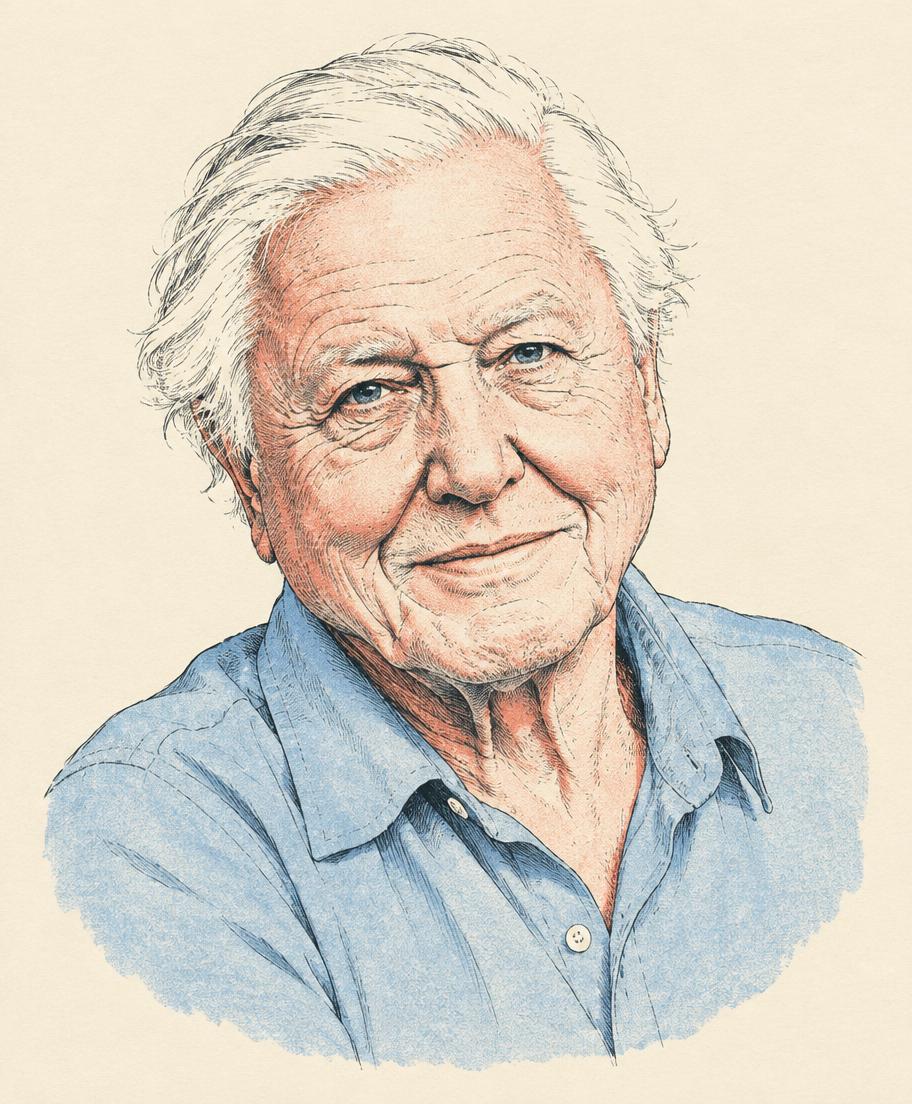
Broadcaster and natural historian
David Attenborough
The broadcaster whose natural history series have shaped how audiences understand life on Earth.
Read biography ↗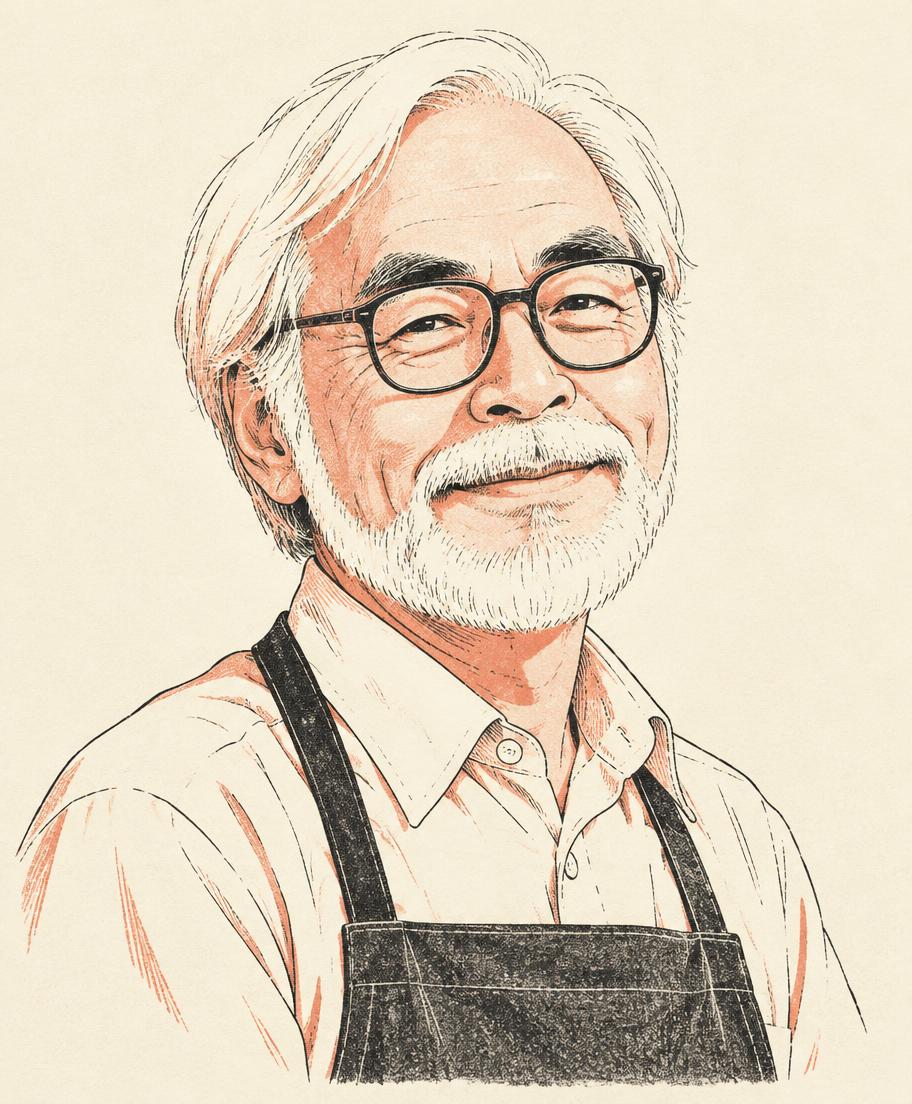
Animator and film director
Hayao Miyazaki
The animator and co-founder of Studio Ghibli whose hand-drawn films reached audiences worldwide.
Read biography ↗
Pope
Benedict I
Pope Benedict I was the bishop of Rome from 2 June 575 to his death on 30 July 579.
Read biography ↗