Russian journalist (1958–2006)
Anna Politkovskaya
Anna Stepanovna Politkovskaya was a Russian investigative journalist who reported on political and social events in Russia, in particular, the Second Chechen War.
By globalcelebwiki Editorial Desk, adapted from Wikipedia · Published 29 September 2026
- Profession
- Russian journalist (1958–2006)
- Born
- 30 August 1958
- Birthplace
- New York City
- Nationality
- Russian

Overview
Anna Stepanovna Politkovskaya (née Mazepa; 30 August 1958 – 7 October 2006) was a Russian investigative journalist who reported on political and social events in Russia, in particular, the Second Chechen War (1999–2005). She was found murdered in the elevator of her apartment block in Moscow on 7 October 2006.
It was her reporting from Chechnya that made her national and international reputation. For seven years, she refused to give up reporting on the war despite numerous acts of intimidation and violence. Politkovskaya was arrested by Russian military forces in Chechnya and subjected to a mock execution. She was poisoned while flying from Moscow via Rostov-on-Don to help resolve the 2004 Beslan school hostage crisis, and had to turn back, requiring careful medical treatment in Moscow to restore her health.
Her post-1999 articles about conditions in Chechnya were turned into books several times; Russian readers' main access to her investigations and publications was through Novaya Gazeta, a Russian newspaper that featured critical investigative coverage of Russian political and social affairs. From 2000 onwards, she received numerous international awards for her work. In 2004, she published Putin's Russia, a personal account of Russia for a Western readership.
On 7 October 2006 (the 54th birthday of Russian president Vladimir Putin), she was murdered in the elevator of her block of apartments, an assassination that attracted international attention. In 2014, five men were sentenced to prison for the murder, but it is still unclear who ordered or paid for the contract killing.
Early life and education
Anna Stepanovna Mazepa was born in New York City in 1958, the daughter of Ukrainian Soviet diplomats at the United Nations, Stepan Fedorovich Mazepa (1927–2006) from Kostobobriv, and Raisa Aleksandrovna (née Novikova; 1929–2021) from Kerch in Crimea. Her father was ethnically Ukrainian and had attended a Ukrainian-language school in Chernihiv before the 1941 Nazi invasion of the USSR. He met her mother at a Russian-language night school in Kerch after the war while serving in the fleet. By 1952, her father was admitted to study at an institute in Moscow, and her parents married there. Her father was appointed to the Ukrainian delegation at the United Nations during the Khrushchev era. He became a founding member of the Special Committee against Apartheid in 1962, and served as its secretary as late as 1974.
Her parents bought an apartment in central Moscow in 1962 and Politkovskaya mostly grew up there. She attended a music school and trained figure skating; according to her mother, she was noted for her frequent use of the local Krupskaya Library. She graduated from Moscow State University's school of journalism in 1980 with a thesis about the poetry of Marina Tsvetaeva. The faculty head at the time was Yasen Zasurskii, a close friend of the Mazepas and their frequent guest in New York. She married fellow student Alexander Politkovsky in 1978; by 1981 they had two children, Ilya and Vera. At first Alexander was better known, joining TV journalist Vladislav Listyev as one of the hosts on the late-night TV-program Vzglyad. Apart from her childhood years, Politkovskaya spent no more than a few weeks outside Russia at any one time, even when her life came under threat. She was a U.S. citizen and had a U.S. passport, although she never relinquished her Russian citizenship.
Politkovskaya's initial employment was with Izvestia, the organ of the Supreme Soviet of the Soviet Union, in 1982. According to her ex-husband in 2011, it was a brief internship in the mailroom and her only journalistic engagement during the 1980s as he failed to assist her career. In her son's words, until the mid-1990s she "wasn't even a journalist, she was a housewife". Her own later account stated that "Sasha's work ... kept me from doing my own thing". She is said by Politkovsky to have worked temporarily as a cleaner at the Mayakovsky Theatre. However, after the spell at Izvestia she soon held another internship at the Vozdushnyi transport (Воздушный транспорт, the in-house magazine of the Ministry of Civil Aviation), as a reporter and editor of the Aeroflot emergencies and accidents section. As recalled by Politkovsky, her first travel assignment was on the plane crash in Omsk (1984). The correspondent role came with an unlimited air ticket, which enabled her to travel widely across the country and observe Russian society. She was privy to developments in the media sphere through her husband, "Russia's number one television journalist" from 1987 onwards, and shared his political interests. In the 1990 film about the Politkovsky family, she was portrayed as her husband's "assistant". By the time of the dissolution of the Soviet Union in 1991, she experienced threats against their family, which forced her teenage son's exile in London in 1992. She was a columnist for the socio-political newspaper Megapolis-Express, founded in 1990, before it turned into a tabloid serving fake news in September 1994. She was professionally involved in the creative union Eskart – which by 1991 offered advertising services through its partnership with major media outlets, such as the All-Union Radio, the organ of the Ministry of Railways Gudok, Kuranty, Literaturnaya Gazeta, Moskovskiye Novosti, My, Ogoniok, Oktyabr, Sovetskaya Kultura, Stolitsa, and Trud – and in the St Petersburg publishing house Paritet, founded in 1992.
Politkovskaya's career took off with the decline of her husband's influence following the 1993 Russian constitutional crisis. From 1994 to 1999, she worked as the assistant chief editor of Obshchaya Gazeta, headed by Yegor Yakovlev, where she wrote frequently about social problems, particularly the plight of refugees. From June 1999 to 2006, she wrote columns for the biweekly Novaya Gazeta, a newspaper with strong investigative reporting that was critical of the new post-Soviet regime from the outset. She published several award-winning books about Chechnya, life in Russia, and Russia under Vladimir Putin, including Putin's Russia.
Politkovskaya won awards for her work. She used each of these occasions to urge greater concern and responsibility by Western governments that, after the September 11 attacks on the United States, welcomed Putin's contribution to their "war on terror". She talked to officials, the military and the police and also frequently visited hospitals and refugee camps in Chechnya and in neighboring Ingushetia to interview those injured and uprooted by the renewed fighting.
In numerous articles critical of the war in Chechnya and the pro-Russian regime there, Politkovskaya described alleged abuses committed by Russian military forces, Chechen rebels, and the Russian-backed administration led by Akhmad Kadyrov and his son Ramzan Kadyrov. She also chronicled human rights abuses and policy failures elsewhere in the North Caucasus. In one characteristic instance in 1999, she not only wrote about the plight of an ethnically-mixed old peoples' home under bombardment in Grozny, but helped to secure the safe evacuation of its elderly inhabitants with the aid of her newspaper and public support. Her articles, many of which form the basis of A Dirty War (2001) and A Small Corner of Hell (2003), depict a conflict that brutalized both Chechen fighters and conscript soldiers in the federal army, and created hell for the civilians caught between them.
As Politkovskaya reported, the order supposedly restored under the Kadyrovs became a regime of endemic torture, abduction, and murder, by either the new Chechen authorities or the various federal forces based in Chechnya. One of her last investigations was into the alleged mass poisoning of Chechen schoolchildren by a strong and unknown chemical substance which incapacitated them for many months.
In May 2007, Random House posthumously published Politkovskaya's A Russian Diary, containing extracts from her notebook and other writings. Subtitled A Journalist's Final Account of Life, Corruption, and Death in Putin's Russia, the book gives her account of the period from December 2003 to August 2005, including what she described as "the death of Russian parliamentary democracy", the Beslan school hostage crisis, and the "winter and summer of discontent" from January to August 2005. Because she was murdered "while translation was being completed, final editing had to go ahead without her help", wrote translator Arch Tait in a note to the book.
"Who killed Anna and who lay beyond her killer remains unknown", wrote Jon Snow, the main news anchor for the United Kingdom's Channel 4 in his foreword to the book's UK edition. "Her murder robbed too many of us of absolutely vital sources of information and contact", he concluded, "Yet it may, ultimately, be seen to have at least helped prepare the way for the unmasking of the dark forces at the heart of Russia's current being. I must confess that I finished reading A Russian Diary feeling that it should be taken up and dropped from the air in vast quantities throughout the length and breadth of Mother Russia, for all her people to read."
Attempted hostage negotiations
Politkovskaya was closely involved in attempts to negotiate the release of hostages in the Moscow theatre hostage crisis of 2002. When the Beslan school hostage crisis erupted in the North Caucasus in early September 2004, Politkovskaya attempted to fly there to act as a mediator, but was taken off the plane, acutely ill due to an attempted poisoning, in Rostov-on-Don (see #Poisoning).
Access to Russian authorities
In Moscow, Politkovskaya was not invited to press conferences or gatherings that Kremlin officials might attend, in case the organizers were suspected of harboring sympathies toward her. Despite this, many top officials allegedly talked to her when she was writing articles or conducting investigations. According to one of her articles, they did talk to her, "but only when they weren't likely to be observed: outside in crowds, or in houses that they approached by different routes, like spies". She also stated that the Kremlin tried to block her access to information and discredit her:I will not go into the other joys of the path I have chosen, the poisoning, the arrests, the threats in letters and over the Internet, the telephoned death threats, the weekly summons to the prosecutor general's office to sign statements about practically every article I write (the first question being, "How and where did you obtain this information?"). Of course I don't like the constant derisive articles about me that appear in other newspapers and on Internet sites presenting me as the madwoman of Moscow. I find it disgusting to live this way. I would like a bit more understanding.
Documentary
2008, documentary by Masha Novikova Anna, Seven Years on the Frontline; 78 min., the Netherlands.
In 2008, Swiss director Eric Bergkraut made a documentary, Letter to Anna, about Politkovskaya's life and death. It includes interviews with her son Ilya, her daughter Vera, her ex-husband Alexander Politkovsky, and others—such as businessman Boris Berezovsky and filmmaker Andrei Nekrasov.
In 2011, Russian director Marina Goldovskaya made the documentary A Bitter Taste of Freedom, a Swedish-Russian-American co-production. The title refers to an earlier documentary film by the same director, A Taste of freedom (1991) which is about Russian life in the new, post-Soviet reality and features the Politkovsky family. A Bitter Taste of Freedom was shown at the 27th Warsaw International Film Festival where it won the Best Documentary Feature Award. From the festival's program:
She was brave, she was bold, and she was beautiful. In her fearless quest to uncover the wrongdoings of the Russian State, Anna Politkovskaya inspired awe in some and fear in countless others. An investigative journalist for Moscow's liberal Novaya Gazeta, she was the only spokesperson for victims of Putin's government. Hers was a lonely voice, yet loud enough for the entire country to hear. It was too loud. At age 48 she was assassinated for simply doing her job. A documentary about the bravery of the human spirit. As the director says, it "is especially important now, when the world is so full of cynicism and corruption, when we so desperately need more people with Anna's level of courage and integrity and commitment".
Principal production on a biographical film, then entitled Anna, began in 2022, with Maxine Peake playing Politkovskaya and also featuring Jason Isaacs and Ciaran Hinds. Ultimately titled Words of War, it had a limited release that began on May 2, 2025.
Awards and honours
2001: "Golden Pen Prize" of the Russian Union of Journalists
2001: Amnesty International Global Award for Human Rights Journalism
2002: Norwegian Authors Union Freedom of Expression Prize ("Ytringsfrihetsprisen")
2002: Index on Censorship Award for the "Defence of Free Expression".
2002: PEN American Center Freedom to Write Award
The international human rights organization RAW in WAR (Reach All Women in War), which focuses on supporting and protecting women human rights defenders working in war and conflict zones, established in 2006 the annual Anna Politkovskaya Award in Politkovskaya's honour. The award recognizes "a woman human rights defender from a conflict zone in the world who, like Anna, stands up for the victims of this conflict, often at great personal risk". Mariana Katzarova, a close friend and a human rights colleague of Politkovskaya, founded RAW in WAR (Reach All Women in WAR) and the Anna Politkovskaya Award in 2006 in London, after working as a journalist and human rights advocate in the war zones of Bosnia, Kosovo and the North Caucasus, including 10 years as the Russia Researcher for Amnesty International.
The award was first given on the first anniversary of Politkovskaya's murder, to her friend and colleague, Chechen activist Natalia Estemirova, who was herself abducted and killed in 2009 in Chechnya.
There is also a "Journalism-prize Anna Politkovskaja" ("il premio giornalistico Anna Politkovskaja"), which is annually awarded in Ferrara, Italy, by the magazine L'internationale and the comune of Ferrara.
Winners of the Journalism prize "Anna Politkovskaja"
Works
Politkovskaia, Anna (2000) Voyage en enfer: Journal de Tchetchenie, Robert Laffont: Paris.
Politkovskaya, Anna (2001) A Dirty War: A Russian Reporter in Chechnya, Harvill: London.ISBN 9781860468971
Политковская, Анна (2002) Вторая чеченская (The Second Chechen War), Zakharov: Moscow.
Politkovskaya, Anna (2003) A Small Corner of Hell: Dispatches from Chechnya, translation of Vtoraya chechenskaya, The University of Chicago Press. Retrieved 2015-02-28.
Politkovs'ka, Anna. "Druha chechens'ka." Trans. I. Andrusiak. Kyiv: Diokor, 2004. (In Ukrainian.)
Sources and references
Spotted something wrong? Report a correction.
Related profiles
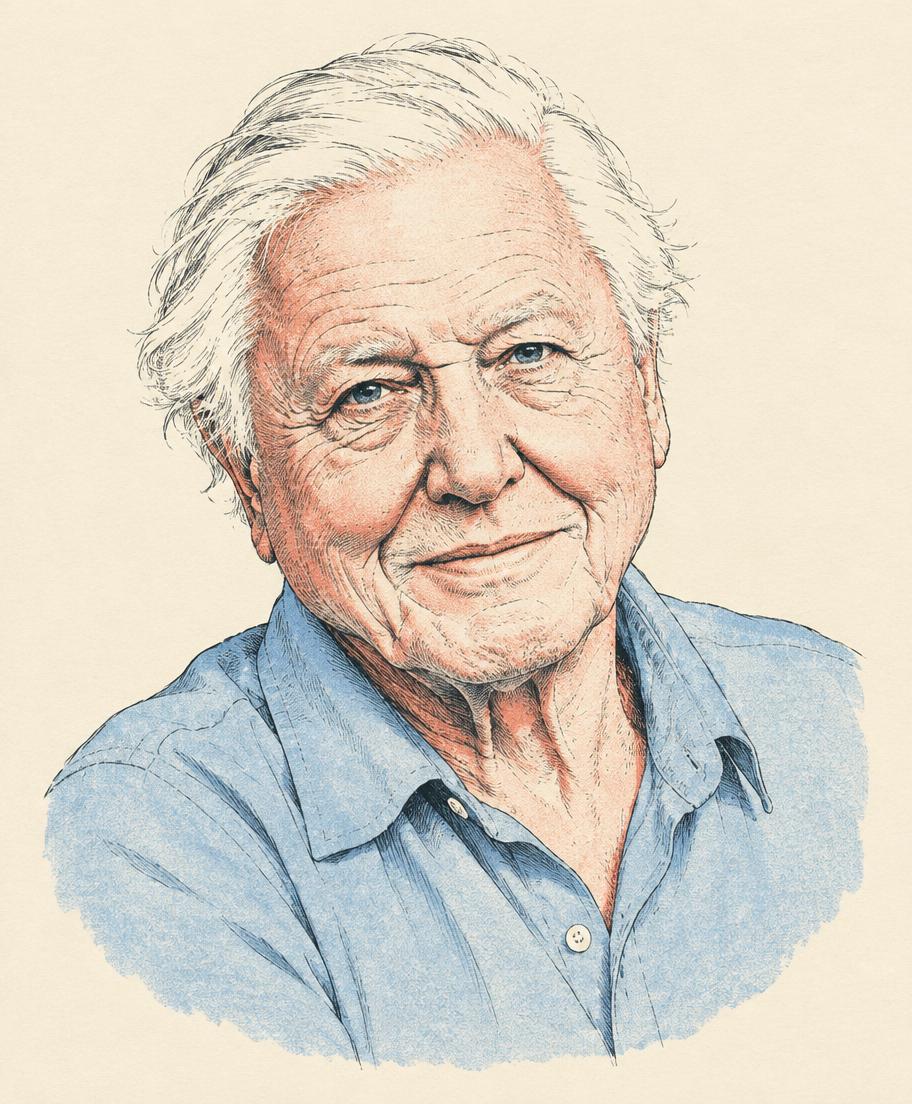
Broadcaster and natural historian
David Attenborough
The broadcaster whose natural history series have shaped how audiences understand life on Earth.
Read biography ↗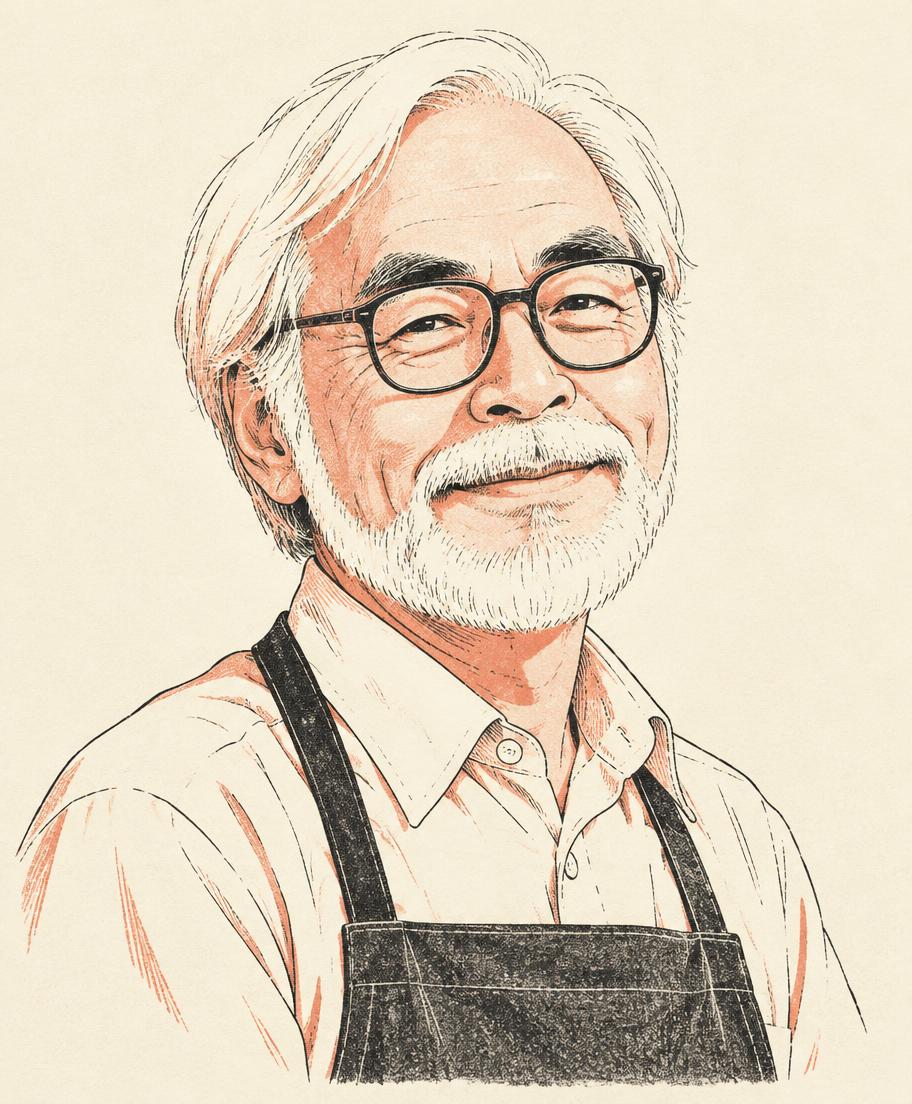
Animator and film director
Hayao Miyazaki
The animator and co-founder of Studio Ghibli whose hand-drawn films reached audiences worldwide.
Read biography ↗
Pope
Benedict I
Pope Benedict I was the bishop of Rome from 2 June 575 to his death on 30 July 579.
Read biography ↗