Prussian geographer, naturalist and explorer (1769–1859)
Alexander von Humboldt
Friedrich Wilhelm Heinrich Alexander von Humboldt was a German polymath, geographer, naturalist, explorer, and proponent of Romantic philosophy and science.
By globalcelebwiki Editorial Desk, adapted from Wikipedia · Published 29 September 2026
- Profession
- Prussian geographer, naturalist and explorer (1769–1859)
- Born
- 14 September 1769
- Birthplace
- Berlin
- Nationality
- Prussian

Overview
Friedrich Wilhelm Heinrich Alexander von Humboldt (14 September 1769 – 6 May 1859) was a German polymath, geographer, naturalist, explorer, and proponent of Romantic philosophy and science. He was the younger brother of the Prussian minister, philosopher, and linguist Wilhelm von Humboldt (1767–1835). Humboldt's quantitative work on botanical geography laid the foundation for the field of biogeography, while his advocacy of long-term systematic geophysical measurement pioneered modern geomagnetic and meteorological monitoring. Humboldt and Carl Ritter are both regarded as the founders of modern geography as they established it as an independent scientific discipline.
Between 1799 and 1804, Humboldt travelled extensively in the Americas, exploring and describing them for the first time from a non-Spanish European scientific point of view. On these travels, along with French explorer Aimé Bonpland, he traversed thousands of miles through some of the most difficult and little-known places on Earth, to include identifying the source of the Orinoco River and in 1802 climbing the highest mountain in Ecuador to a height of 19,286 feet, at the time a world record altitude for a Westerner. His description of the journey was written up and published in several volumes over 21 years.
Humboldt resurrected the use of the word cosmos from the ancient Greek and assigned it to his multivolume treatise, Kosmos, in which he sought to unify diverse branches of scientific knowledge and culture. This important work also motivated a holistic perception of the universe as one interacting entity, which introduced concepts of ecology leading to ideas of environmentalism. In 1800, and again in 1831, he described scientifically, on the basis of observations generated during his travels, local impacts of development causing human-induced climate change.
Humboldt is seen as "the father of ecology" and "the father of environmentalism".
Early life, family and education
Alexander von Humboldt was born in Berlin in Prussia on 14 September 1769. He was baptized as a baby in the Lutheran faith, with the Duke of Brunswick-Wolfenbüttel serving as godfather.
His father, Alexander Georg von Humboldt (1720–1779), belonged to a prominent German noble family from Pomerania. Although not one of the titled gentry, he was a major in the Prussian Army, who had served with the Duke of Brunswick. At age 42, Alexander Georg was rewarded for his services in the Seven Years' War with the post of royal chamberlain. He profited from the contract to lease state lotteries and tobacco sales.
Travels and work in Europe
Humboldt graduated from the Freiberg School of Mines in 1792 and was appointed to a Prussian government position in the Department of Mines as an inspector in Bayreuth and the Fichtel Mountains. Humboldt was excellent at his job, with production of gold ore in his first year outstripping the previous eight years. During his period as a mine inspector, Humboldt demonstrated his deep concern for the men laboring in the mines. He opened a free school for miners, paid for out of his own pocket, which became an unchartered government training school for labor. He also sought to establish an emergency relief fund for miners, aiding them following accidents.
Humboldt's researches into the vegetation of the mines of Freiberg led to the publication in Latin (1793) of his Florae Fribergensis, accedunt Aphorismi ex Doctrina, Physiologiae Chemicae Plantarum, which was a compendium of his botanical researches. That publication brought him to the attention of Johann Wolfgang von Goethe, who had met Humboldt at the family home when Alexander was a boy, but Goethe was now interested in meeting the young scientist to discuss metamorphism of plants. An introduction was arranged by Humboldt's brother, who lived in the university town of Jena, not far from Goethe. Goethe had developed his own extensive theories on comparative anatomy. Working before Darwin, he believed that animals had an internal force, an urform, that gave them a basic shape and then they were further adapted to their environment by an external force. Humboldt urged him to publish his theories. Together, the two discussed and expanded these ideas. Goethe and Humboldt soon became close friends.
Humboldt often returned to Jena in the years that followed. Goethe remarked about Humboldt to friends that he had never met anyone so versatile. Humboldt's drive served as an inspiration for Goethe. In 1797, Humboldt returned to Jena for three months. During this time, Goethe moved from his residence in Weimar to reside in Jena. Together, Humboldt and Goethe attended university lectures on anatomy and conducted their own experiments. One experiment involved hooking up a frog leg to various metals. They found no effect until the moisture of Humboldt's breath triggered a reaction that caused the frog leg to leap off the table. Humboldt described this as one of his favorite experiments because it was as if he were "breathing life into" the leg.
During this visit, a thunderstorm killed a farmer and his wife. Humboldt obtained their corpses and analyzed them in the anatomy tower of the university.
In 1794, Humboldt was admitted to the famous group of intellectuals and cultural leaders of Weimar Classicism. Goethe and Schiller were the key figures at the time. Humboldt contributed (7 June 1795) to Schiller's new periodical, Die Horen, a philosophical allegory entitled Die Lebenskraft, oder der rhodische Genius (The Life Force, or the Rhodian Genius). In this short piece, the only literary story Humboldt ever authored, he tried to summarize the often contradictory results of the thousands of Galvanic experiments he had undertaken.
With the financial resources to fund his scientific travels, he sought a ship on a major expedition. In the meantime, he went to Paris, where his brother Wilhelm was living. Paris was a great center of scientific learning and his brother and sister-in-law Caroline were well connected in those circles. Louis-Antoine de Bougainville urged Humboldt to accompany him on a major expedition, likely to last five years, but the French revolutionary Directoire placed Nicolas Baudin at the head of it rather than the aging scientific traveler. On the postponement of Captain Baudin's proposed voyage of circumnavigation due to continuing warfare in Europe, which Humboldt had been officially invited to accompany, Humboldt was deeply disappointed. He had already selected scientific instruments for his voyage. He did, however, have a stroke of luck with meeting Aimé Bonpland, the botanist and physician for the voyage.
Discouraged, the two left Paris for Marseille, where they hoped to join Napoleon Bonaparte in Egypt, but North Africans were in revolt against the French invasion in Egypt and French authorities refused permission to travel. Humboldt and Bonpland eventually found their way to Madrid, where their luck changed spectacularly.
In Madrid, Humboldt sought authorization to travel to Spain's realms in the Americas; he was aided in obtaining it by the German representative of Saxony at the royal Bourbon court. Baron Forell had an interest in mineralogy and science endeavors and was inclined to help Humboldt. At that time, the Bourbon Reforms sought to reform administration of the realms and revitalize their economies. At the same time, the Spanish Enlightenment was in florescence. For Humboldt "the confluent effect of the Bourbon revolution in government and the Spanish Enlightenment had created ideal conditions for his venture".
The Bourbon monarchy had already authorized and funded expeditions, with the Botanical Expedition to the Viceroyalty of Peru to Chile and Peru (1777–1788), New Granada (1783–1816), New Spain (Mexico) (1787–1803), and the Malaspina Expedition (1789–1794). These were lengthy, state-sponsored enterprises to gather information about plants and animals from the Spanish realms, assess economic possibilities, and provide plants and seeds for the Royal Botanical Garden in Madrid (founded 1755). These expeditions took naturalists and artists, who created visual images as well as careful written observations as well as collecting seeds and plants themselves. Crown officials as early as 1779 issued and systematically distributed Instructions concerning the most secure and economic means to transport live plants by land and sea from the most distant countries, with illustrations, including one for the crates to transport seeds and plants.
When Humboldt requested authorization from the crown to travel to Spanish America, most importantly, with his own financing, it was given positive response. Spain under the Habsburg monarchy had guarded its realms against foreigner travelers and intruders. The Bourbon monarch was open to Humboldt's proposal. Spanish Foreign Minister Don Mariano Luis de Urquijo received the formal proposal and Humboldt was presented to the monarch in March 1799. Humboldt was granted access to crown officials and written documentation on Spain's empire. With Humboldt's experience working for the absolutist Prussian monarchy as a government mining official, Humboldt had both the academic training and experience of working well within a bureaucratic structure.
Before leaving Madrid in 1799, Humboldt and Bonpland visited the Natural History Museum, which held results of Martín Sessé y Lacasta and José Mariano Mociño's botanical expedition to New Spain. Humboldt and Bonpland met Hipólito Ruiz López and José Antonio Pavón y Jiménez of the royal expedition to Peru and Chile in person in Madrid and examined their botanical collections.
Armed with authorization from the King of Spain, Humboldt and Bonpland made haste to sail, taking the ship Pizarro from La Coruña, on 5 June 1799. The ship stopped six days on the island of Tenerife, where Humboldt climbed the volcano Teide, and then sailed on to the New World, landing at Cumaná, Venezuela, on 16 July.
The ship's destination was not originally Cumaná, but an outbreak of typhoid on board meant that the captain changed course from Havana to land in northern South America. Humboldt had not mapped out a specific plan of exploration, so that the change did not upend a fixed itinerary. He later wrote that the diversion to Venezuela made possible his explorations along the Orinoco River to the border of Portuguese Brazil. With the diversion, the Pizarro encountered two large dugout canoes each carrying 18 Guayaqui Indians. The Pizarro's captain accepted the offer of one of them to serve as pilot. Humboldt hired this Indian, named Carlos del Pino, as a guide.
Venezuela from the 16th to the 18th centuries was a relative backwater compared to the seats of the Spanish viceroyalties based in New Spain (Mexico) and Peru, but during the Bourbon reforms, the northern portion of Spanish South America was reorganized administratively, with the 1777 establishment of a captaincy-general based at Caracas. A great deal of information on the new jurisdiction had already been compiled by François de Pons, but was not published until 1806.
At the invitation of the captain general, Manuel de Guevara y Vasconcelos, Humboldt stayed in Caracas for about two months, leaving in February. Rather than describe the city and its administration, Humboldt started his researches with the valley of Aragua, where export crops of sugar, coffee, cacao, and cotton were cultivated, visiting a plantation owned by the Bolívar family. Cacao plantations were the most profitable, as world demand for chocolate rose. It is here that Humboldt is said to have developed his idea of human-induced climate change. Investigating evidence of a rapid fall in the water level of the valley's Lake Valencia, Humboldt credited the desiccation to the clearance of tree cover and to the inability of the exposed soils to retain water. With their clear cutting of trees, the agriculturalists were removing the woodland's "threefold" moderating influence upon temperature: cooling shade, evaporation and radiation.
Humboldt visited the mission at Caripe and explored the Guácharo cavern, where he found the oilbird, which he was to make known to science as Steatornis caripensis. He also described the Guanoco asphalt lake as "The spring of the good priest" ("Quelle des guten Priesters"). Returning to Cumaná, Humboldt observed, on the night of 11–12 November, a remarkable meteor shower (the Leonids). He proceeded with Bonpland to Caracas where he climbed the Avila mount with the young poet Andrés Bello, the former tutor of Simón Bolívar, who later became the leader of independence in northern South America. Humboldt met the Venezuelan Bolívar himself in 1804 in Paris and spent time with him in Rome. The documentary record does not support the supposition that Humboldt inspired Bolívar to participate in the struggle for independence, but it does indicate Bolívar's admiration for Humboldt's production of new knowledge on Spanish America.
On 24 November 1800, the two friends set sail for Cuba, landing on 19 December, where they met fellow botanist and plant collector John Fraser. Fraser and his son had been shipwrecked off the Cuban coast, and did not have a license to be in the Spanish Indies. Humboldt, who was already in Cuba, interceded with crown officials in Havana, as well as giving them money and clothing. Fraser obtained permission to remain in Cuba and explore. Humboldt entrusted Fraser with taking two cases of Humboldt and Bonpland's botanical specimens to England when he returned, for eventual conveyance to the German botanist Willdenow in Berlin. Humboldt and Bonpland stayed in Cuba until 5 March 1801, when they left for the mainland of northern South America again, arriving there on 30 March.
Humboldt is considered to be the "second discoverer of Cuba" due to the scientific and social research he conducted on this Spanish colony. During an initial three-month stay at Havana, his first tasks were to survey that city properly and the nearby towns of Guanabacoa, Regla, and Bejucal. He befriended Cuban landowner and thinker Francisco de Arango y Parreño; together they visited the Guines area in south Havana, the valleys of Matanzas Province, and the Valley of the Sugar Mills in Trinidad. Those three areas were, at the time, the first frontier of sugar production in the island. During those trips, Humboldt collected statistical information on Cuba's population, production, technology and trade, and with Arango, made suggestions for enhancing them. He predicted that the agricultural and commercial potential of Cuba was huge and could be vastly improved with proper leadership in the future.
On their way back to Europe from the Americas, Humboldt and Bonpland stopped again in Cuba, leaving from the port of Veracruz and arriving in Cuba on 7 January 1804, staying until 29 April 1804. In Cuba, he collected plant material and made extensive notes. During this time, he socialized with his scientific and landowner friends, conducted mineralogical surveys, and finished his vast collection of the island's flora and fauna that he eventually published as Essai politique sur l'îsle de Cuba.
After their first stay in Cuba of three months, they returned to the mainland at Cartagena de Indias (now in Colombia), a major center of trade in northern South America. Ascending the swollen stream of the Magdalena River to Honda, they arrived in Bogotá on 6 July 1801, where they met the Spanish botanist José Celestino Mutis, head of the Royal Botanical Expedition to New Granada, staying there until 8 September 1801. Mutis was generous with his time and gave Humboldt access to the huge pictorial record he had compiled since 1783. Mutis was based in Bogotá, but as with other Spanish expeditions, he had access to local knowledge and a workshop of artists, who created highly accurate and detailed images. This type of careful recording meant that even if specimens were not available to study at a distance, "because the images travelled, the botanists did not have to". Humboldt was astounded at Mutis's accomplishment; when Humboldt published his first volume on botany, he dedicated it to Mutis "as a simple mark of our admiration and acknowledgement".
Humboldt had hopes of connecting with the French sailing expedition of Baudin, now finally underway, so Bonpland and Humboldt hurried to Ecuador. They crossed the frozen ridges of the Cordillera Real and reached Quito on 6 January 1802, after a tedious and difficult journey.
Their stay in Ecuador was marked by the ascent of the active volcano Pichincha and their climb of the extinct, snow-capped volcano Chimborazo, where Humboldt and his party, consisting of himself, Bonpland, a number of Indians and the Ecuadorian nobleman Carlos Montúfar, reached an altitude of 19,286 feet (5,878 m). This was a world record at the time, higher even than had been ascended in a balloon, (for a westerner—Incas had climbed much higher altitudes centuries before), but 1000 feet short of the summit. Humboldt's journey concluded with an expedition to the sources of the Amazon en route for Lima, Peru.
At Callao, the main port for Peru, Humboldt observed the transit of Mercury on 9 November and studied the fertilizing properties of guano, rich in nitrogen, the subsequent introduction of which into Europe was due mainly to his writings.
Humboldt and Bonpland had not intended to go to New Spain, but when they were unable to join a voyage to the Pacific, they left the Ecuadorian port of Guayaquil and headed for Acapulco on Mexico's west coast. Even before Humboldt and Bonpland started on their way to New Spain's capital on Mexico's central plateau, Humboldt realized the captain of the vessel that brought them to Acapulco had reckoned its location incorrectly. Since Acapulco was the main west-coast port and the terminus of the Asian trade from the Spanish Philippines, having accurate maps of its location was extremely important. Humboldt set up his instruments, surveying the deep-water bay of Acapulco, to determine its longitude.
Humboldt and Bonpland landed in Acapulco on 15 February 1803, and from there they went to Taxco, a silver-mining town in modern Guerrero. In April 1803, he visited Cuernavaca, Morelos. Impressed by its climate, he nicknamed the city the City of Eternal Spring. Humboldt and Bonpland arrived in Mexico City, having been officially welcomed via a letter from the king's representative in New Spain, Viceroy Don José de Iturrigaray. Humboldt was also given a special passport to travel throughout New Spain and letters of introduction to intendants, the highest officials in New Spain's administrative districts (intendancies). This official aid to Humboldt allowed him to have access to crown records, mines, landed estates, canals, and Mexican antiquities from the prehispanic era. Humboldt read the writings of Bishop-elect of the important diocese of Michoacan Manuel Abad y Queipo, a classical liberal, that were directed to the crown for the improvement of New Spain.
They spent the year in the viceroyalty, traveling to different Mexican cities in the central plateau and the northern mining region. The first journey was from Acapulco to Mexico City, through what is now the Mexican state of Guerrero. The route was suitable only for mule train, and all along the way, Humboldt took measurements of elevation. When he left Mexico a year later in 1804, from the east coast port of Veracruz, he took a similar set of measures, which resulted in a chart in the Political Essay, the physical plan of Mexico with the dangers of the road from Acapulco to Mexico City, and from Mexico City to Veracruz. This visual depiction of elevation was part of Humboldt's general insistence that the data he collected be presented in a way more easily understood than statistical charts. A great deal of his success in gaining a more general readership for his works was his understanding that "anything that has to do with extent or quantity can be represented geometrically. Statistical projections [charts and graphs], which speak to the senses without tiring the intellect have the advantage of bringing attention to a large number of important facts".
Humboldt was impressed with Mexico City, which at the time was the largest city in the Americas, and one that could be counted as modern. He declared "no city of the new continent, without even excepting those of the United States, can display such great and solid scientific establishments as the capital of Mexico". He pointed to the Royal College of Mines, the Royal Botanical Garden and the Royal Academy of San Carlos as exemplars of a metropolitan capital in touch with the latest developments on the continent and insisting on its modernity. He also recognized important criollo savants in Mexico, including José Antonio de Alzate y Ramírez, who died in 1799, just before Humboldt's visit; Miguel Velásquez de León; and Antonio de León y Gama.
Humboldt spent time at the Valenciana silver mine in Guanajuato, central New Spain, at the time the most important in the Spanish empire. The bicentennial of his visit in Guanajuato was celebrated with a conference at the University of Guanajuato, with Mexican academics highlighting various aspects of his impact on the city. Humboldt could have simply examined the geology of the fabulously rich mine, but he took the opportunity to study the entire mining complex as well as analyze mining statistics of its output. His report on silver mining is a major contribution, and considered the strongest and best informed section of his Political Essay. Although Humboldt was himself a trained geologist and mining inspector, he drew on mining experts in Mexico. One was Fausto Elhuyar, then head of the General Mining Court in Mexico City, who, like Humboldt was trained in Freiberg. Another was Andrés Manuel del Río, director of Royal College of Mines, whom Humboldt knew when they were both students in Freiberg. The Bourbon monarchs had established the mining court and the college to elevate mining as a profession, since revenues from silver constituted the crown's largest source of income. Humboldt also consulted other German mining experts, who were already in Mexico. While Humboldt was a welcome foreign scientist and mining expert, the Spanish crown had established fertile ground for Humboldt's investigations into mining.
Leaving from Cuba, Humboldt decided to take an unplanned short visit to the United States. Knowing that the current U.S. president, Thomas Jefferson, was himself a scientist, Humboldt wrote to him saying that he would be in the United States. Jefferson warmly replied, inviting him to visit the White House in the nation's new capital. In his letter Humboldt had gained Jefferson's interest by mentioning that he had discovered mammoth teeth near the Equator. Jefferson had previously written that he believed mammoths had never lived so far south. Humboldt had also hinted at his knowledge of New Spain.
Arriving in Philadelphia, which was a center of learning in the U.S., Humboldt met with some of the major scientific figures of the era, including chemist and anatomist Caspar Wistar, who pushed for compulsory smallpox vaccination, and botanist Benjamin Smith Barton, as well as physician Benjamin Rush, a signer of the Declaration of Independence, who wished to hear about cinchona bark from a South American tree, which cured fevers. Humboldt's treatise on cinchona was published in English in 1821.
After arriving in Washington D.C, Humboldt held numerous intense discussions with Jefferson on both scientific matters and also his year-long stay in New Spain. Jefferson had only recently concluded the Louisiana Purchase, which now placed New Spain on the southwest border of the United States. The Spanish minister in Washington, D.C. had declined to furnish the U.S. government with information about Spanish territories, and access to the territories was strictly controlled. Humboldt was able to supply Jefferson with the latest information on the population, trade agriculture and military of New Spain. This information would later be the basis for his Essay on the Political Kingdom of New Spain (1810).
Jefferson was unsure of where the border of the newly-purchased Louisiana was precisely, and Humboldt wrote him a two-page report on the matter. Jefferson would later refer to Humboldt as "the most scientific man of the age". Albert Gallatin, Secretary of the Treasury, said of Humboldt "I was delighted and swallowed more information of various kinds in less than two hours than I had for two years past in all I had read or heard." Gallatin, in turn, supplied Humboldt with information he sought on the United States.
After six weeks, Humboldt set sail for Europe from the mouth of the Delaware and landed at Bordeaux on 3 August 1804.
Humboldt kept a detailed diary of his sojourn to Spanish America, running some 4,000 pages, which he drew on directly for his multiple publications following the expedition. The leather-bound diaries themselves are now in Germany, having been returned from Russia to East Germany, where they were taken by the Red Army after World War II. Following German reunification, the diaries were returned to a descendant of Humboldt. For a time, there was concern about their being sold, but that was averted. A government-funded project to digitize the Spanish American expedition as well as his later Russian expedition has been undertaken (2014–2017) by the University of Potsdam and the German State Library–Prussian Cultural Heritage Foundation.
Humboldt's decades' long endeavor to publish the results of this expedition not only resulted in multiple volumes, but also made his international reputation in scientific circles. Humboldt came to be well-known with the reading public as well, with popular, densely illustrated, condensed versions of his work in multiple languages. Bonpland, his fellow scientist and collaborator on the expedition, collected botanical specimens and preserved them, but unlike Humboldt who had a passion to publish, Bonpland had to be prodded to do the formal descriptions. Many scientific travelers and explorers produced huge visual records which remained unseen by the general public until the late nineteenth century. In the case of the Malaspina Expedition, it was not until the late twentieth century when Mutis's botanical, some 12,000 drawings from New Granada, was published. Humboldt, by contrast, published immediately and continuously, using and ultimately exhausting his personal fortune, to produce both scientific and popular texts. Humboldt's name and fame were made by his travels to Spanish America, particularly his publication of the Political Essay on the Kingdom of New Spain; his image as the premier European scientist was a later development.
For the Bourbon crown, which had authorized the expedition, the returns were not only tremendous in terms of sheer volume of data on their New World realms, but in dispelling the vague and pejorative assessments of the New World by Guillaume-Thomas Raynal, Georges-Louis Leclerc, Comte de Buffon, and William Robertson. The achievements of the Bourbon regime, especially in New Spain, were evident in the precise data Humboldt systematized and published.
Humboldt's American expedition contributed to the development of physical geography, plant geography, and meteorology. During the expedition, he made systematic measurements of geographical, meteorological, and other natural phenomena using contemporary scientific instruments. He studied plants and animals in their natural environments and recorded their distribution in relation to factors such as elevation, climate, and geography. He also collected and preserved specimens of plants and animals, taking steps to reduce the risk of losing the entire collection if specimens were damaged or lost.
Humboldt saw the need for an approach to science that could account for the harmony of nature among the diversity of the physical world. For Humboldt, "the unity of nature" meant that it was the interrelation of all physical sciences—such as the conjoining between biology, meteorology and geology—that determined where specific plants grew. He found these relationships by unraveling myriad, painstakingly collected data, data extensive enough that it became an enduring foundation upon which others could base their work. Humboldt viewed nature holistically, and tried to explain natural phenomena without the appeal to religious dogma. He believed in the central importance of observation, and as a consequence had amassed a vast array of the most sophisticated scientific instruments then available. Each had its own velvet lined box and was the most accurate and portable of its time; nothing quantifiable escaped measurement. According to Humboldt, everything should be measured with the finest and most modern instruments and sophisticated techniques available, for that collected data was the basis of all scientific understanding.
This quantitative methodology would become known as Humboldtian science. Humboldt wrote "Nature herself is sublimely eloquent. The stars as they sparkle in firmament fill us with delight and ecstasy, and yet they all move in orbit marked out with mathematical precision." However, Andreas Daum has recently revisited the concept of Humboldtian Science and set it apart from "Humboldt's science".
Expedition in Russia, 1829
In 1811, and again in 1818, projects of Asiatic exploration were proposed to Humboldt, first by Tsar Nicholas I's Russian government, and afterwards by the Prussian government; but on each occasion, untoward circumstances interposed. It was not until he had begun his sixtieth year that he resumed his early role of traveler in the interests of science.
The Russian Finance Minister, Count Georg von Cancrin, contacted Humboldt about whether a platinum-based currency was possible in Russia and invited him to visit the Ural Mountains. Humboldt was not encouraging about a platinum-based currency, when silver was the standard as a world currency. But the invitation to visit the Urals was intriguing, especially since Humboldt had long dreamed of going to Asia. He had wanted to travel to India and made considerable efforts to persuade the British East India Company to authorize a trip, but those efforts were fruitless.
When Russia renewed its earlier invitation to Humboldt, he accepted. The Russians sought to entice Humboldt by engaging his enduring interest in mining sites, for comparative scientific purposes for Humboldt, but for the Russians to gain expert knowledge about their resources. For Humboldt, the Russian monarch's promise to fund the trip was extremely important, since Humboldt's inherited 100,000 thaler fortune was gone and he lived on the Prussian government pension of 2,500–3,000 thalers as the monarch's chamberlain. The Russian government gave an advance of 1200 chervontsev in Berlin and another 20,000 when he arrived in Saint Petersburg.
Humboldt was eager to travel not just to the Urals, but also across the steppes of Siberia to Russia's border with China. Humboldt wrote Cancrin saying that he intended to learn Russian to read mining journals in the language. As the details of the expedition were worked out, Humboldt said that he would travel to Russia in his own French coach, with a German servant, as well as Gustav Rose, a professor of chemistry and mineralogy. He also invited Christian Gottfried Ehrenberg to join the expedition, to study water micro-organisms in Lake Baikal and the Caspian Sea. Humboldt himself was keen to continue his studies of magnetism of mountains and mineral deposits. As was usual for his research, he brought scientific instruments to take the most accurate measurements. The Russians organized the local arrangements, including lodging, horses, accompanying crew. Humboldt's title for the expedition was as an official of the Department of Mines. As the expedition neared dangerous areas, he had to travel in a convoy with an escort.
Physically Humboldt was in good condition, despite his advancing years, writing to Cancrin "I still walk very lightly on foot, nine to ten hours without resting, despite my age and my white hair".
Scholarly and public recognition
During his lifetime Humboldt became one of the most famous men in Europe. Academies, both native and foreign, were eager to elect him to their membership, the first being The American Philosophical Society in Philadelphia, which he visited at the tail end of his travel through the Americas. He was elected to the Prussian Academy of Sciences in 1805.
Over the years other learned societies in the U.S. elected him a member, including the American Antiquarian Society (Worcester, MA) in 1816; the Linnean Society of London in 1818; the New York Historical Society in 1820; a Foreign Honorary Member of the American Academy of Arts and Sciences in 1822; the American Ethnological Society (New York) in 1843; and the American Geographical and Statistical Society, (New York) in 1856. He was elected a foreign member of the Royal Swedish Academy of Sciences in 1810. The Royal Society, whose president Sir Joseph Banks had aided Humboldt as a young man, now welcomed him as a foreign member.
After Mexican independence from Spain in 1821, the Mexican government recognized him with high honors for his services to the nation. In 1827, the first President of Mexico, Guadalupe Victoria granted Humboldt Mexican citizenship and in 1859, the President of Mexico, Benito Juárez, named Humboldt a hero of the nation (benemérito de la nación). The gestures were purely honorary; he never returned to the Americas following his expedition.
Importantly for Humboldt's long-term financial stability, King Frederick William III of Prussia conferred upon him the honor of the post of royal chamberlain, without at the time exacting the duties. The appointment had a pension of 2,500 thalers, afterwards doubled. This official stipend became his main source of income in later years when he exhausted his fortune on the publications of his research. Financial necessity forced his permanent relocation to Berlin in 1827 from Paris. In Paris he found not only scientific sympathy, but the social stimulus which his vigorous and healthy mind eagerly craved. He was equally in his element as the lion of the salons and as the savant of the Institut de France and the observatory.
On 12 May 1827 he settled permanently in Berlin, where his first efforts were directed towards the furtherance of the science of terrestrial magnetism. In 1827, he began giving public lectures in Berlin, which became the basis for his last major publication, Kosmos (1845–1862).
Kosmos was Humboldt's multi-volume effort in his later years to write a work bringing together all the research from his long career. The writing took shape in lectures he delivered before the University of Berlin in the winter of 1827–1828. These lectures would form "the cartoon for the great fresco of the [K]osmos". His 1829 expedition to Russia supplied him with data comparative to his Latin American expedition.
The first two volumes of the Kosmos were published between the years 1845 and 1847 and were intended to comprise the entire work, but Humboldt published three more volumes, one of which was posthumous. Humboldt had long aimed to write a comprehensive work about geography and the natural sciences. The work attempted to unify the sciences then known in a Kantian framework. With inspiration from German Romanticism, Humboldt sought to create a compendium of the world's environment. He spent the last decade of his long life—as he called them, his "improbable" years—continuing this work. The third and fourth volumes were published in 1850–1858; a fragment of a fifth appeared posthumously in 1862.
His reputation had long since been made with his publications on the Spanish American expedition. There is not a consensus on the importance of Kosmos. One scholar, who stresses the importance of Humboldt's Political Essay on the Kingdom of New Spain as essential reading, dismisses Kosmos as "little more than an academic curiosity". A different opinion is that Kosmos was his "most influential book".
As with most of Humboldt's works, Kosmos was also translated into multiple languages in editions of uneven quality. It was very popular in Britain and America. In 1849 a German newspaper commented that in England two of the three different translations were made by women, "while in Germany most of the men do not understand it". The first translation by Augustin Pritchard—published anonymously by Mr. Baillière (volume I in 1845 and volume II in 1848)—suffered from being hurriedly made. In a letter Humboldt said of it: "It will damage my reputation. All the charm of my description is destroyed by an English sounding like Sanskrit."
The other two translations were made by Elizabeth Juliana Leeves Sabine under the superintendence of her husband Col. Edward Sabine (4 volumes 1846–1858), and by Elise Otté (5 volumes 1849–1858, the only complete translation of the 4 German volumes). These three translations were also published in the United States. The numbering of the volumes differs between the German and the English editions. Volume 3 of the German edition corresponds to the volumes 3 and 4 of the English translation, as the German volume appeared in 2 parts in 1850 and 1851. Volume 5 of the German edition was not translated until 1981, again by a woman. Otté's translation benefited from a detailed table of contents, and an index for every volume; of the German edition only volumes 4 and 5 had (extremely short) tables of contents, and the index to the whole work only appeared with volume 5 in 1862. Less well known in Germany is the atlas belonging to the German edition of the Cosmos "Berghaus' Physikalischer Atlas", better known as the pirated version by Traugott Bromme under the title "Atlas zu Alexander von Humboldt's Kosmos" (Stuttgart 1861).
Alexander von Humboldt published prolifically throughout his life. Many works were published originally in French or German, then translated to other languages, sometimes with competing translation editions. Humboldt himself did not keep track of all the various editions. He wrote specialized works on particular topics of botany, zoology, astronomy, mineralogy, among others, but he also wrote general works that attracted a wide readership, especially his Personal Narrative of Travels to the Equinoctial Regions of the New Continent during the years 1799–1804. His Political Essay on the Kingdom of New Spain was widely read in Mexico itself, the United States, as well as in Europe.
Many of the original works have been digitally scanned by the Biodiversity Heritage Library. There have been new editions of print works, including his Views of the Cordilleras and Monuments of the Indigenous Peoples of the Americas (2014), which includes reproductions of all the color and black and white plates. In the original edition, the publication was in a large format and quite expensive. There is a 2009 translation of his Geography of Plants and a 2014 English edition of Views of Nature.
Influence on scientists and artists
Humboldt was generous toward his friends and mentored young scientists. He and Bonpland parted ways after their return to Europe, and Humboldt largely took on the task of publishing the results of their Latin American expedition at Humboldt's expense, but he included Bonpland as co-author on the nearly 30 published volumes. Bonpland returned to Latin America, settling in Buenos Aires, Argentina, then moved to the countryside near the border with Paraguay. The forces of Dr. José Gaspar Rodríguez de Francia, the strong man of Paraguay, abducted Bonpland after killing Bonpland's estate workers. Bonpland was accused of "agricultural espionage" and of threatening Paraguay's virtual monopoly on the cultivation of yerba mate.
Despite international pressure, including the British government and Simón Bolívar's, along with European scientists including Humboldt, Francia kept Bonpland prisoner until 1831. He was released after nearly 10 years in Paraguay. Humboldt and Bonpland maintained a warm correspondence about science and politics until Bonpland's death in 1858.
During Humboldt's time in Paris, he met in 1818 the young and brilliant Peruvian student of the Royal Mining School of Paris, Mariano Eduardo de Rivero y Ustáriz. Subsequently, Humboldt acted as a mentor of the career of this promising Peruvian scientist. Another recipient of Humboldt's aid was Louis Agassiz (1807–1873), who was directly aided with needed cash from Humboldt, assistance in securing an academic position, and help with getting his research on zoology published. Agassiz sent him copies of his publications and went on to gain considerable scientific recognition as a professor at Harvard. Agassiz delivered an address to the Boston Society of Natural History in 1869, on the centenary of his patron's birth. When Humboldt was an elderly man, he aided another young scholar, Gotthold Eisenstein, a brilliant, young, Jewish mathematician in Berlin, for whom he obtained a small crown pension and whom he nominated for the Academy of Science.
Humboldt's popular writings inspired many scientists and naturalists, including Charles Darwin, Henry David Thoreau, John Muir, George Perkins Marsh, Ernst Haeckel, Ida Laura Pfeiffer as well as brothers Richard and Robert Schomburgk and Robert, Adolf, and Hermann Schlagintweit.
Humboldt carried on correspondence with many contemporaries and two volumes of letters to Karl August Varnhagen von Ense have been published.
In the Napoleonic wars, Prussia had capitulated to France, signing the Treaty of Tilsit. The Prussian royal family returned to Berlin, but sought better terms of the treaty and Friedrich Wilhelm III commissioned his younger brother Prince Wilhelm with this. Friedrich Wilhelm III asked Alexander to be part of the mission, charged with introducing the prince to Paris society. This turn of events for Humboldt could not have been better, since he desired to live in Paris rather than Berlin.
In 1814 Humboldt accompanied the allied sovereigns to London. Three years later he was summoned by the king of Prussia to attend him at the congress of Aachen. Again in the autumn of 1822 he accompanied the same monarch to the Congress of Verona, proceeded thence with the royal party to Rome and Naples and returned to Paris in the spring of 1823. Humboldt had long regarded Paris as his true home. Thus, when at last he received from his sovereign a summons to join his court at Berlin, he obeyed reluctantly.
Between 1830 and 1848 Humboldt was frequently employed in diplomatic missions to the court of King Louis Philippe of France, with whom he always maintained the most cordial personal relations. Charles X of France had been overthrown, with Louis-Philippe of the house of Orléans becoming king. Humboldt knew the family, and he was sent by the Prussian monarch to Paris to report on events to his monarch. He spent three years in France, from 1830 to 1833. His friends François Arago and François Guizot, were appointed to posts in Louis-Philippe's government.
Humboldt's brother, Wilhelm, died on 8 April 1835. Alexander lamented that he had lost half of himself with the death of his brother. Upon the accession of the crown prince Frederick William IV in June 1840, Humboldt's favor at court increased. Indeed, the new king's craving for Humboldt's company became at times so importunate as to leave him only a few waking hours to work on his writing.
Humboldt's publications such as Personal Narrative of Travels to the Equinoctial Regions of the New Continent during the years 1799–1804 originate from a time when colonialism was prevalent. Within recent academic publications, there are arguments for and against Humboldt's own imperial bias. Within the book Imperial Eyes, Pratt argues for an implicit imperial bias within Humboldt's writing. While Humboldt financed his expedition to the Spanish colonies independently, the Spanish monarchy allowed him to travel to South America. Due to unrest within the Spanish colonies in South America, the Spanish crown implemented liberal reforms which led to greater support of the Spanish monarchy within the lower class. However, Pratt points out that the reforms created opposition towards the Spanish rule within the upper class as the declining control of the Spanish monarchy would result in the white South American elite losing their privileges. When Humboldt wrote about the natural world within South America, he portrayed it as neutral and free of people: If the indigenous population was mentioned within Humboldt's writing, Pratt argues, they were only represented when they were beneficial for Europeans. Others argue that Humboldt was a German Columbus, as he described a virginal country that could be used for commerce by Europeans.
Other scholars counter Pratt's argumentation and refer to the abolitionist and anti-colonialist standpoint that Humboldt represents within his writing. An example is Humboldt's descriptions of the South American colonies in which he critiqued Spanish colonial rule. His close relationship with Enlightenment values such as liberty and freedom led to his support of democracy and his subsequent support of the independence of South America. In order to improve the material and political situation of the indigenous population, Humboldt included propositions within his writing that he also presented to the Spanish monarchy. When witnessing a slave market, Humboldt was shocked by the treatment of black people which led him to become opposed to slavery and support the abolitionist movement throughout his life. Within his descriptions in Personal Narratives, Humboldt also included the answers that were given to him by indigenous people. Additionally, Lubrich argues that despite the colonial and orientalist notions of his writing, Humboldt did not recreate these stereotypes, but deconstructed them.
Because Humboldt did not mention God in his work Cosmos, and sometimes spoke unfavourably of religious attitudes, it was occasionally speculated that he was a materialist philosopher, or perhaps an atheist. However, unlike irreligious figures such as Robert G. Ingersoll, who went so far as to use Humboldtian science to campaign against religion, Humboldt himself denied imputations of atheism. In a letter to Varnhagen von Ense he emphasized that he believed the world had indeed been created, writing of Cosmos: "... 'creation' and the 'created world' are never lost sight of in the book. And did I not, only eight months ago, in the French translation, say, in the plainest terms: 'It is this necessity of things, this occult but permanent connection, this periodical return in the progress, development of formation, phenomena, and events which constitute 'Nature' submissive to a controlling power?'"
It has been argued that "although Humboldt emphasizes the basis of morality in the nature of man, he does acknowledge that a belief in God is linked directly to acts of virtue" and therefore "the dignity of man lies at the centre of Humboldt's religious thought".
Humboldt also believed firmly in an afterlife. A letter he wrote to his friend Charlotte Hildebrand Diede states: "God constantly appoints the course of nature and of circumstances; so that, including his existence in an eternal future, the happiness of the individual does not perish, but on the contrary grows and increases."
Humboldt remained distant of organized religion, typical of a Protestant in Germany relating to the Catholic Church; Humboldt held deep respect for the ideal side of religious belief and church life within human communities. He differentiated between "negative" religions, and those "all positive religions [which] consist of three distinct parts—a code of morals which is nearly the same in all of them, and generally very pure; a geological chimera, and a myth or a little historical novel". In Cosmos, he wrote about how rich geological descriptions were found in different religious traditions, and stated: "Christianity gradually diffused itself, and, wherever it was adopted as the religion of the state, it not only exercised a beneficial condition on the lower classes by inculcating the social freedom of mankind, but also expanded the views of men in their communion with Nature...this tendency to glorify the Deity in his works gave rise to a taste for natural observation."
Humboldt showed religious tolerance towards Judaism, and he criticized the political Jews Bill, which was an initiative intended to establish legal discrimination against Jews. He called this an "abominable" law, since he hoped to see Jews being treated equally in society.
Much of Humboldt's private life remains a mystery because he destroyed his private letters. While a gregarious personality, he may have harbored a sense of social alienation, which drove his passion for escape through travel.
On 24 February 1857, Humboldt suffered a minor stroke, which passed without perceptible symptoms. It was not until the winter of 1858–1859 that his strength began to decline; on 6 May 1859, he died peacefully in Berlin, aged 89. His last words were reported to be "How glorious these sunbeams are! They seem to call Earth to the Heavens!" His remains were conveyed in state through the streets of Berlin, in a hearse drawn by six horses. Royal chamberlains led the cortège, each charged with carrying a pillow with Humboldt's medals and other decorations of honor. Humboldt's extended family, descendants of his brother Wilhelm, walked in the procession. Humboldt's coffin was received by the prince-regent at the door of the cathedral. He was interred at the family resting-place at Tegel, alongside his brother Wilhelm and sister-in-law Caroline.
Honours and namesakes
The honours which had been showered on Humboldt during their life continued after his death. More species are named after Humboldt than after any other human being. The first centenary of Humboldt's birth was celebrated on 14 September 1869, with great enthusiasm in both the New and Old Worlds. Numerous monuments were constructed in his honour, such as Humboldt Park in Chicago, planned that year and constructed shortly after the Chicago fire. Newly explored regions and species named after Humboldt, as discussed below, also stand as a measure of his wide fame and popularity.
"Scarcely was there a European order which Humboldt had not the right to wear", and "more than a hundred and fifty societies to which he had been elected". These included "the most celebrated Academies of the leading nations of Europe and America, and not merely those of a purely scientific character, but any which had for their object the spread of education and the advancement of civilisation." Additionally, he was at least an honorary member of academies and learned societies throughout Europe and America and "was invested with the degree of Doctor in three faculties".
1827 Honorary Doctor of the Imperial University of Dorpat
1829: Actual Privy Counsellor, with the title of Excellency by King Frederick William III of Prussia
1842: Chancellor of the Order of Merit, an administrative position empowered to appoint, by King Frederick William IV of Prussia
1842: Pour le Mérite, Recipient (civil division)
1844: Order of the Red Eagle, by King Frederick William IV of Prussia
Humboldt described many geographical features and species that were hitherto unknown to Europeans. Species named after him include:
Annona humboldtii – Neotropical fruit tree or shrub
Bathybembix humboldti – Humboldt's margarite
Conepatus humboldtii – Humboldt's hog-nosed skunk
Hylocharis humboldtii – Humboldt's hummingbird
The following places are named for Humboldt:
The mineral humboldtine was named for Alexander by Mariano Eduardo de Rivero y Ustáriz in 1821.
Humboldt University of Berlin is named after Alexander and his brother Wilhelm who founded it
Alexander von Humboldt Biological Resources Research Institute in Bogotá and Villa de Leiva, Colombia
California State Polytechnic University, Humboldt in Arcata, California
Universidad Alejandro de Humboldt in Caracas, Venezuela
Instituto de Medicina Tropical Alexander von Humboldt (IMTAvH), a tropical medicine institute at Cayetano Heredia University in Lima, Peru
Alexander-von-Humboldt-Gymnasium, Konstanz, Germany
Alexander von Humboldt German International School Montreal, Montreal, Canada
Colegio Alemán Alexander von Humboldt, Mexico City, Mexico
Deutsche Schule Lima Alexander von Humboldt, Lima, Peru
Humboldt Senior High School, St. Paul, Minnesota
Alexander von Humboldt also lends his name to a prominent lecture series in Human geography in the Netherlands (hosted by the Radboud University Nijmegen). It is the Dutch equivalent of the widely known annual Hettner lectures at the University of Heidelberg.
After his death, Humboldt's friends and colleagues created the Alexander von Humboldt Foundation (Stiftung in German) to continue his generous support of young academics. Although the original endowment was lost in the German hyperinflation of the 1920s, and again as a result of World War II, the Foundation has been re-endowed by the German government to award young academics and distinguished senior academics from abroad. It plays an important role in attracting foreign researchers to work in Germany and enabling German researchers to work abroad for a period.
Edgar Allan Poe dedicated his last major work, Eureka: A Prose Poem, to Humboldt, "With Very Profound Respect". Humboldt's attempt to unify the sciences in his Kosmos was a major inspiration for Poe's project.
In 2019, Josefina Benedetti composed Humboldt an Orchestral Suite in five movements.
Alexander von Humboldt is also a German ship named after the scientist, originally built in 1906 by the German shipyard AG Weser at Bremen as Reserve Sonderburg. She was operated throughout the North and Baltic Seas until being retired in 1986. Subsequently, she was converted into a three-masted barque by the German shipyard Motorwerke Bremerhaven, and was re-launched in 1988 as Alexander von Humboldt.
The Jan De Nul Group operates a hopper dredger built in 1998 also named Alexander von Humboldt.
Simón Bolívar wrote that "The real discoverer of South America was Humboldt, since his work was more useful for our people than the work of all conquerors". Charles Darwin expressed his debt to Humboldt, and admiration for his work, writing to Joseph Dalton Hooker that Humboldt was the "greatest scientific traveller who ever lived". Wilhelm von Humboldt wrote that "Alexander is destined to combine ideas and follow chains of thoughts which would otherwise have remained unknown for ages. His depth, his sharp mind and his incredible speed are a rare combination." Johann Wolfgang Goethe observed that "Humboldt showers us with true treasures". Friedrich Schiller wrote that "Alexander impresses many, particularly when compared to his brother—because he shows off more!" José de la Luz y Caballero wrote that "Columbus gave Europe a New World; Humboldt made it known in its physical, material, intellectual, and moral aspects".
Napoléon Bonaparte remarked "You have been studying Botanics? Just like my wife!" Claude Louis Berthollet said "This man is as knowledgeable as a whole academy". Thomas Jefferson remarked "I consider him the most important scientist whom I have met". Emil du Bois-Reymond wrote that "Every assiduous scholar ... is Humboldt's son; we are all his family." Robert G. Ingersoll wrote that "He was to science what Shakespeare was to the drama".
Hermann von Helmholtz wrote that "During the first half of the present century we had an Alexander von Humboldt, who was able to scan the scientific knowledge of his time in its details, and to bring it within one vast generalization. At the present juncture, it is obviously very doubtful whether this task could be accomplished in a similar way, even by a mind with gifts so peculiarly suited for the purpose as Humboldt's was, and if all his time and work were devoted to the purpose."
Letters of Alexander von Humboldt to Varnhagen von Ense. From 1827 to 1858. With extracts from Varnhagen's diaries, and letters of Varnhagen and others to Humboldt. Tr. from the 2d German by Friedrich Kapp (ed.), biodiversitylibrary.org
Letters of Alexander von Humboldt written between the years 1827 and 1858 to Varnhagen von Ense together with extracts from Varnhagen's diaries, and letters of Varnhagen and others to Humboldt/ authorized translation from the German (with explanatory notes and a full index of names), biodiversitylibrary.org
Nova genera et species plantarum (7 vols. folio, 1815–1825), contains descriptions of above 4500 species of plants collected by Humboldt and Bonpland, was mainly compiled by Carl Sigismund Kunth; J. Oltmanns assisted in preparing the Recueil d'observations astronomiques (1808); Cuvier, Latreille, Valenciennes and Gay-Lussac cooperated in the Recueil d'observations de zoologie et d'anatomie comparée (1805–1833).
Sources and references
Spotted something wrong? Report a correction.
Related profiles
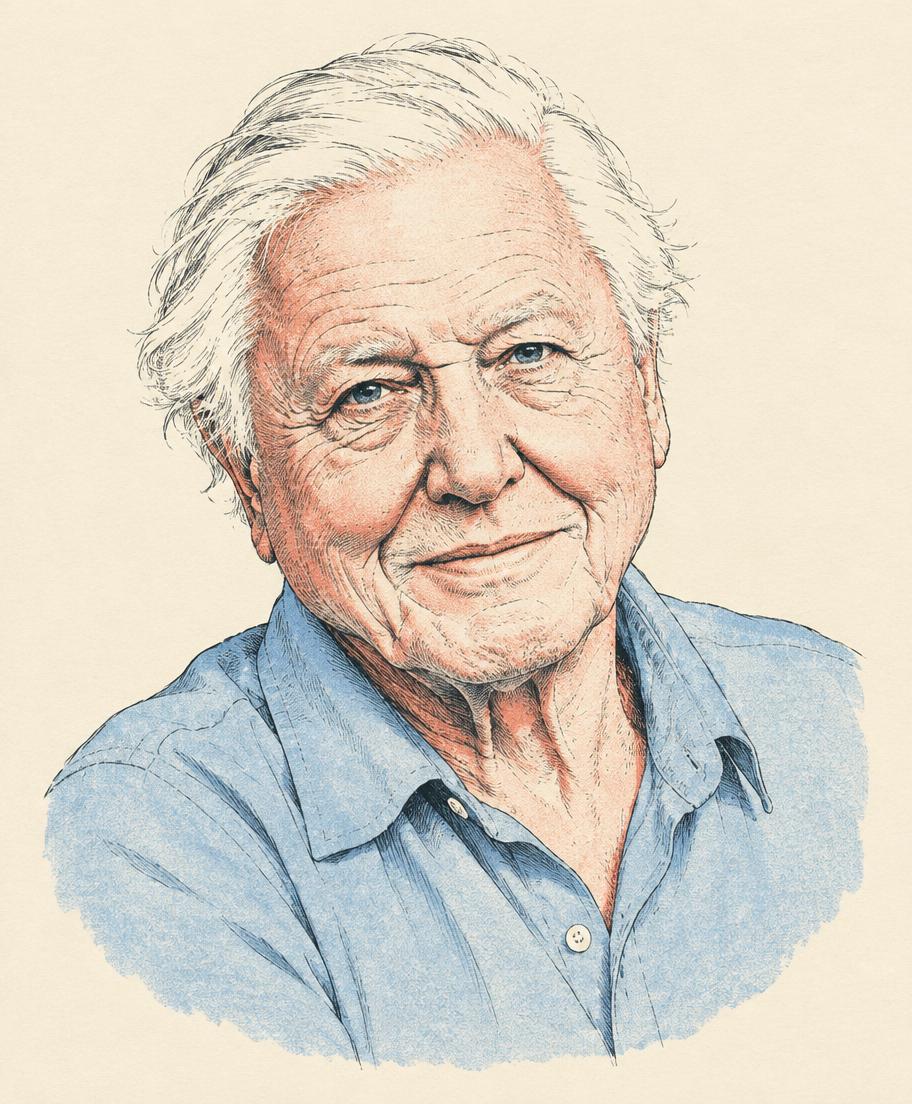
Broadcaster and natural historian
David Attenborough
The broadcaster whose natural history series have shaped how audiences understand life on Earth.
Read biography ↗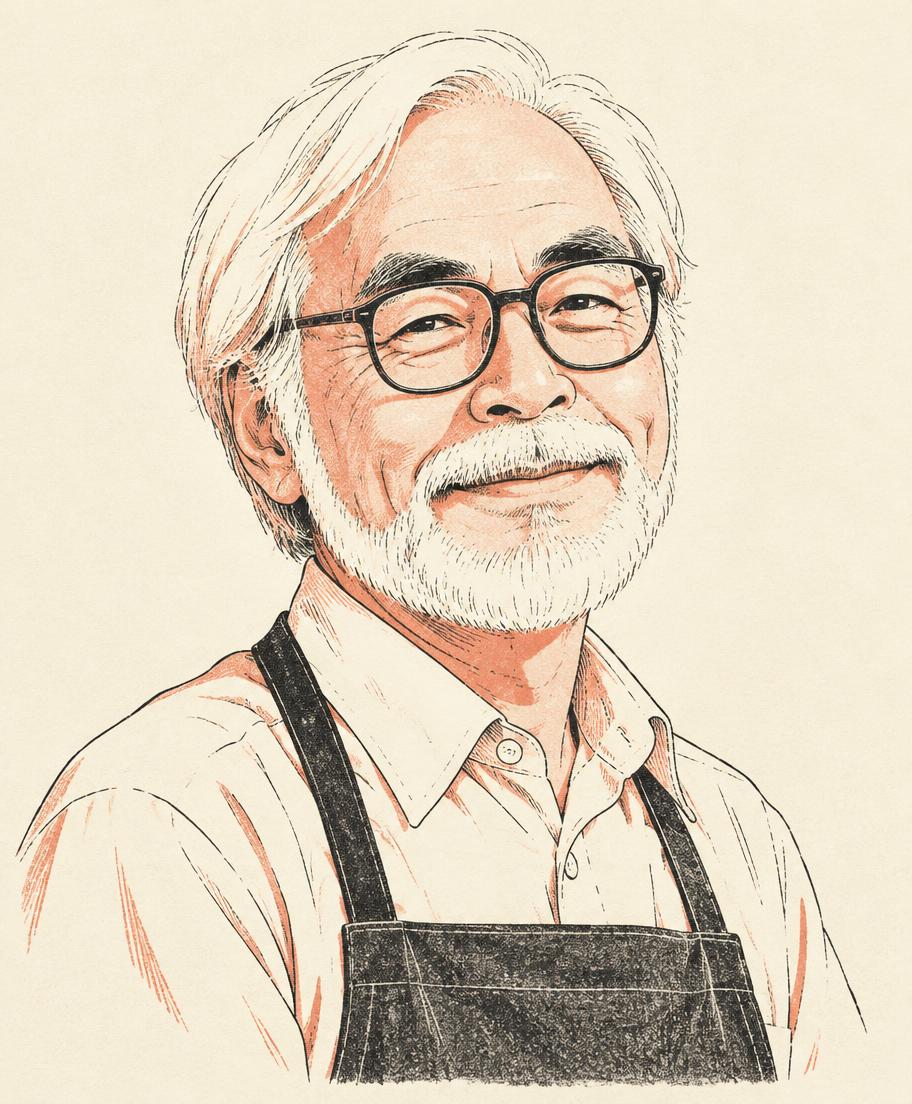
Animator and film director
Hayao Miyazaki
The animator and co-founder of Studio Ghibli whose hand-drawn films reached audiences worldwide.
Read biography ↗
Pope
Benedict I
Pope Benedict I was the bishop of Rome from 2 June 575 to his death on 30 July 579.
Read biography ↗